
Who Can Legally Marry You in the UK? Understanding Marriage Regulations and Options
When planning your wedding in the UK, you must know who can legally marry you. In the UK, someone like a registered religious leader or a civil registrar must conduct your marriage. This ensures that your union is recognized by the law and fulfills the legal requirements to get married in the UK.

If you’re considering a civil partnership, it’s similar but has its own set of rules. You can form a civil partnership with the same legal authority as those who conduct marriages. Both civil partnerships and marriages can be registered at your local registry office, and you will need to provide certain documents.
Understanding the legal framework will help you navigate your wedding plans smoothly. Make sure to check your eligibility on gov.uk for further details on the marriage register and necessary requirements.
Legal Requirements for Marriage in the UK
When planning to get married in the UK, it is essential to know the legal requirements. Understanding your eligibility, the notice period, and the types of ceremonies available will help you prepare for your special day.
Eligibility to Marry or Form a Civil Partnership
To get married in the UK, you must be at least 16 years old. If you are under 18, you will need parental consent. Both partners must be free to marry, meaning you cannot be currently married or in a civil partnership.
If you have a previous marriage, you must provide proof of annulment or divorce. This includes making sure that any previous marriage or civil partnership has been legally ended. Both partners should also provide proof of identity and address. This ensures that all records are accurate.
Notice Period and Marriage Documentation
Before your wedding, you must give notice at your local Register Office. This notice must be at least 28 days before the marriage ceremony. You will need to provide certain documents, including proof of identity, proof of address, and details of your previous marriages, if any.
During the notice period, your details will be displayed publicly at the Register Office. This is to ensure that there are no objections to your marriage. If everything is in order, you can get your marriage certificate after the ceremony.
Types of Ceremonies
In the UK, you can have different types of wedding ceremonies. The most common types include religious and civil ceremonies.
-
Civil Ceremonies: These take place at Register Offices or approved premises. A registrar conducts them, and they can be simple or personalized.
-
Religious Ceremonies: You can have a religious wedding in places like churches, temples, or other religious venues. Different faiths may have specific requirements, so it’s important to check with your chosen venue.
Make sure to book your ceremony in advance and confirm that all legal requirements are met to make your day special!
Planning Your Ceremony
Planning your ceremony is an exciting part of getting married. You will need to consider your wedding venue, the type of ceremony that suits you, and specific needs for same-sex couples.
Choosing Your Wedding Venue
Selecting the right wedding venue is crucial. You can choose from various options like a religious venue, a civil venue, or even a unique location that reflects your style.
Make sure the venue is formally approved for weddings, which you can check through your local authority. Many couples opt for registered religious buildings for their ceremonies.
This setting can add a special touch, especially if you wish for a religious blessing post-ceremony. Alternatively, many choose civil weddings for a more straightforward approach.
Consider the number of guests, accessibility, and services offered at the venue. These factors will ensure your day goes smoothly.
Religious vs. Civil Ceremonies
When planning your ceremony, you have a choice between a religious or civil ceremony. A religious ceremony often occurs in a church or other registered religious building and can include spiritual elements.
In contrast, a civil ceremony is typically held at a registry office or an approved venue. This option often provides more flexibility regarding the location and timing.
You might also consider a humanist wedding, which focuses on personal reflections without religious elements. Be sure to research the legal requirements for each type.
It’s important to understand that a civil marriage and a marriage ceremony can be different. Civil weddings are legally binding, while religious ceremonies may require additional steps to ensure legal recognition.
Special Considerations for Same-Sex Couples
Same-sex couples in the UK have the same rights as opposite-sex couples when it comes to marriage and civil partnerships. If you are a same-sex couple, you can choose to marry or enter into a civil partnership.
Understanding your options is essential. You may wish to have a religious ceremony, but not all faiths perform such ceremonies for same-sex couples. Make sure to inquire about specific practices if this is important to you.
For many same-sex couples, a civil ceremony is appealing as it is widely accepted and easy to arrange. It’s also a good idea to check if your chosen venue has experience hosting same-sex marriages.
After the Ceremony
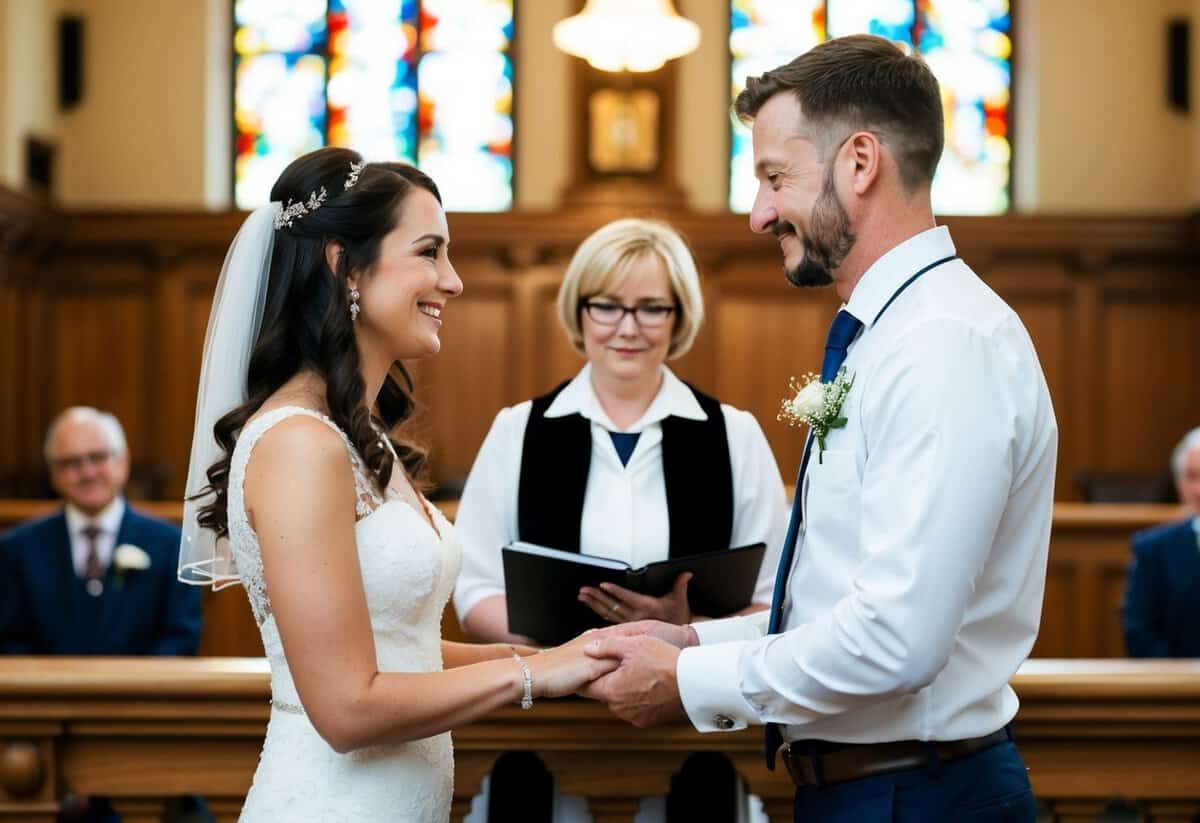
Once the ceremony is over, there are important steps you need to take. These include registering your marriage and considering any name changes. Let’s look at each of these topics in detail.
Registering Your Marriage
After your ceremony, it’s crucial to register your marriage. This process typically happens within 14 days. The local Register Office will provide a marriage document, which you must complete with your personal details.
You and your partner need to sign the marriage schedule during the ceremony. Once you have completed registration, you will receive your marriage certificate. This document is important for legal purposes, like changing your name or updating your marital status on official documents.
Make sure to keep your marriage certificate safe, as it serves as proof of your marriage.
Changing Your Name
If you decide to change your name after getting married, you should know how to do it correctly. You can adopt your partner’s surname or create a hyphenated version of both names.
To change your name officially, you’ll need your marriage certificate as proof. After that, you’ll inform various organizations, such as banks, government offices, and your employer.
Consider making a list of places that require your name change. This will help you stay organized once you start the process. Be aware that some places might have their specific requirements for documentation.