
Who Else Does Mary Marry? Exploring Her Romantic Connections in Stories
When you think about Mary, the mother of Jesus, it’s natural to wonder about her life after Joseph. The Bible does not indicate that Mary married anyone else after Joseph’s death. The focus remains on her unique role as the virgin mother, which adds to the mystery surrounding her life.

Mary was engaged to Joseph when she received the announcement from the angel Gabriel about her pregnancy. This betrothal was a significant commitment in biblical times, marking a step toward marriage, even though they did not live together until the wedding.
Knowing this, many people are curious about Mary’s life after her time with Joseph.
As you explore this topic, you may find various interpretations and stories. However, the scriptures provide little information about Mary’s life beyond her role as Jesus’ mother. This leaves much to ponder about her experiences and relationships.
Mary and Joseph’s Betrothal
Mary’s betrothal to Joseph is an important part of the Christmas story. This relationship highlights their commitment and the cultural practices of their time. Understanding this background gives you a deeper insight into their lives and the role of faith in their journey.
Cultural Context of Betrothal
In ancient Israel, betrothal was much more serious than today’s engagement. It was a legal commitment between families, often arranged by parents.
During this time, Mary and Joseph were expected to follow Jewish law.
The betrothal meant they were considered husband and wife, even before living together. Breaking this agreement required a formal divorce. This practice demonstrated the strong family ties and community bonds that were vital to the Israelites.
Scriptural References
The Bible mentions Mary and Joseph’s betrothal in both the books of Matthew and Luke. In Matthew 1:18, it shows that “Mary was betrothed to Joseph.” This reference emphasizes their commitment even before Jesus was born.
Luke’s Gospel also supports this idea. When the angel Gabriel appears to Mary, it confirms her status as a virgin engaged to Joseph. These scriptural accounts affirm the importance of their bond and set the stage for the coming events in Bethlehem.
The Role of the Holy Spirit
The Holy Spirit plays a crucial role in the story of Mary and Joseph. When Mary became pregnant, it was not through Joseph but by the power of the Holy Spirit, as stated in Matthew 1:20.
This miraculous event highlights Mary’s unique role as the Virgin Mary. It assures Joseph of Mary’s purity and their special place in God’s plan. The involvement of the Holy Spirit underscores the divine aspect of their union, which goes beyond normal human relationships.
The Annunciation and Mary’s Response
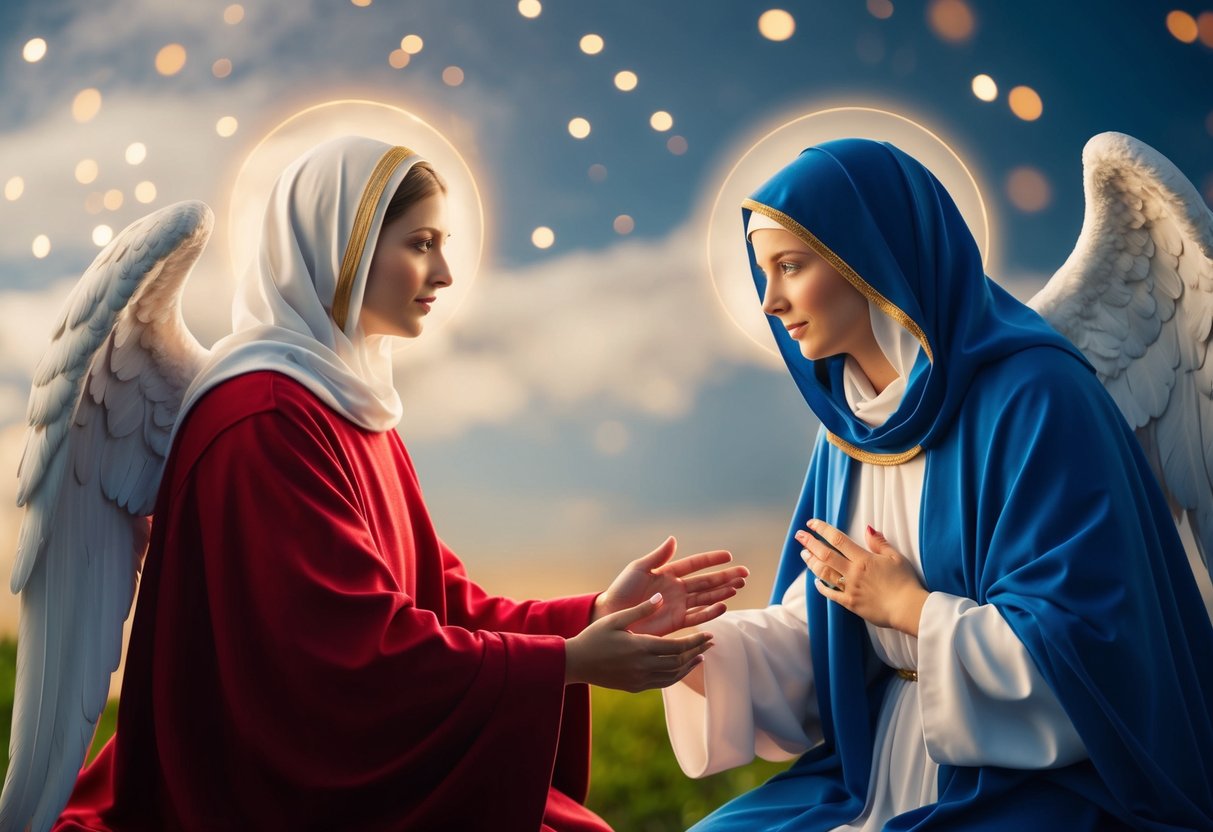
In the Annunciation, Mary receives a message from the Angel of the Lord. This moment is crucial in Christianity as it marks her acceptance of the role as the Mother of God.
The Angel of the Lord
The Angel of the Lord, Gabriel, appeared to Mary in Nazareth. He brought a message from God, announcing that she would conceive the Son of God by the Holy Spirit. This is found in Luke 1:26-38.
Gabriel reassured Mary, telling her not to be afraid. He explained how this miracle would happen, emphasizing that it was part of God’s divine plan. Mary listened carefully, showing her willingness to embrace this incredible news.
Her response was one of faith and obedience. She accepted her role, saying, “I am the Lord’s servant; may your word to me be fulfilled.” This moment highlights her strength and trust in God’s message.
Mary’s Perpetual Virginity
Mary’s Perpetual Virginity means that she remained a virgin before, during, and after the birth of Jesus. This belief is important in many Christian traditions.
The Virgin Birth is a central tenet in understanding her role as the Mother of God. The Gospel of Matthew (Matthew 1:24-25) reinforces this notion, stating Joseph did not have relations with her until after Jesus’ birth.
Mary’s commitment to her virginity reflects her dedication to God’s will. It signifies her purity and special role in salvation history. This belief has been celebrated in Christian teachings to this day.
Jesus’ Birth and Family

The birth of Jesus is a significant event in Christian faith, marking the arrival of the Messiah. Understanding Mary’s role and her family provides insights into this miraculous event.
Virgin Birth and Its Significance
The Virgin Birth refers to Mary conceiving Jesus while remaining a virgin. This event is crucial in Christian beliefs, emphasizing that Jesus’ birth was divine and without human fatherhood. The New Testament presents this in Matthew 1:18-25 and Luke 1:26-38.
Mary’s virginity signifies purity and her unique role as the mother of the Messiah. In the Catholic Church, this doctrine reinforces the belief in Jesus’ divine nature. The Hebrew Bible also hints at a virgin birth in Isaiah 7:14, which many see as a prophecy fulfilled by Mary.
Mary and Joseph’s Lineage
Mary and Joseph both came from notable lineages. According to New Testament accounts, Joseph is a descendant of King David, which is vital since prophecies stated the Messiah would arise from David’s line. This connection can be found in Matthew 1.
Mary’s lineage is often less emphasized but is also significant. She is believed to be from the tribe of Judah. Both lineages highlight God’s plan in fulfilling messianic prophecies. This genealogical background adds depth to Jesus’ identity as the promised one, or Messiah, in Christian teachings.
The Brothers of Jesus
After Jesus’ birth, Mary and Joseph had other children. The New Testament mentions several of Jesus’ brothers, including James, Simon, and Judas. These siblings are often identified as his half-brothers, indicating they shared the same mother, Mary.
James eventually became a leader in the early church. He was known for his strong faith and leadership among believers. The role of these siblings is significant in understanding Jesus’ family dynamic and the early Christian community, as they were involved in spreading his teachings.
Theological Perspectives on Mary’s Marriage
Many perspectives exist on Mary’s role and marriage, especially within Christianity. One key idea is the Perpetual Virginity of Mary. This belief holds that Mary remained a virgin before, during, and after giving birth to Jesus.
John Calvin, a major figure in the Protestant Reformation, acknowledged Mary’s unique status. He emphasized her role but also affirmed that she had other children after Jesus, which differs from Catholic teaching.
The Catholic Church maintains that the Virgin Birth is important for understanding Christ’s divine nature. This points to the miraculous work of the Holy Spirit in Mary’s conception of Jesus.
You might find that Mary’s marriage to Joseph is often described in a special way. It’s seen as a sacred partnership meant to raise Christ. Their relationship is portrayed with deep respect and reverence.
Mary’s life revolves around her relationship with Christ, as she is called the Mother of God. This title reflects her importance in Christian theology.