
Who Gets Wedding Rings After Death? Understanding Heirloom Rights and Family Traditions
Losing a loved one is incredibly hard, and dealing with their possessions can be a tough part of the grieving process.
Wedding rings often hold deep sentimental value and can spark questions about who should inherit them. You might wonder if it goes to a family member, a close friend, or if it can be repurposed in a meaningful way.
Deciding what to do with wedding rings after someone passes can bring on feelings of sadness and remembrance. It’s important to take your time and think about how best to honor the memory of your loved one.
You may want to keep the ring, pass it down through the family, or even transform it into a new piece of jewelry that carries on their spirit.
Understanding these choices can help you navigate this emotional time with care. Whether you’re looking for a way to remember your spouse or wanting to keep a family’s tradition alive, knowing the options can make the process a little easier.
Legal Considerations in Bequeathing Wedding Rings

When it comes to wedding rings, legal issues can be quite significant. Understanding estate planning and inheritance laws is key for you to effectively manage and bequeath these treasured pieces.
Estate Planning and Asset Distribution
Estate planning is crucial when you want to decide how your wedding rings will be distributed after your death. You need to clearly outline your wishes in a will. This legal document allows you to specify who will inherit your wedding rings.
If you don’t have a will, state laws typically determine what happens to your belongings. The wedding ring might be considered part of the estate and divided according to those laws. Making sure your intentions are clear helps prevent disputes among family members.
Consider including your wedding ring in a trust for added protection. This way, the ring is managed outside of probate, which speeds up the distribution process.
Inheritance Laws and Recipients
Inheritance laws can vary significantly depending on where you live. Generally, your wedding ring is considered part of your personal property. This often means it can be left to anyone you choose.
Typically, surviving spouses have the first claim to such assets. However, if a couple is separated or divorced, the ring may go to other designated heirs, like children or family members. It’s essential to know that laws surrounding inherited wedding rings can differ if there are children involved.
Be clear about your preferences in your will. This minimizes confusion and helps your loved ones understand your wishes regarding your cherished wedding ring.
Emotional Aspects of Wedding Rings After Passing
Wedding rings hold deep emotional significance after a partner’s passing. They can serve as powerful mementos and links to cherished memories. Understanding these feelings can help you navigate your grief and decide how to honor your loved one.
Coping with Loss Through Mementos
After losing a spouse, the wedding ring often becomes a tangible connection to the past. Wearing it can provide comfort and a sense of closeness to your loved one. You might choose to keep the ring on your finger or wear it on a chain around your neck.
Creating new mementos is also an option. Some people melt down the ring to create a unique piece of jewelry, like a pendant. This way, the love remains while adapting to the new reality.
These items become symbols of your journey through grief, offering a way to remember a departed loved one and celebrate their life.
The Significance of Family Heirlooms
Family heirlooms, such as wedding rings, carry stories and memories that extend beyond one person’s life. When you inherit these rings, you are also gaining a piece of your family’s history. They remind you of the love and commitment that has endured through generations.
Passing down a wedding ring can serve as a comfort, helping you feel connected to those who came before you. It can spark conversations about your family’s past, solidifying bonds and traditions.
By preserving and sharing these heirlooms, you keep the memory of your loved ones alive, allowing you to honor their legacy and the values they held dear.
Creative Continuance of Memory
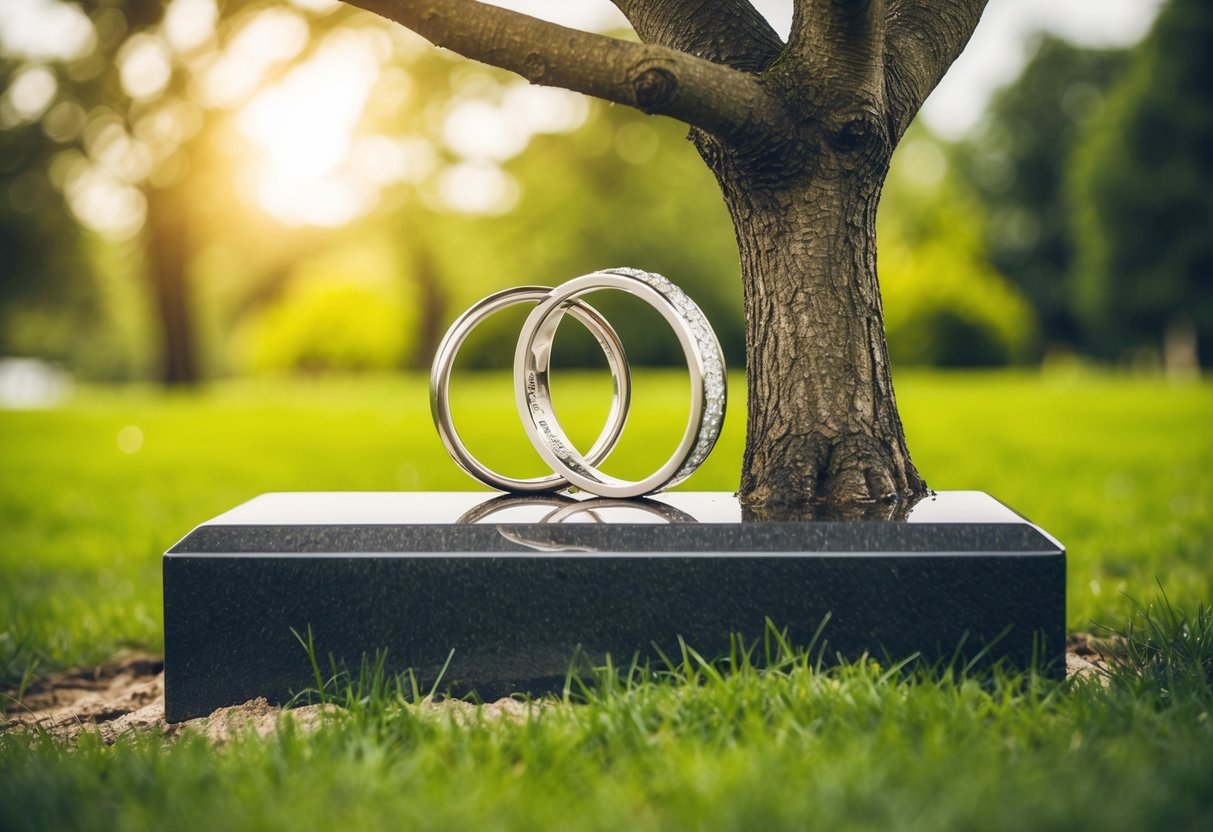
Celebrating the life of a loved one can include imaginative ways to keep their memory alive. You can approach this through transforming their wedding rings into special memorial pieces or planting memory trees, which serve as living tributes.
Transforming Wedding Rings into Memorial Pieces
Turning wedding rings into memorial pieces is a heartfelt way to preserve the memory of your loved one. You might consider creating a memorial ring, which incorporates the original ring into a new design. Custom jewelry artists can help you craft a piece that reflects your loved one’s personality.
Additionally, memorial art is another option. This could involve displaying the rings in a shadow box along with cherished photos and keepsakes. This creates a special space to honor their legacy. For something unique, think about having a memorial diamond made from the carbon in their ring. This piece serves as a beautiful reminder of their love.
Planting Memory Trees as Living Tributes
Planting a memory tree is a meaningful way to pay tribute to someone you’ve lost. As you nurture the tree, it symbolizes growth and remembrance. Before planting, place the wedding rings at the roots of the sapling. This connects their memory to the life that grows from it.
Each year, as the tree flourishes, it can remind you of the love and memories you shared. You can also create a small garden with commemorative art around it, using stones or plaques to include messages or quotes that celebrate your loved one’s life. This living tribute can be a serene spot for reflection and remembrance.
Options for Wedding Rings Without a Designated Heir
When a wedding ring doesn’t have a specific heir, you have several meaningful choices for what to do with it. These options can honor your loved one while allowing the ring to serve a new purpose.
Donation and Crafting New Jewelry
One way to honor the memory of a loved one is by donating the ring to a charitable organization. Many charities accept jewelry to auction off, and the proceeds go to those in need. This can be a therapeutic choice, allowing you to feel connected to your loved one while helping others.
Alternatively, you could repurpose the ring into custom jewelry. Vintage rings, especially, can be transformed to create new pieces, like necklaces or bracelets. This process can serve as a creative outlet and a way to carry your loved one’s memory with you. Each piece can symbolize their legacy while fitting your style.
Selling and Using Proceeds in Honoring the Deceased
If you choose to sell the ring, you have options for how to use the proceeds. Selling inherited jewelry can provide financial support during a difficult time.
Many local jewelers or online platforms allow you to sell personal items with ease.
You might also consider using the profits for a memorial, such as a donation to a favorite charity of your loved one. This not only honors their memory but helps ensure that their spirit lives on in a meaningful way.
Lastly, using the money for a therapeutic choice, like a quiet getaway or a special event, can also bring some comfort during a tough time.