
Who Gives a Bride Away If There Is No Father? Exploring Alternative Traditions and Roles
When planning a wedding, you might wonder who gives you away if your father is not present. Traditionally, the father of the bride has this cherished role, walking you down the aisle to the groom. Today, many brides choose different people to fulfill this important job.
If your father is not a part of your life, you have plenty of options. You might consider having your mother, sibling, or another loved one take on this meaningful role. Many brides even invite close family members like a grandfather, uncle, or aunt to share in this special moment.
Choosing who gives you away can add a personal touch to your wedding. It’s an opportunity to honor those who have supported you in your life and celebrate the connections that matter most to you.
Embrace this chance to make your day truly yours.
Understanding the Tradition
The tradition of giving away the bride has deep roots and has evolved over time. You’ll find that different cultures and modern weddings have adapted this practice in various ways.
Origins of Giving Away the Bride
This tradition dates back thousands of years. Originally, it symbolized the transfer of a woman as a property from her father to her husband. In many societies, this practice was deeply linked to family honor and social status. Women often relied on male figures for protection and support.
In ancient times, families arranged marriages for social, economic, or political reasons. The father would give his daughter away as a sign of agreement. This ritual was not just about the couple but also involved families coming together.
Modern Interpretations
In today’s ceremonies, the tradition is more flexible. You may see various people giving the bride away, such as a mother, step-parent, sibling, or even a close friend. Couples now have the freedom to choose who walks them down the aisle based on their personal relationships.
Many modern weddings still honor the traditional role of the father, but it’s not a strict requirement. This shift lets you celebrate your unique family dynamics.
Many brides enjoy creating their own meaningful moments during the ceremony.
Role of Family Members
When there is no father to give the bride away, family members often take on this meaningful role. Each person can add a unique touch to the ceremony, honoring the bride’s connections and her journey.
Mothers and Stepfathers
The mother of the bride is a strong choice to give you away if your father is not present. This moment can be very emotional and symbolizes the support of your family.
Stepfathers can also step in, showing that love and family can come from many different places. If your relationship with your mother or stepfather is strong, having them take this role can create a beautiful moment.
They can walk with you down the aisle, perhaps even sharing a few words of love and support during the ceremony.
Siblings and Immediate Family
Siblings can play an important part in your wedding by walking you down the aisle. Whether it’s your brother or sister, having them give you away emphasizes your bond. This can make the moment feel even more special.
If you have a close relationship with aunts, uncles, or cousins, they can also fulfill this role. Including immediate family helps you feel surrounded by love, and many brides appreciate this personal touch.
You might consider letting them speak a few words before giving you away, making it memorable.
Honoring Loved Ones
If you have lost close family members, you can still honor their memory during your wedding. Consider carrying a photo or wearing something that belonged to them.
You can invite a family member to mention them during the ceremony. This can help keep their spirit present while you celebrate.
Remember, this is your day, and honoring loved ones can give it a meaningful depth. You can even explain to your guests why certain people are important to you, making your ceremony more personal and heartfelt.
Variations and Alternatives
If you find yourself wondering who gives the bride away when there is no father, there are plenty of meaningful options to explore. You can create a personalized moment that reflects your values and relationships.
LGBTQ Couples and Independence
For LGBTQ couples, the traditional roles at a wedding may not fit your story. Instead of focusing on who gives you away, this moment can highlight your independence.
Both partners can walk down the aisle together, showcasing equality and unity. This approach reinforces your commitment to each other.
It also allows you to share a special moment with family or friends who support your journey. Think of roles like a close friend or a beloved family member walking with you. This offers a modern twist on a sentimental tradition.
Walking Down the Aisle Solo
Walking down the aisle solo is a beautiful way to show your independence. You can embrace this moment by taking a confident stroll toward your partner.
This choice symbolizes that you are choosing to marry them of your own free will.
If you feel comfortable, consider incorporating something personal, like wearing something borrowed or something blue. This could enhance your solo walk by adding sentimental value.
This option gives you the chance to create a moment that is entirely yours, free from traditional constraints.
Alternative Wordings and Gestures
When it comes to the wedding ceremony, alternative wordings can replace the traditional “who gives this bride away?” You could say, “Who supports this union today?” or “Who stands with her as she takes this step?” These phrases invite everyone’s support.
Another option involves using symbolic gestures. For instance, you might light a unity candle together or share a special dance with family members.
These actions can hold deep meaning and allow everyone to participate in your celebration. Such alternatives keep the focus on love, commitment, and shared connections.
Planning Your Processional
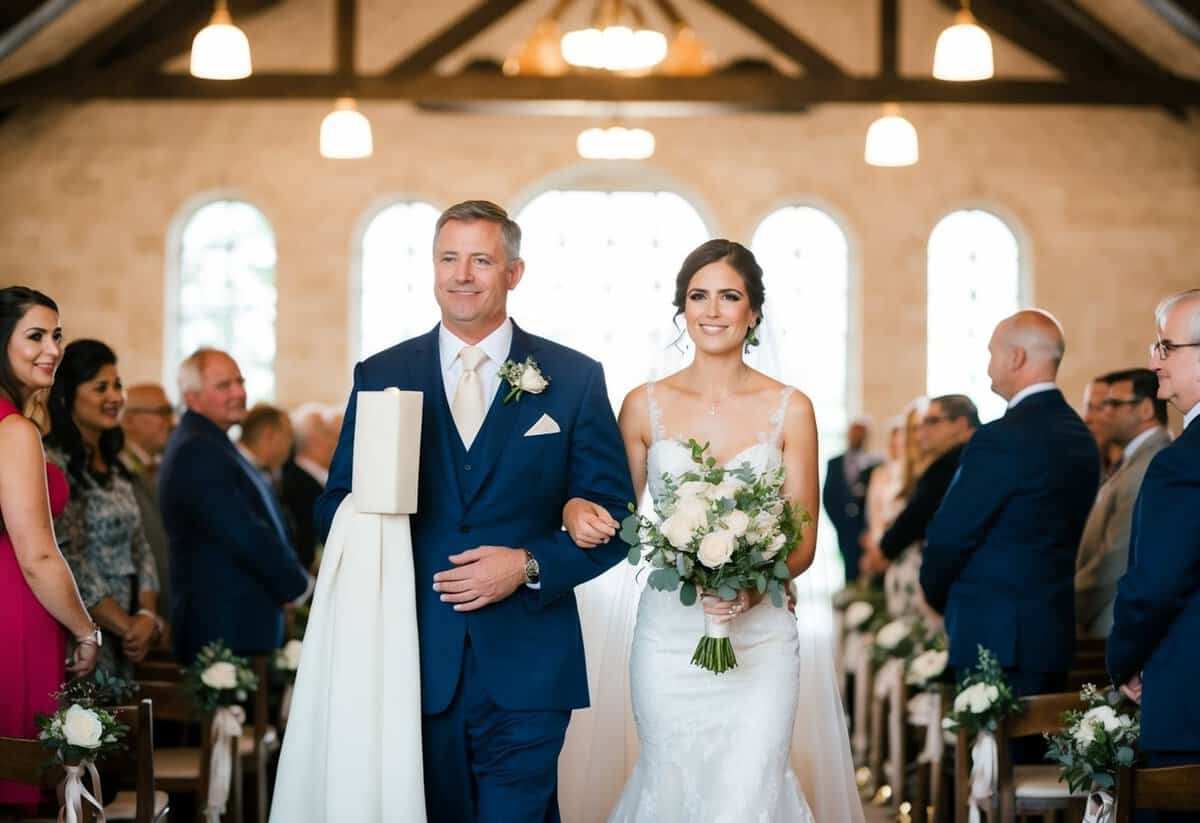
Planning your processional is an important step in your wedding ceremony. It sets the tone for the event and highlights the unity of families. Here are some key points to consider about how to create a meaningful experience during this special moment.
The Role of the Wedding Planner
Your wedding planner can be a valuable resource during the planning of your processional. They can help you organize who walks down the aisle, ensuring the timing flows smoothly.
Discuss options with your planner, especially if traditional roles may change. They can suggest creative alternatives for giving away the bride.
For example, having the mother of the bride participate in this ceremonial act can be powerful. Involving other family members, like siblings or grandparents, can also enrich the moment.
Your planner will coordinate the details, handling logistics to make the experience seamless.
Family Processional Dynamics
The family processional is crucial for uniting families during the ceremony. If a father is not present, think about who else might walk you down the aisle.
Options can include your mother, a sibling, or a close family friend. Consider what feels right for you.
The processional should reflect your family dynamics and relationships. This personal touch makes the ceremony more intimate.
You might even choose to have a memorial table with photos of absent loved ones. This can be a beautiful way to honor their presence in spirit.
Be open with your family about their roles, making sure everyone feels included.
Creating a Symbolic Moment
Creating a symbolic moment during your processional can enhance the emotional impact. Think about what rituals might resonate with you and your partner. This could include a handfasting ceremony or lighting a unity candle.
As you approach the officiant, take time to absorb the moment. It’s not just about the physical walk; it’s about the journey you’re starting together.
You can communicate your intentions to your officiant, allowing them to guide the moment meaningfully. Make sure your processional includes music that enhances the atmosphere. Ultimately, this moment symbolizes your commitment to each other and the families you are joining.