
Who Gives the Bride Away at a Wedding? Understanding This Heartfelt Tradition
When it comes to a wedding ceremony, one of the most cherished traditions is the moment when someone gives the bride away. The father of the bride traditionally fills this role. He symbolizes the transfer of responsibility and support from one family to another. However, you might wonder if this custom is still relevant today, and who else can take on this significant role.

As weddings evolve, so do their traditions. Many couples now choose to have other family members, friends, or even the bride herself perform this honor. This decision reflects personal values and family dynamics, allowing you to find meaning that resonates with your relationship and cultural background.
Understanding who gives the bride away can add a personal touch to your ceremony. It’s an opportunity to honor relationships that matter to you, making your wedding feel even more special.
Historical Significance of Giving Away the Bride
The practice of giving away the bride holds deep historical roots and reflects various cultural beliefs. Understanding these origins can give you insight into the meanings behind this tradition and its evolution over time.
Cultural Origins of the Tradition
The tradition of giving away the bride originates from ancient societies. In many cultures, marriages were arranged, often for political or economic reasons. Fathers had a significant role in choosing a partner for their daughters.
In these societies, daughters were often seen as property belonging to their fathers. Thus, the act of giving them away was a formal transfer of ownership from one male figure to another, typically from the father to the husband. This practice reinforced social structures and family alliances.
The Dowry and Transfer of Responsibility
A dowry is another important aspect linked to this tradition. It involves the bride’s family providing goods, money, or property to the groom. This exchange symbolizes the father’s acknowledgment of the new family unit being formed.
By giving away the bride and providing a dowry, the father transfers responsibility for his daughter to her new husband. This act implied trust in the husband to care for and protect her. Over time, the meanings have shifted, and today, it’s often seen as a symbol of love and support rather than property transfer.
Who Traditionally Gives the Bride Away?
In many weddings, the tradition of giving the bride away is a meaningful part of the ceremony. It usually involves a key figure, often the father of the bride, in a symbolic gesture that represents the bride’s transition.
Role of the Father of the Bride
Traditionally, the father of the bride plays the most significant role in this custom. He walks his daughter down the aisle and presents her to the groom. This act symbolizes the father’s blessing and support as the bride starts a new life with her partner.
Some families may choose another significant male figure, such as a brother or family friend. The decision should reflect the couple’s wishes and their family dynamics.
The father of the bride often expresses pride and emotion during this moment. It’s a special connection that many cherish, adding a personal touch to the ceremony.
The Officiant’s Question
During the ceremony, the officiant usually asks, “Who gives this woman to be married to this man?” This question is directed toward the father or the person accompanying the bride. It marks the moment when the transition is made official.
The officiant’s question highlights the importance of family involvement. This tradition signifies the support and acceptance from the bride’s family as she embraces her new life.
It’s not just about the words; it’s a moment filled with emotion and significance. Many couples now customize this part of the ceremony to better reflect their values and relationships.
Modern Interpretations and Variations
Today’s weddings embrace a variety of interpretations for the moment of giving the bride away. This reflects changing values and unique personal expressions. You might encounter new customs that celebrate love and support in different ways.
Escorting the Bride in LGBTQ Weddings
In LGBTQ weddings, the tradition of giving away the bride or groom often takes on a different meaning. Many couples now opt for both partners to walk down the aisle together, symbolizing their equal commitment.
Sometimes, parents or close friends join the procession as a show of support. This highlights the importance of community and shared love in the ceremony. The focus shifts from ownership to partnership, making the moment more inclusive and meaningful.
Alternative Wordings and Gestures
Modern ceremonies often use alternative wordings for the traditional question, “Who gives this bride away?” You might hear phrases like, “Who supports this couple today?” or “Who stands with this couple?”
These options allow for a broader representation of family and community. Some couples prefer to skip the question altogether, choosing to share a personal vow or statement. This makes the moment feel more intimate and aligned with their values.
Unique Celebrations and Transitions
Couples today are also exploring unique ways to celebrate the transition down the aisle. Some design personalized rituals, such as using a unity ceremony or sharing a special dance.
Walking down the aisle together offers a visual representation of partnership rather than a traditional transfer of ownership. Furthermore, unique celebrations may blend cultural customs or personal stories, making the ceremony truly one-of-a-kind. This adaptation showcases how modern weddings continue to evolve, focusing on the beauty of love in all its forms.
The Ceremony and Beyond
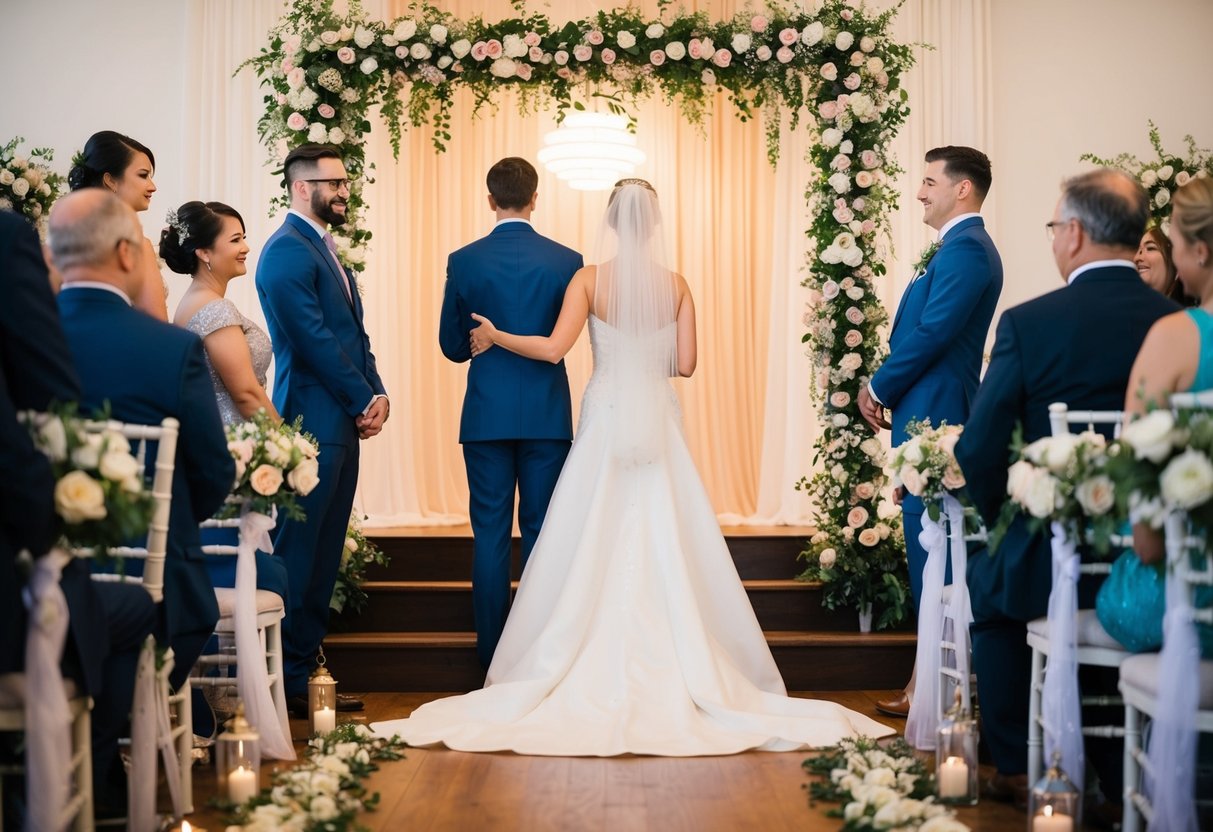
The ritual of giving away the bride is an important part of many wedding ceremonies. It symbolizes the uniting of families and supports the couple as they start their lives together. This moment can be meaningful for everyone involved.
Uniting Families Through the Ritual
When someone gives the bride away, it represents the joining of two families. Traditionally, this role has been fulfilled by the father of the bride. However, many modern couples choose different arrangements.
If the bride’s father is unavailable, other family members or close friends may take on this role. This choice reflects your personal values and family dynamics. The act fosters a sense of connection and support among loved ones, making the ceremony more inclusive.
In same-sex weddings, the tradition adapts to suit the couple’s preferences. You might involve both sets of parents or alternative supporters who reflect your unique relationships. This flexibility allows each couple to create a moment that feels right for them.
Presenting the Couple for Marriage
After the bride is given away, the officiant typically presents the couple to the assembly. This is an exciting moment, marking the transition from individual families to a new union. The question often asked is, “Who gives this woman to be married to this man?”
This phrase highlights the importance of support and approval from family and friends. It emphasizes the commitment you and your partner are making. It’s not just a formality; it’s a heartfelt acknowledgment of the love and unity that surrounds the couple.
This part of the ceremony can vary widely, depending on your background and preferences. Whether you choose to keep traditions intact or create new ones, what matters most is that it resonates with you and your loved ones.