
Who Gives the Groom Away at a Wedding? Exploring Traditions and Modern Choices
When we talk about wedding traditions, the moment someone gives away the groom may not be as widely known as the tradition for the bride.
Traditionally, the groom does not have someone who formally gives him away. This custom focuses on the bride being presented to her husband. However, this doesn’t mean that you can’t add a personal touch to your ceremony by including someone special to accompany or support the groom.
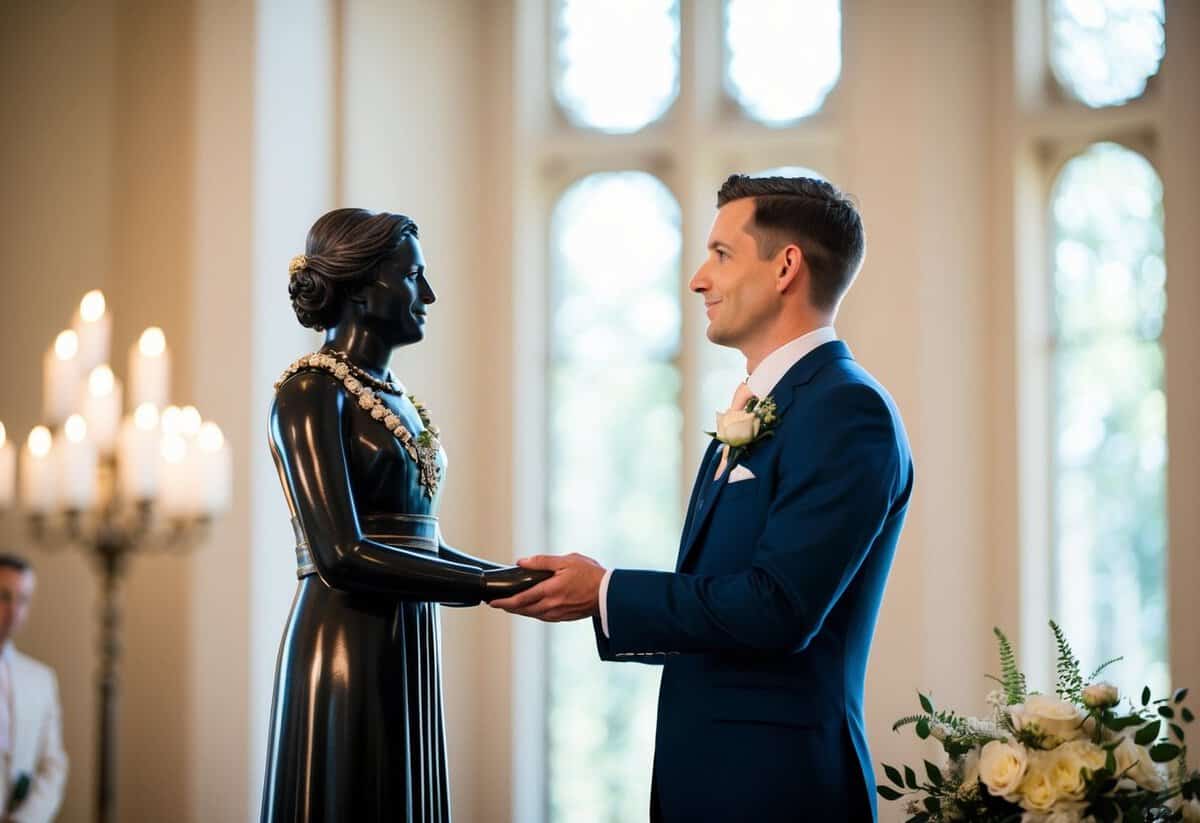
In modern weddings, couples often blend traditions, and you might find the groom walking down the aisle with his parents or another significant figure in his life. This can enhance the emotional connection during the ceremony and honor important relationships.
Taking the time to think about who will stand by your side can make this moment even more memorable.
Understanding the role of giving away the bride helps us appreciate why the groom’s side might look different but still holds a special meaning. By acknowledging these traditions, you create a meaningful ceremony that reflects your values and relationships, making your wedding day uniquely yours.
History and Tradition of Giving Away the Bride
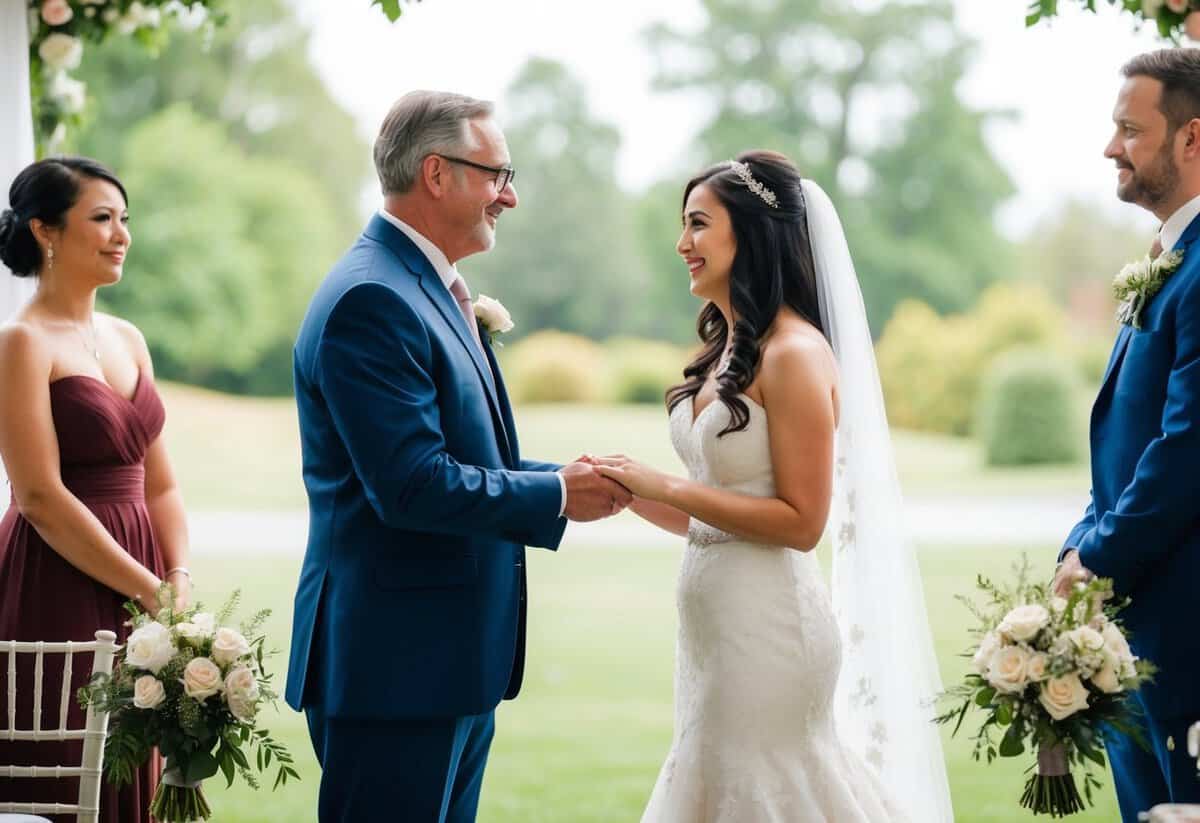
The tradition of giving away the bride has deep roots in history and marriage customs. It reflects shifts in societal values and roles within families. You will see how this practice originated and how it has changed over time.
Origins of the Tradition
The act of giving away the bride dates back centuries. It often started as a transfer of ownership. In many societies, a father would give his daughter to her groom, signifying a shift in responsibility.
This practice was commonly linked to the dowry system. A dowry was money or goods a bride brought into a marriage. This reinforced the idea of women as property within familial structures. While it is framed as a gesture of love, it also served practical purposes in arranged marriages.
Evolution into Modern Weddings
As society evolved, so did the meaning of giving away the bride. Today, this tradition still exists, but its implications have changed. Many couples now view it as a symbolic act rather than a transfer of ownership.
Today, it’s common for the father of the bride to walk his daughter down the aisle. Alternatively, some couples choose other family members or friends for this role. This change reflects a modern understanding of equality in relationships.
Many people focus more on celebrating love than adhering strictly to traditions. Couples might even reject the idea altogether, opting for personal or cultural variations of the ceremony. This makes weddings feel more inclusive and representative of their unique relationships.
Roles in the Wedding Ceremony
In a wedding, every participant has an important role that contributes to the special day. Understanding these roles can help make the ceremony smoother and more meaningful.
Father of the Bride and Alternative Participants
Traditionally, the father of the bride gives the bride away. This moment symbolizes the transfer of care from her family to her new spouse. As he walks his daughter down the aisle, this act is filled with deep emotion.
In modern weddings, there can be alternative participants. This might include the mother of the bride, a sibling, or even a close friend. The choice can reflect personal values and family dynamics.
No matter who it is, the important factor is that the person chosen is someone the bride trusts and loves. This person should be prepared to support the bride, providing reassurance as she steps into this new chapter of her life.
Responsibilities of the Wedding Party
The wedding party plays a crucial role in supporting the couple. This includes the bridesmaids, groomsmen, maid of honor, and best man.
Each member has specific duties to ensure everything runs smoothly. For example, bridesmaids help the bride get ready, while groomsmen support the groom. The maid of honor is usually in charge of coordinating the bridal party and assisting the bride with any last-minute details. The best man often handles the rings and gives a speech at the reception.
Together, the wedding party helps set the tone for the ceremony. Their presence not only adds to the celebration but also provides the couple with support and encouragement throughout the day.
Ceremonial Process and Modern Interpretations
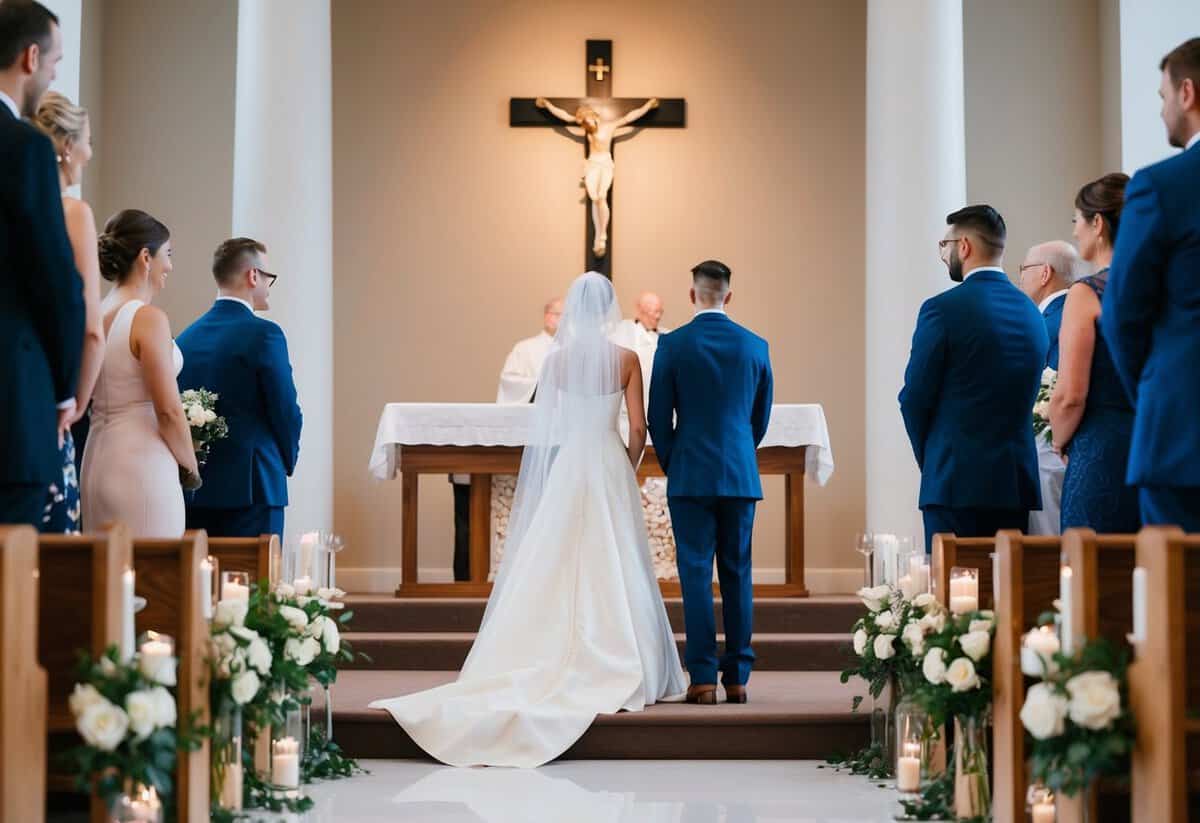
In many wedding ceremonies, there are both traditional and modern ways to express love and support. Understanding these variations can help you personalize your event in a meaningful way.
The Walk Down the Aisle
Traditionally, the walk down the aisle is a significant part of the ceremony. While many may think only the bride is involved in this process, modern weddings allow for broader participation.
During the ceremony, a close family member or friend can accompany the groom as he makes his entrance. This symbolizes unity and love, showcasing the support of family and friends. You might choose a parent, sibling, or a mentor to walk alongside you.
This change highlights the importance of partnership, showing that both the bride and groom have their loved ones around them. The walk also serves as a moment to reflect on the journey that’s led to this special day.
Alternative Wordings and Practices
In place of the traditional question, “Who gives this groom away?” modern interpretations can vary widely. Instead of just a single mention, some ceremonies include both sets of parents saying a heartfelt “I do” together.
This practice emphasizes equality and love. It shows that both families are coming together to support the couple.
Alternative wordings like “We all do” can create a sense of community. This can include friends speaking about their journey alongside the couple.
These changes in wording and practices make the ceremony more reflective of your values and relationships. They highlight the love and partnership that binds everyone together on this special day.
Cultural Variations of the Tradition
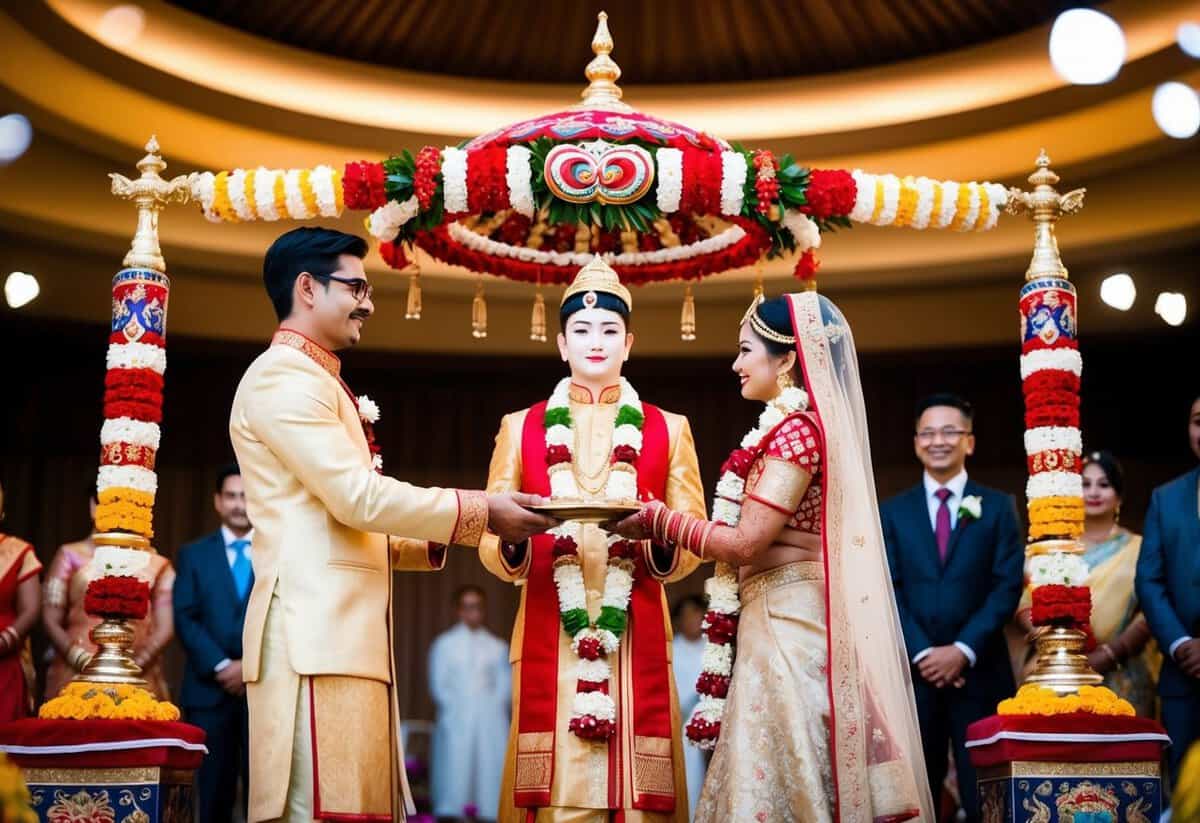
Different cultures have unique ways of viewing and participating in the tradition of who gives the groom away. In many instances, these customs reflect deeper meanings tied to family and community. Let’s look at some specific practices in Christian and Jewish weddings, as well as Hindu traditions.
Christian and Jewish Weddings
In Christian weddings, there is often a focus on family unity. Typically, the groom stands at the altar while the processional takes place. While it’s common for the bride to be given away by her father, the groom may have a moment of acknowledgment as well.
In Jewish weddings, the chuppah plays a crucial role. The groom usually waits under this canopy, which symbolizes the couple’s new home. Family members may offer blessings, and the groom’s parents may also play a significant role in this moment.
Hindu Weddings and Other Cultural Practices
Hindu weddings feature rich traditions. During the ceremony, the groom’s family presents him with his bride. However, the bride’s family still plays an important role. In Hindu culture, kanyadaan signifies the father giving away his daughter to the groom. This marks a blessing for the couple’s journey ahead.
Other cultures also have unique interpretations. For instance, in some Indigenous cultures, both families participate actively. This symbolizes a union of not just individuals, but also families and communities. Each of these practices reflects strong cultural ties and emphasizes the importance of family in a wedding ceremony.