
Who Goes First on Wedding Invitations: A Guide to Addressing Traditions
When it comes to wedding invitations, a common question arises: traditionally, the bride’s name goes first on the invitation. This practice reflects cultural norms that prioritize the bride, aligning with the “ladies first” mentality. Understanding this can simplify your decision-making during wedding planning.
As you prepare your wedding invitations, think about what feels right for you and your partner. While tradition is important, many couples now choose to go a different route based on their own preferences or family backgrounds. Whether you stick to custom or decide to mix things up, effective communication with your partner can help clarify how you want your names presented.
Wedding invitation etiquette is not just about whose name appears first; it also sets the tone for your big day. Getting this detail right can make a positive impression on your guests and reflect your unique style as a couple.
Understanding Wedding Invitation Etiquette

When planning wedding invitations, it’s important to understand whose name goes first. The choice can reflect both traditional etiquette and personal preferences. Knowing the rules can help make this decision easier for you.
Traditional Wedding Etiquette
In many cultures, the bride’s name traditionally comes first on wedding invitations. This custom stems from the idea that the bride’s parents are hosting the event and inviting guests to celebrate.
For instance, if the bride’s name is Emily and the groom’s name is James, the invitation would read “Emily and James.” This choice often honors family dynamics and cultural norms, which value the bride’s family’s role.
If there are special family situations, like divorced parents, clear communication can ensure everyone feels included. Overall, knowing traditional etiquette sets a respectful tone for your wedding.
Modern Etiquette and Personal Preferences
Today, many couples choose to break from tradition. Your personal preference, or even your cultural background, can influence whose name appears first. Some same-sex couples may also decide based on alphabetical order or mutual agreement.
For options like “Alex and Jamie,” this can show inclusivity. You get to pick what feels right for you. If the groom’s name goes first, it’s often a personal choice rather than a rule.
It’s a good idea to discuss this with your partner to ensure both names hold equal weight in your decision. Clear communication will help you both feel happy with the invitation.
Components of a Wedding Invitation
When creating your wedding invitation, understanding the key components will help you convey the necessary details and set the tone for your big day. Each part plays a specific role in guiding your guests on what to expect.
Host Line and Order of Names
The host line is usually the first part of your invitation. It identifies who is hosting the event, which is often the couple’s parents or the couple themselves.
You can use phrases like “Mr. and Mrs. John Smith” or simply “John and Jane.” Including full names is essential, as it adds a formal touch.
When it comes to the order of names, traditional etiquette often places the bride’s name first followed by the groom’s. For example, “Jane Smith and John Doe.” This sequence respects social conventions and highlights the bride’s role in the ceremony.
If either person has a hyphenated last name, include both last names clearly. Remember, you have the flexibility to adjust the order based on family dynamics or personal preference.
Titles and Names
Using the correct titles in your invitations is essential. For males, “Mr.” typically precedes their full name. For females, “Ms.” is used for those over 18, while “Miss” is suitable for younger women.
Be sure to include middle names if it feels appropriate. This adds formality and can help distinguish between guests with similar names.
It’s also important to note the names of any guests. For example, if inviting a couple, write “Ms. Jane Smith and Mr. John Doe.” Always clarify relationships, especially if you’re inviting a single guest but they are plus-one-ing a partner.
These details help create a clear, inviting atmosphere for your special day while keeping it respectful and elegant.
Design and Aesthetics
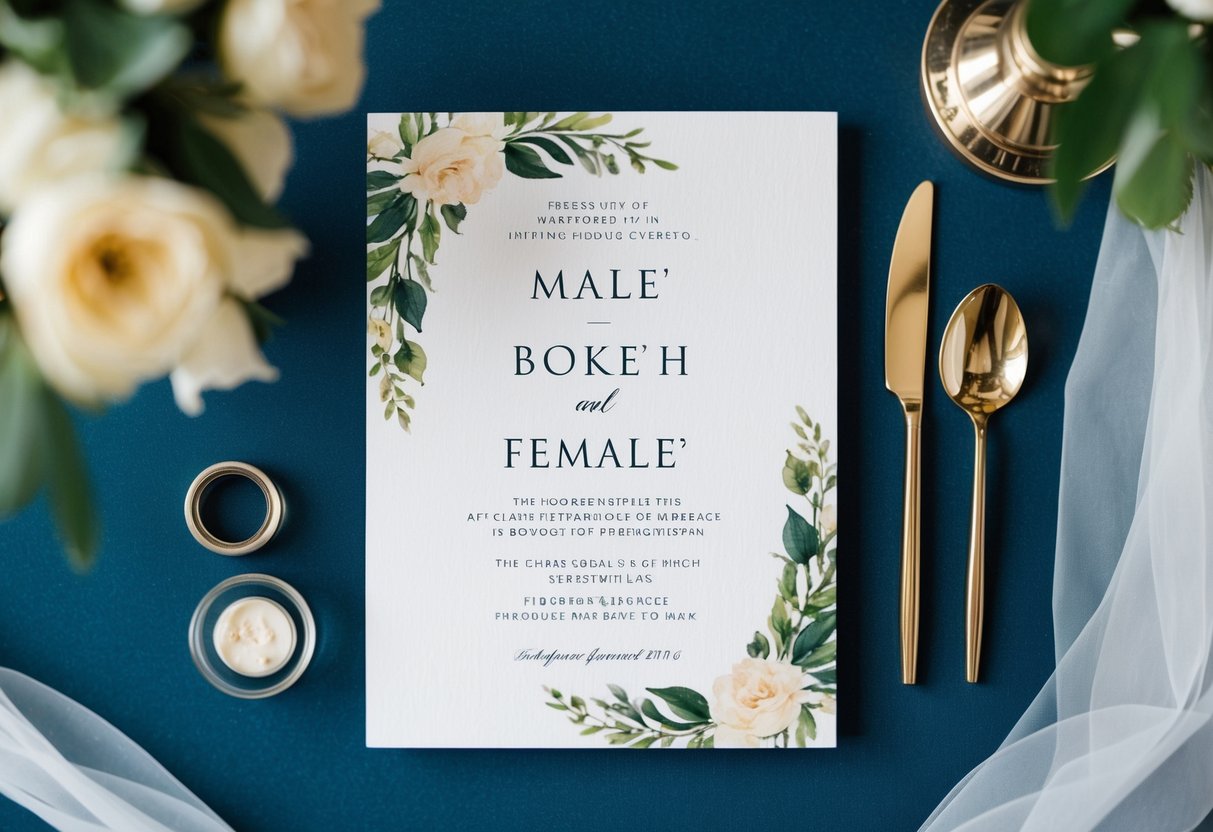
When planning your wedding invitations, it’s important to consider how the design reflects both you and your partner. Incorporating personal touches can strengthen the unity of your wedding theme and create a memorable experience for your guests.
Incorporating Unity and Personal Touch
To create a cohesive look, choose colors and designs that match your wedding day theme. Think about using matching fonts and colors for the outer envelope and the invitation itself. This unity sets the tone for your special day.
Personal touches are key. You can include symbols or motifs that hold special meaning for both of you. Perhaps add a small graphic of your favorite flower or an initialed monogram.
Make sure to balance aesthetics with readability. Clarity is essential, so use fonts that are easy to read. By focusing on these elements, your wedding invitation will feel uniquely yours.
Etiquette for Different Types of Weddings
When planning your wedding invitations, the type of wedding you choose can greatly influence how you present the names. Here’s what you should keep in mind for casual and formal weddings.
Casual versus Formal Weddings
For casual weddings, the approach tends to be more relaxed. You can choose to list names in any order that feels right for you. Many couples choose to put the bride’s name first, but you can also list names based on personal preferences.
In contrast, formal weddings follow more traditional etiquette. Typically, the bride’s name goes first on the wedding invitations. This is especially true for the ceremony details. You should ensure that the names are written clearly and elegantly, reflecting the formality of the event.