
Who Hands Over the Bride? Understanding the Tradition and Its Modern Variations
The moment when the bride is handed over during the wedding ceremony is filled with emotion and significance. Traditionally, the father of the bride walks her down the aisle and gives her away to the groom. This symbolizes his blessing and support for this new chapter in her life. This custom can vary, as some couples may choose to have both parents accompany the bride or even a close family member or friend.

You might find it interesting that this practice dates back many centuries and reflects important cultural values around family and marriage. Understanding who hands over the bride can add depth to your own wedding ceremony or simply enhance your knowledge of wedding traditions.
As you read on, you’ll discover more about this touching act, its origins, and how various cultures interpret the tradition. Whether you’re planning a wedding or enjoying the beauty of these customs, exploring who hands over the bride can deepen your appreciation for the ceremony and its rich meanings.
The Tradition of Giving Away the Bride
The tradition of giving away the bride has deep historical roots and continues to evolve in modern times. You may find various interpretations of this gesture that reflect changing values around marriage and female empowerment. Let’s explore its background and how views on this ceremony are shifting today.
Historical Roots
The practice of giving away the bride dates back centuries and is often linked to the concept of arranged marriages. In many cultures, this tradition was about forming alliances between families, where the bride’s father or male guardian would “hand her over” to the groom. This gesture signified the transfer of responsibility.
In the past, brides were often viewed as property. The dowry system, common in various societies, involved the bride’s family providing items of value to the groom. This further emphasized ownership and economic ties rather than the bride’s autonomy. Understanding these historical roots helps you see why some may question this tradition today.
Modern Interpretations
Today, the tradition of giving away the bride can take on new meanings. Many modern brides want the moment to symbolize love and support rather than ownership.
It’s common for brides to involve both parents or even close friends in the process. This shift reflects a broader movement toward female empowerment and equality in relationships.
Brides may choose to walk down the aisle solo or only with family members who have been important in their lives. This change highlights their independence and decision-making in the marriage process. It’s a way for couples to honor their history while embracing their unique values.
Alternative Wordings and Modern Alternatives
As society evolves, so do the words and phrases used during wedding ceremonies. Instead of asking, “Who gives this woman to be married to this man?” officiants might use alternate language that emphasizes choice and partnership.
Some couples prefer phrases like “Who supports this union?” or “Who stands with this bride today?” This not only honors family involvement but also recognizes the bride’s agency.
Additionally, modern alternatives to giving away the bride may include personalized rituals that suit the couple’s values, such as involving friends or creating new traditions.
By making these adjustments, you can ensure that your wedding ceremony reflects your beliefs and respects your journey.
The Wedding Ceremony Process
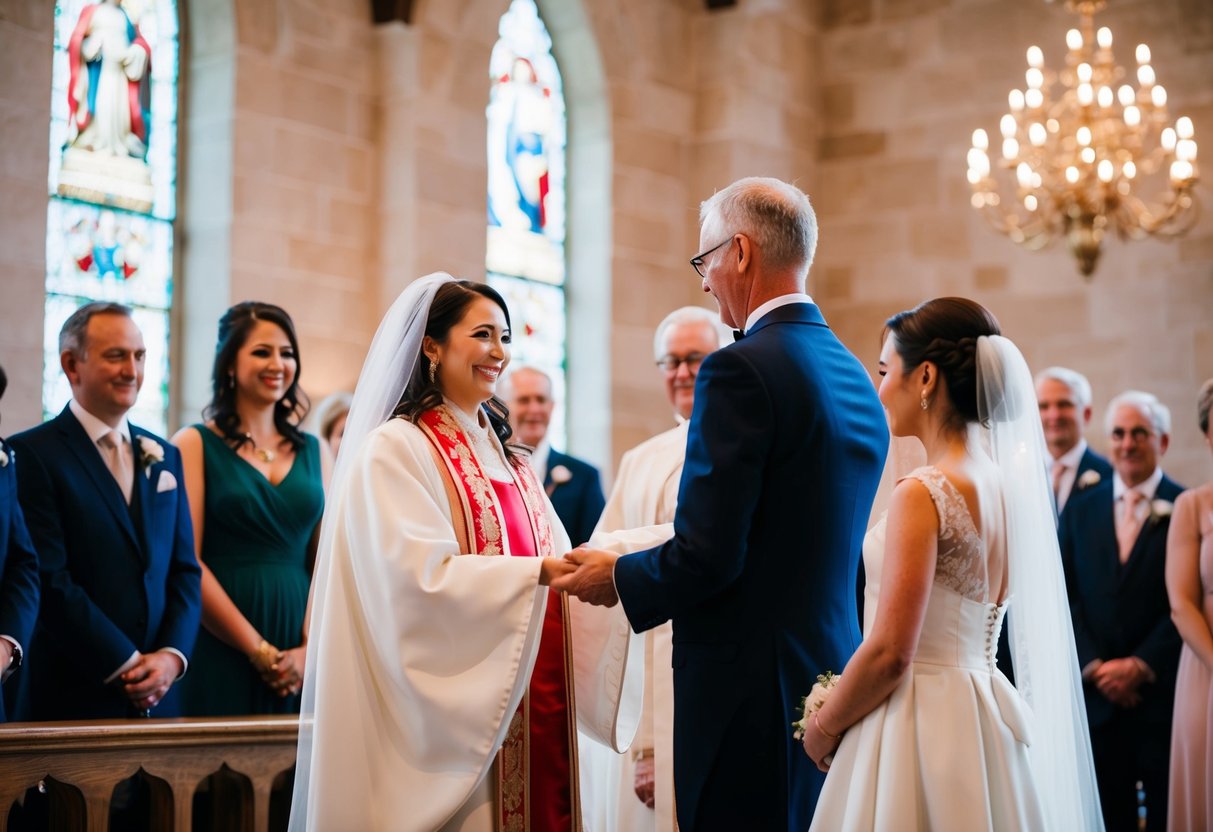
The wedding ceremony process is an important part of your big day. It involves various roles and traditions that come together to create a memorable experience.
Role of the Officiant and Wedding Party
The officiant is central to the ceremony. This person leads the service, guiding you and your partner through the vows and rituals. They help set the tone, making it both solemn and joyful.
The wedding party also plays a key role. This group typically includes the best man, bridesmaids, and sometimes additional family members. They support you and your partner throughout the ceremony. Their presence symbolizes love and friendship, making the day even more special.
Walking Down the Aisle and Ceremony Processional
Walking down the aisle is one of the most anticipated moments. You will usually start at the back of the venue, with your father or another chosen escort by your side. The music plays, and all eyes will be on you.
The ceremony processional involves the order in which everyone walks down the aisle. Typically, it starts with the bridesmaids and groomsmen, followed by the flower girl and ring bearer. Finally, you enter with your escort, leading to a powerful moment of unity as you step toward your partner.
Blessing and Approval of the Family
Family blessings are often an integral part of the ceremony. This moment signifies approval and support from your families. It’s a way to honor traditions and show respect to both sides.
During this time, your officiant may invite your family to offer blessings. This can include a formal prayer or a simple acknowledgment of love and support. Engaging family in this way enhances the significance of the vows you take together.
Roles in Presenting the Bride
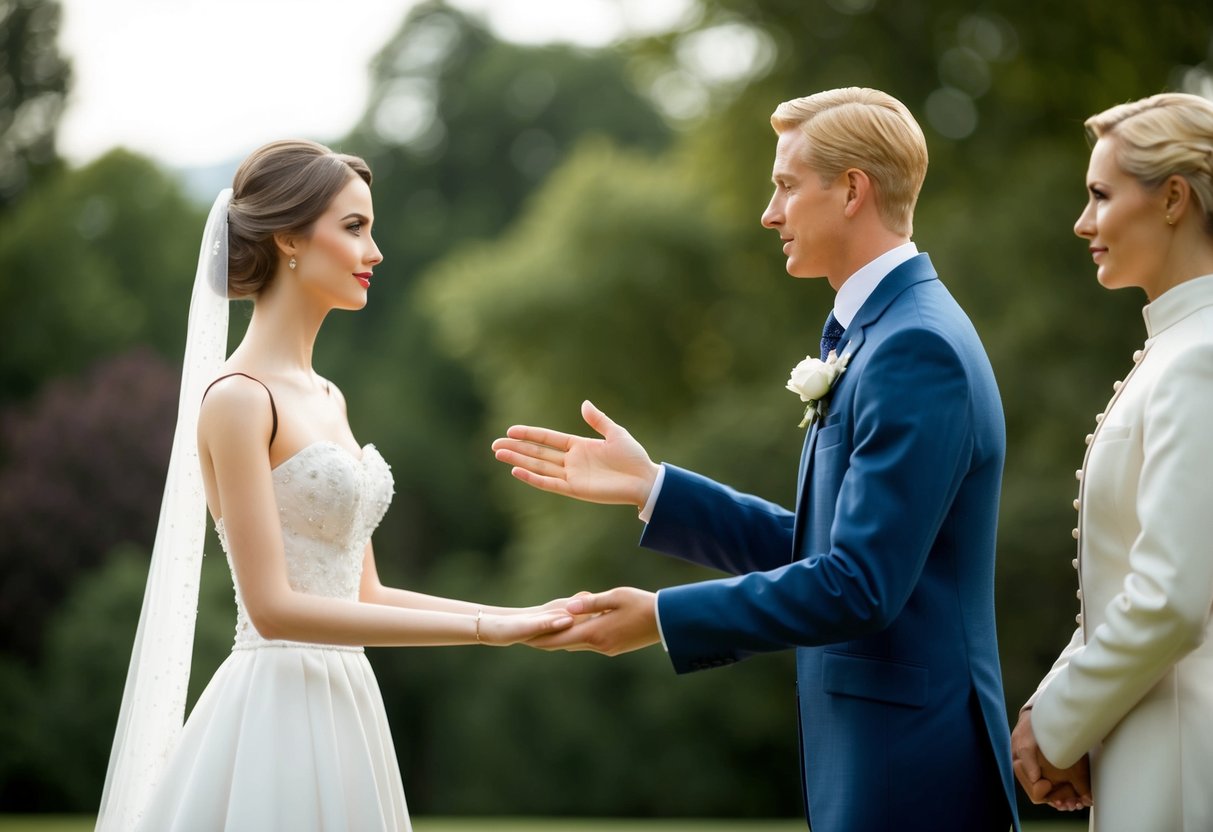
The act of presenting the bride is filled with meaning and tradition. Depending on personal choices and family dynamics, various individuals may take part in this important moment.
Bridal Escort Variations
Traditionally, the father of the bride plays a major role in escorting. He walks his daughter down the aisle, symbolically giving her away to the groom. This act shows love and support, marking the transition from one family to another.
In modern weddings, variations exist. Some brides may choose their stepfather, mother, or even a close family member, like a godparent, to perform this role. Couples may also opt to walk down the aisle together, showcasing their equal partnership. This shift emphasizes that the bride and groom are starting their journey as a team.
Voicing the Act of Giving
As the bride reaches the altar, someone often makes a statement. They usually ask the person presenting her, “Who gives this bride away?” This question is not just a formality; it acknowledges the significance of the moment.
Usually, the father or another escort responds affirmatively with, “I do.” This response signifies consent and support for the marriage. Couples today have also changed this tradition. Both parents may speak, or the minister might lead the moment, making it more inclusive and personal.