
Who Pays for First Wedding? Understanding Traditional Wedding Expenses
Weddings can bring up many questions, especially about money. If you’re wondering who typically pays for the wedding, you’re not alone. Traditionally, the bride’s family has covered most of the costs, but modern couples often choose to share expenses or pay for everything themselves.

Navigating these financial decisions can be tricky, especially with family expectations and traditions to consider.
Your wedding planning journey begins with a budget discussion that involves all parties, ensuring everyone is on the same page.
Understanding the traditional roles can help you make informed choices that fit your situation. As you prepare for your big day, knowing who pays for what can ease stress and keep your plans on track.
Understanding Wedding Expenses
Planning a wedding involves many costs that can add up quickly. It’s important to understand how to divide these expenses and create a budget that fits your needs.
Division of Costs
Traditionally, the parents of the bride cover the majority of wedding expenses. This can include the venue, catering, and major elements like the wedding dress. But today, more couples are sharing these costs with both sets of parents or even covering them completely themselves.
Common expenses include:
- Venue costs: This can be one of the largest expenses.
- Catering: Food and drinks are crucial for your guests’ experience.
- Decor: Flowers and decorations help set the atmosphere.
- Attire: Dresses and suits can be significant costs.
- Entertainment: Bands or DJs are often crucial for the reception.
Communication about financial contributions is key to avoid misunderstandings.
Budgeting for the Big Day
Creating a wedding budget is essential to help manage costs. Start by listing all the expected expenses, focusing on both mandatory and optional items.
Consider the following steps:
- Research average costs: In 2023, the average wedding cost was around $35,000. This includes everything from the venue to the attire.
- Set priorities: Decide what aspects are most important to you. Whether it’s the venue or the catering, allocate more funds accordingly.
- Utilize a wedding planner: If you can, hire a wedding planner. They can help you stick to your budget and manage negotiations.
Don’t forget to factor in smaller costs, like the marriage license, which can also add to your overall wedding expenses.
Traditional and Modern Approaches to Who Pays
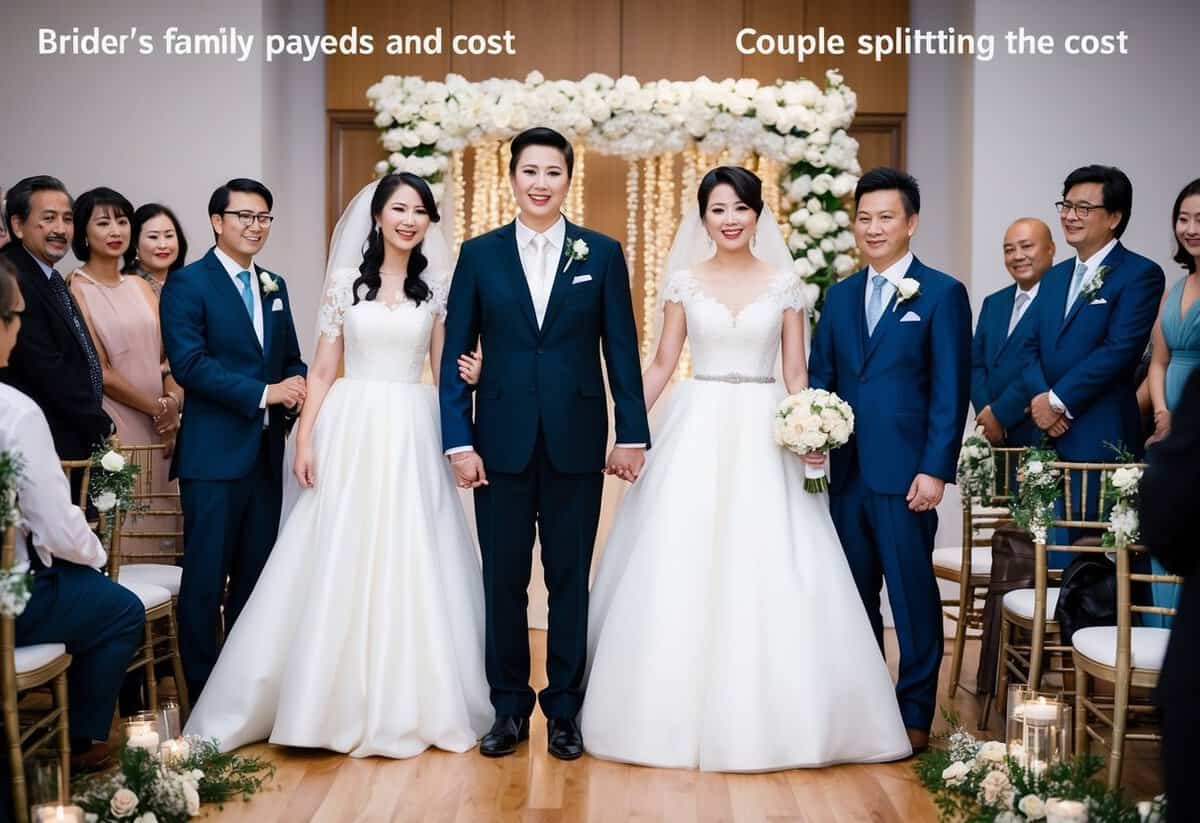
Understanding who pays for a wedding can be confusing. Traditions have shifted over the years, changing the expectations for financial contributions. Here’s a look at how historical norms differ from today’s contemporary shifts.
Historical Norms
Traditionally, the bride’s family covered most of the wedding expenses. This included the ceremony, reception, and the bride’s attire. The idea came from historical views that placed the financial burden on the bride’s family as a way to honor their daughter.
The groom’s family typically paid for the reception, which is often the most expensive aspect. According to etiquette experts like Emily Post, this arrangement helped establish connections between families. This practice was common until recently and shaped many cultural expectations around weddings.
Contemporary Shifts
In modern weddings, these traditions are changing. Many couples today prefer to finance their own celebrations. They often choose to split costs among themselves, their families, or both. This shift reflects broader societal changes, including couples marrying later and striving for equality in their partnerships.
Modern couples might also embrace options like crowdfunding to cover expenses. This empowers them to make decisions that fit their values and finances. Ultimately, who pays for what can vary, creating opportunities for collaboration and creativity in planning your special day.
Itemizing Wedding Costs

When planning your wedding, it’s important to know what costs to expect. Understanding the major expenses will help you create a budget and make informed choices. Here’s a breakdown of key categories that typically contribute to wedding expenses.
Attire and Beauty
Your attire is one of the most memorable aspects of the day. The wedding gown is often the most significant expense for the bride. Prices can vary widely, depending on style and designer. Accessories like the bridal veil, shoes, and jewelry should also be included.
Don’t forget the groom! He will need groom’s attire, which usually consists of a suit, shoes, and accessories like a tie or cufflinks.
Hair and makeup services are also vital. Many brides opt for professional styling, which can add to the cost, so be sure to include this in your budget.
Ceremony and Reception
The wedding venue is often the biggest expense. Choose a space that fits your style and budget, whether it’s a grand hall or a cozy garden.
Next, consider the reception costs, including the meal and drinks. Costs build up quickly, especially with venue rentals, catering, and service fees.
Floral arrangements are another significant part of your wedding. Budget for bouquets, centerpieces, and other decorative flowers.
Finally, allocate funds for the officiant fee, as well as photography and videography services. Capturing your special day is crucial, so choose a professional whose style matches your vision.
Additional Pre-Wedding Events
Pre-wedding events can also add to your expenses. Many couples host an engagement party and a bridal shower, which may require food, drinks, and decorations.
Consider costs for the rehearsal dinner as well. This event typically involves the wedding party and immediate family.
Lastly, bachelor and bachelorette parties often incur costs for activities and accommodations. Planning ahead can help you manage these additional expenses effectively.
Gifts, Parties, and Final Touches
Planning a wedding involves many elements, including managing gifts and organizing special events. Understanding the etiquette around these aspects helps make the process smoother and more enjoyable.
Managing Expectations
When it comes to wedding gifts, communication is key. Let your guests know about any specific gifts you may desire. You can create a honeymoon fund or a gift registry to suggest items that you really want.
It’s also important to be clear about gift expectations in your wedding invitations. Consider adding a note about your wishes. This way, your guests are informed and can plan accordingly.
Remember that not all guests can give expensive gifts. Share your gratitude for any contributions. A sincere thank you goes a long way in expressing your appreciation for their gestures.
Celebratory Pre-Wedding Events
Pre-wedding events, like engagement parties and bridal showers, are opportunities to celebrate with friends and family. These gatherings can help ease any wedding planning stress.
Engagement parties usually involve both families and close friends. They are a great way to share your excitement. Make sure to send out invitations early.
You might also want to consider hiring a bridal consultant or a wedding planner for help with these events. Their expertise can make everything run smoothly.
For bridal showers, the maid of honor or close friends usually organizes the event. This is typically a gift-giving occasion that can feature fun games and activities.
Planning these events thoughtfully ensures you enjoy every moment leading up to your big day.