
Who Pays for the Bride’s Dress? Exploring Traditions and Modern Practices
When planning a wedding, many questions arise, especially about who pays for the wedding dress. Traditionally, the bride’s family is expected to cover the costs of her dress, but modern practices have shifted. Nowadays, it’s common for brides and grooms to share expenses, making the financial aspect of wedding planning more inclusive.

Understanding the etiquette of who pays can help ease any stress. While some families still follow traditional roles, others blend responsibilities. The groom’s family often contributes to certain costs, too. This creates a partnership approach, where both families work together to celebrate your special day.
Navigating these expectations can be tricky, but knowing the options available to you can make the decision easier.
With this information, you can focus on finding the perfect dress without worrying too much about who is footing the bill.
Understanding Wedding Expenses
Wedding expenses can feel overwhelming, but breaking them down helps. Understanding how to allocate your budget and what typical costs you might encounter can clarify things.
Allocating the Wedding Budget
When planning your wedding budget, consider who will contribute.
Traditionally, the bride’s family often covers many costs, like the ceremony and reception. However, it’s common for modern couples to share expenses or split them with both families.
Make a list of all potential costs such as venue fees, catering, and attire. This will help you see where funds will go.
Set a clear figure for each category, and decide on priorities. You can use a simple table to track expenses:
| Expense Category | Estimated Cost | Actual Cost |
|---|---|---|
| Venue | $X | $Y |
| Catering | $X | $Y |
| Dress | $X | $Y |
| Decorations | $X | $Y |
Typical Cost Breakdown
It’s important to know where your money goes. Typical wedding costs can include:
- Ceremony: This often includes venue rentals, officiant fees, and decorations.
- Reception: Expect to pay for food, drinks, and venue services.
- Attire: The bride’s wedding dress and the groom’s outfit can be significant, often costing several thousand dollars.
- Extra Costs: Things like wedding rings, transportation, and photography can add up quickly.
Discuss these categories with your partner and families. This promotes transparency and helps to avoid surprises as you navigate your wedding planning.
Traditions in Wedding Cost Sharing
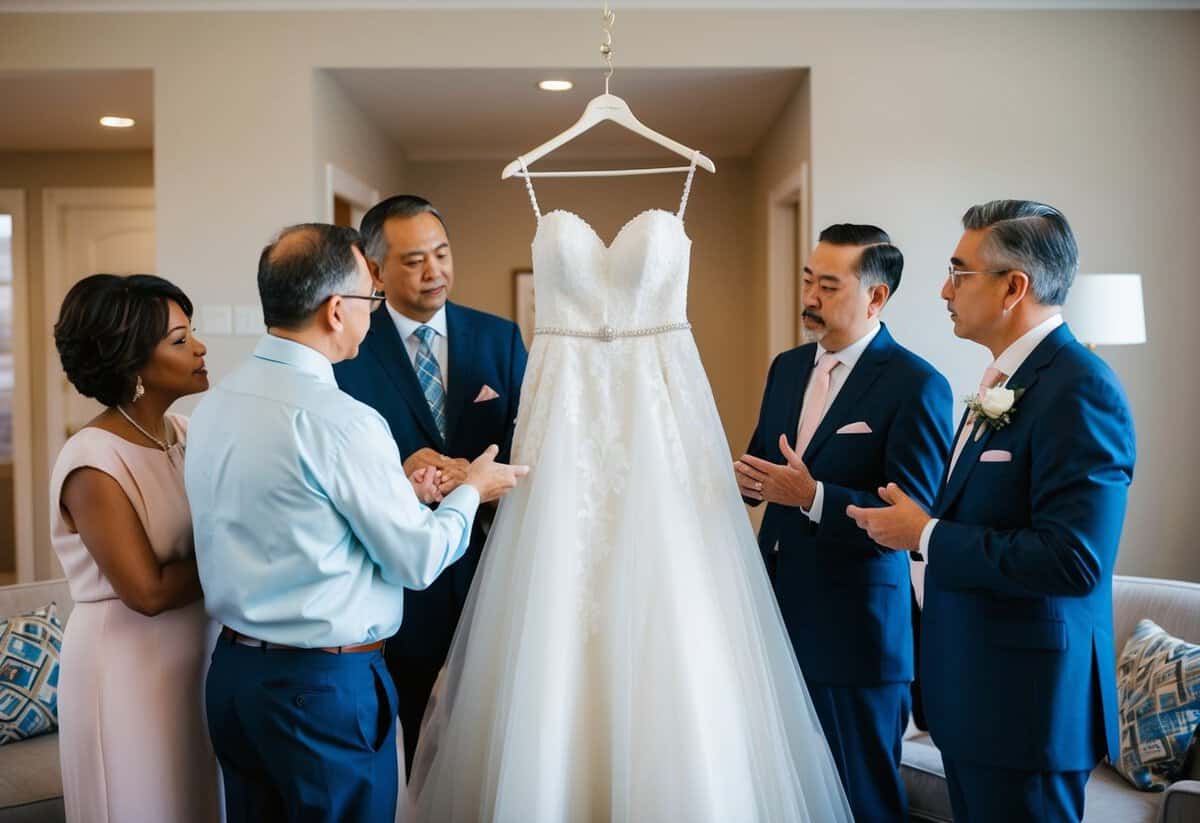
Understanding who traditionally pays for what in a wedding can help you navigate the planning process with ease. Each family’s contributions play an important role in the overall financial picture, especially regarding the bride’s dress and other wedding expenses.
Bride’s Family Contributions
Traditionally, the bride’s family takes on significant costs related to the wedding. This includes the wedding dress, which often comes with expenses for alterations and accessories.
Additionally, they typically cover costs for the ceremony, reception venue, invitations, and sometimes flowers.
The bride’s family may also take care of costs for the engagement party and the rehearsal dinner. These expenses can add up quickly, emphasizing the importance of planning ahead to ensure that everyone’s expectations align.
Groom’s Family Contributions
The groom’s family usually has a lighter financial load. Traditionally, they are responsible for the wedding rings, which often includes both the engagement ring and the wedding bands.
They may also contribute by covering the costs of the rehearsal dinner, which is typically a more casual gathering before the big day. In some cases, they help with expenses for the bachelor and bachelorette parties, ensuring that everyone can celebrate without financial stress.
Modern Adaptations
In recent years, wedding cost-sharing has evolved. Many couples today opt for a more equal division of expenses, reflecting their joint commitment.
This means that both families may share the costs of the wedding dress, receptions, and other related expenses.
You might find that some couples prefer to pay for their wedding together, allowing them to retain full control over their budget. This modern approach respects traditional values while adapting to the unique dynamics of each family.
It’s essential to communicate openly about expectations to avoid misunderstandings and ensure a smooth planning experience.
Planning for the Wedding Dress

When planning for your wedding dress, it’s important to understand who typically pays for it and how to approach the shopping experience. This is a significant part of your wedding planning, and knowing these details can help you make informed decisions.
Who Pays for the Bride’s Dress
Traditionally, the bride’s parents cover the cost of the wedding dress. This includes not just the gown but also accessories like the veil and sometimes the bride’s bouquet.
However, many couples today choose to share expenses.
You might find yourself paying for your dress, especially if you and your partner are planning together.
It’s always best to discuss finances openly with your family and partner to set a budget that works for everyone. Remember, transparency ensures less stress as your wedding day approaches.
Wedding Dress Shopping Tips
When shopping for your wedding gown, start by researching different styles. Consider what looks best on your body type.
Make a list of shops to visit, and narrow down your choices by browsing online. Bring along trusted friends or family to help you decide. They can offer valuable opinions and support.
Try on various styles, fabrics, and colors to find what you love. Don’t forget to also consider hair and makeup looks that will complement your dress.
Setting a budget early on will help you avoid overspending. Lastly, allow enough time for fittings and alterations, making sure your dress fits perfectly for your special day.