
Who Pays for the Groom’s Wedding Band? Exploring Tradition and Costs
When planning a wedding, many couples wonder about the details of who pays for each item, especially when it comes to rings. Traditionally, the bride’s family often pays for the groom’s wedding band, but modern couples are changing these norms. Understanding the customs around wedding bands can help clarify your own situation.

As you think about your wedding expenses, it’s important to consider your financial situation and how you want to approach the buying of rings. Some couples now share the costs, or each person may buy their own wedding band. Knowing who typically pays can make things easier for you and your partner as you navigate the planning process.
Whether you’re leaning toward traditional wedding ring customs or creating your own unique approach, discussing these details early on can set the stage for a smooth wedding experience. After all, the focus should be on celebrating your love and commitment.
Understanding Wedding Expenses
Managing wedding expenses can be a key part of your planning process. You’ll need to consider various aspects, like splitting costs, budgeting realistically, and accounting for family contributions or cultural customs. Each of these factors plays a role in defining how much you will spend on the groom’s wedding band and other essentials.
Splitting Wedding Costs
When planning your wedding, you may want to consider how you will split costs between you and your partner. Some couples choose a shared expenses approach, where each person contributes to the overall budget.
This can include the groom’s wedding band as part of the total expenses.
For example, you might allocate a specific amount for rings within your budget. This approach can ease the financial load and make the process feel more collaborative.
Different couples will agree on different methods, so it’s essential to have open discussions about what feels fair for both of you.
Wedding Budget Considerations
Creating a wedding budget is vital for your planning success. Experts often recommend setting aside 3-8% of your total wedding budget specifically for wedding bands.
If your total budget is $30,000, this means you should aim to spend between $900 and $2,400 on the rings.
Make a list of all expenses you expect, such as venue costs, catering, and attire. Then, designate amounts for each category. By doing this, you can prevent overspending and ensure you make informed choices regarding your rings.
Family Contributions and Cultural Norms
Family contributions can significantly influence your wedding budget. In some cultures, families may offer financial help or cover specific costs, such as the groom’s wedding band.
These traditions can vary widely. For instance, it’s common in some cultures for the bride’s family to buy the groom’s ring while the groom’s family pays for the bride’s ring.
Understanding these customs can help you navigate conversations with your family. If family contributions are involved, discuss expectations clearly. This way, all parties are on the same page, and you can avoid misunderstandings during the planning process.
Responsibility and Etiquette

When it comes to the groom’s wedding band, there are traditional expectations and modern practices to consider. Understanding who typically pays and how these responsibilities can change is helpful for you as you plan your wedding.
Who Buys the Wedding Bands
Traditionally, the groom’s family pays for his wedding band. This practice stems from older customs about wedding expenses. The bride’s family often covers the bride’s ring, while the groom’s family handles his ring. However, this can vary based on personal preferences.
Many couples now choose to share the costs as part of a reciprocal exchange. This approach represents a joint investment in your future together. Discussing this can strengthen your partnership and ensure both of you feel comfortable with the decisions made regarding the rings.
Modern Approaches to Wedding Expenses
In today’s world, wedding expenses are often more fluid. You might find that couples prefer to split purchases equally. This modern approach reflects changing attitudes towards personal finance and partnership.
Additionally, some couples choose to set a joint budget for all wedding-related expenses, including rings. This method fosters teamwork while planning and keeps financial decisions straightforward.
Remember, the most important aspect is that both of you feel good about your choices. It’s perfectly fine to weigh traditions against what feels right for your relationship.
Choosing the Right Band
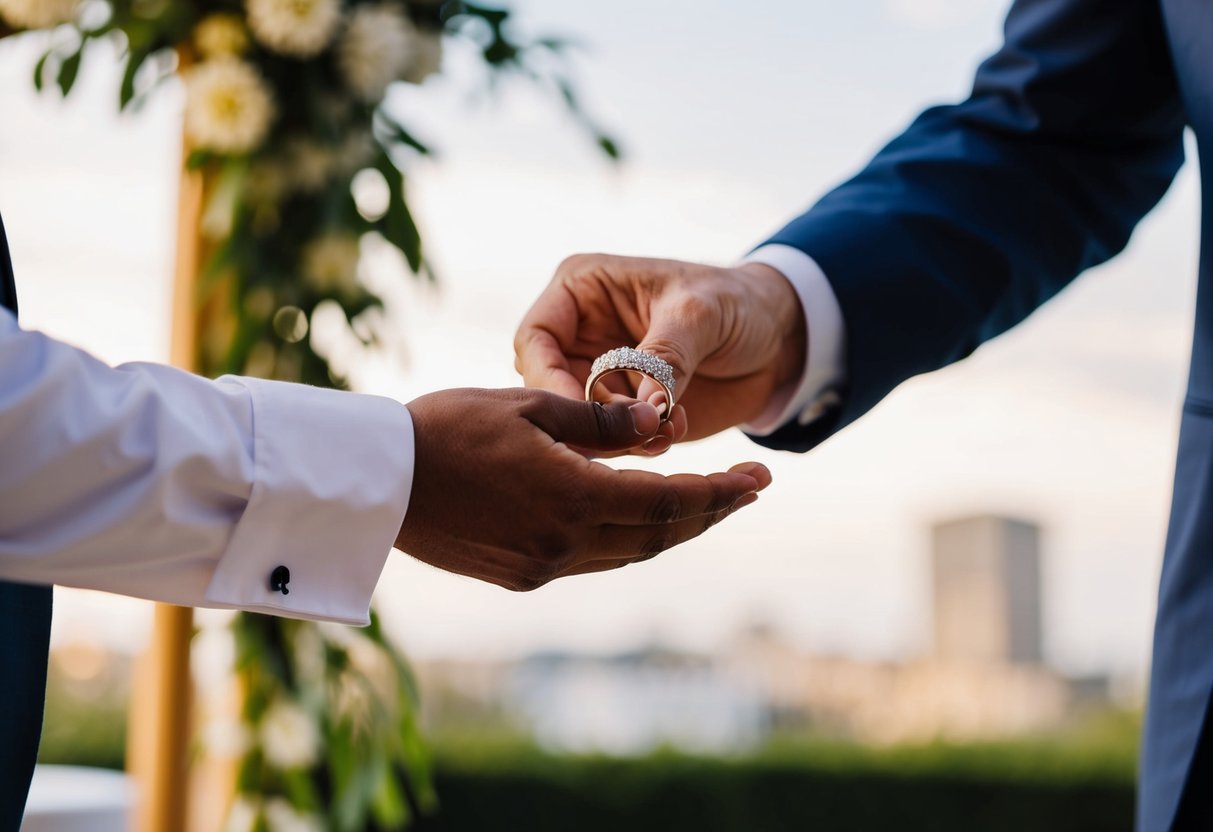
When selecting the groom’s wedding band, you want to consider both the metal type and the customization options available. These choices can reflect your personal style and fit your budget as well.
Metal Types and Options
There are several popular metal types for men’s wedding bands. Each metal has its unique properties and price range.
- Gold: Available in yellow, white, and rose variations, gold is classic and ensures lasting beauty. Keep in mind that gold can scratch easily.
- Titanium: Lightweight and highly durable, titanium is a modern choice. It’s also hypoallergenic, making it great for sensitive skin.
- Platinum: Known for its luxury and durability, platinum is more expensive but lasts longer without losing luster.
- Tungsten: This metal is incredibly tough and scratch-resistant. It offers a sleek appearance and is often more affordable.
As you consider these options, think about your lifestyle and how much wear your band will endure.
Customization and Personalization
Personalizing your wedding band adds a special touch. Many couples choose to include personalized engravings. Options can include your initials, a meaningful date, or a short phrase that resonates with both of you.
Modern wedding bands often allow for various finishes, such as matte or polished looks. You can also mix different metals for a unique design.
Consider adding symbols that hold significance, like a family crest or a favorite sports team’s logo. Customization can transform a simple band into a cherished piece of art that tells your unique story.