
Who Pays for Wedding Dinner? Understanding the Financial Responsibilities
When planning a wedding, the question of who pays for the wedding dinner can often be a source of confusion. Traditionally, the groom’s family covers the costs of the rehearsal dinner, but many couples today choose to split the wedding expenses more evenly. This shift reflects a change in how weddings are approached, especially as couples are getting married later in life and often have a better grasp of their finances.

Setting a budget is crucial in wedding planning. You might find yourself discussing contributions from both families, or even considering your own financial input.
Knowing the average cost of a wedding can help you navigate these discussions and make informed choices about how to allocate funds for the dinner and other festivities.
Ultimately, understanding the expectations can ease some of the tension and help you focus on creating a beautiful celebration. The key is open communication about wedding expenses and contributions to ensure a joyful day for everyone involved.
Deciphering Wedding Costs
Planning a wedding often means figuring out who pays for what. Understanding the division of expenses can help you create a realistic wedding budget that reflects your choices and relationships.
Division of Expenses
Traditionally, the bride’s family covers most wedding costs. This includes the ceremony, reception, and related expenses. The groom’s family usually takes care of the rehearsal dinner, which might be around $1,500, depending on guest count.
Average Costs:
- Ceremony and Reception: Around $35,000 in 2023.
- Rehearsal Dinner: Approx. $1,500.
- Post-Wedding Brunch: Between $500 and $1,000.
These figures help you understand where financial contributions typically come from. Families may also discuss sharing costs to ease the financial burden on one side.
Modern Approaches to Wedding Budgets
Today, many couples choose a more flexible approach to their wedding budgets. With the rise of modern weddings, it’s common for both families and the couple to contribute.
Key Insights:
- Couples may set joint budgets to cover all expenses.
- Open communication is vital to ensure everyone is on the same page.
This collaboration reflects changing traditions and offers couples more control over their celebrations. Identifying who pays for what helps clarify expectations and reduces stress, making the planning process smoother.
Pre-Wedding and Ceremony Details
Planning a wedding involves several important steps leading up to the big day. From initial celebrations to the ceremony itself, each stage has specific details that need attention to ensure everything runs smoothly.
Initial Celebrations and Legalities
Before the wedding, many couples hold engagement parties. These gatherings celebrate your upcoming marriage with family and friends. It’s a great time to share your excitement and get everyone involved.
You will also need to obtain a marriage license in your area. This legal document is essential for your wedding to be recognized. Each state has its own rules, so check what’s needed and the fees involved.
Don’t forget about the invitations! You’ll want to send out wedding invitations well in advance. They should include essential details like your wedding date, venue, and RSVP information. Choosing a theme can help set the tone for your celebration.
Ceremony and Reception Essentials
Your wedding ceremony is a crucial part of your day. You’ll need to choose an officiant who aligns with your values and beliefs. Their fee can vary, so consider this expense as you plan.
The venue for both the ceremony and reception is another key decision. Think about guest capacity and the vibe you want to create. Popular choices include gardens, churches, or banquet halls.
Don’t forget about your attire! The bride’s dress and groom’s wedding band should be chosen early. Both can be significant expenses, so budgeting for these is wise.
Lastly, set aside funds for reception expenses. This includes catering services, decorations, and any entertainment you wish to provide. Each of these details combines to create a memorable day for you and your guests.
The Celebration Itself
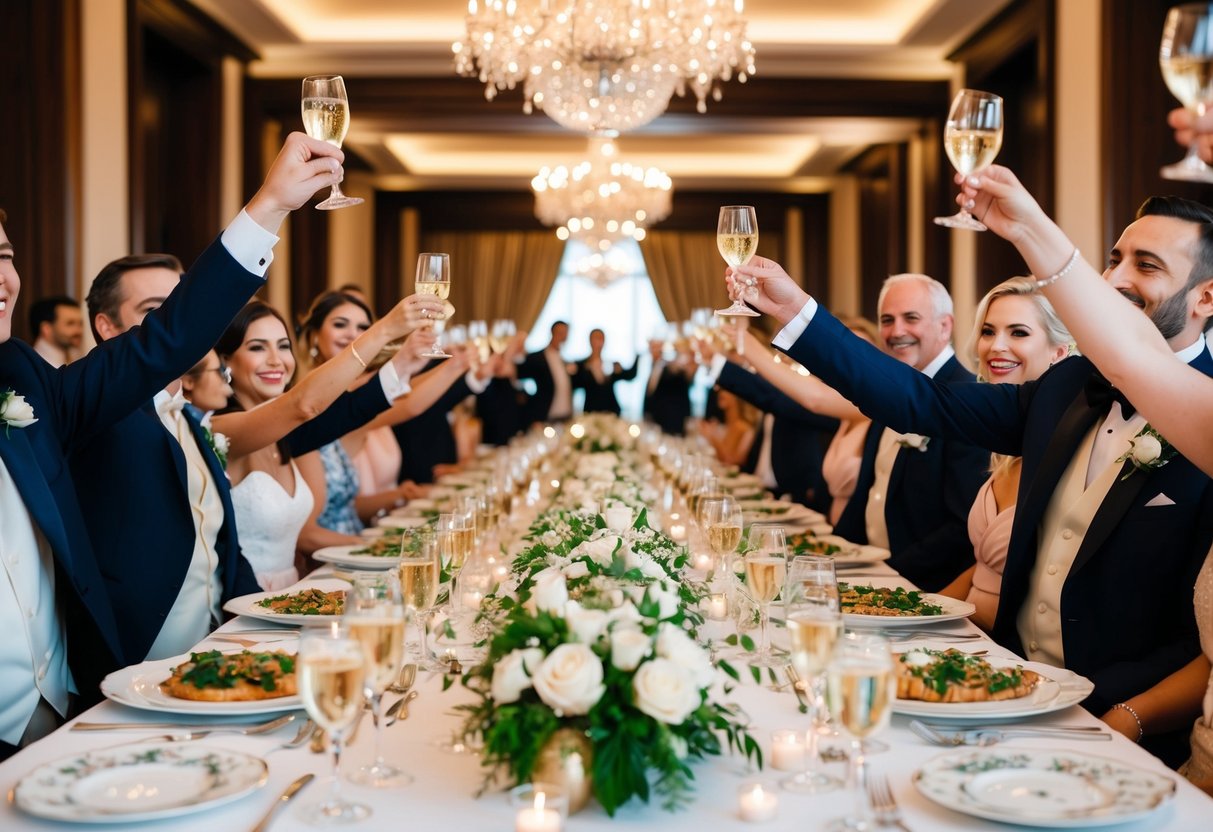
Your wedding celebration is more than just the vows; it’s a time to gather with your loved ones and create unforgettable memories. Two key parts of this celebration are dining and entertainment, followed by decor and ambiance.
Dining and Entertainment
Dining is a crucial part of your wedding reception. You can choose between a plated meal, buffet, or even food stations, depending on your style and budget.
Consider including a variety of options to please your guests. Popular choices often include:
- Appetizers: Finger foods like bruschetta or mini sliders.
- Main Courses: Chicken, beef, and vegetarian options.
- Desserts: A beautiful wedding cake alongside other sweet treats.
Don’t forget about alcohol. Offering a selection of wines, beers, and signature cocktails adds to the festive atmosphere. You might even want to incorporate drinks into your bridal shower, bachelor, or bachelorette party to enhance the celebration!
Entertainment is just as important. Many couples choose live bands or DJs for reception music that keeps your guests dancing. You can also hire performers like dancers or even a fun photo booth to entertain everyone.
Decor and Ambiance
The decor sets the tone for your wedding celebration. Floral arrangements are a popular choice, adding beauty and a personal touch. Consider your wedding colors when selecting flowers; they can brighten your venue and match your theme.
Centerpieces, which can vary from elegant vases to whimsical arrangements, bring your reception tables to life.
Lighting plays a huge role in creating the right ambiance. Soft, warm lights can make the setting feel cozy and inviting. Think about string lights, candles, or uplighting to enhance your space.
Don’t overlook the cake display. A stunning wedding cake can also serve as a centerpiece. Enhance its appeal with fresh flowers or a unique stand.
All these elements combined can turn your wedding celebration into a memorable experience for you and your guests.
Post-Wedding Responsibilities
After the wedding, there are a few important tasks to handle. This includes finalizing details from the celebration and kickstarting your honeymoon plans. Here’s a closer look at what you should consider.
Finalizing the Celebration
You’ll want to settle all outstanding wedding costs, ensuring everything is paid. This includes final payments for catering, photography, and any rentals.
Don’t forget to handle your vendors, like hair and makeup artists, who may have final charges. Review contracts and confirm that all services have been delivered before making those last payments.
Also, take time to enjoy your wedding gifts. A quick thank-you note for each gift is thoughtful and will show your appreciation. This is a great way to cherish the love and support you’ve received.
Lastly, if you’re looking to cover some wedding expenses, consider a honeymoon fund.
Kickstarting the Honeymoon
Planning your honeymoon can be as exciting as the wedding itself.
First, review any prepaid expenses for the trip. Then, evaluate how much money you’ve gathered and how it can contribute to your getaway.
Start booking any last-minute details like flights, accommodations, and activities. Also, research fun experiences tailored to your interests.
Don’t overlook packing! Ensure you have all necessary clothing, including attire for special dinners out.
If you’re using vendor photos, check in with your photographer and videographer about timelines for pictures and film editing. Getting these details squared away adds to the excitement of your new adventure.