
Who Puts the Wedding Ring on First? A Quick Guide to Wedding Traditions
When it comes to the wedding ring exchange, a common question many couples have is who puts the wedding ring on first. Traditionally, the groom places the wedding band on the bride’s finger first, signifying his commitment and love. This moment in the wedding ceremony is filled with emotion and symbolizes the beginning of your life together.
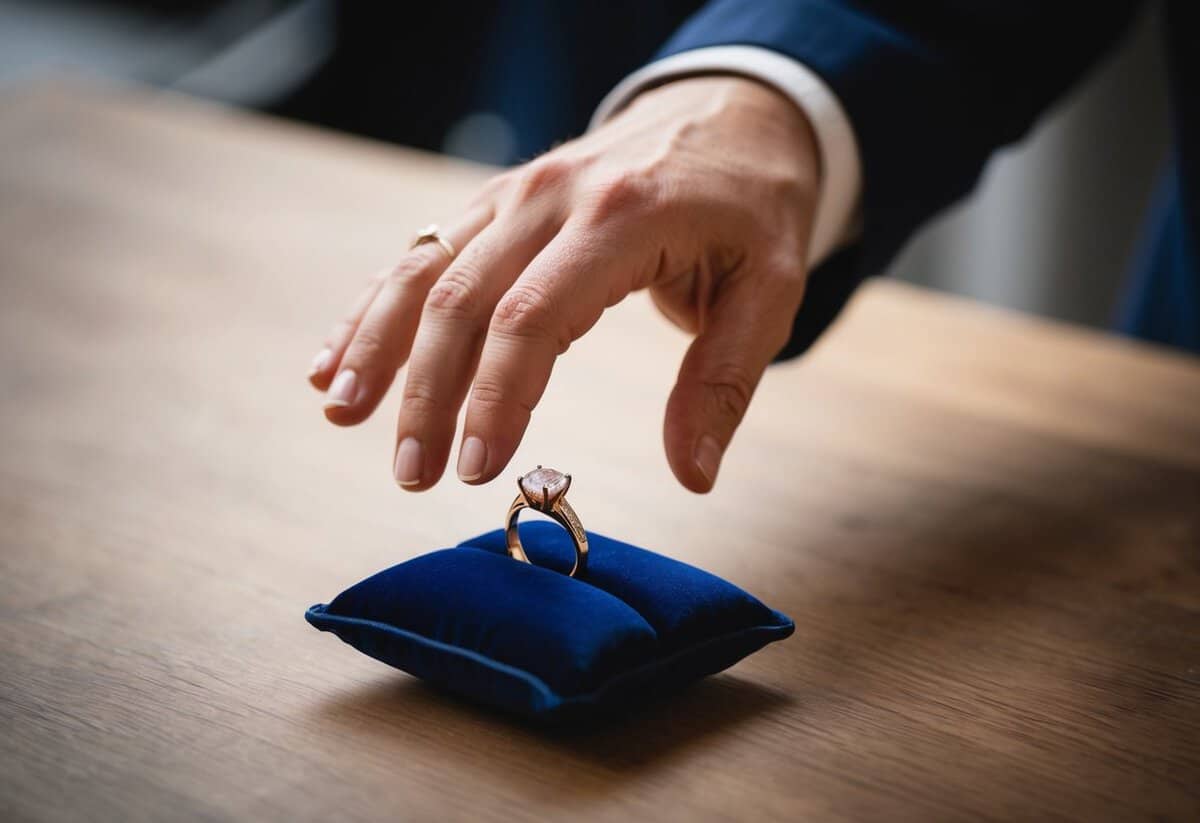
Though tradition often guides this process, it’s important to remember that every couple is unique. You can choose the order that feels most meaningful to you. Whether you want to stick to tradition or create your own custom, the ring exchange represents a significant promise of love and dedication.
Understanding this important custom can enhance the joy of your wedding day. As you plan your ceremony, think about what the ring exchange means to you and how you want to express that commitment to each other.
Cultural and Historical Significance
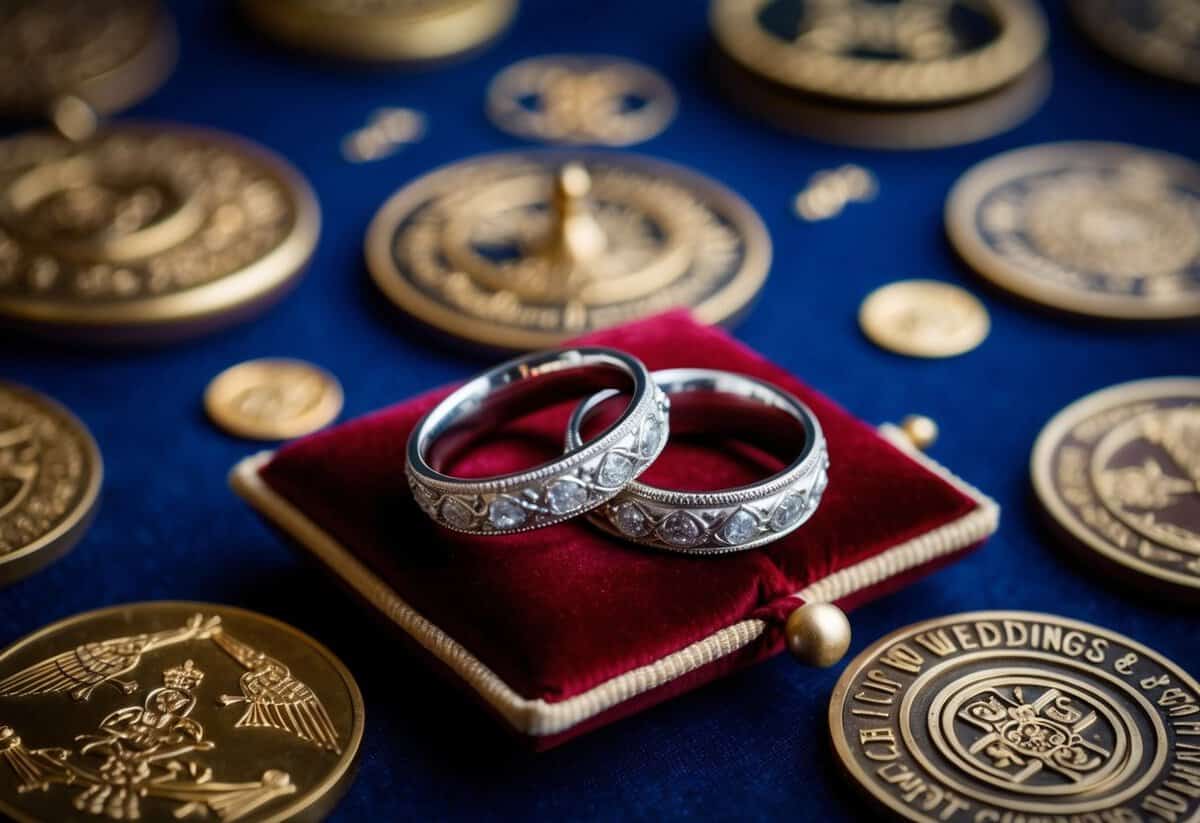
Understanding the cultural and historical significance of who puts the wedding ring on first can enhance the meaning of this special moment. Different cultures have their unique practices, and these traditions often carry deep symbolic gestures linked to commitment and love.
Tradition and Symbolism
Wedding traditions vary greatly around the world. In many Western cultures, the groom typically places the ring on the bride’s finger first. This act represents the beginning of their shared life and commitment to one another. It serves as a symbolic gesture of love and partnership.
In other cultures, the roles may reverse, or the exchange timing might differ, reflecting local customs. For instance, in some Eastern traditions, both partners may place rings on each other’s fingers simultaneously. Each variation highlights a significant moment in the ceremony, showcasing the unique values of that particular culture.
Historical Roots
The historical roots of ring exchange date back to ancient times. The ring is often viewed as a circle, symbolizing eternity and unbroken commitment. Early civilizations, like the Egyptians, used rings made of reeds or leather.
With time, precious metals became popular, marking both wealth and dedication. These historical practices laid the groundwork for modern customs we see today. The act of placing a ring on a finger has evolved, but it continues to represent steadfastness and love across cultures and time periods.
The Wedding Ceremony Order
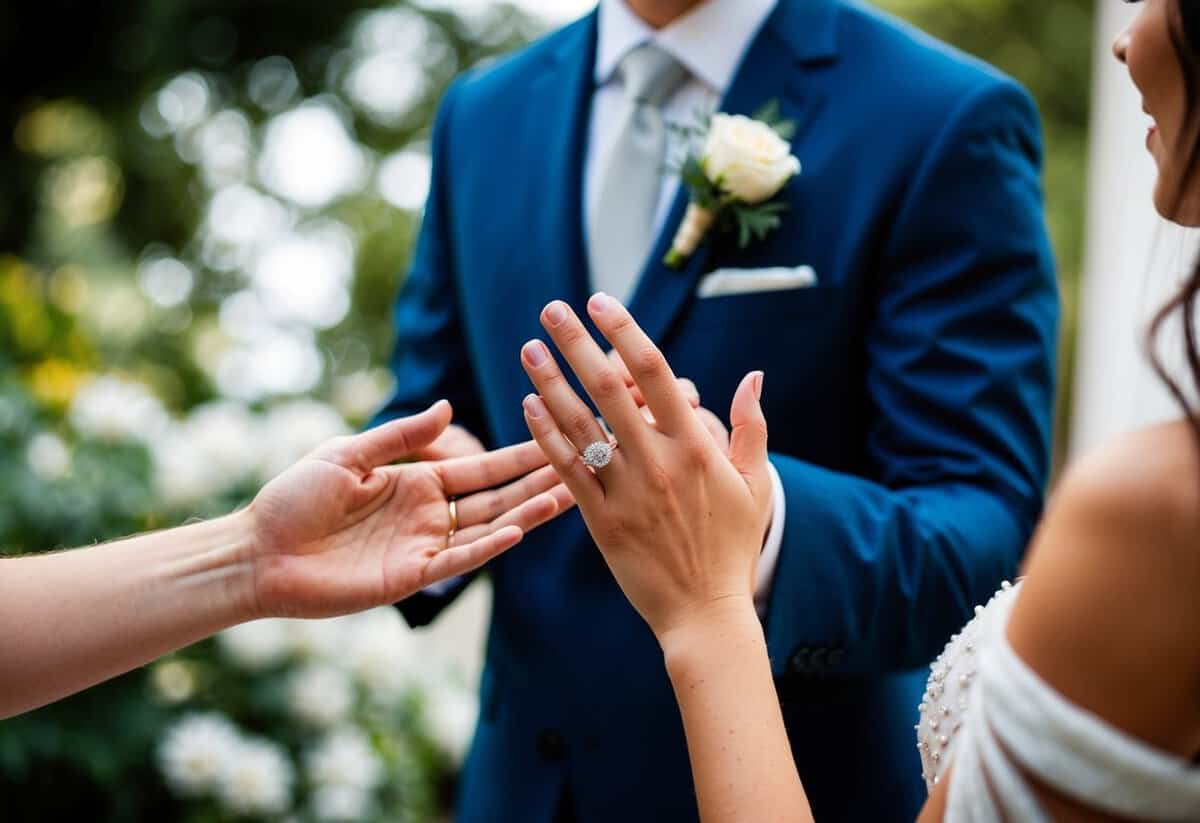
The wedding ceremony follows a traditional order that helps guide the couple and their guests through the celebration. Understanding this order can enhance your ceremony experience and allow you to fully appreciate each moment.
Processional to Recessional
The ceremony begins with the processional, where the wedding party walks down the aisle. This usually includes the groom, groomsmen, bridesmaids, and finally, the bride. Each participant plays a special role in setting the tone for the day.
After you exchange vows and rings, the ceremony shifts to the recessional. This is the joyful exit where you and your partner walk back down the aisle together, often followed by your wedding party. Typically, upbeat music plays during this time to celebrate your new union.
Role of the Officiant
The officiant plays a critical role in your ceremony. This person leads the service, helping you and your guests feel comfortable. They explain the significance of the vows and any rituals you choose to include, such as readings or symbolic acts.
Additionally, your officiant is responsible for ensuring that the ceremony follows your desired structure and any religious traditions you want to incorporate. It’s important to communicate your wishes to them ahead of time. A good officiant will make the experience personal and memorable for you and your guests.
Exchanging of the Rings
The exchange of wedding rings is a significant part of the ceremony. It symbolizes love and commitment between you and your partner. Understanding the details of this ritual can help make the moment even more special.
Ritual of Ring Exchange
During the wedding ceremony, the moment of exchanging rings is full of emotion. Typically, it happens after the vows are exchanged. You and your partner will take turns placing the rings on each other’s fingers.
Often, a maid of honor and best man play important roles. They may hold the rings until it’s time for the exchange. Sometimes, a special ring bearer, such as a child, carries the rings down the aisle, adding a sweet touch to the ceremony.
Who Puts the Ring On First
Traditionally, many couples follow a specific order during the ring exchange. It is common for the groom to place the ring on the bride’s finger first. This act symbolizes his commitment and love.
However, some couples choose to exchange rings simultaneously for a more balanced approach. There are no strict rules, so you can opt for what feels right for both of you. Other creative options include having a loved one present the rings.
Engagement Ring and Wedding Band
When it comes to the rings, there is often some confusion about engagement rings and wedding bands. The engagement ring is typically given before the wedding. It represents a promise to marry.
During the ceremony, you exchange wedding bands. These rings symbolize your vows and the lifelong commitment you’re making. It’s common for the wedding band to be placed on the finger below the engagement ring. This way, it sits closest to your heart.
Choosing the rings is an important part of the planning process. You might want to consider styles that complement each other.
Personalizing Your Ceremony
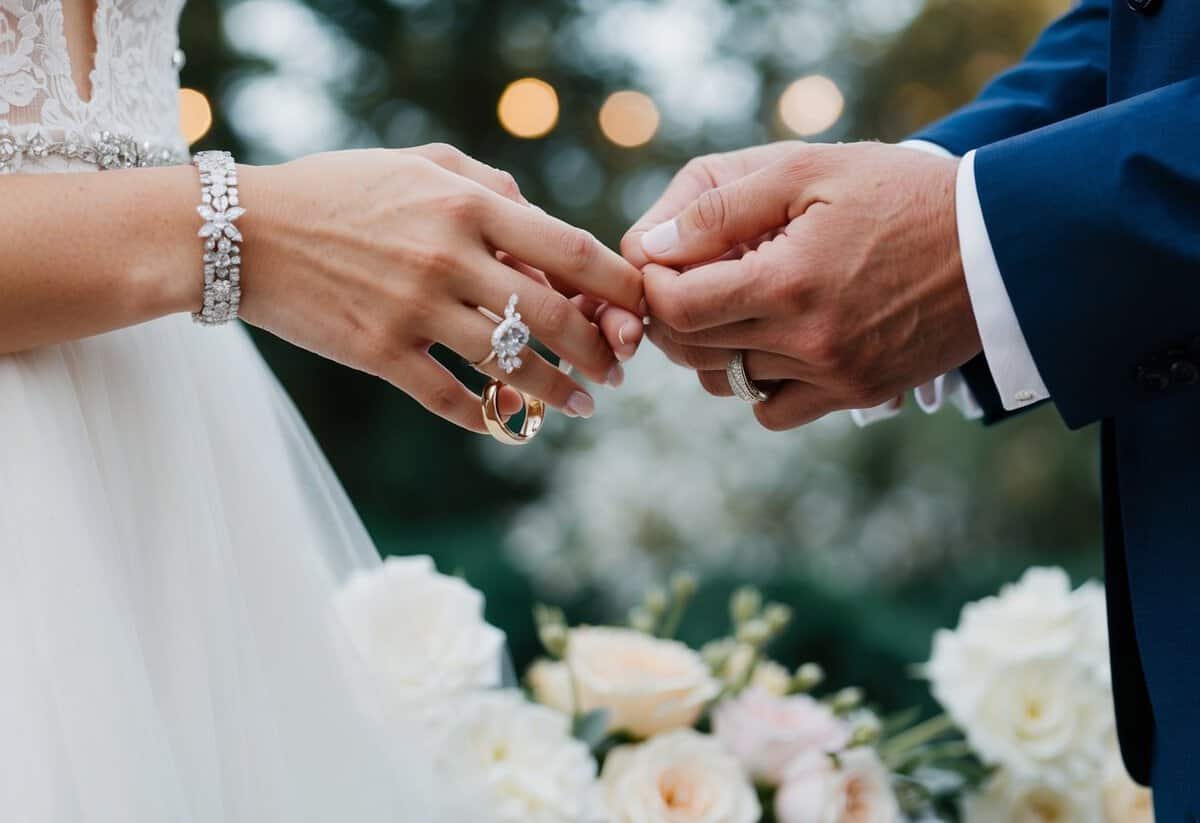
Making your wedding ceremony truly yours involves incorporating your personal tastes and styles. You can reflect your unique love story through various elements of the ceremony, from the order of ring exchange to the rings themselves.
Couple’s Preferences and Styles
Your wedding should represent who you are as a couple. This includes deciding who puts the wedding ring on first. While traditions often suggest the groom goes first, you may choose a different order that feels right.
Consider what resonates with both of you. Do you want something classic, or are you looking for a more modern approach? By discussing your preferences, you can create elements in the ceremony that genuinely represent your relationship and values.
Incorporating Personal Touches
Adding personal touches can make your wedding ceremony more meaningful. Think about including elements that celebrate your unique story. This could be a special reading, a song that is significant to you, or even a shared ritual.
You might also choose to write your own vows or include family traditions. Incorporating such details allows your guests to witness your bond and share in your commitment. It transforms the ceremony into a reflection of your love and dreams for the future.
Choosing the Right Jewelry Designer
The rings you choose for your ceremony hold great significance. Selecting a jewelry designer who understands your vision can enhance this experience.
Look for someone who creates pieces that match your personal style, whether it’s simple, ornate, or even custom-designed.
Discuss your ideas with the designer. Share your love story to inspire a unique design.
Personalizing your rings will not only make them special but also ensure they symbolize your commitment in a way that is meaningful to both of you.