
Who Sits the Mother of the Bride? A Guide to Wedding Seating Arrangements
When planning a wedding, one important detail is figuring out the seating arrangement, especially for the mother of the bride.
Traditionally, the mother of the bride sits in a central aisle seat in the front row, typically on the left side. This spot not only allows her to have a clear view of the ceremony but also highlights her important role in this special day.
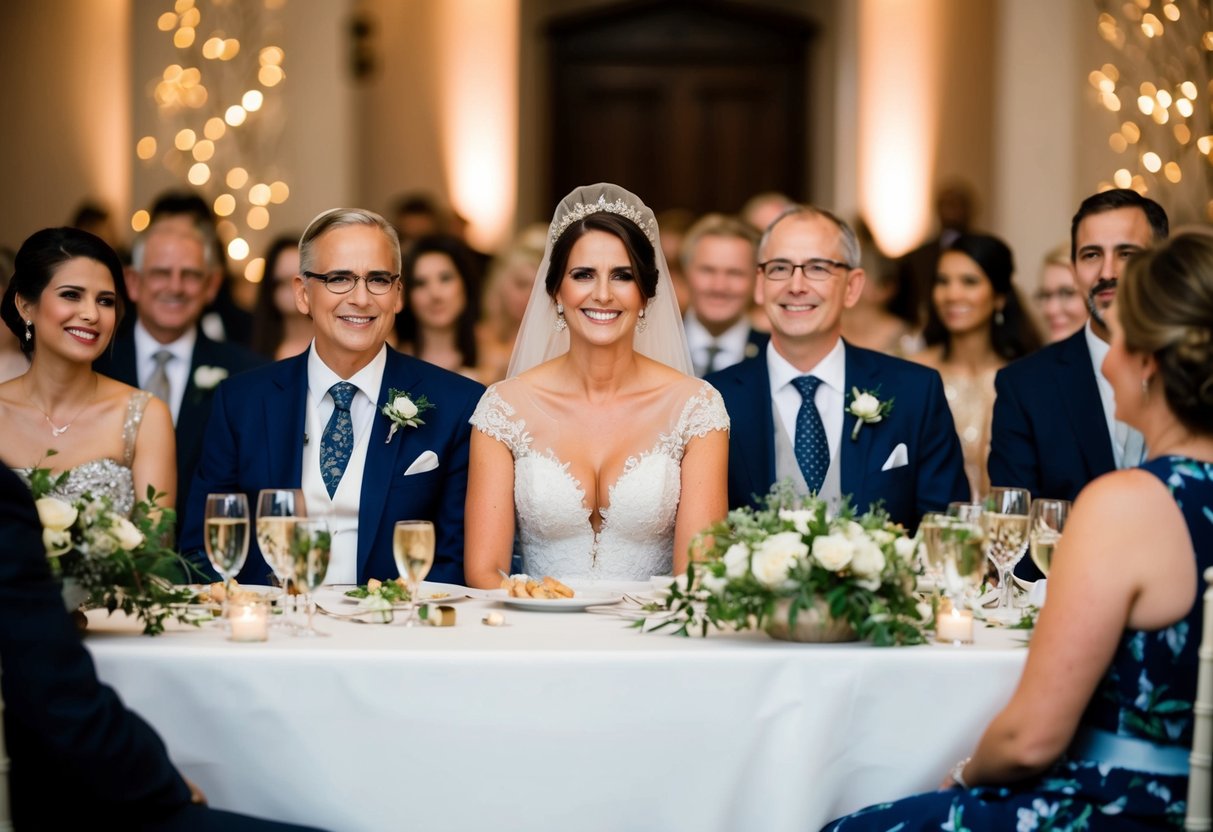
As you plan, consider who will walk your mother to her seat. Often, another family member, like a son or brother, will assist her. This moment can be very meaningful, so think about what feels right for your family and the overall vibe of your wedding.
Getting the seating arrangement right can set the tone for the entire event. It’s a small touch that shows thoughtfulness and respect for your family, especially for your mother. With the right planning, you can make this moment memorable for everyone involved.
The Role of the Mother of the Bride
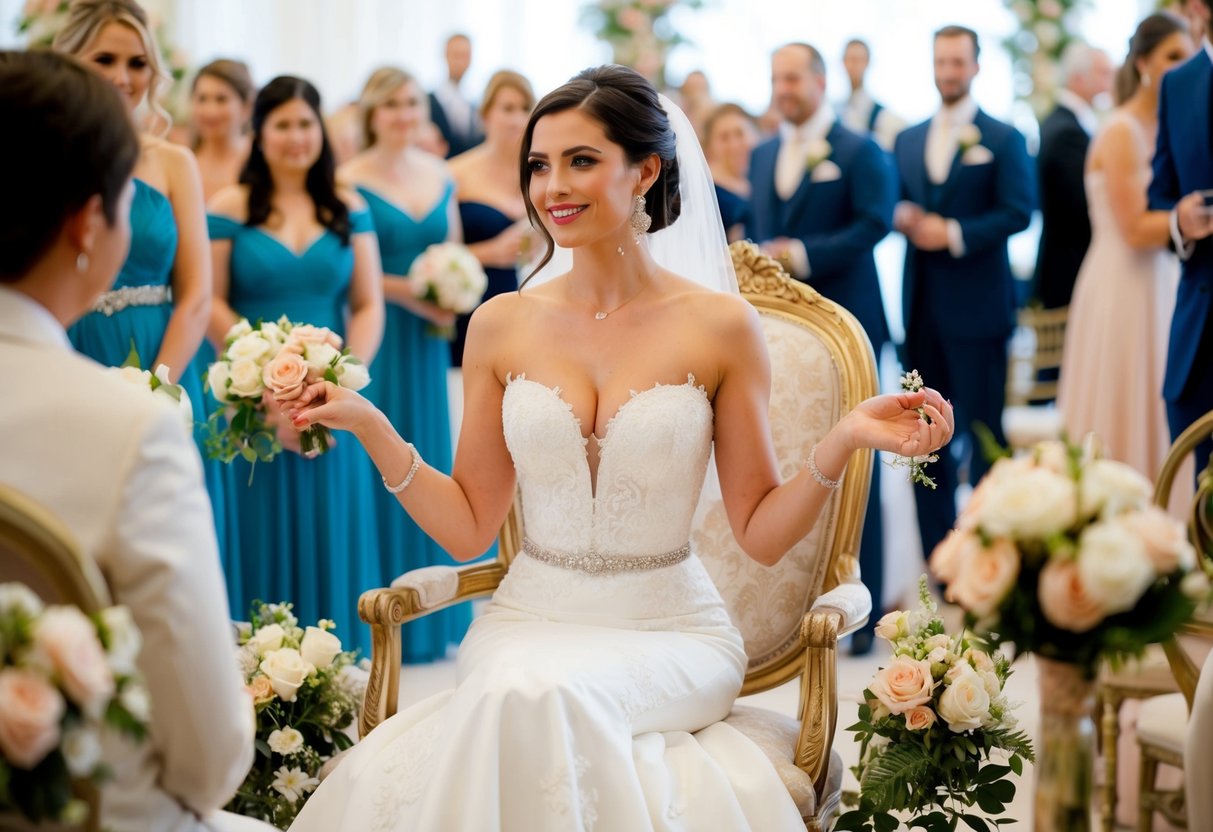
The mother of the bride plays a vital role in the wedding. This involves being present during key moments of the ceremony and supporting the bride throughout the planning process. Her input is invaluable, helping to create a memorable experience.
Significance in the Ceremony
During the wedding ceremony, the mother of the bride has a special place. She usually sits in a prominent position, often beside the father of the bride or directly in front of the bridal party. This signifies her importance and support for the couple.
As the ceremony unfolds, she may also play a role in the procession. Traditionally, she walks down the aisle just before the bride. This moment highlights her support and connection to her daughter. Her presence adds to the emotional weight of the day.
Responsibilities Before and During the Wedding
In the lead-up to the wedding, your role involves various responsibilities. You might assist with planning, attending dress fittings, and sharing ideas for the big day. Staying involved helps you bond with your daughter and ease her stress.
On the wedding day, your duties may include managing family dynamics, greeting guests, and supporting the bridal party. Being an emergency fixer is also part of your role. You help solve problems that arise, allowing the bride to focus on enjoying her day. Your calm presence makes a big difference for everyone involved.
Planning the Seating Arrangement
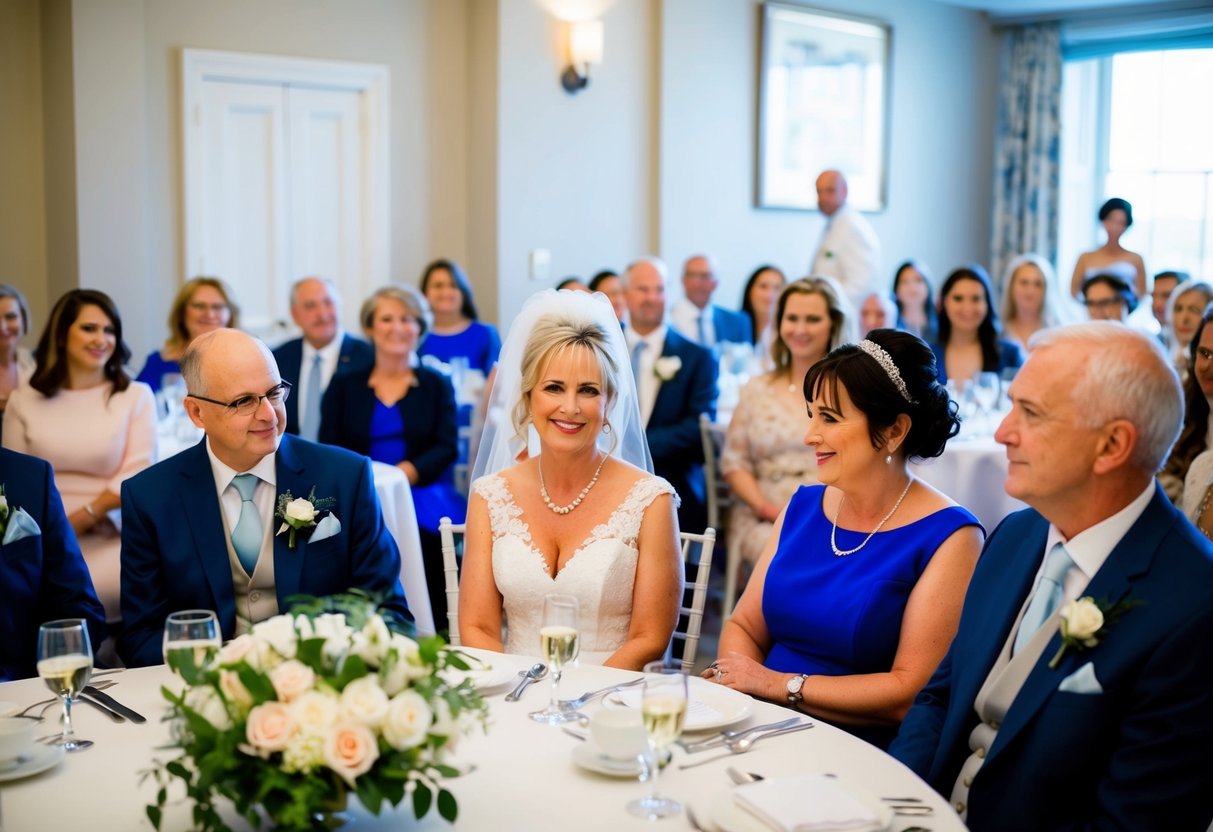
Creating a seating arrangement can be a thoughtful process. It ensures that everyone, especially important family members like the mother of the bride, feels comfortable and included. Here are some important aspects to consider while planning.
Understanding the Seating Chart
Start by drafting a seating chart for both the ceremony and the reception. Begin with immediate family members, placing the mother of the bride in a prominent spot.
Traditionally, she sits on the left side during the ceremony, with the groom’s parents on the right.
Consider using a table that outlines or visualizes where each person will sit. You can use software or paper for this. Including VIP guests at tables close to the couple helps them feel special. Make sure to keep a balanced distribution so no one feels isolated.
Seating Divorced Parents Tactfully
If parents are divorced, tact is key. It’s important to manage their seating thoughtfully to avoid discomfort. You might seat the mother of the bride with a supportive friend or family member nearby.
For the groom’s side, you can do something similar. Placing each parent at different tables can help ease potential tension.
Communication is essential, so discuss seating preferences with both parents ahead of time. This way, both feel respected in your plans without having to sit in direct view of one another.
Organizing Family Tables
When it comes to family tables, think carefully about how to group guests together. Mixing families can promote mingling and ease any family tensions.
You might also want to create tables specifically for close relatives.
Label each table with names or numbers to simplify seating. Adding personal touches, like unique centerpieces for family tables, can make them feel special. Find out which relatives enjoy each other’s company, and seat them accordingly. A comfortable setting can lead to enjoyable conversations and great memories!
Ceremony and Reception Seating Etiquette
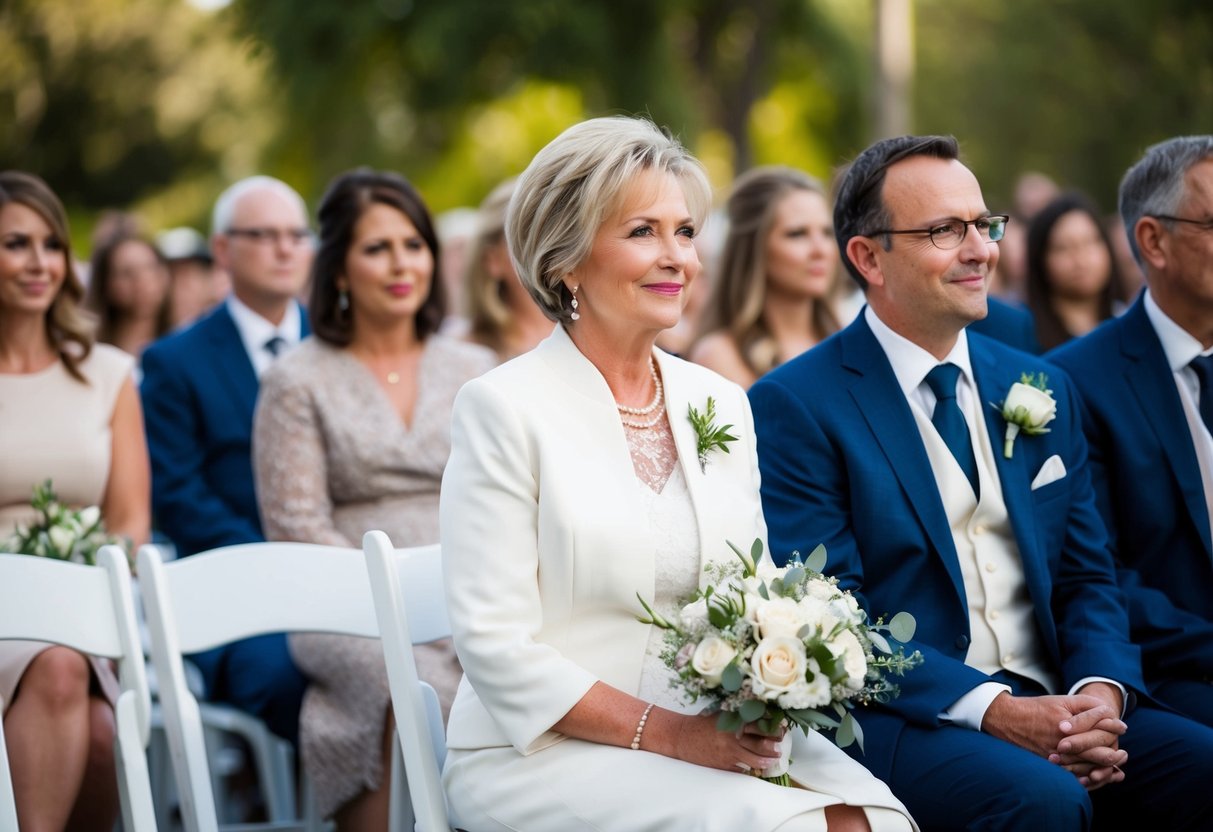
Seating arrangements at weddings are essential for creating the right atmosphere and honoring important family members. Understanding traditional practices can help you plan a smooth and enjoyable event.
Traditional Wedding Seating
In many traditional weddings, seating follows a specific order. Usually, the mother of the bride sits in the front row on the left side of the aisle. The groom’s mother sits on the right side. This arrangement highlights the importance of both families.
If the ceremony has a processional, the parents walk in before the bridal party. It’s nice to ensure that both sets of parents are comfortable, so consider their preferences. Also, if either parent is widowed, it’s thoughtful to arrange for a close family member or friend to sit with them.
Seating at Religious Ceremonies
Seating can vary significantly based on the type of ceremony.
In Christian weddings, the congregation usually sits in pews, with the bride’s parents on one side and the groom’s parents on the other.
For Jewish weddings, the family often sits under the chuppah, a canopy symbolizing their new home together.
In Hindu weddings, seating for guests may depend on traditional practices within the community. In many cases, family and close friends are seated near the couple, highlighting the importance of community support.
Arranging the Head and Bridal Tables
At the reception, the seating arrangement for the head table is crucial. The bride and groom often sit at the center. Nearby, you can place their parents, typically with the bride’s family on one side and the groom’s on the other.
If you prefer a more intimate setting, consider a sweetheart table for just the two of you.
For larger gatherings, a bridal table can include close friends and family.
Think about using elegant decorations and clear signage to direct guests to their tables. This ensures they feel welcomed and comfortable.