
Who Walks Down the Aisle? A Guide to Traditional Wedding Roles
Walking down the aisle is one of the most memorable moments of a wedding. Many people wonder who typically takes on this special role. Traditionally, the bride walks down the aisle with her father or another honored escort, such as a stepfather or close family member.

This moment symbolizes support and love as you transition into a new chapter of your life. You may also consider including other figures, like both your father and stepfather, to represent your unique family dynamics. Knowing your options can help you create a meaningful experience on your big day.
Understanding the Wedding Processional
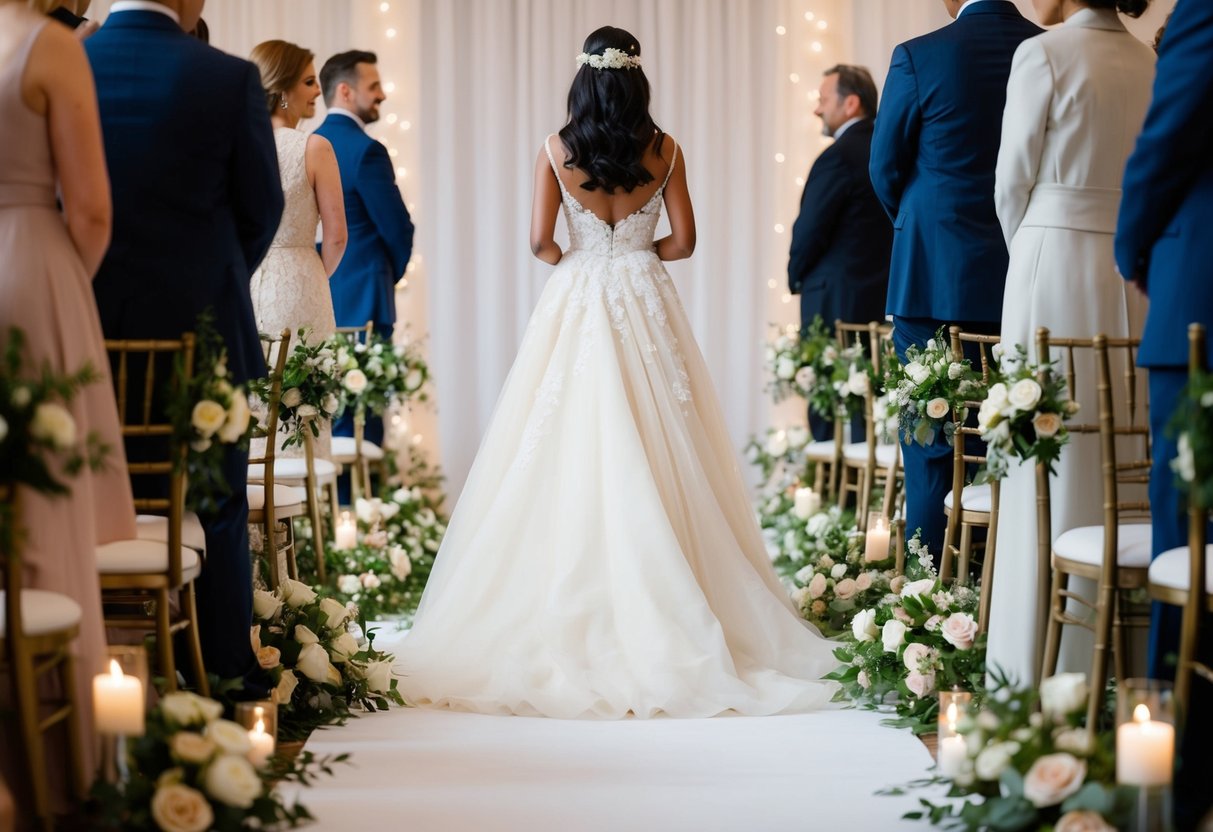
The wedding processional is a key part of the wedding ceremony. It sets the tone and marks the beginning of the event. Knowing the order of entrance, the roles involved, and cultural variations can help make your ceremony go smoothly.
The Order of Entrance
The order of entrance in a wedding procession typically starts with the officiant, followed by family members, and then the bridal party. The groom usually stands at the front, awaiting the arrival of the bride.
A common order might look like this:
- Officiant
- Groom
- Best Man
- Groomsmen
- Bridesmaids
- Maid/Matron of Honor
- Flower Girl and/or Ring Bearer
- Bride and her escort (often her father or a significant family member)
Following this order can create a beautiful flow, showcasing each person’s special role in the ceremony.
Roles and Responsibilities
Each participant in the wedding processional plays a unique role. The officiant leads the ceremony, while the groom stands ready to unite with his bride. Bridesmaids and groomsmen support the couple, often assisting during planning and the ceremony.
The maid or matron of honor has a significant role, standing close to the bride throughout the event. Meanwhile, children, like flower girls or ring bearers, add a touch of charm and innocence. Each person’s presence ensures that the wedding ceremony is meaningful and memorable.
Cultural Variations
Each culture has its own traditions regarding the wedding processional. In some cultures, the bride’s family may walk her down the aisle, symbolizing the joining of two families. In others, the groom and bride might enter together, showing equality in their union.
For instance, in Jewish traditions, both sets of parents often walk down the aisle first. In certain Asian cultures, the entrance may be more elaborate, including music and specific rituals. It’s important to consider what fits best with your values and the message you want to convey during your wedding ceremony.
Key Participants in the Processional
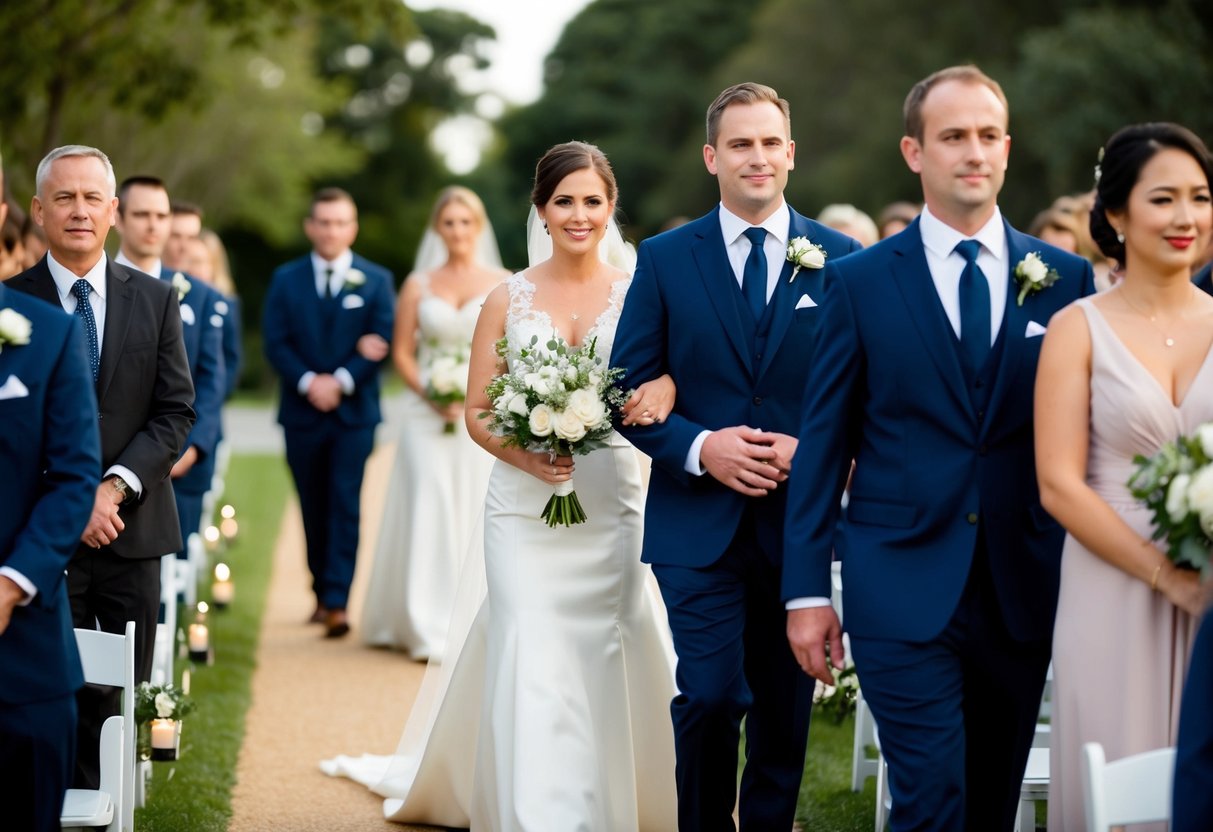
In a wedding processional, various important figures set the stage for the bride’s grand entrance. Understanding who walks and their roles can help you plan a meaningful ceremony.
Immediate Family Members
Immediate family members play a significant role in the processional. The ceremony typically begins with the parents. The mother of the bride often walks down the aisle first, followed by the mother of the groom.
Then, both sets of parents may take their seats, marking their support of the couple. Following this, the bride’s father usually has the honor of escorting her down the aisle, unless she chooses to walk alone. This moment is emotional and highlights the importance of family during the ceremony.
Bridal Party Dynamics
Next comes the bridal party, which includes the maid of honor, bridesmaids, best man, and groomsmen. The bridesmaids walk in pairs or one by one, starting with the one farthest from the bride.
The maid of honor, often the bride’s sister or closest friend, walks last among the bridesmaids. Groomsmen follow the same pattern, with the best man walking last. This dynamic creates a flow and builds excitement for the bride’s entrance, showcasing the support and love surrounding the couple.
Special Roles for Children
Children often add a cute and charming touch to the processional. The flower girls and ring bearers play special roles here. Flower girls usually walk ahead of the bride, scattering petals on the aisle. They can be very young, adding a sweet element to the ceremony.
The ring bearer follows them, carrying the wedding rings on a cushion or in a special box. You might also see a page boy who can assist in holding the rings or flowers. Including children in this way adds joy to the moment and makes it unforgettable.
The Community Behind the Scenes
Behind every wedding ceremony are many people working together to make the day special. They collaborate to create a memorable experience for the bride, groom, and their guests. Here’s a closer look at the key roles that contribute to making the ceremony run smoothly.
Ceremony Officials
The ceremony’s success relies heavily on the officiant. They set the tone and ensure that the vows are exchanged with care. You might choose a wedding officiant, rabbi, or a nondenominational officiant depending on your beliefs.
In traditional Christian ceremonies, the officiant may lead prayers and readings. In a Jewish wedding ceremony, the officiant could be a rabbi who guides the couple under a chuppah. Each officiant brings their unique touch to the event, making it meaningful for the couple and their families.
Musical Elements
Music plays a vital role in your ceremony. The choice of your wedding processional song can evoke powerful emotions. Many couples opt for classics like the “Bridal Chorus” or “Canon in D.”
If you prefer something personal, consider a unique song that tells your story. In some ceremonies, a cantor may lead traditional songs, especially in a Jewish wedding. Ensure that the music aligns with your vision to create the right atmosphere as you walk down the aisle.
Venue and Set-up
The venue sets the scene for your ceremony. You can choose from a beautiful garden to a grand hall, all to reflect your style. Make sure the space is set up to accommodate your guests comfortably.
Consider the decorations too. For a military wedding, you may include elements like flags. In a civil ceremony, you might prefer a simple yet elegant look. Each choice you make helps create the perfect backdrop as you exchange vows, supported by your community.