
Who Walks Grandparents Down the Aisle? Exploring This Heartwarming Wedding Tradition
When planning your wedding, you might ask, “who walks grandparents down the aisle?” Typically, ushers or family members walk grandparents down the aisle. This ensures they feel special and included in the ceremony. This moment honors their important role in your life and adds a heartfelt touch to your special day.
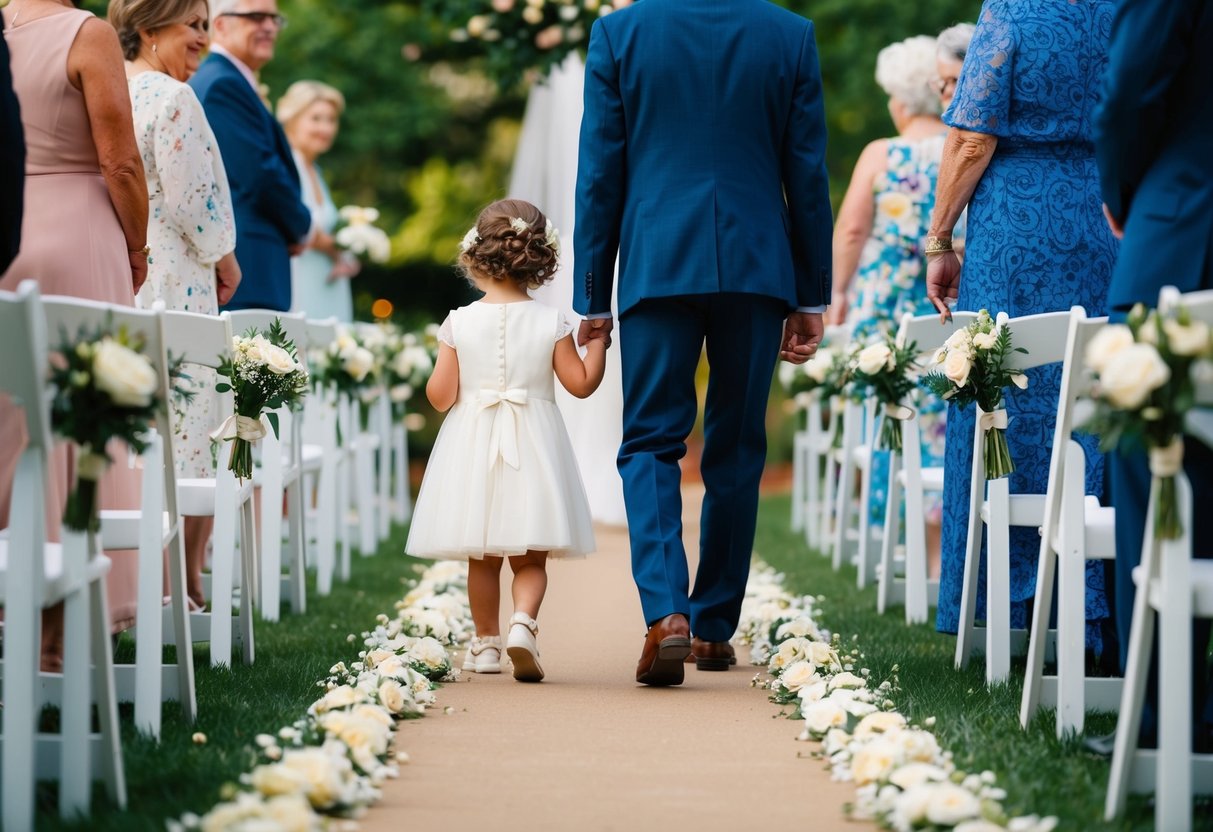
Considering the physical ability of your grandparents is essential. If they need assistance, arranging for someone to help them can make the experience smooth and enjoyable. In some cases, couples choose to seat grandparents ahead of time, especially if mobility is an issue.
As you think about your wedding processional, remember that the way grandparents are included is entirely up to you. It’s an opportunity to create lasting memories while paying tribute to the loved ones who have supported you through the years.
Understanding the Wedding Processional

The wedding processional is an important part of the wedding ceremony. It sets the tone as everyone walks down the aisle, leading to the main event.
Who walks in first? The officiant is usually the first to enter. Then, it often includes family members like grandparents. In some ceremonies, grandparents can be escorted by parents or other relatives to make them feel special and included.
Here’s a simple list of the traditional wedding processional order:
- Officiant
- Grandparents
- Parents of the couple
- Wedding party attendants
- The bride and her escort
- The groom and his escort
In religious services, like a Catholic wedding, or during Jewish and Hindu ceremonies, the order can vary slightly. For example, you might see traditions where grandparents hold a place of honor right after the officiant.
Making sure grandparents are part of the processional helps honor their role in your life. Their presence adds warmth and connection to the ceremony.
Planning the order helps create a smooth flow. Discuss your vision with your wedding planner or officiant to ensure everyone feels included. This thoughtful approach makes the day memorable for everyone, especially your beloved grandparents.
Roles of Family Members
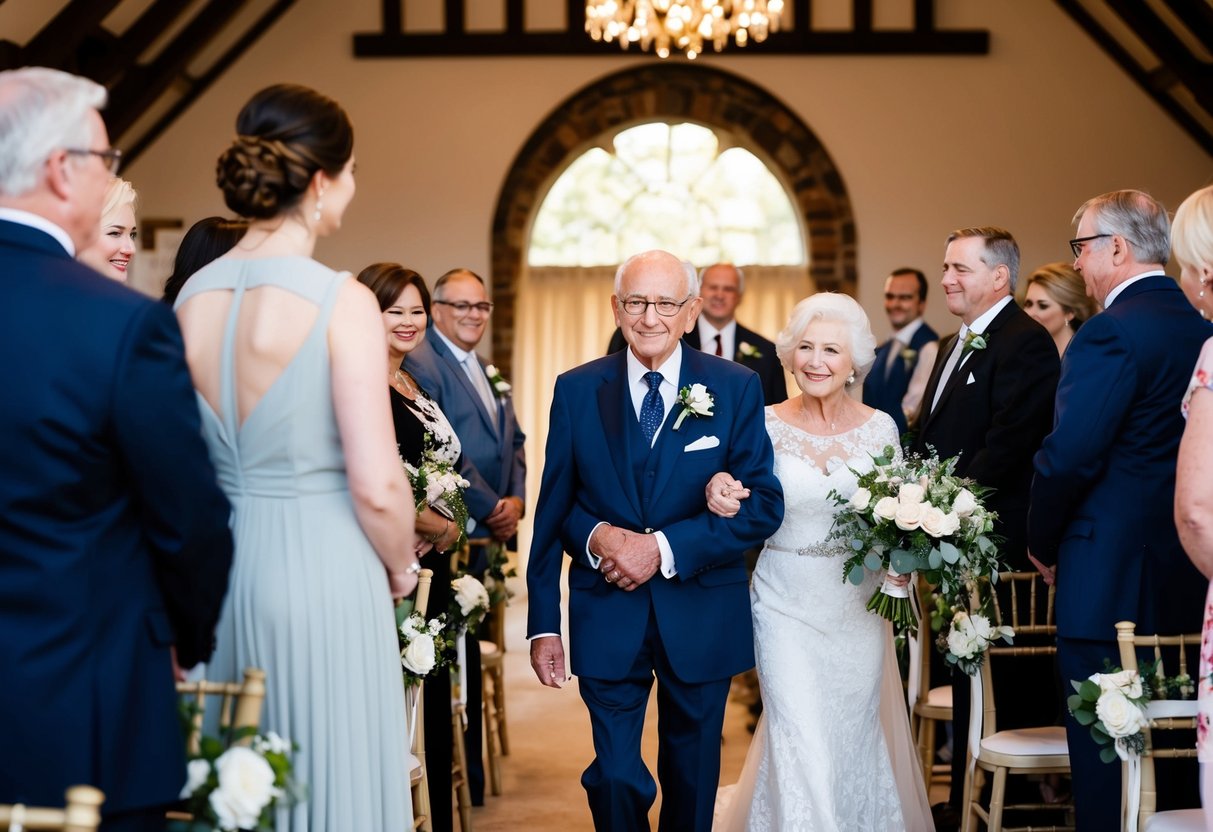
Family members play special parts in the wedding processional. Understanding their roles helps ensure that everyone feels included and honored during this important ceremony.
The Role of Grandparents
Grandparents often hold a cherished place in the wedding. If both sets are present, they may walk down the aisle together, creating a heartfelt moment. Typically, the groom’s grandparents enter first, followed by the bride’s grandparents.
You might consider having an usher assist them if mobility is a concern. Their presence signifies support and love for the couple. It’s also thoughtful to ensure they are seated in a way that allows them to see the ceremony well. This shows respect for their role in your life.
Parents in the Procession
Parents play a significant role in the wedding processional, especially the mother of the bride and the father of the bride. Traditionally, the mother of the bride walks down the aisle ahead of the wedding party. This can be a touching moment, as she is often there to support her daughter.
The father’s role can vary. He may escort the bride down the aisle or take a seat after the grandparents are seated. The groom’s parents also walk down, usually after the bride’s family. Their participation highlights the joining of two families and the love they have for their children.
Order of Procession
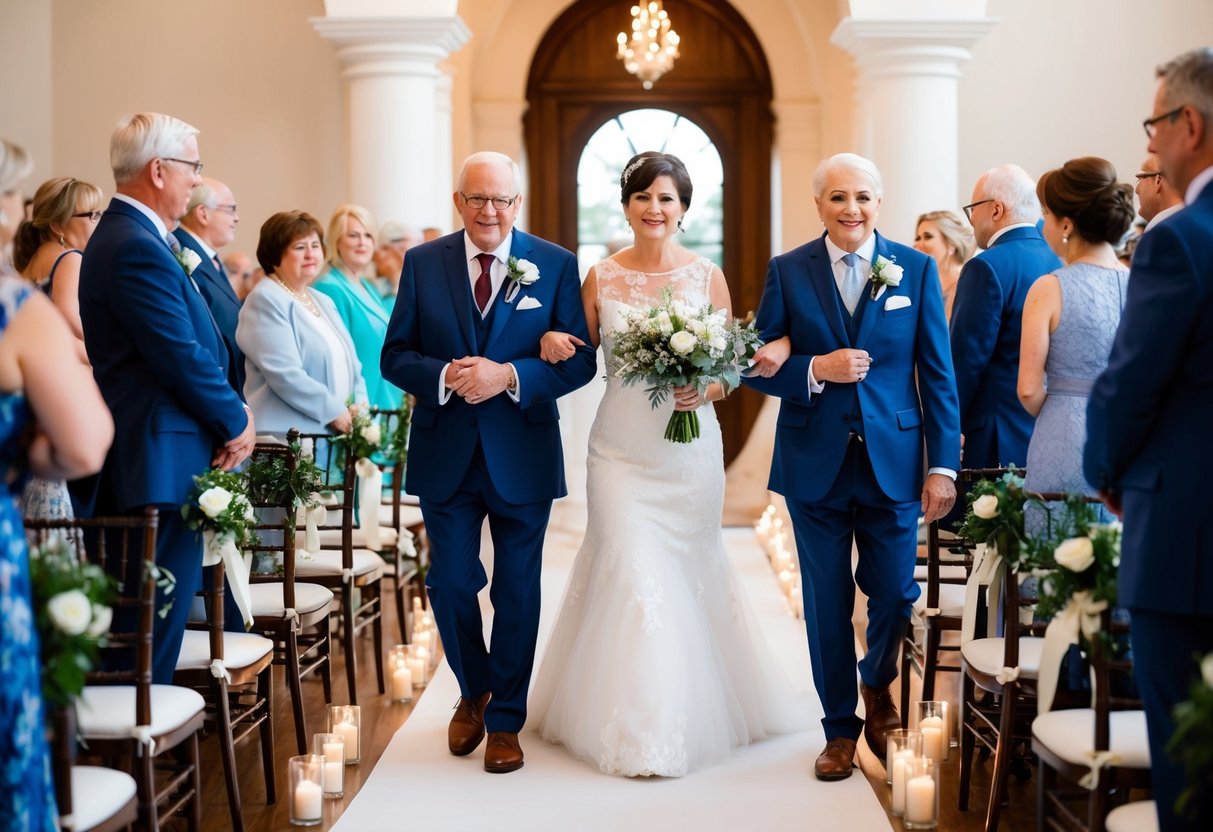
When planning who walks down the aisle, it’s important to consider both traditional and modern orders of procession. This includes how grandparents fit into the ceremony and who leads the way. Here’s a closer look at the details you need to know.
Traditional Order of Procession
In a classic wedding procession, the order typically starts with the officiant, followed by the groom and his groomsmen. This is often followed by the bridal party, which includes bridesmaids and maid of honor.
Grandparents are usually among the first to walk down the aisle. It’s common for them to go after the parents of the groom and before the bride’s parents. They can walk together, or separately if desired.
After everyone is in place, the flower girls and ring bearers will make their entrance, leading up to the bride. The bride walks last, creating a memorable moment as she approaches the altar. This tradition highlights the importance of family in your ceremony.
Modern Variations to Consider
Modern weddings have become more flexible, allowing you to personalize your wedding processional. Many couples choose to have grandparents walk down the aisle first, as a nod to their significance in the ceremony.
You might decide to have the groomsmen walk in pairs or individually for a more relaxed vibe. Also, some couples choose to include special family members or significant people that may not fit traditional roles.
The flower girls and ring bearers can also walk at different times based on your preference. This flexibility allows you to create a unique experience that fits your style while honoring your loved ones.
Pre-Wedding Preparations

Getting ready for a wedding involves many steps. You’ll want to ensure that everything runs smoothly, especially when it comes to important family members like grandparents.
The Role of the Wedding Planner
A wedding planner can be a huge help during preparations. They will coordinate schedules, manage vendors, and take care of details so you can focus more on family.
Make sure to communicate your wishes for the grandparents’ involvement. Discuss when they should arrive and how they will be seated. The planner can help plan the entire processional, including who walks where.
They can also ease any stress by organizing the wedding rehearsal. During this event, everyone will practice walking down the aisle. This is especially important for grandparents, as it helps them feel comfortable with the flow.
Navigating the Rehearsal Dinner
The rehearsal dinner is a special time to bond with family and friends before the big day. It typically happens the night before the wedding. Here, you can share your vows and talk about the processional in a relaxed setting.
Invite family members, including your grandparents. Make sure they know where to sit and who they’ll be walking with during the ceremony. This helps avoid confusion and makes them feel included.
Talking through the details can ease their nerves. You may also want to discuss the roles of the bridal party. This helps everyone understand what to expect during the bridal march and the recessional.