
Who Walks the Bride Down the Aisle at a Vow Renewal? Exploring Tradition and Choices
When renewing your vows, one important question often arises: who walks the bride down the aisle? Traditionally, many couples choose to walk down the aisle together or have their children accompany them, making it a special moment for everyone involved. It’s a beautiful way to celebrate your relationship and include loved ones in the ceremony.
The options for who walks you down the aisle are nearly endless. You might want to have a parent, sibling, or even a close friend by your side. The choice depends on your personal preferences and the dynamics within your family. This is your moment, so feel free to make it uniquely yours.
As you think about your vow renewal, consider what would make you most comfortable and happy. Whether it’s choosing to walk solo, with your partner, or alongside someone special, the focus should be on the love shared between you and your spouse. Each option can create a wonderful atmosphere that reflects your journey together.
Understanding Vow Renewals
A vow renewal is a meaningful way to celebrate love and commitment. It often reflects your journey together and allows for a personalized ceremony. Understanding the significance and main elements can help you plan a memorable event.
Significance of Vow Renewal Ceremonies
Vow renewal ceremonies are special occasions that allow couples to reaffirm their love and commitment to each other. You can mark important milestones, like anniversaries, or simply celebrate your relationship.
These ceremonies can be big or small, making them flexible as a nondenominational ceremony. You can include family and friends, or keep it intimate. The key is that it’s about your love story and what matters to both of you.
Renewing vows can also bring a fresh perspective to your relationship. It’s an opportunity to reflect on your journey and set new intentions for the future together.
Vow Renewal Processional Basics
In traditional weddings, the bride often walks down the aisle with a parent. For vow renewals, you have more freedom in how you approach the processional.
You might choose to walk down the aisle together, signifying your unity. Another option is to involve children or close friends. The choice should reflect your personal style and what feels right for your relationship.
Music plays an important role, so select something meaningful to you both. Whether it’s a favorite song or a formal tune, it enhances the emotional atmosphere.
Your vow renewal can be as unique as your love story. Focus on what feels special and true to you.
Roles in the Vow Renewal Ceremony
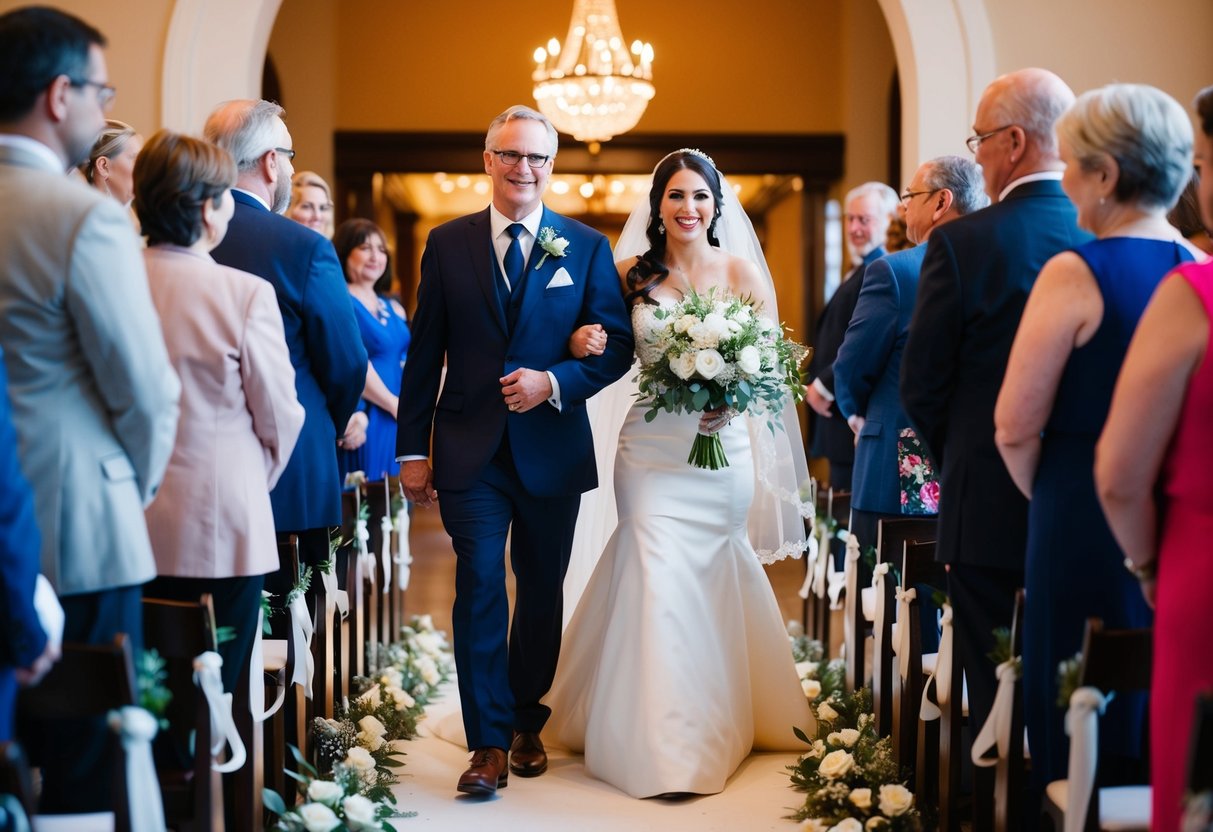
The roles in a vow renewal ceremony can vary widely. Key decisions can affect who walks the bride down the aisle and how family members participate. It’s all about what feels right for you and your loved ones.
Who Walks the Bride Down the Aisle?
When it comes to who walks you down the aisle, there are no strict rules. You might choose your father for a traditional touch. This can symbolize his support and love.
Alternatively, you may want to walk down together with your partner. This option emphasizes equality and unity in your relationship.
Some couples include children or close friends in this special moment. You can even have a parent from each side walk you both down the aisle, creating a family-centered atmosphere.
It’s important to keep your family dynamics in mind. Choose someone who reflects your journey and values.
Honoring Parents and Relatives
Honoring parents and relatives during a vow renewal is a lovely way to show appreciation. Many couples include their parents in the ceremony, which highlights their support throughout the years.
You might invite your parents to give a reading or share a blessing. This not only involves them but also adds meaningful touches.
Consider incorporating a family member’s memory or tradition. For example, you can use a family heirloom in the ceremony to symbolize connection.
If you have children, involving them can deepen family ties. They could participate by handing you rings or joining the aisle walk.
Recognizing loved ones can deepen the experience for everyone involved.
The Wedding Party and Participants
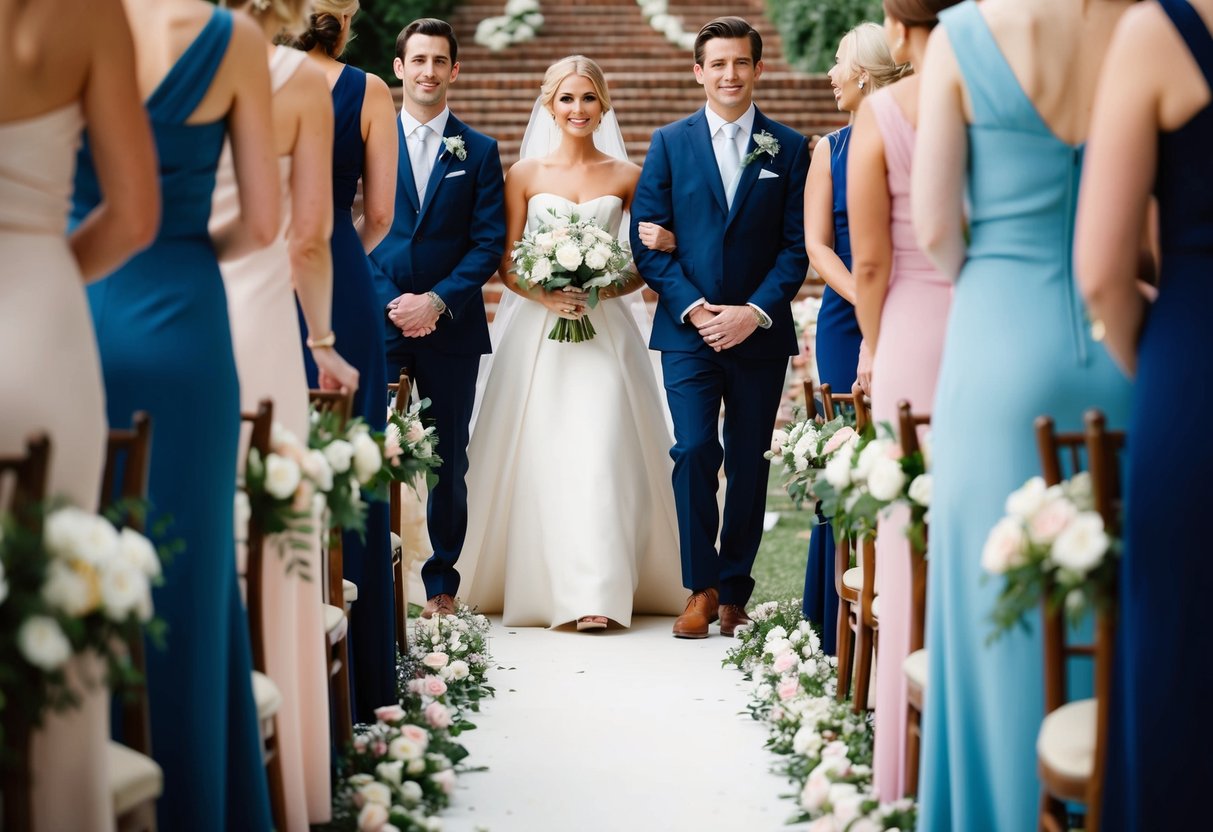
Your wedding party plays an important role in your vow renewal. These individuals support you during the ceremony and add to the celebration. They help create a memorable atmosphere filled with love and joy.
Bridesmaids, Groomsmen, and Honor Attendants
Bridesmaids are typically close friends or family members who stand by your side. They help with planning, support you on the day, and often wear matching dresses. Choose people who will uplift you and enjoy the celebration.
Groomsmen have similar roles for the groom. They offer support and share in the joy of the renewal. The best man is the groom’s right hand, often delivering a speech and holding the rings.
The maid of honor or matron of honor also carries special significance. This individual coordinates the bridesmaids and ensures everything runs smoothly. Their support can make a big difference on your special day.
Ring Bearers and Flower Girls
The ring bearer typically carries the wedding rings to you during the ceremony. This role is often filled by a child, adding a cute touch. They symbolize the promise you and your partner are making.
Flower girls scatter petals along the aisle before your entrance. This custom adds beauty to the ceremony. Like the ring bearer, they’re often younger members of your family or close friends, bringing an adorable element to the event.
Don’t forget to consult your wedding planner for advice on how many people to include. They can help create a balanced and lovely wedding party.
Ceremonial Elements and Traditions
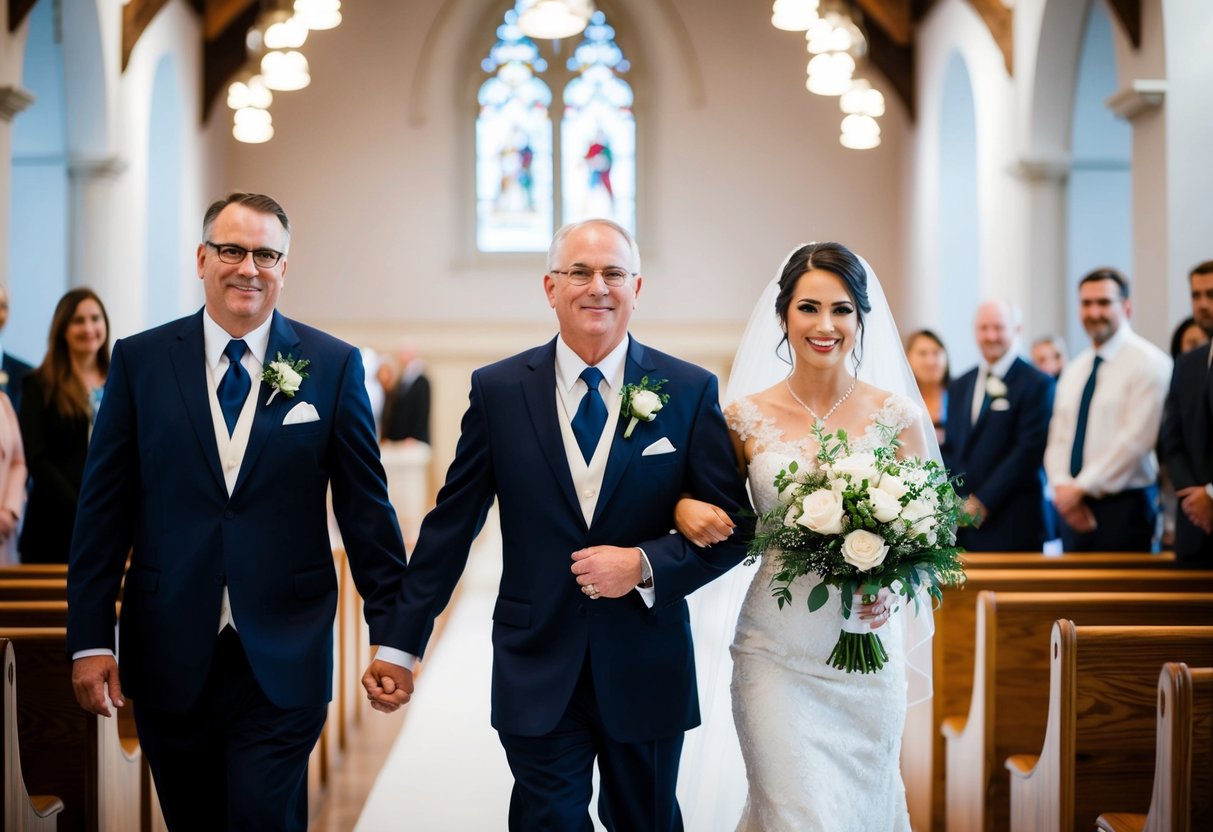
When it comes to a vow renewal, there are important ceremonial elements and traditions that guide the processional order. These elements can vary based on cultural and religious backgrounds, adding personal significance to the celebration.
Cultural and Religious Processional Orders
The order in which participants walk during the ceremony can differ greatly. In a Christian wedding processional order, you may find the officiant leading, followed by the bridesmaids, groomsmen, and finally the bride with her escort. Many choose to include the classic “Here Comes the Bride” music.
For a Jewish ceremony, the processional often features the bride walking under a chuppah with her parents, symbolizing family support. In contrast, during a Hindu wedding, the baraat is a festive parade with music as the groom arrives. The bride may walk towards the mandap with her relatives, emphasizing community participation.
Symbolic Gestures and Items
Symbols play a vital role in your vow renewal ceremony. Many couples exchange wedding rings, representing eternal love.
During the procession, carrying items that have meaning for you adds a personal touch. For instance, some may wish to hold flowers that were part of their original wedding.
Using a unity candle or sand ceremony can represent the blending of two lives.
These gestures and items, whether from a nondenominational ceremony or specific traditions, create a memorable atmosphere while showcasing beliefs and values.