
Who Walks the Groom Down the Aisle? Understanding Traditional and Modern Roles
At weddings, many people focus on who walks the bride down the aisle, but the groom’s entrance is just as important. In many traditional ceremonies, the groom’s parents walk him down the aisle, with his father on one side and his mother on the other. This moment symbolizes the support and love of the family as he prepares to start a new chapter.
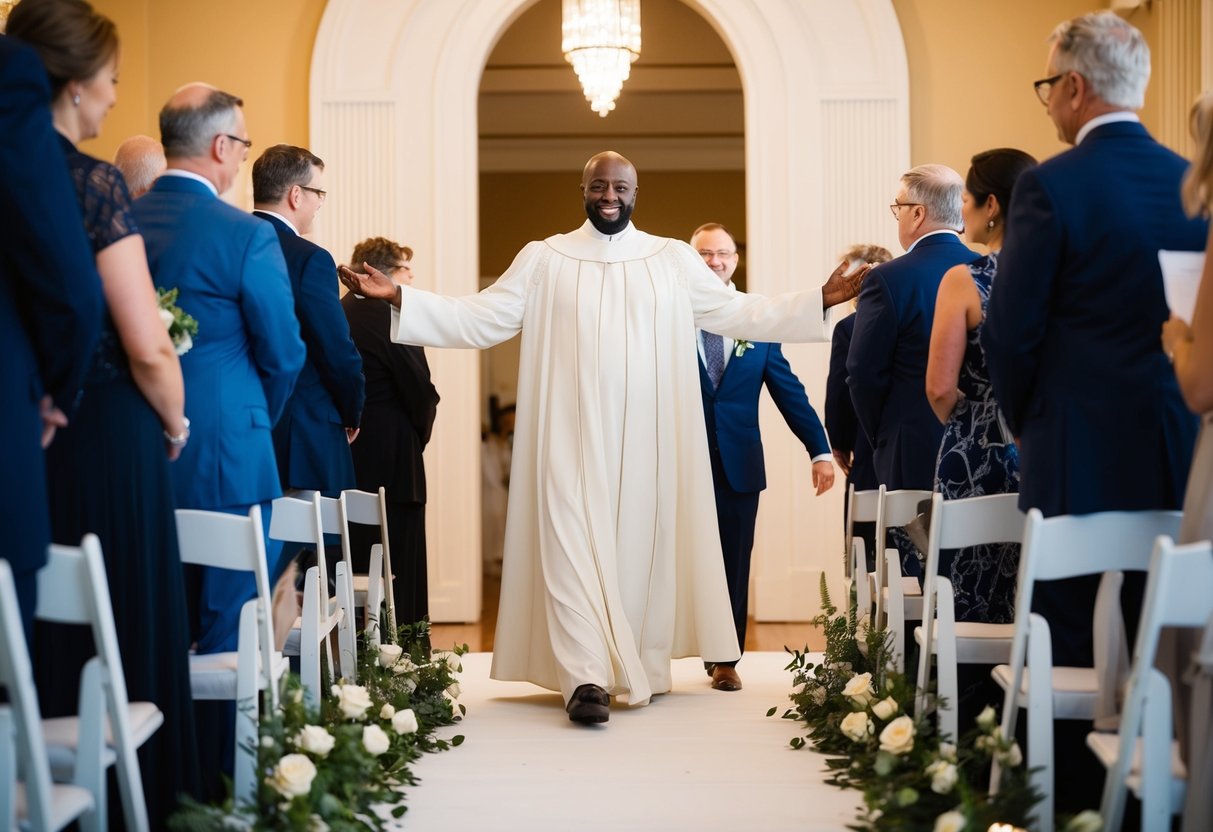
Different cultures may have unique customs surrounding this part of the ceremony. In Christian weddings, the groom often walks alone or with his parents, while Jewish weddings may include both parents as part of the procession. Hindu and Muslim weddings also have specific traditions that may involve family members escorting the groom.
Understanding these customs can enhance your appreciation of the wedding ceremony.
Whether you choose a traditional approach or create your own unique twist, knowing who walks the groom down the aisle adds depth to the celebration. Each option reflects the love, respect, and joy shared on this special day.
Wedding Ceremony Roles and Traditions
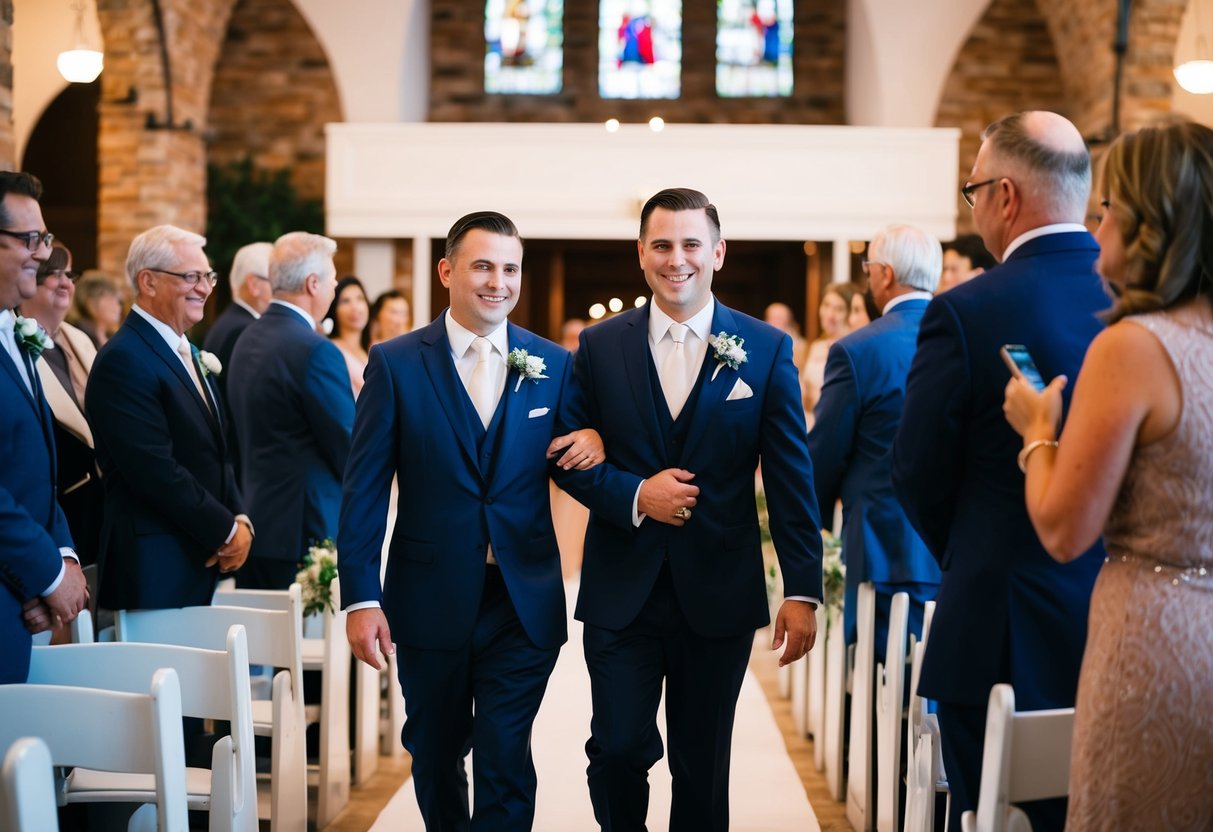
In a wedding ceremony, roles are significant as they reflect traditions and family values. Understanding who walks down the aisle and the associated customs can add meaning to your special day.
Significance of Aisle Traditions
The processional is a key moment in any wedding ceremony. It sets the tone for the event. Traditionally, the groom may walk down the aisle alone or with family, symbolizing his support system. This moment can create excitement and anticipation.
Many couples choose alternative paths that resonate with them personally. Whether it’s a non-traditional procession or an inclusive walk that involves both partners’ families, these decisions reflect your values and style. The beauty of these traditions is that they can be modified to fit your story.
Role of the Groom’s Parents
The groom’s parents usually play an important role in the wedding ceremony. They often walk down the aisle together, seated on the right side of the ceremony venue. This act symbolizes unity and support for their son.
In some weddings, the groom’s mother might escort her son down the aisle, showcasing their bond. In recent times, parents are becoming more involved in various aspects of the ceremony, helping to honor family traditions.
This inclusion reinforces the idea of family in the celebration of love. It’s a great way to show appreciation for their role in your life.
Inclusion of Grandparents
Including grandparents in the wedding ceremony is a touching way to honor family heritage. They can participate in the processional, either by walking down the aisle with parents or being seated at the front.
Their presence often brings warmth and joy to the occasion. Many couples choose to have grandparents involved in other special ways, like lighting a unity candle or giving a read during the ceremony.
These gestures connect family history to the new journey you’re starting. Incorporating elders helps bridge generations, making your wedding memorable for everyone present.
The Groom’s Processional
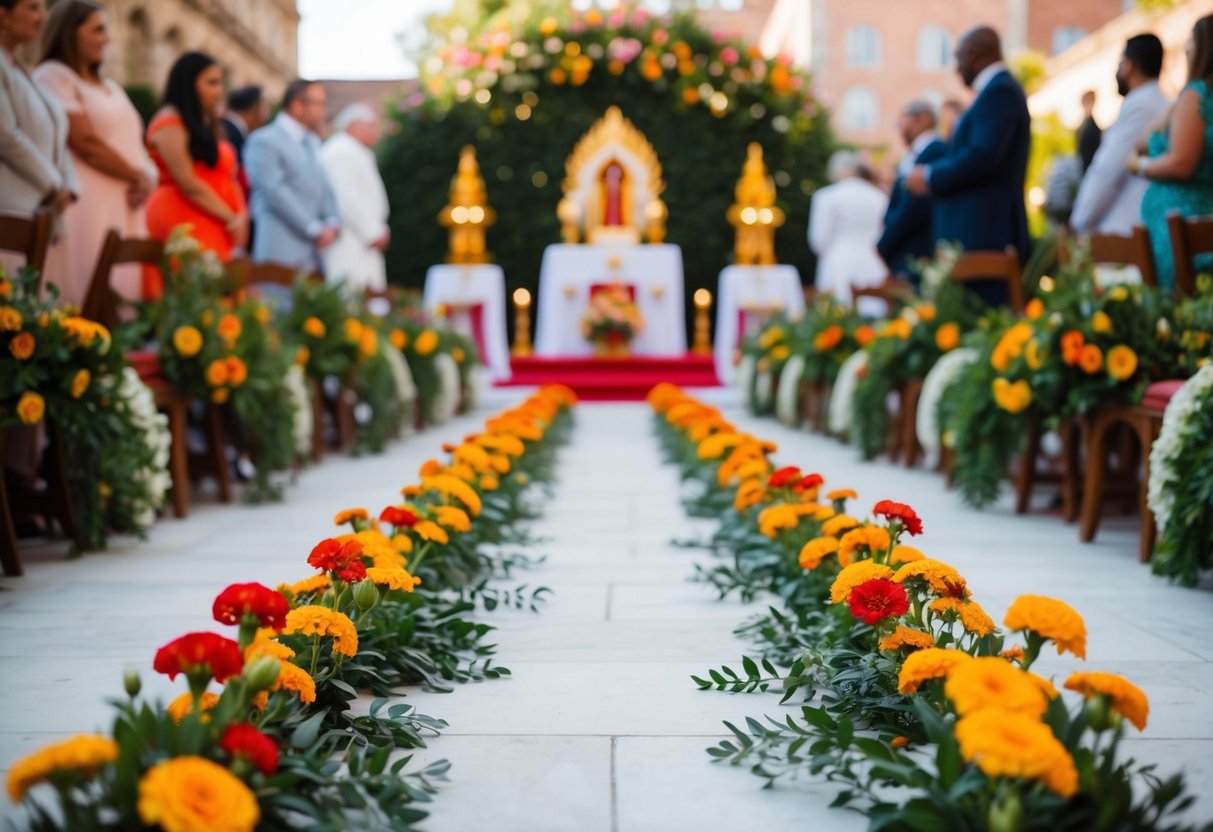
When it comes to the groom’s processional, there are many traditions and personal choices involved. Understanding who walks the groom down the aisle and how cultural practices shape this moment can help make your ceremony special.
The Entrance of the Groom
The groom’s entrance is an important moment in the wedding ceremony. Typically, he walks down the aisle at the beginning of the processional, signaling the start of the event. Depending on the couple’s preference, he may walk alone or with family members.
This entrance sets the tone for the ceremony. It’s often accompanied by music that the couple chooses, adding to the emotional impact. In some ceremonies, the groom may stand at a focal point, such as the altar or mandap, waiting for the bride’s arrival.
Who Walks the Groom Down the Aisle
Traditionally, the groom may be accompanied by his parents. In many cases, the father stands on one side, and the mother on the other, creating a beautiful family moment.
Some grooms prefer to walk alone, emphasizing their individuality. Others might walk with siblings or friends to reflect personal relationships. The arrangement is flexible and should feel right for you.
For Jewish weddings, the groom walks down the aisle as part of the processional order, which is often joyous and celebratory. In a Hindu wedding, the groom may arrive in a lively baraat, surrounded by friends and family, which adds excitement to the event.
Processional Variances Across Cultures
Cultural traditions influence how the groom’s processional is conducted. In Christian weddings, the groom typically enters shortly before the bride, standing at the altar. This moment can be quite solemn, with a focus on the vows.
In contrast, Jewish weddings often have a distinct processional order. The groom walks down, usually accompanied by parents, before the ceremony continues with the ketubah signing.
In Hindu weddings, the baraat is when the groom famously makes a grand entrance, often riding in a decorated vehicle. He then stands at the mandap, ready to unite with his bride during the ceremony.
Non-denominational weddings allow the couple to choose freely, blending elements from various traditions!
Bridal Processional and Recessional
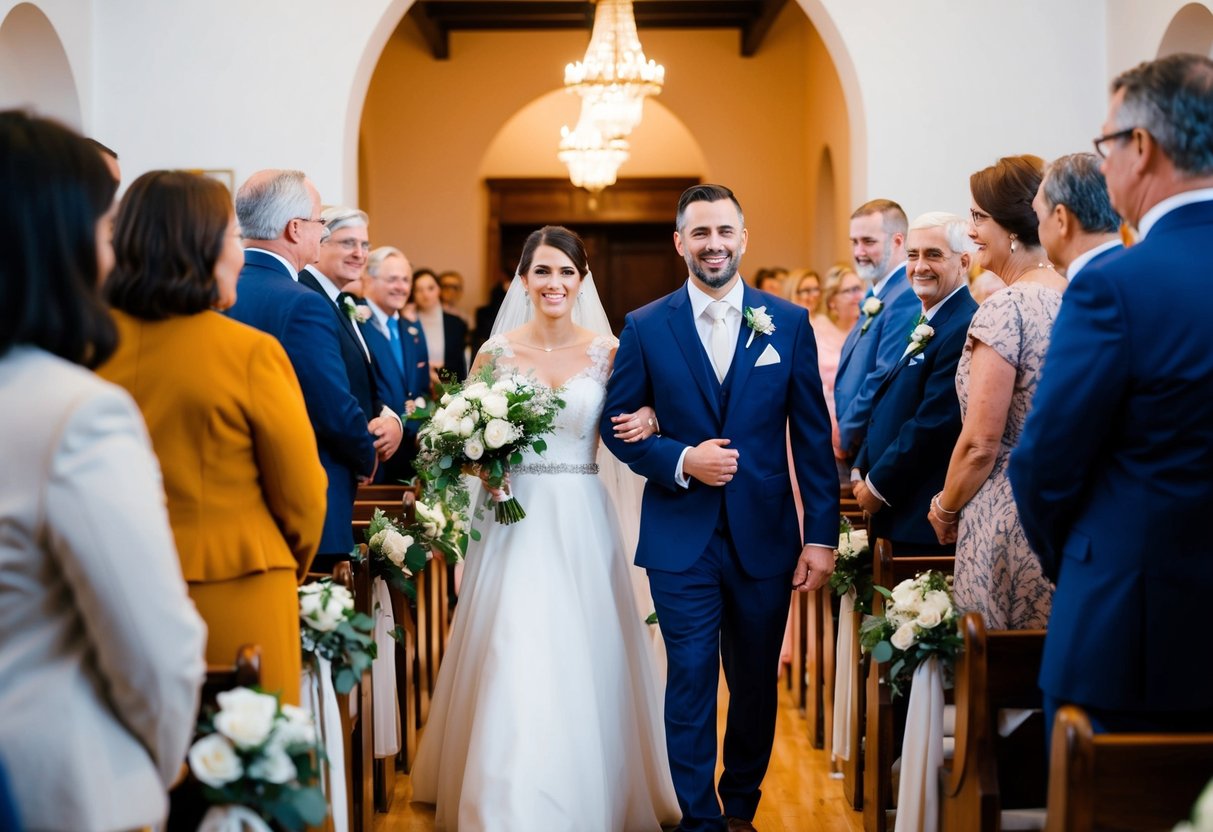
The bridal processional is a beautiful moment in a wedding ceremony. It sets the tone for the celebration. Each participant has a special role. Understanding these roles can help you plan this important part of your special day.
Maid of Honor and Bridesmaids
The maid of honor and bridesmaids play a key role in the processional. They walk down the aisle just before the bride. This can be done individually or in pairs, creating a lovely visual sequence. The maid of honor usually walks last among the bridal party.
Bridesmaids might wear similar dresses to show unity. They often assist the bride with her dress and flowers, ensuring she feels supported. Their presence adds to the emotional weight of the moment. It’s a time for smiles, shared glances, and even a few happy tears.
Father of the Bride’s Role
The father of the bride has a traditional and significant role during the processional. He usually walks the bride down the aisle, symbolizing support and giving her away. This moment can be emotional, as it marks a transition in the bride’s life.
In some cases, both parents escort the bride. This shows equal support and love from both sides of the family. It’s important to keep in mind that the movement should be slow enough to allow guests to absorb the moment. This adds to the significance and beauty of the processional.
Special Roles for Children
Children often have special roles during the processional and recessional. The flower girl typically walks before the bride, scattering petals along the aisle. This creates an enchanting atmosphere and adds a whimsical touch to the ceremony.
The ring bearer follows closely behind. He usually carries the wedding rings on a decorative pillow, making this moment adorable and memorable. Their innocent expressions often evoke smiles and laughter from the guests.
These roles help to create joyful and emotional moments that everyone will cherish forever.