
Whose Last Name Goes First on Wedding Invites? A Simple Guide for Couples
When planning your wedding, you might wonder about whose last name goes first on invitations. Traditionally, the bride’s last name is placed first, but this can vary based on personal preference and communication between you and your partner. It’s important to consider both traditional and modern etiquette when deciding how to list names.
In today’s world, many couples choose to challenge old customs. For same-sex couples or friends who want a more casual vibe, the order can be based on factors like alphabetical order or which name sounds better together. Open communication with your partner about these details can ensure that your wedding invites reflect your unique style and preference.
Creating wedding invitations is not just about following rules but about making choices that feel right to you. So, whether you lean toward traditional etiquette or want to pave your own path, discussing your options will help you present your names in a way that feels authentic and special.
Invitation Basics and Etiquette
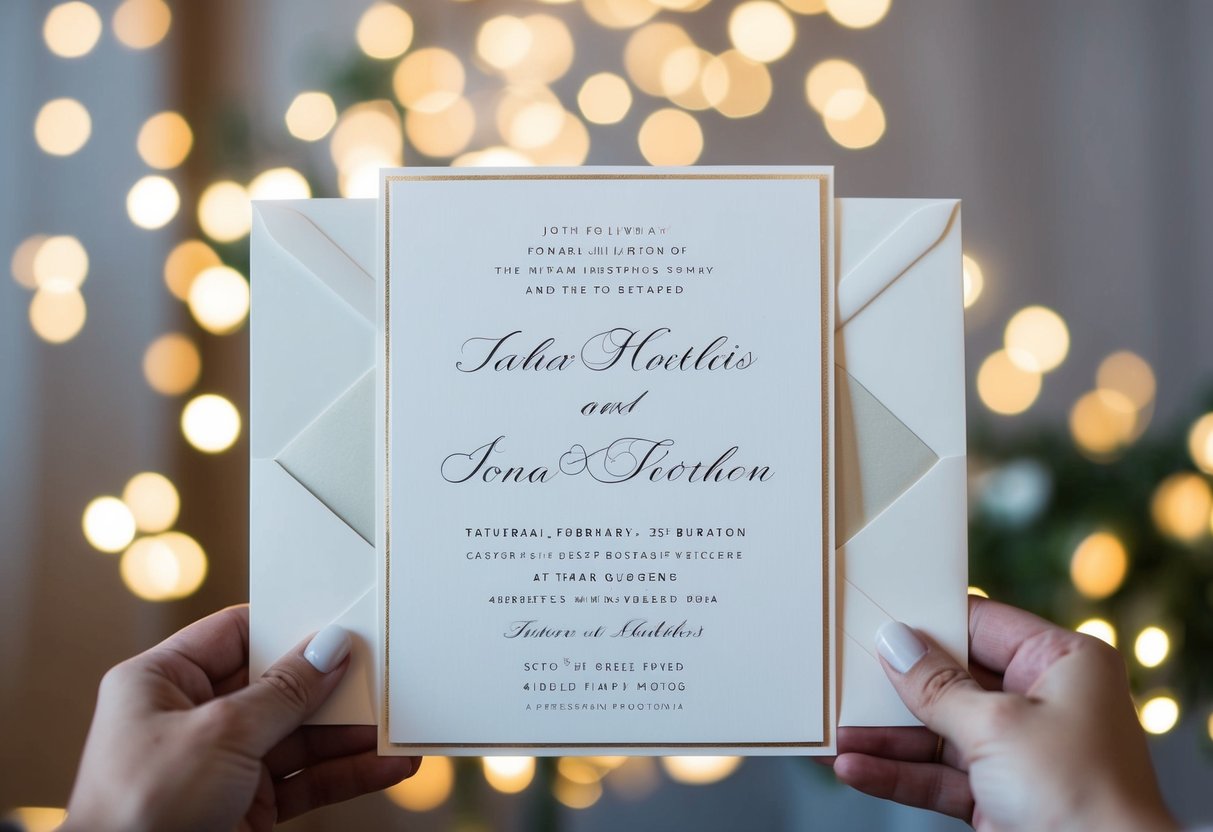
When planning your wedding invitations, it’s crucial to consider the etiquette surrounding name order, especially as traditions may vary. Here, you will learn about traditional practices, modern approaches, and specific formalities for different types of couples.
Understanding Traditional Wedding Invitation Etiquette
Traditional wedding etiquette often places the groom’s name first when addressing invitations. This custom reflects historical norms, but it may not suit every couple today. If you and your partner have different last names, you can choose the order based on preference or alphabetical order.
For example, if your names are John Smith and Jane Doe, you can address the invitation as either:
- John Smith and Jane Doe
- Jane Doe and John Smith
Using this approach allows you to communicate clearly while respecting tradition.
Modern Approaches to Wedding Invitations
Today, many couples opt for a more equal approach when it comes to name order on invitations. Whether you’re a same-sex couple or simply want to break from tradition, you can list names in a way that feels right for you.
Many couples choose to alphabetize their names or list both names side by side. You might write:
- Jane Doe and John Smith
This modern method emphasizes unity, showing your guests that both partners are equally important.
Formalities for Different Couple Dynamics
Different couple dynamics may also affect how you address invitations. For instance, if you’re inviting a divorced woman, it’s respectful to address her with her current last name, avoiding any previous married names. If she has remarried, use her new married name instead.
When dealing with same-sex couples or couples with hyphenated last names, consider these options:
- Use the full names as they prefer.
- Show the names in order of preference or importance to the couple.
Remember, the goal is to create a welcoming feel for all your guests, regardless of their relationship status or name.
Deciding Whose Name Goes First
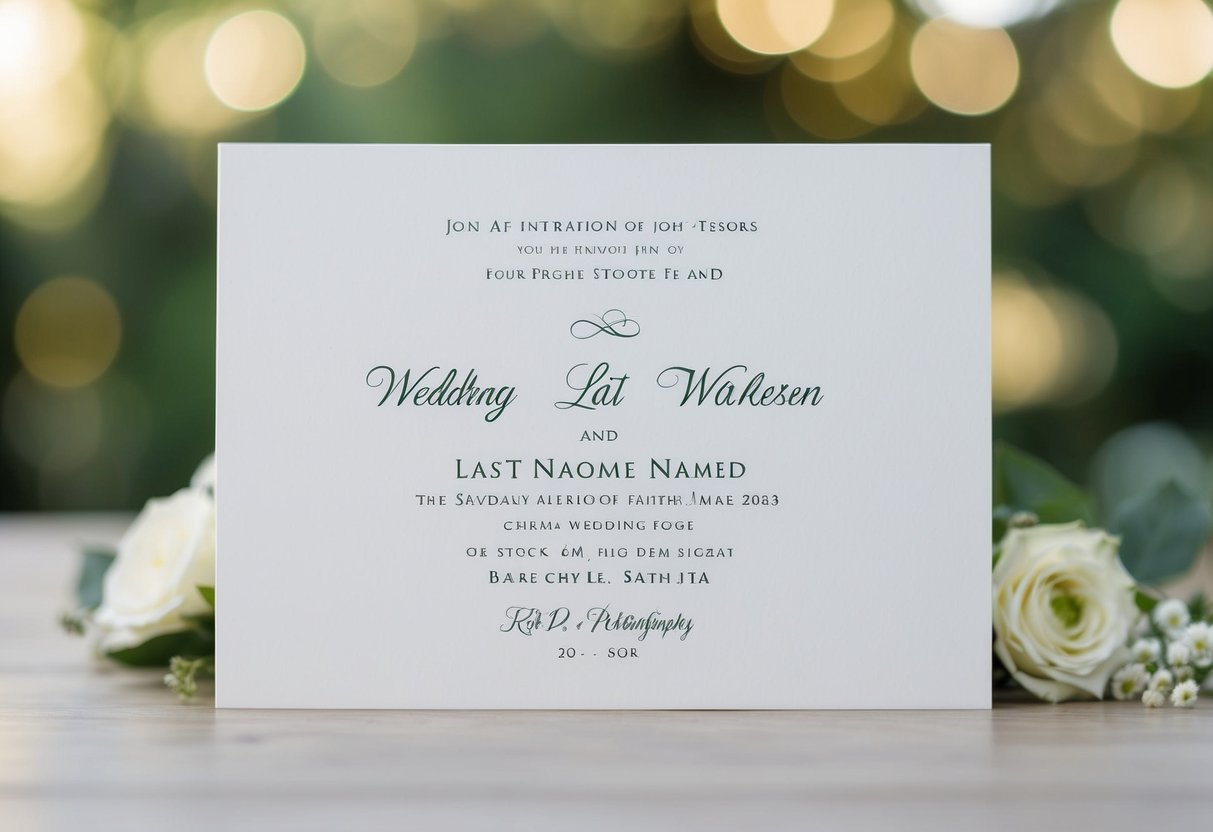
Choosing whose name appears first on wedding invitations can feel challenging. This decision often depends on tradition, personal preference, and the unique dynamics of your relationship and families.
Alphabetical Order Versus Personal Preference
When deciding whose name goes first, you might consider alphabetical order. This approach is easy and fair, ensuring that neither partner feels favored. Simply look at the first letter of each name. For example, if your name is Alex Jones and your partner’s is Taylor Smith, then “Alex” goes first.
Some couples might prioritize personal preference over alphabetical order. This choice could reflect your feelings, cultural background, or family traditions. Discussing this together ensures that both partners are comfortable with the final decision. Ultimately, it’s about what feels right for you as a couple.
Inclusivity and Reflecting Family Dynamics
In today’s diverse society, inclusivity in name order can be very important. For same-sex couples, choosing names can be approached in various ways, like alternating the order for different events. This method allows for fairness and acknowledges both partners equally.
Also, consider how family dynamics may influence your choice. You might want to include names of children or your shared last names, which may change the traditional order. Whatever your decision, ensure it reflects your relationship and the love you share. This can help create a sense of unity and representation in your wedding plans.
Composing Your Wedding Invitations

When creating your wedding invitations, you want to focus on the wording, essential details, and how to include titles and names. These elements come together to make your invitations clear and inviting.
Crafting the Right Wording for Your Invitations
The wording on your wedding invitation sets the tone for your big day. Start with the names of the couple. Traditionally, you might list the bride’s first, middle, and last name first, followed by the groom’s name. For example:
Jane Marie Doe
and
John Michael Smith
Using titles like Mr. and Mrs. can add a formal touch, such as “Mr. and Mrs. Doe request the honor of your presence…” But if you prefer a modern approach, feel free to skip the titles. Make sure to include key details like the wedding date, time, and venue.
Incorporating Essential Wedding Details
Your invitation must include important information so guests know what to expect. First, add the wedding date and time clearly. For example:
Saturday, the 15th of June, 2025, at 4:00 PM
Next, mention the ceremony venue. Whether it’s a church or outdoor setting, include the full address. For instance:
St. Peter’s Church
123 Wedding Lane
City, State
Don’t forget to mention the reception line or if the reception will follow the ceremony. Adding a simple note like “Reception to follow” helps guests plan their day.
Titles and Naming Conventions in Invitations
Choosing how to use titles and names is essential for your invitation’s tone. For formal invitations, using Mr., Mrs., or Ms. helps convey respect. Example: “Mr. and Mrs. Doe request the pleasure of your company.”
Consider including both first and middle names for clarity. If you choose hyphenated last names or a mixed family situation, list names accordingly. For instance:
Jane Marie Doe-Smith
and
John Michael Smith-Doe
Using respectful titles reflects your personalities and the event’s significance. This attention to detail will make your invitation not only informative but also meaningful.
Pre-Wedding and Post-Wedding Communication
Effective communication before and after your wedding helps set expectations and keeps guests informed. This section focuses on key details about sending save-the-dates and the information shared during the wedding weekend.
Sending Save the Dates and Follow-Up Information
Sending save-the-dates is a great way to inform your guests about your wedding date early on. This helps them reserve the date, especially if travel is involved.
Make sure to include essential details such as the date, location, and wedding website link for more information. You can use fun designs that match your wedding theme.
After sending out save-the-dates, follow up with traditional wedding invitations. When addressing envelopes, consider the names listed. You might choose to follow traditional etiquette, or be modern and flexible with the name order, especially for same-sex couples. Don’t forget a note about RSVP deadlines to help you with final counts.
Wedding Weekend Schedules and Welcome Materials
During the wedding weekend, you must provide schedules for your guests. Share an itinerary that outlines ceremony times, reception details, and any pre-wedding events.
You can also create hotel welcome bags for out-of-town guests. Include items such as water bottles, snacks, and a map of the area. This thoughtful gesture makes them feel appreciated and comfortable.
For out-of-town guests, include a schedule of events in these bags. This way, guests know what to expect and when. Everyone will appreciate the effort you put into keeping them informed, ensuring a smooth experience for all.