
Whose Name Goes First, Husband or Wife on Wedding Invitations? A Simple Guide to Proper Etiquette
Choosing whose name goes first on wedding invitations can feel like a big decision. Many couples wonder about the proper etiquette surrounding this choice. Traditionally, the groom’s name is placed first, followed by the bride’s name, but modern couples often have flexibility to decide what feels right for them.
In today’s diverse society, this rule isn’t set in stone. For same-sex couples or those with different naming preferences, you have the freedom to choose the order that reflects your relationship.
Whether you prioritize tradition or personal connection, understanding these norms can help you personalize your wedding invitations in a way that feels authentic to you.
As you dive deeper into the topic, you’ll discover the nuances and variations that can guide you in making this decision. Knowing the basics of wedding invitation etiquette can help ease any anxiety over this seemingly simple choice.
Understanding Wedding Invitation Etiquette
When planning your wedding invitations, knowing the etiquette rules can help set the right tone for your big day. This section covers important aspects of invitation wording, how to address your guests properly, and nuances in envelope addressing.
Invitation Wording and Name Order
Choosing the right wording for your wedding invitation is essential. Traditionally, the bride’s name comes first on the invitation, reflecting the cultural norm. However, modern approaches allow for flexibility.
If you and your partner have different last names, you may choose to list them in alphabetical order or according to personal preference. This respects both families equally while keeping the focus on your celebration.
Consider phrases like “together with their families” or “request the honor of your presence.” This sets a warm and inviting tone for your guests, making them feel cherished.
Formal vs. Informal Address
How you address your guests can impact the formality of your wedding. For formal invitations, use full names and titles, like Mr. and Mrs. or Dr. and Ms. Using formal stationery enhances this elegance.
If your wedding is more casual, you can opt for first names or even nicknames. Just be sure that your wording matches the overall vibe of your celebration.
Remember that consistency is key.
If you’re sending out save-the-date cards, keep the same level of formality across all printed materials to avoid confusion.
Envelope Addressing Nuances
When it comes to the outer envelope, etiquette plays a significant role. Always use the proper titles and spelling for guests. If couples are married, use “Mr. and Mrs.” or their individual titles if appropriate.
For unmarried couples living together, list both names on separate lines. Don’t forget about including full addresses, which should follow standard formatting.
To avoid mix-ups, be careful with abbreviations. It’s best to spell out street names (e.g., “Street” instead of “St.”) for formal invitations. Take the time to ensure everything is correct before sending your invites. Making these small adjustments can enhance the overall presentation.
The Role of Tradition and Personal Preference
When it comes to wedding invitations, both tradition and personal preferences play a key role in deciding whose name goes first. You may feel pressure to adhere to customs, yet it’s completely valid for you to prioritize what feels right for your unique relationship.
Traditional Etiquette on Name Ordering
Traditionally, the bride’s name is listed before the groom’s on wedding invitations. This custom is rooted in historical practices where the bride’s family took precedence. Many couples choose to follow this convention to honor tradition.
For example, if you have a long-standing family custom, it might matter to you to show respect for that history. However, if you and your partner have discussed it and agree on a different order, that choice reflects your personal style.
Modern Invitation Etiquette
Modern invitation etiquette has evolved to be more inclusive and flexible. You might choose to put names in alphabetical order, especially if you want to represent equality in your partnership. This approach is gaining popularity among many couples, including same-sex couples, as it emphasizes mutual respect.
Some may prefer to highlight their shared last name or even switch roles, especially if one partner has a stronger preference. No matter what, it’s important that the decision reflects your values and conveys the significance of your wedding.
Cultural Norms and Unique Relationships
Cultural traditions can also influence whose name goes first. Different cultures have various customs, and you might find that a specific tradition resonates with you and your partner.
For instance, in some cultures, the husband’s name is prioritized, while in others, the bride’s name is emphasized. Understanding these customs can help you decide how to manage wedding planning while staying true to your cultural background and individual preferences.
Special Considerations for Names and Titles
When choosing how to write names on wedding invitations, there are several important factors to consider. This includes understanding the nuances in titles, how to address different kinds of couples, and recognizing unique last names.
Addressing Married and Same-Sex Couples
For married couples, traditional etiquette often places the wife’s name first, but this can vary. Same-sex couples can choose any order that feels right for them. It’s essential to communicate with your partner to decide how you want to be represented.
When addressing invitations, use formal titles like “Mr.” and “Mrs.” or informal ones like first names, based on your preference. If you have two last names, consider using a joint last name if that’s your choice. Ensure both names are given equal prominence.
Hyphenated, Middle, and Different Last Names
If you or your partner have hyphenated or middle names, incorporate them thoughtfully. For example, if your full name is Jane Smith-Jones, include both last names on the invitation. This shows respect for both identities.
If you both have different last names, it is perfectly fine to list them separately. For instance, you might write “Jane Smith and John Doe” to highlight your individuality. Remember, clarity is key to avoid any confusion for your guests.
Addressing Divorced Women and Widows
When addressing divorced women, use their title and last name, as in “Ms. Jane Smith,” unless you know they prefer another title. This is particularly relevant if they kept their married name or returned to their maiden name. Respect their choice.
For widows, you might still address them using their late husband’s last name, depending on their preference. Be sensitive to their situation, and consider asking for guidance on how they would like to be addressed. This shows thoughtfulness and care during the planning process.
Final Touches to Your Wedding Invitations
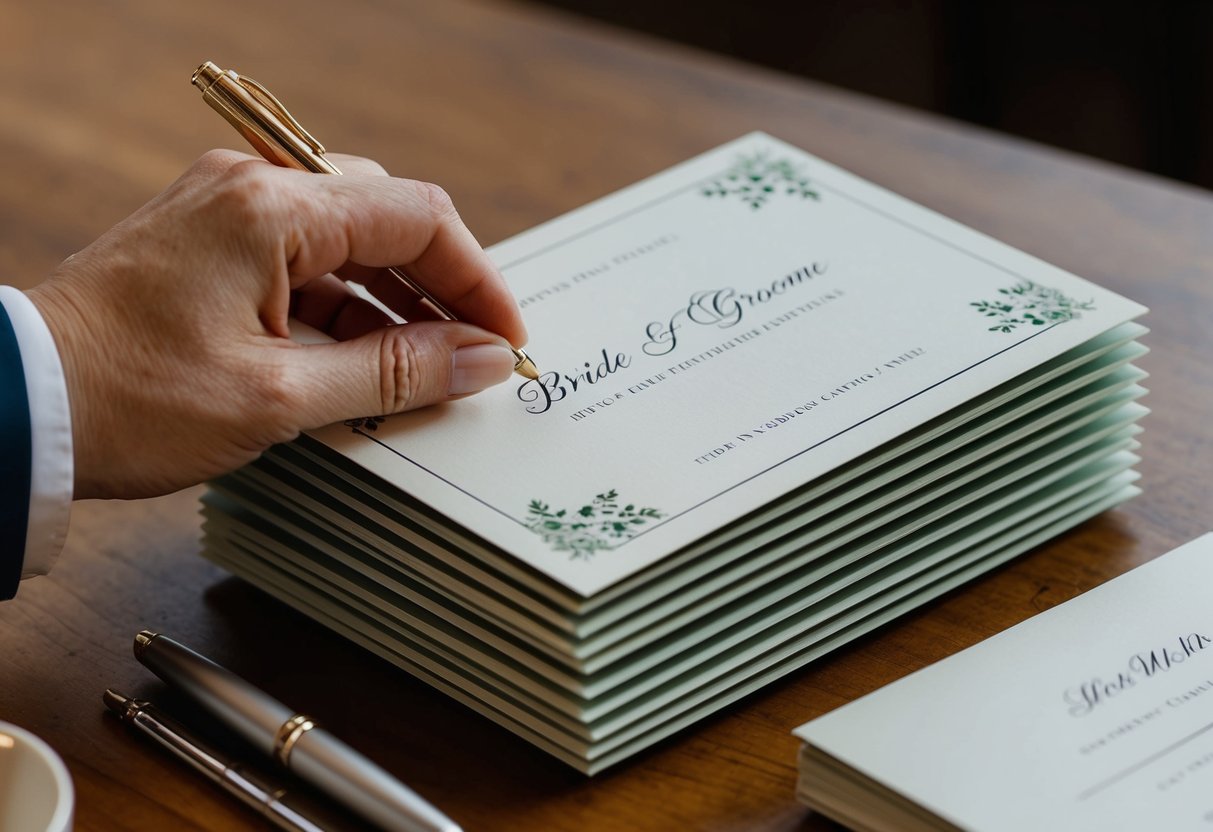
When finalizing your wedding invitations, consider including important details that help your guests prepare. Thoughtful touches can enhance their excitement and ensure they have all the information they need.
Incorporating Additional Wedding Details
Make sure to include key wedding details on your invitations. Start with the date and time. Clearly state when your ceremony begins and include the full date to avoid any confusion.
Next, think about mentioning any special elements like your wedding weekend activities. This can include welcome receptions or brunches that you have planned. You can simply add a note that invites guests to join you for these events.
Also, consider including information about hotel welcome bags. If you’re providing these, let your guests know where to pick them up. Lastly, including a friendly reminder about the dress code is helpful. You want everyone to feel comfortable and stylish!
Choosing the Right Formal Stationery
Selecting the right invitation card is essential for setting the tone of your wedding. Choose a design that reflects your personality as a couple. Think about colors, fonts, and styles that you both love.
Next, ensure the quality of the stationery. Go for thicker cardstock that feels substantial. This adds a touch of elegance.
You might want to explore options for cocktail napkins that match your wedding theme. These personal touches make your event feel special.
Finally, consider the envelope that will hold your invitation. Don’t forget about the outer envelope’s address format. Using the right titles, like “Mr.” and “Mrs.” or “Ms.” and “Mr.” shows respect and thoughtfulness.