
Whose Name Goes First in a Married Couple? Exploring Tradition and Modern Practices
When addressing wedding invitations or any formal communication for a married couple, you might wonder whose name should come first. Traditionally, the husband’s name is often listed before the wife’s, but many couples today prefer to switch it up or go by alphabetical order. This decision can reflect your values and how you want to be perceived as partners.
There are no hard and fast rules anymore, especially for same-sex couples or those who choose to break away from tradition. You could consider using the names in a way that feels most comfortable and fair for both of you. Whatever approach you take, the most important thing is that it represents your relationship.
In a world where norms are changing, it’s great to have this choice. Understanding the options can help you make a decision that feels right for you as a couple and sets the tone for your wedding invitations and beyond.
Historical and Cultural Context
Understanding whose name comes first in a married couple involves looking at both historical traditions and modern changes in naming conventions. The choice often reflects cultural values and social practices that have evolved over time.
Traditional Wedding Etiquette
In traditional wedding etiquette, the bride’s name has long been placed before the groom’s in invitations and formal address. This practice is rooted in historical customs where the bride’s family plays a significant role in hosting and financing the wedding.
You might have seen invitations formatted like this:
- Mr. John Smith
- and Mrs. Jane Doe
The use of “Mr. and Mrs.” emphasizes the bride’s maiden name, blending both names into a new family identity. Many etiquette books, such as Crane’s Blue Book of Social Stationery, provide detailed guidance on proper name order and addressing to maintain this tradition.
Modern Evolutions in Naming Conventions
Today, naming conventions are evolving. Many couples choose to prioritize personal preferences over traditional rules. Some may decide to use both names equally, hyphenate surnames, or even forgo last names entirely, which reflects a shift towards gender equality and individuality.
In invitations, you might see different formats:
- Jane Doe and John Smith
- John Smith and Jane Doe
These choices show that each couple can create a style that feels right for them, regardless of traditional expectations. As cultural norms continue to change, it’s essential to communicate preferences clearly with guests to avoid confusion.
Practical Aspects of Naming Order
When sending out invitations, knowing how to address them properly is important. It helps set the tone for your event and shows respect to your guests. Here are two key areas to consider regarding naming order.
Outer and Inner Envelope Addressing
When addressing invitations, use both an outer and an inner envelope. The outer envelope should include titles and full names. For example, you might write “Mr. and Mrs. John Smith.” This gives it a formal touch.
The inner envelope is more relaxed and can use just first names. You would write “John and Jane.” This helps create a warm atmosphere for your event.
If the couple has different last names, you can list them together on the outer envelope. Place the woman’s name first, like “Ms. Emily Johnson and Mr. David Brown.” This respects modern practices while keeping it stylish.
Significance of Titles and Formal Names
Titles matter in the world of invitation etiquette. They show respect and give your invitations a polished look. For married couples, it’s common to address the husband first, like “Mr. and Mrs.”
However, it is increasingly acceptable to use the wife’s name first, especially in more progressive settings. You might say “Mrs. Jane Smith and Mr. John Smith.” It’s good to follow the couple’s preference when you know it.
Including middle names can add a nice detail if desired. For instance, “Mr. John Alexander Smith and Mrs. Jane Louise Smith” sounds distinguished. Pay attention to these aspects to set the right tone for your invitations!
Personalizing Wedding Stationery
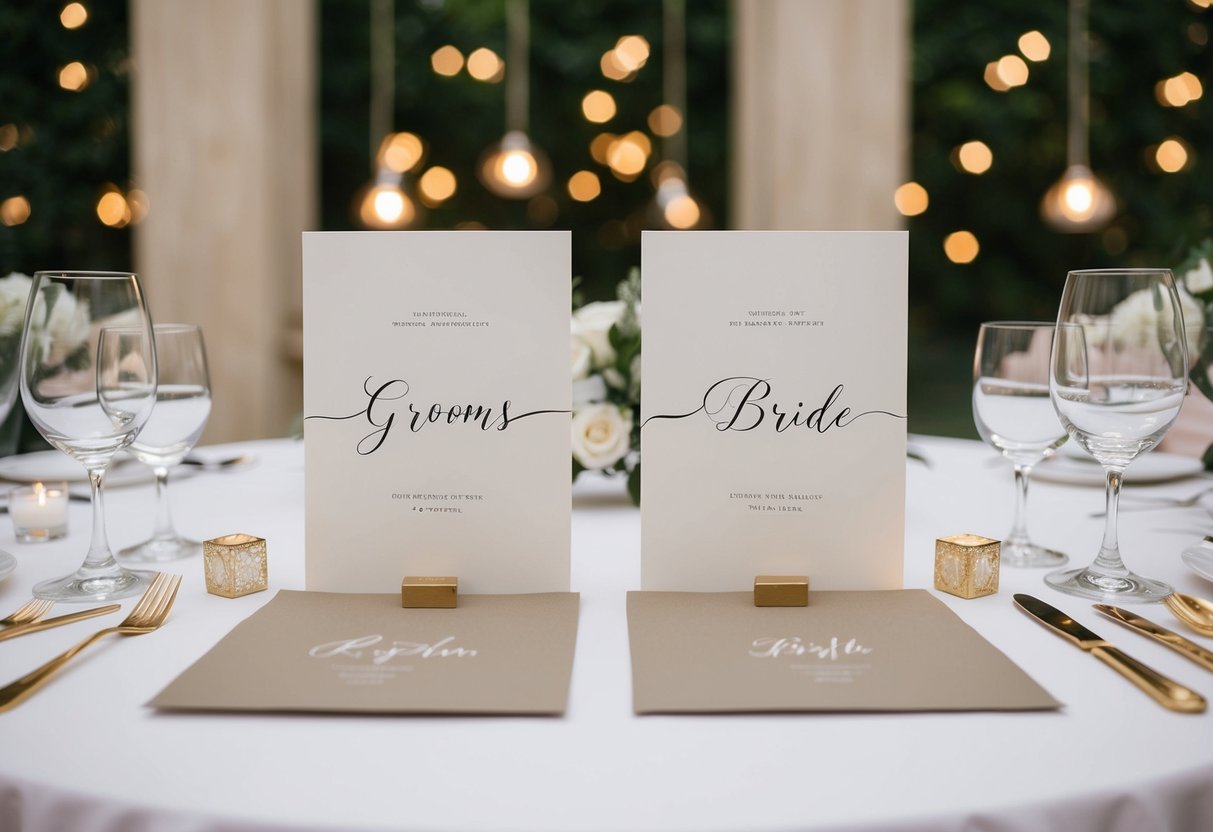
When you personalize your wedding stationery, you have the opportunity to add your unique touch. This involves considering personal preference as well as the couple’s circumstances, especially for same-sex couples and unmarried partners.
Incorporating Personal Preference and Style
Your wedding stationery should reflect both you and your partner’s personalities. There are many ways to achieve this.
-
Choose Your Names’ Order: Traditionally, the bride’s name appears first on invitations. However, if you prefer a different order, it’s perfectly okay to go with your choice.
-
Design Elements: Think about colors, fonts, and images that resonate with you. For instance, if you both love nature, incorporating floral designs could make your invites special.
-
Wording: Customize the wording to suit your style. Choose a formal tone or something fun and casual.
Remember, personalizing these elements keeps your wedding stationery aligned with your vision.
Considerations for Same-Sex and Unmarried Couples
For same-sex couples, the traditional naming order can be adjusted to suit your preferences. Here are some ideas to consider:
-
Name Placement: You can list your names in any order you choose. It’s about what feels best for both of you.
-
Invitation Wording: Use inclusive language that resonates with your relationship. For example, “Together with their families” can replace more traditional wording.
For couples who are unmarried, personalizing stationery can include the use of both names prominently. This approach symbolizes your partnership, regardless of marital status.
Feel free to explore designs that best represent your journey together, blending your styles into one cohesive statement.
Executing a Polished Final Touch
Choosing whose name goes first is not just a matter of tradition; it’s a matter of style and etiquette. You want your wedding invitations to reflect both of your personalities.
Start by considering wedding invitation wording. If one of you has a hyphenated last name, you can list both names in the hyphenated form. This shows unity and respect for both family names.
Think about alphabetical order. If you’re unsure, listing names alphabetically can be a neutral choice. For example, if the names are John Smith and Emily Taylor, you would write Emily Taylor first.
When drafting your invitations, remember that the outer envelope typically holds more formal titles, while the informal address inside can simply use first names.
As you plan, keep your specific style in mind. This includes how you want to address your guests. Whether you opt for classic or casual, ensure it aligns with your overall vision for the day.
Don’t forget that mistakes can happen. Double-check spelling and title formatting to ensure a polished look. You want your invitations to impress and set the tone for your special day.