
Whose Name Goes First on a Wedding Invitation? Tips for Couples
Deciding whose name goes first on a wedding invitation can feel a bit tricky. Traditionally, the bride’s name is placed before the groom’s name because her parents usually host the event. This is a long-standing rule of wedding invitation etiquette that many couples choose to follow, but it’s not set in stone.
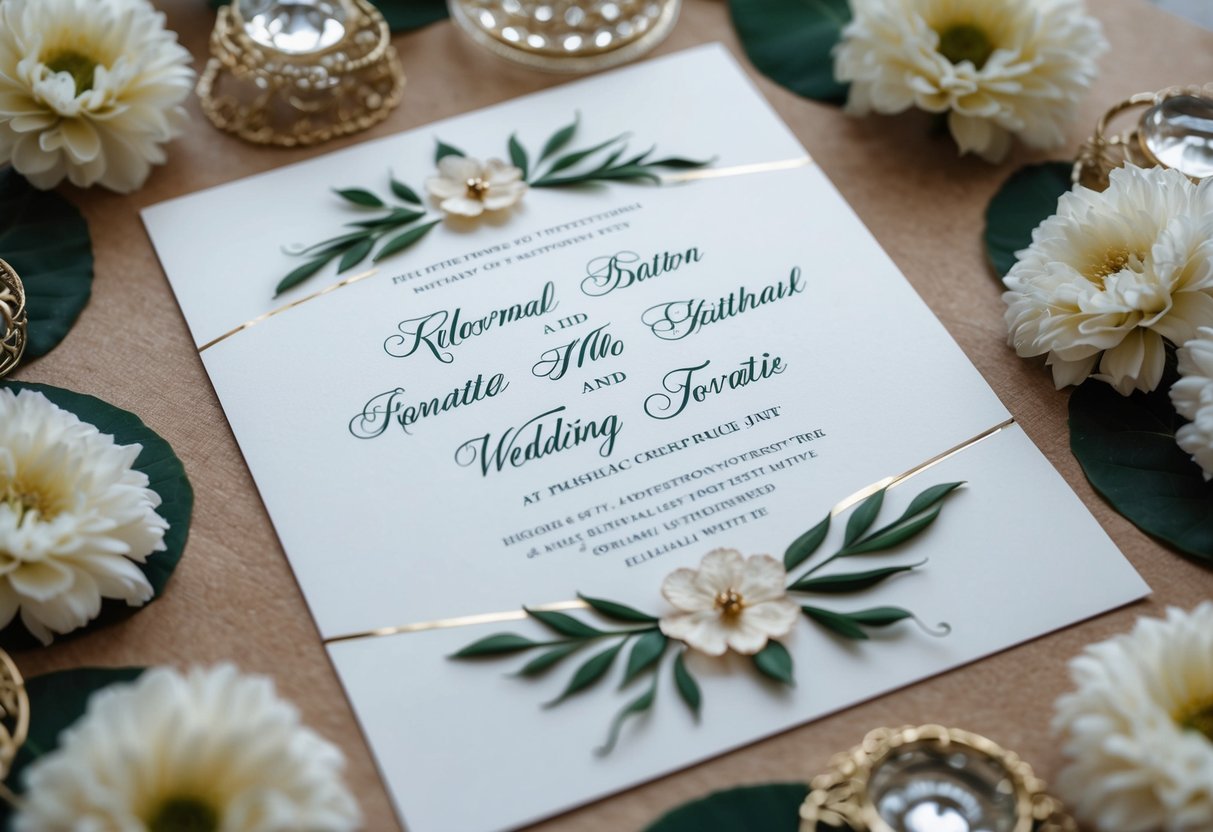
As you prepare your invitations, consider what feels right for you and your partner. Some couples opt for a modern approach, placing names in the order they prefer. This decision can reflect both of your personalities and may even include cultural practices that hold special meaning for you.
Whether you stick to tradition or make a personal choice, what matters most is that the invitation reflects both of you as a couple. Enjoy the planning process and let your unique style shine through!
Understanding Wedding Invitation Etiquette
When planning your wedding, the details matter. One important detail is whose name goes first on the invitation. This decision can depend on tradition, modern practices, and your personal circumstances.
Traditional Wedding Invitation Etiquette
Traditionally, the bride’s name appears first on wedding invitations. This custom reflects cultural norms where the bride is often given prominence. The wording typically looks like this:
Example:
Mr. and Mrs. John Smith
Request the honor of your presence
at the marriage of their daughter
Emily Jane
to
Mr. Michael Johnson
Following this format honors both families and follows traditional etiquette. It’s a way to show respect for the bride’s side, which historically took the lead in wedding planning.
Modern Approaches to Name Ordering
Today, many couples choose to reflect their personal preferences over strict traditions. You might see names listed alphabetically or based on who is hosting the wedding. Personal touch is essential in these decisions.
For example, if both partners’ families equally contribute, listing names in alphabetical order can work well. A modern invitation might read:
Example:
Emily Jane Smith
and
Michael Johnson
Together with their families
This approach highlights equality in the partnership. It’s all about what feels right for you and your partner.
Same-Sex Couples and Invitation Etiquette
For same-sex couples, wedding invitation etiquette can also vary. You can follow traditional formats or create a new design that represents your relationship best. Many same-sex couples opt for unique wording that includes both partners equally.
You might see invitations that use the couple’s first names prominently. For instance:
Example:
Jamie and Taylor
Request the honor of your presence
at their wedding celebration
This format emphasizes partnership and unity. You have the freedom to choose what resonates with your relationship and style. Cultural traditions can also play a role, so consider what feels right for both of you.
Formatting Your Wedding Invitation
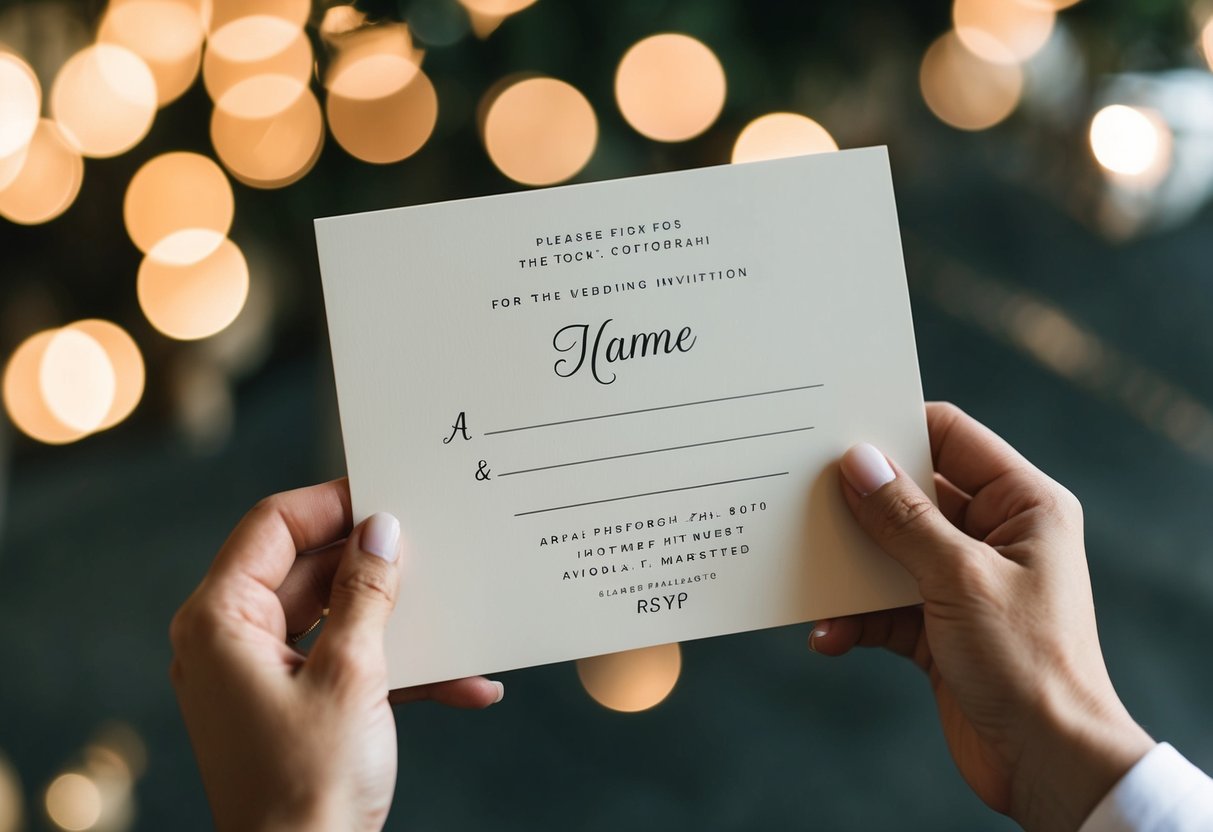
When you format your wedding invitation, it’s important to create a design that reflects your style while including all essential details. This will help your guests understand your big day clearly.
Selecting the Right Design and Layout
Choosing the right design for your wedding invitation sets the tone for your event. Think about your wedding theme and color scheme. Do you want something classic or modern?
Key elements:
- Color: Use colors that match your wedding theme.
- Font: Choose fonts that are easy to read and fit your style.
- Layout: Make sure your text is clear. Use hierarchy to emphasize the most important details like your names and the event date.
Images or graphics can also enhance the invitation’s appeal. Just keep it simple to avoid overwhelming guests.
Including All Necessary Information
Your wedding invitation must include all crucial details to guide your guests. Start with the wedding date and time. This information should be prominent.
Next, include the location. Specify the venue name and address clearly to prevent confusion.
Don’t forget the dress code. If there’s a specific style you prefer, like formal or casual, mention it.
Lastly, provide RSVP details. Include how and when guests should respond, along with any reception information if applicable. Keeping everything organized helps your guests feel included in your celebration.
Navigating Family Dynamics in Invitations
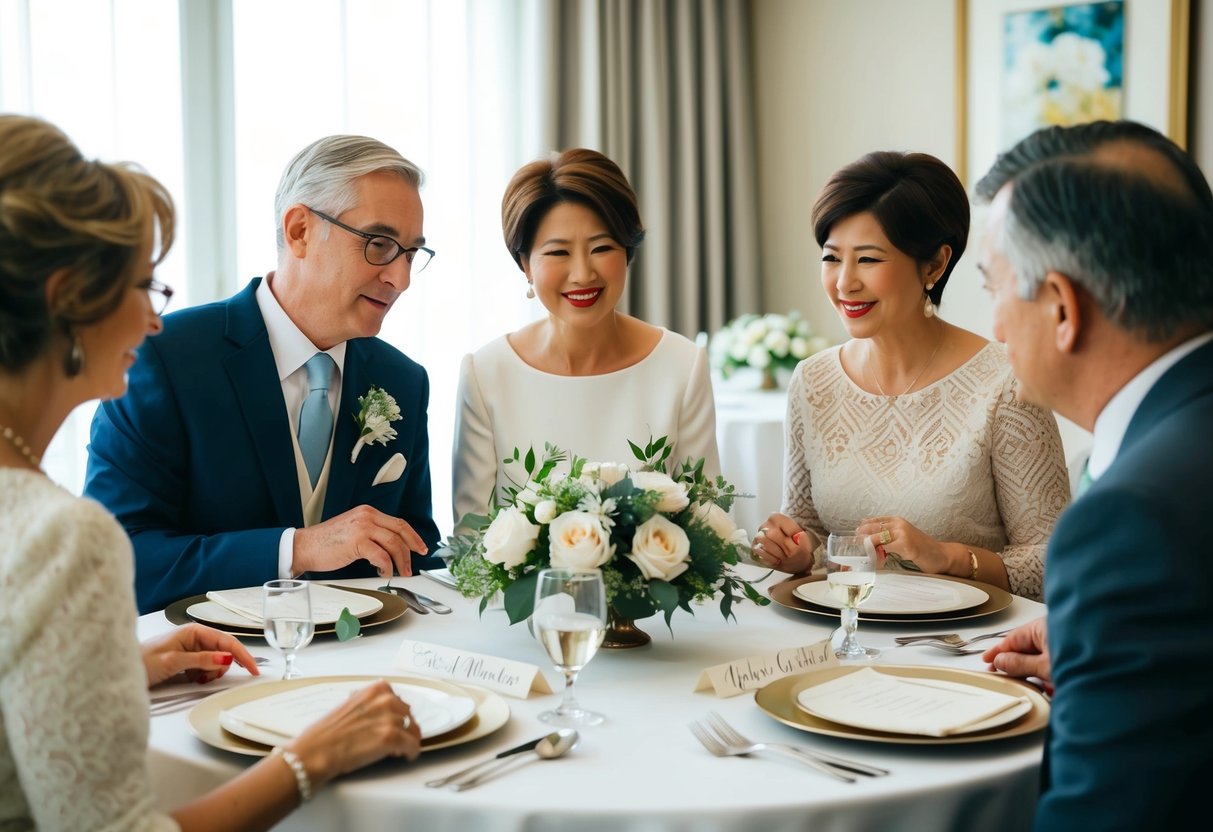
When planning your wedding invitations, it’s important to consider family dynamics. This can include how to address divorced or remarried parents and how to honor deceased family members. Open communication and a willingness to compromise can help you navigate these sensitive situations.
Addressing Divorced and Remarried Parents
When your parents are divorced or remarried, it may feel tricky to decide whose name goes first on the invitation. You can start by having open discussions with both parents. Explain the situation and listen to their feelings.
For example, if the bride’s parents are divorced, you can choose to list each parent’s name separately. You might format it like this:
Bride’s Parents:
Mr. John Smith
Mrs. Jane Doe
This way, you honor both parents equally. If you decide on a more traditional approach, the groom’s name can go first, but ensure it feels right for everyone involved.
Honoring Deceased Family Members
Remembering deceased family members is another important aspect of wedding invitations. You can honor their memory by including them in the invitation wording. This can be done by adding a phrase like “In loving memory of” before their names.
Consider this example:
“In loving memory of
Mrs. Anne Smith, the bride’s grandmother.”
This approach adds warmth and respect to your invitations. It also shows that you value the contributions of past family members. Being inclusive in this way can create a meaningful connection for all guests.
Key Considerations for Your Wedding Invitations
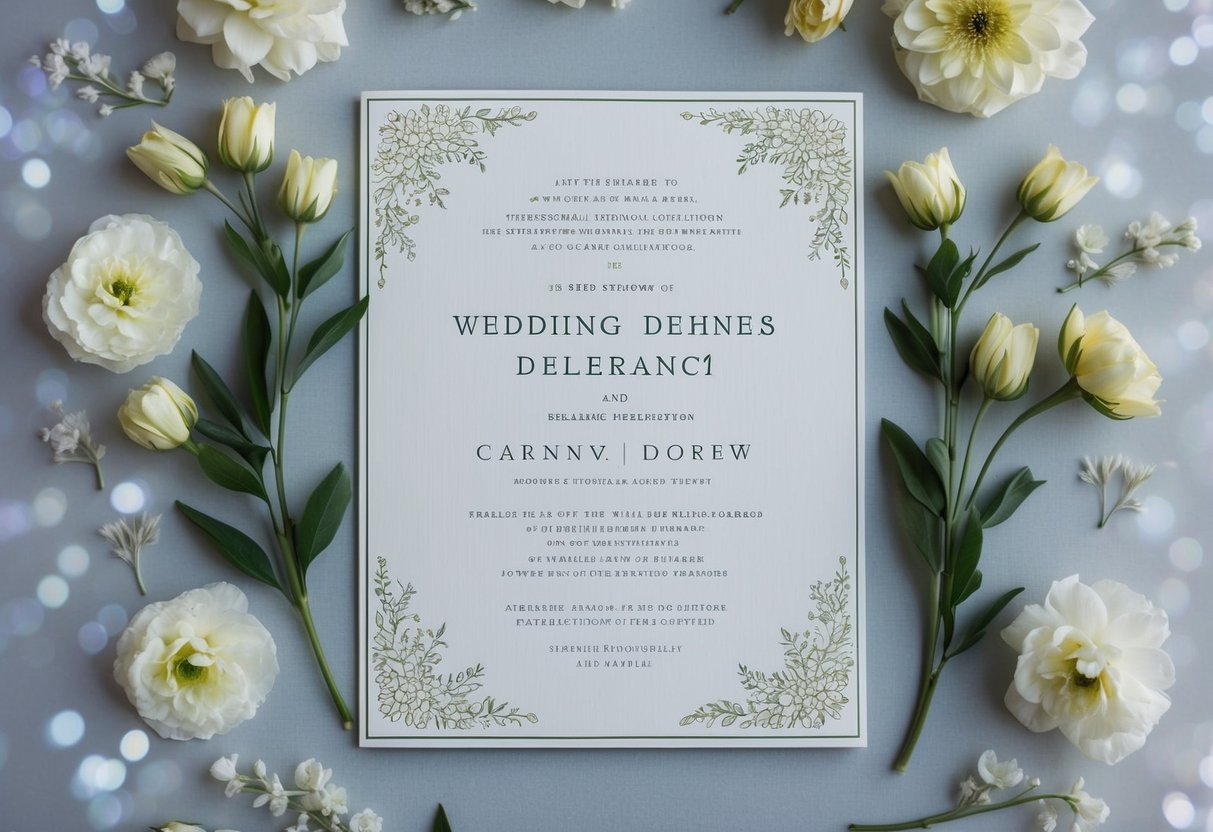
When planning your wedding invitations, certain aspects are important to ensure that your invites reflect your personalities and respect traditions. You’ll want to think about cultural norms and the level of formality for your celebration.
Incorporating Cultural Norms
Cultural traditions can shape how you approach wedding invitations. For instance, in many cultures, the bride’s name is traditionally listed first, while some may have unique customs around name order.
If you’re having a same-sex wedding, you have more freedom to choose the order that feels right for you. Think about any specific cultural etiquette, as it may guide your decisions. You might also want to include registry information or create a unique RSVP method, just like couples from various backgrounds do.
Determining the Formality of Your Wedding
Understanding the formality of your wedding influences your invitation’s style. For a formal wedding, you’ll want to go with elegant wording and perhaps a classic design.
On the other hand, if you are planning a casual wedding, your invitation can reflect a more playful tone. For example, you might focus on fun invitation examples that show your personalities.
Acknowledging the level of formality will help you decide on details like font, color schemes, and layout.
Your invitations will set the right tone for your special day, whether your guests expect a formal ceremony or a relaxed gathering.