
Why Does RSVP Say M? Understanding the Meaning Behind the Letter
When you receive a wedding invitation, you might notice a mysterious “M” followed by a line on the RSVP card. This “M” stands for the first letter of your title, like Mr., Mrs., Ms., or Miss. It helps you fill out the card properly. Understanding this detail can make responding to your invitation easier and show that you appreciate the couple’s effort in arranging their big day.
Using the correct title on your RSVP is part of good wedding invitation etiquette. It adds a touch of formality and respect to your reply, which is important for the couple. By taking the time to write the title and your name, you make it clear that you’re excited to be part of their celebration.
Curious about more details regarding the RSVP process? There’s plenty to learn about how to navigate the etiquette around wedding invites and ensure your response is just right.
Understanding RSVP and the M Line
Getting an RSVP card can be confusing, especially when you see the mysterious “M” on it. This section explores the purpose of RSVPs and what the “M” line means for your response.
The History and Purpose of RSVP
RSVP stands for “Répondez s’il vous plaît,” which means “Please respond” in French. This tradition dates back to the 18th century and has become a standard in formal invitations, including wedding invitations.
RSVP cards are essential for hosts. They help couples plan their celebration, track how many guests to expect, and finalize the wedding budget. Including an RSVP card makes it easy for you to respond quickly, ensuring that your attendance is noted.
Throughout history, responses were often communicated verbally or through letters, but the RSVP card makes it simple and organized. It’s a small yet crucial detail for any formal event that helps keep everyone informed.
Deciphering the M Line on RSVP Cards
The “M” on RSVP cards stands for the title you prefer to use, such as Mr., Mrs., Ms., or Miss. This tradition is part of formal wedding etiquette, guiding guests on how to fill out their responses politely.
When you see the line after the “M,” it’s where you write your name. For example, for a married couple, you might write “Mr. and Mrs. Adam Smith” or “Mr. Adam and Mrs. Sarah Smith.”
Using the correct title helps set the tone for the event and honors the formality of the occasion. It’s a simple way to show respect for the couple’s big day and follow the formal wedding tradition that many couples cherish.
Etiquette and Response Expectations
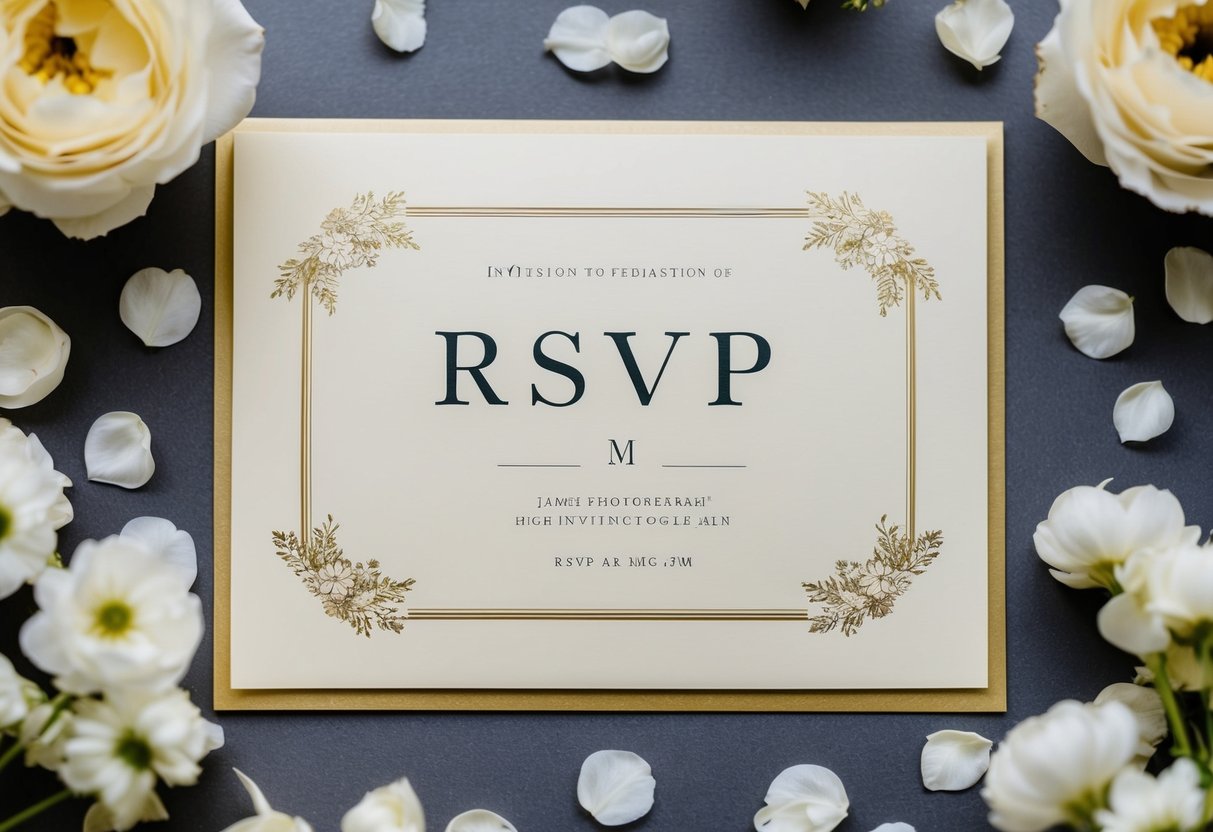
When you receive a wedding invitation with an RSVP card, knowing how to respond is important. It helps the couple plan their special day. Here are key points about how to properly address your RSVP, fill out the “M” line, and respond as a single or married guest.
Properly Addressing Your RSVP
When addressing the RSVP card, use the title that fits you best. This usually includes titles like Mr., Mrs., Ms., or Miss.
If you are married, include your spouse’s name. It’s common to write something like “Mr. and Mrs. John Smith” or “Ms. Jane Doe.” This way, the couple knows exactly who will attend their wedding.
For unmarried couples, it’s best to list the names separately if you are RSVPing together. You may write “Mr. Sam Brown and Ms. Lisa Green.” This is respectful and ensures the couple sees everyone invited.
How to Mark the M Line
The “M” line on the RSVP card is where you write your title. You write it followed by a line where you fill in your name.
For example, if you’re Mr. Smith, you would write “M. [Your Name]” on the form. This indicates you received the invitation and are confirming your attendance.
Make sure to fill this out clearly. It helps the couple read your response easily and accurately add you to their guest list.
Responding As Single or Unmarried Guests
If you’re single or not in a relationship, simply write “M. [Your Name]” on the RSVP card. It is straightforward and allows the couple to understand who is attending.
If you received a plus-one invitation, it’s polite to indicate that who you plan to bring. Write “M. [Your Name] and Guest” if you aren’t bringing someone specific. This shows you’re thoughtful about how they’ll plan seating arrangements.
Being clear in your response is helpful for the couple. It reduces confusion and makes their planning easier.
RSVP for Married Couples
For married couples, you can write your names on the RSVP in a way that shows you are a unit. Use phrases like “Mr. and Mrs. John Doe” or “Mr. John Doe and Mrs. Jane Doe.” This clarity helps the couple anticipate who will be there.
If your partner has a different last name, feel free to use both. For example, “Mr. John Smith and Mrs. Jane Doe.” This respects your identities while showing you are attending together.
In any case, responding promptly is the key to good invitation etiquette. The couple needs to know how many attendees to expect for their wedding.
Planning Your Wedding Guest List
Creating your wedding guest list is an essential step in planning your big day. It impacts your budget, the venue size, and even the meal options you select. Here’s how to effectively manage your guest list while considering important aspects like plus-ones, budgeting, and meal choices.
Incorporating Plus-Ones
When drafting your guest list, consider offering plus-ones to certain guests. This usually includes partners or significant others. It’s a thoughtful gesture that can make your friends feel more comfortable.
To manage this, think about who you’re closest to. For example:
- Close friends and family: Definitely consider inviting their plus-ones.
- Coworkers or acquaintances: It might depend on your relationship with them.
Make a note on your RSVP cards to indicate who can bring a guest. This helps you keep track of numbers and keeps your guest list manageable.
Managing the Number of Guests and Budget
Your guest list directly affects your wedding budget. Each guest adds to costs, including catering, seating, and invitations. To keep within budget, set a maximum number of guests early on.
- Prioritize attendees: List out must-invite people first, like family and best friends.
- Be honest with yourself: If a person is more of an acquaintance, consider leaving them off the list.
This way, you can control costs and ensure that your celebration includes only those who matter most.
Importance of Meal Selection on RSVP Cards
Meal selection on RSVP cards is key for planning. It helps you figure out how much food to order and caters to dietary needs. Include choices like chicken, beef, vegetarian, or vegan options.
When sending your invitations, clearly list the meal options. For example:
- Option A: Grilled chicken with vegetables
- Option B: Beef tenderloin
- Option C: Vegan pasta Primavera
Encourage guests to reply promptly. This can save you from last-minute stress and ensures a delicious meal for everyone.