
Affordable Castle Wedding Venues: Costs and Savings
A castle wedding gives you stone walls, grand staircases, and storybook grounds in one setting. You can find affordable castle wedding venues when you choose a smaller property, travel beyond a major city, or book a Friday, Sunday, or off-season date.
Venue fees often range from about $6,000 for a château-style hall to more than $40,000 for an exclusive historic estate, before catering and other wedding costs.
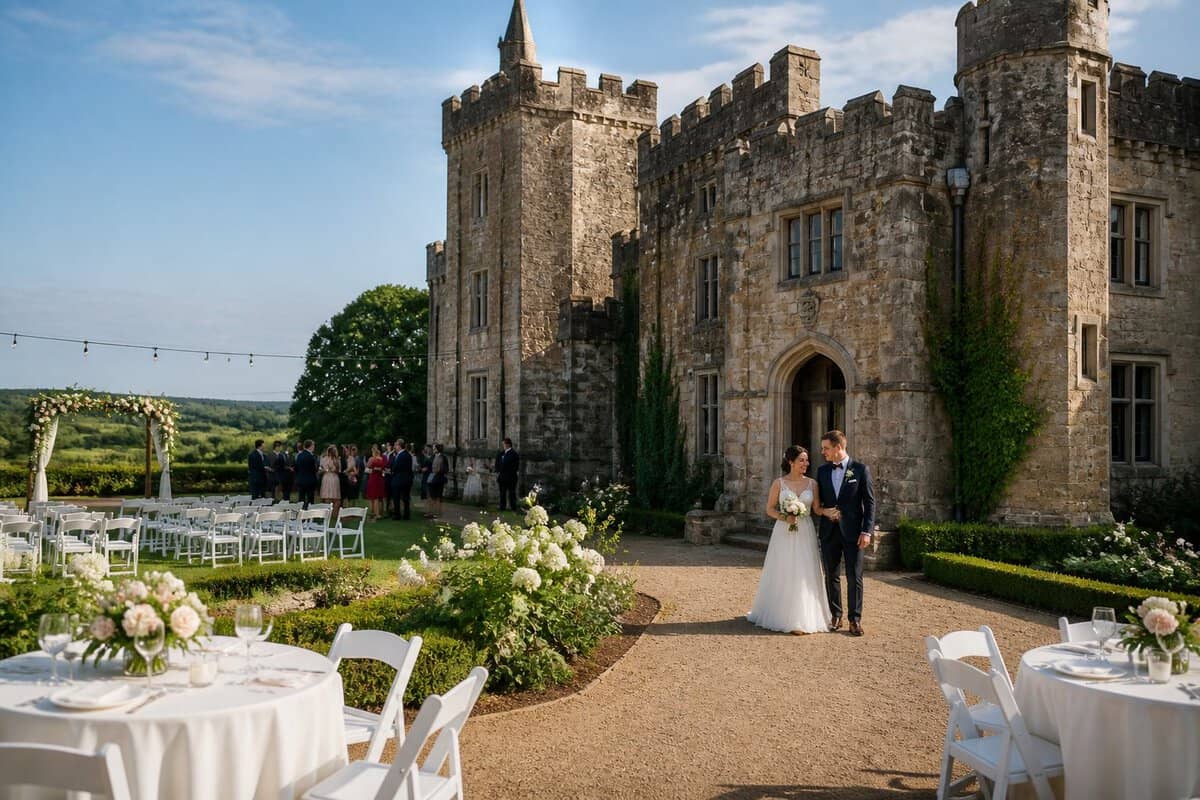
You can create a castle wedding on a practical budget by paying for the features you value most and letting the setting provide much of your décor. Compare the full package price, guest capacity, vendor rules, and date options before you book.
As you explore castle wedding venues and castle weddings, use the ideas below to narrow your choices, then contact your favorite properties for current quotes and available dates.
What Does a Castle Wedding Really Cost?
A castle wedding venue costs about $35,000 to $90,000 for a full celebration in many parts of the United States, while intimate and off-season events can come in below that range. The space alone often costs $10,000 to $40,000, with château-style banquet halls offering a lower-cost path to a royal wedding feel.
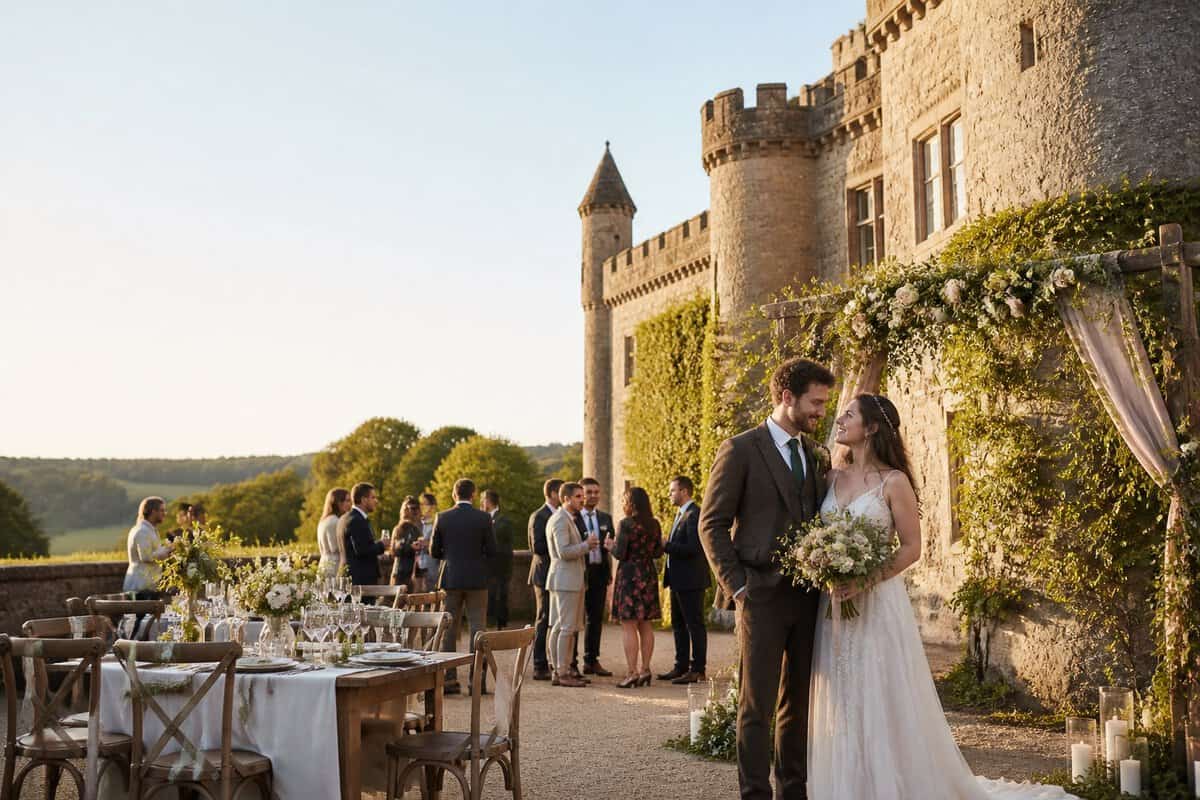
Your final quote will reflect the building, date, guest list, catering plan, and level of privacy. Before you tour, create a complete budget with a tool such as this guide to how to make a realistic wedding budget.
Venue Fees vs. Total Wedding Spend
The venue fee pays for access to the wedding venue and may include ceremony areas, reception rooms, tables, chairs, linens, parking, or getting-ready suites. Historic properties may charge for the building alone, while a package from Wedgewood Weddings or a château-style hall might bundle catering, bar service, staffing, and rentals.
Ask whether the listed price covers:
- Ceremony and reception spaces
- Setup and cleanup time
- Tables, chairs, and linens
- Catering and bar service
- Venue coordination
- Bridal and partner suites
- Insurance requirements
- Cake cutting and outside-vendor fees
Food often costs $85 to $250 or more per guest. An open bar can add $30 to $90 per guest. Photography, attire, flowers, entertainment, transportation, lodging, and invitations complete the rest of the wedding budget.
How Guest Count Changes the Final Price
Guest count affects both your per-person bill and the size of the space you need. A 50-person ceremony might fit inside a tower room or garden, while 200 guests require a larger hall, more staff, extra rentals, and expanded catering.
A smaller list also opens more venue choices. You can consider a ceremony-only rental, an intimate dinner, or a weekday celebration in a room that cannot host a large reception. Build a guest estimate before requesting quotes, then ask each venue for pricing at your expected count and at a smaller count.
What All-Inclusive Packages Can Save You
All-inclusive packages reduce planning time and make the starting price easier to compare. A package that combines the venue, meal, bar, tables, linens, staffing, and coordination can prevent separate rental and service charges from piling up.
Review the included menu, bar hours, staffing level, taxes, service charges, and minimum guest count. A lower package price may require you to add ceremony fees, upgraded meals, rentals, or required vendors. Compare the complete estimate beside a raw venue rental so you see the actual difference.
Where to Find Lower-Cost Castle Settings
Lower-cost castle settings are easiest to find at public historic properties, smaller château-style buildings, and venues with flexible weekday or off-season calendars. You can also search outside major cities, where land and operating costs place less pressure on venue prices.
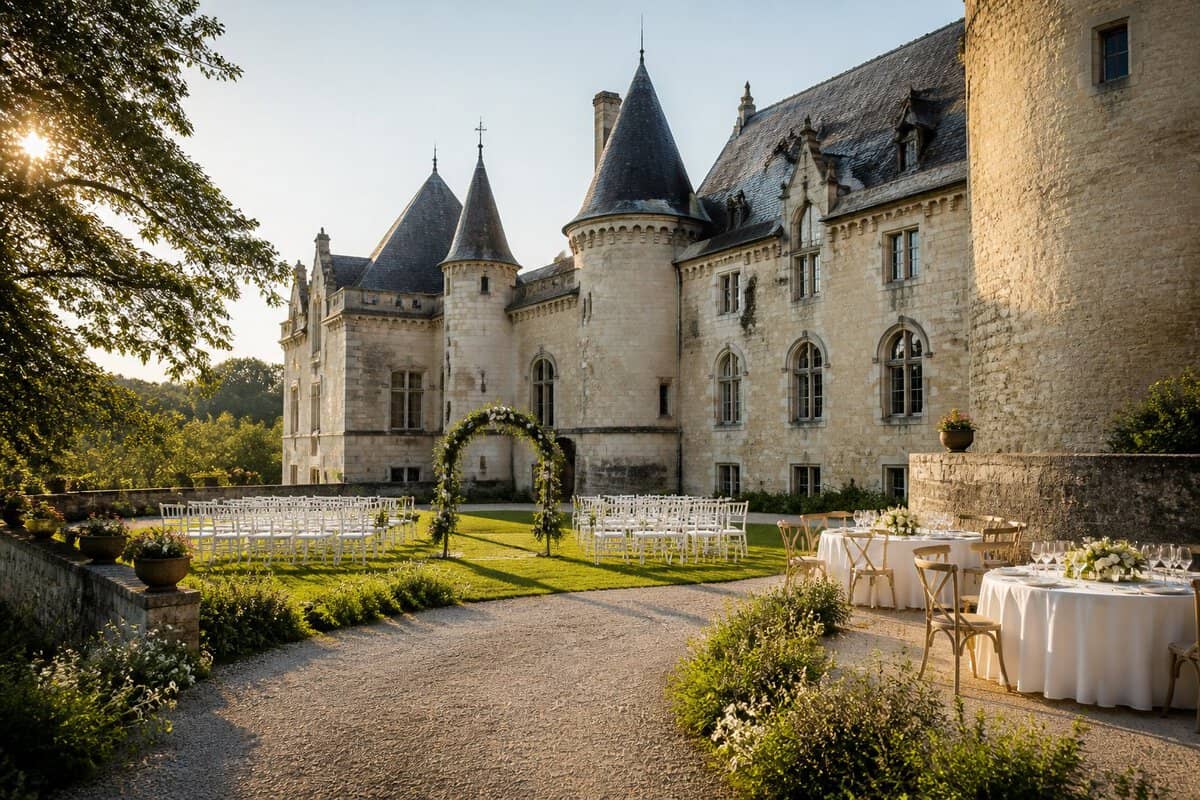
A property does not need to be a private royal residence to deliver stonework, towers, gardens, and dramatic photos. Expand your search to historic houses, museum properties, and event halls with castle-inspired architecture.
Historic Public Properties and Ceremony Rentals
Public landmarks can provide a beautiful setting for a ceremony, cocktail hour, or small reception. Gillette Castle sits near the Connecticut River and offers a memorable historic backdrop. A ceremony rental there might pair with a nearby restaurant or reception hall, which lets you pay for the castle experience without reserving an entire estate.
Pythian Castle and Joslyn Castle also show how historic properties can serve as event settings. Ask whether weddings are hosted in the full building, selected rooms, or outdoor grounds. A shorter rental window or ceremony-only booking may fit a smaller budget.
Confirm rules for candles, amplified music, photography, alcohol, chairs, and décor. Public sites can protect their historic features with strict policies, so include approved rentals in your first estimate.
Smaller Castles and Château-Style Venues
Smaller castles often create a stronger guest experience with fewer rooms to maintain and less space to staff. The Sterling Castle, Castle Farms, and similar château-style properties can offer grand entrances and formal grounds while serving a moderate guest count.
Look for a venue with one standout room, an attractive exterior, and a short list of required vendors. You might spend less on décor when the building supplies the visual setting. Ask about weekday minimums, ceremony fees, lodging, and whether the property hosts more than one event on the same day.
Weekday, Sunday, and Off-Season Availability
Friday, Sunday, winter, and early-spring dates can reduce venue fees by about 20% to 40% at some properties. A short winter ceremony with fireplaces and candlelight can deliver a strong castle atmosphere at a lower rate than a peak Saturday in June.
Request a price calendar instead of asking only for the cheapest date. Compare the venue fee, guest minimum, catering rate, bar package, and rental inclusions for each option. A discounted date loses its value if it requires a large minimum or costly transportation plan.
Affordable Standout Venues Around the U.S.
Affordable standout venues include historic museums, smaller estates, public landmarks, and château-style properties outside the most expensive metro areas. The best fit comes from matching your guest count and priorities to the venue’s rental model.
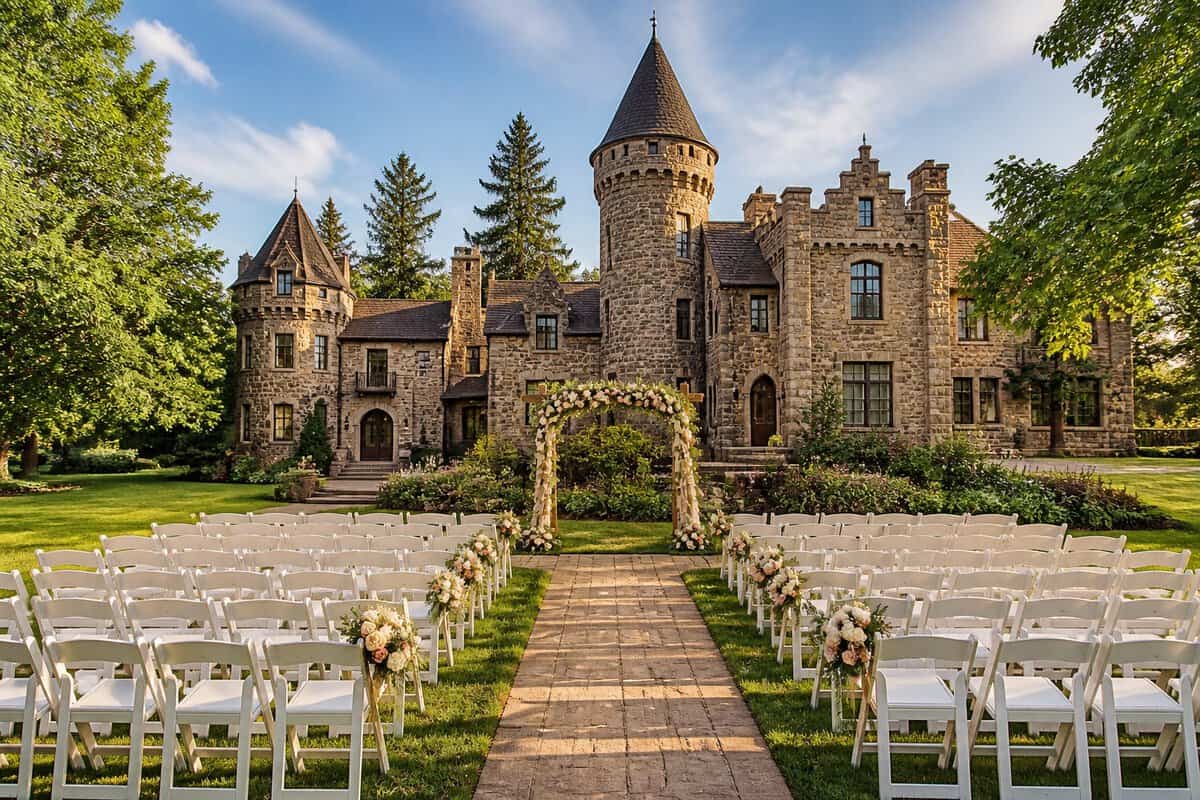
Treat these names as starting points for your search, since pricing, event access, and wedding policies change by date and package. Request a current proposal before adding a property to your shortlist.
Northeast Castles and Gilded Age Estates
The Northeast offers many dramatic properties, though estates near New York City and Boston often carry higher rates. Hammond Castle and the Hammond Castle Museum in Gloucester, Massachusetts, provide medieval character beside the coast. Searles Castle in Massachusetts adds elaborate historic interiors and landscaped grounds.
Thornewood Castle in Washington is farther west but still suits couples seeking a private, historic atmosphere. In New York, Oheka Castle in Huntington delivers Gilded Age grandeur, while Sands Point Preserve overlooks the Long Island Sound. Whitby Castle offers a castle setting with access to the New York metropolitan region.
Rhode Island options include Rosecliff in Newport, where formal rooms support an elegant celebration. Compare these properties with smaller estates and museums in nearby towns to find lower rental fees.
Ask about ceremony-only access, guest minimums, and approved caterers.
Southern and Mountain-Region Options
Southern and mountain-region venues often give you more space for your money, especially outside major tourist centers. Rhodes Hall in Atlanta offers Romanesque Revival architecture and a central location. Skylands Manor in New Jersey brings castle-like rooms and grounds to a wooded setting.
Biltmore Estate and Biltmore House in Asheville, North Carolina, provide a major destination experience against the Blue Ridge Mountains. Their scale creates many event possibilities, though premium dates and exclusive spaces require careful budget review.
Iolani Palace in Honolulu, Hawaii, offers a distinctive historic setting for couples planning a destination wedding. Include guest travel, lodging, meals, and local transportation when comparing a Hawaii celebration with a mainland venue.
Waterfront and Destination-Worthy Properties
Waterfront properties create memorable ceremonies while giving you a natural design feature. Boldt Castle on Lake St. Clair offers a landmark setting for couples who want water views and historic architecture. Sands Point Preserve combines estate grounds with Long Island Sound scenery, and Whitby Castle provides a polished castle atmosphere near the coast.
Destination venues need a wider cost calculation. Add hotel rooms, shuttle service, welcome events, guest meals, and possible travel for vendors. A lower venue fee can lose its savings when most guests need flights or several nights of lodging.
Ask whether the property offers a ceremony and reception package that reduces separate site fees.
How to Keep the Fairytale Within Budget
You can keep the fairytale within budget by selecting a few signature features, using the property’s architecture as décor, and comparing every vendor requirement before signing. A smaller guest list and flexible date create room for details such as upgraded food or photography.
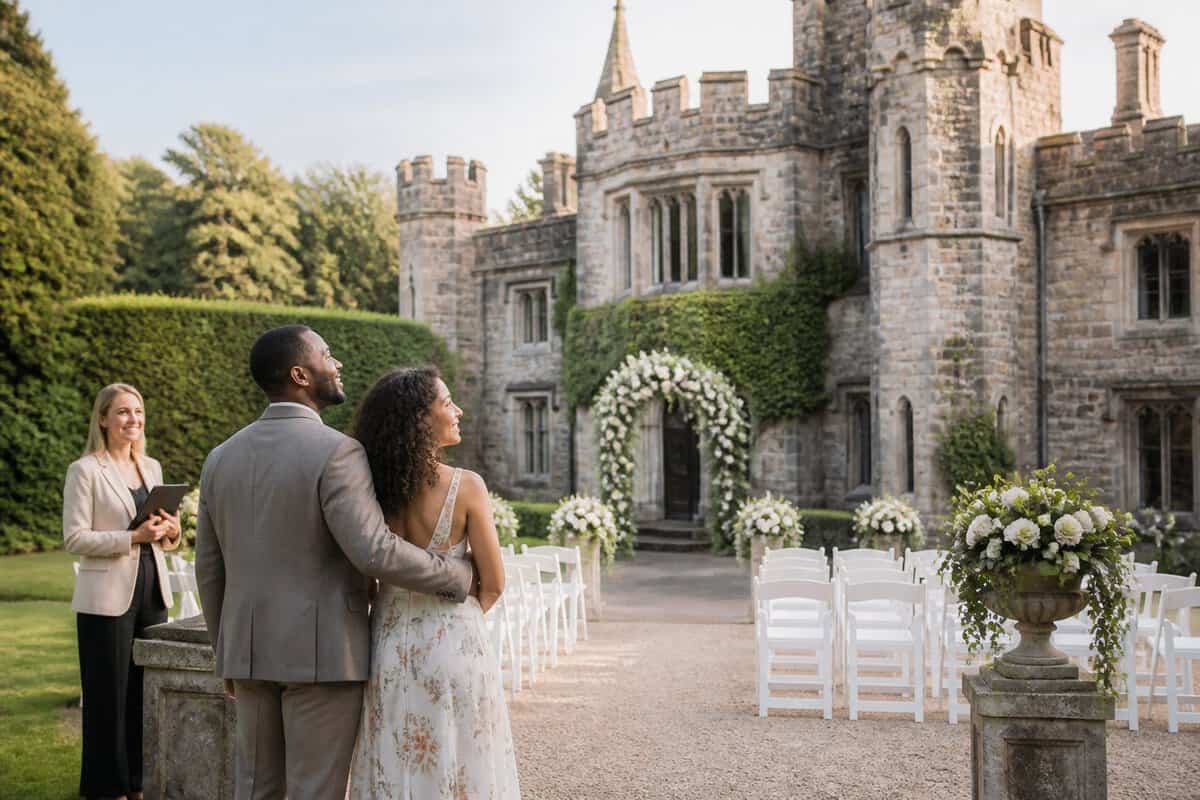
Use a written budget for every quote, including taxes, service charges, rentals, transportation, and lodging. These affordable wedding tips can help you protect the parts of the celebration you care about most.
Choose the Features That Matter Most
Choose two or three castle features that define your vision. You might prioritize formal gardens, a grand staircase, stained glass windows, or a stone ceremony room. Let those priorities guide the venue and package you select.
A venue with a strong outdoor ceremony site could let you reduce room décor. A building with Gothic Revival or Romanesque Revival details might need only restrained florals and candlelight. A Tudor-style mansion may offer enough character through timberwork, fireplaces, and period furnishings.
Write your priority list before touring. When a venue includes your top features, you can skip upgrades that add cost without changing the experience.
Use Gardens and Architecture as Built-In Décor
Formal gardens, manicured grounds, stone walls, carved wood, and stained glass windows create a finished setting for photos and guests. Position your ceremony and reception to use those details as part of the design.
Keep floral arrangements focused on the altar, head table, and guest tables. Choose candles, seasonal branches, or single-color flowers that support the building’s lines. Avoid covering historic details with large installations unless the venue requires extra visual treatment.
Ask your florist to tour the property or review clear photographs before preparing a proposal. The plan should respect fire rules, wall protections, floor limits, and restrictions on attaching décor.
Compare Vendor Rules, Catering, and Rental Inclusions
Vendor rules can change the value of a venue quote by thousands of dollars. Ask whether you must use an approved caterer, pay an outside-vendor fee, rent every item through the venue, or provide additional event insurance.
Compare these items in writing:
- Catering price per guest
- Bar package and service hours
- Tables, chairs, china, glassware, and linens
- Setup, cleanup, and staffing
- Cake cutting and corkage
- Florist, photographer, and DJ restrictions
- Parking, shuttle access, and restroom rentals
A flexible venue can let you bring a lower-cost caterer or rental company. Confirm that the savings remain after delivery, staffing, and service charges.
How to Compare Quotes Before You Book
Compare castle quotes by total event cost, included services, access time, guest experience, and contract terms. A venue with a higher rental fee might cost less after catering, rentals, and required staffing are included.
A clear comparison prevents the atmosphere from making the decision for you. Use a side-by-side budget sheet and add every line item before paying a deposit.
Questions to Ask During a Venue Tour
Ask how many weddings the property hosts on your date, how long you receive the space, and whether another event shares the grounds. Confirm the ceremony location, reception room, guest capacity, parking, accessibility, and getting-ready spaces.
Ask for the venue’s preferred vendor list and the rules for outside professionals. Discuss music limits, candles, decorations, alcohol, pets, photography locations, and cleanup duties. If you want a setting inspired by Versailles, The Great Gatsby, or The Cloisters, ask which rooms support that style without added décor fees.
Request a sample contract and a complete proposal before you make a decision. The documents should show taxes, service charges, deposits, payment dates, cancellation terms, and overtime rates.
Costs Commonly Missing From the Starting Price
Starting prices may leave out catering, bar service, rentals, staffing, ceremony fees, insurance, and taxes. You might also see charges for cake cutting, corkage, security, cleanup, coat check, heaters, restroom trailers, or parking attendants.
Remote venues can add shuttle service and guest lodging. Historic buildings may require special floor protection, security staff, or approved suppliers.
Ask each venue to mark every item as included, optional, required, or unavailable. Put the quotes into the same format.
A simple spreadsheet with one row per cost lets you compare a castle with a mansion, a garden property, or a venue such as the Van Dusen Mansion. For broader planning help, review how to manage wedding expenses.
How to Confirm Capacity, Weather Plans, and Access
Confirm capacity for your exact layout, including a dance floor, buffet, bar, band, DJ, cake table, and accessible seating. A room that holds 150 seated guests might hold fewer once entertainment and service areas are added.
Ask for a written rain plan with its location, cost, setup time, and guest flow. A ceremony site near the Rocky Mountains or an outdoor garden needs a firm plan for wind, heat, cold, and sudden storms.
Check when vendors can load in, when you can enter, and when cleanup must finish. Confirm elevator access, restroom locations, power supply, parking, lighting, and accessibility routes. These details shape your final quote and your guests’ comfort from arrival through departure.