
Affordable Wedding Venues Near the Beach: How to Save
A beach wedding gives you a beautiful setting, natural scenery, and a relaxed atmosphere without requiring a lavish ballroom. The key is choosing a wedding venue that fits your guest list and checking every fee before you sign.
The most affordable wedding venues near the beach usually pair a modest rental fee with an off-peak date, a smaller guest count, and simple reception plans. Public beaches, state parks, coastal inns, and community spaces can all support a memorable beach wedding when you plan around permits, weather, and rentals.
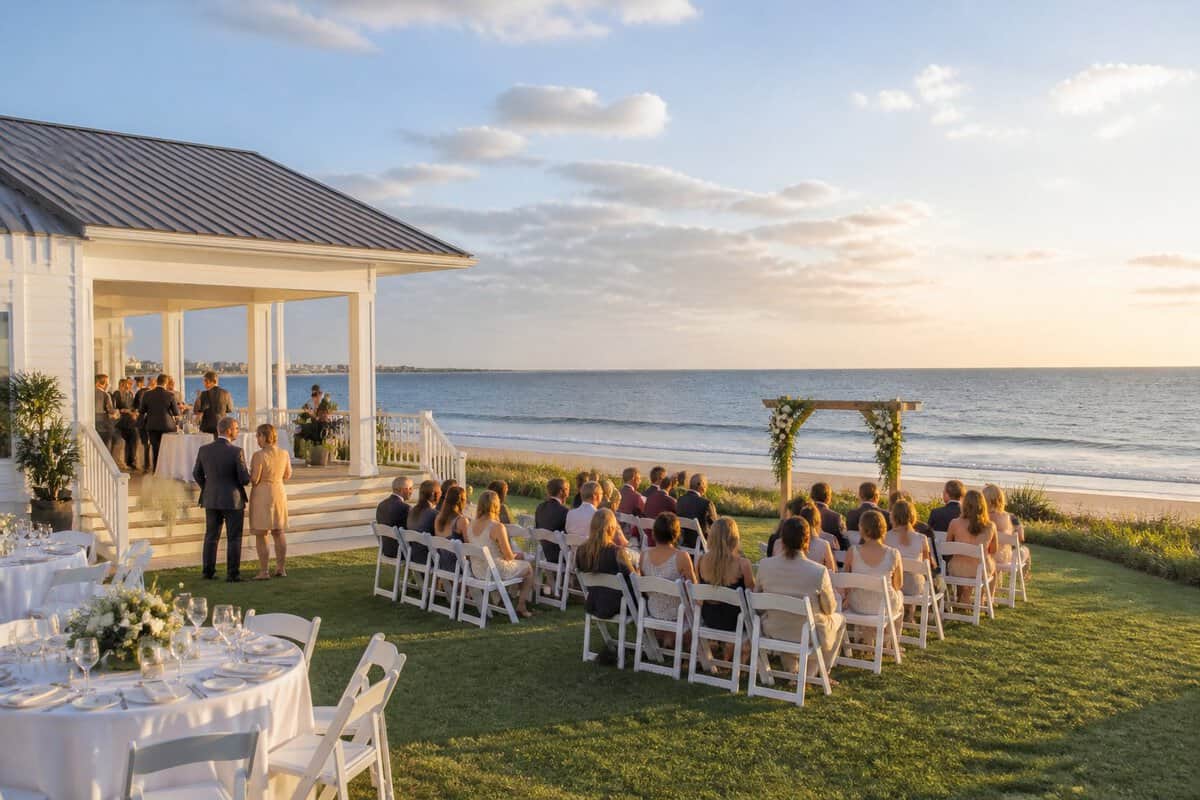
You can also save by holding the ceremony at the shoreline and moving dinner to a nearby restaurant or private home. Explore beach wedding ideas on a budget as you compare locations, then request an itemized quote from each venue you like.
What Makes a Beachfront Venue Affordable?
Affordable beachfront venues keep costs manageable through lower rental fees, flexible dates, smaller guest limits, or included services. A private beachfront may cost more than a public beach permit, while a simple outdoor wedding can reduce décor and room expenses.
Venue Fees vs. Total Wedding Costs
The venue rental is only one part of your wedding budget. Ask about food and beverage minimums, service charges, taxes, insurance, ceremony fees, cleanup, parking, power, restrooms, tables, chairs, and backup space.
A low rental price can rise quickly when you add outside rentals and vendors. Compare the full package in writing, including setup and breakdown hours.
A location with a higher starting fee might cost less when it includes seating, lighting, staff, and an indoor reception room.
Guest Count, Season, and Day-of-Week Pricing
Your guest count affects food, seating, restrooms, parking, and staffing. An intimate ceremony with 25 to 50 guests gives you more access to small coastal inns, restaurants, and private homes.
Choose a weekday, Sunday, or off-season date to lower venue rental costs. Coastal markets charge more during popular summer weekends and holiday periods.
Ask about Friday rates, brunch receptions, winter dates, and shorter event windows.
Public Beach Permits vs. Private Beachfront Access
Public beaches can offer a low-cost ceremony setting, though you may need a permit, insurance, noise approval, parking passes, and rules for chairs or arches. Contact the city, county, or park office before sending invitations.
Private beachfront access provides more control over guest areas, music, décor, and timing. A smaller private property near the water may offer better value when it includes a house, restrooms, parking, and reception space in one contract.
Which Venue Type Fits Your Budget?
The best venue type depends on how much convenience you want included in the price. Hotels and resorts simplify lodging, restaurants reduce rental needs, and private homes create room for a smaller wedding weekend.

Hotels and Resorts With On-Site Accommodations
A hotel or resort works well when many guests need rooms. Group rates, ceremony space, catering, guest rooms, and a reception area can be combined into one plan.
Ask whether the property charges a room block fee, resort fee, parking fee, or food minimum. A coastal hotel may offer a lower per-person package during the off-season, especially for a Sunday celebration.
On-site accommodations also reduce transportation needs for your guests. That savings can help balance a venue price that looks higher at first.
Private Homes and Small Coastal Inns
Private homes and small inns suit intimate destination wedding plans. You may receive lodging, a yard or deck, kitchen access, and beach access through one rental agreement.
Review local rules before booking. Some vacation rentals prohibit weddings, amplified music, tents, or gatherings above the overnight guest limit.
Confirm the property’s event policy in writing and ask who handles cleanup, trash, restrooms, and liability coverage.
Small inns can provide a welcoming setting for a ceremony and dinner. Their guest limits make them a strong fit for couples who want a personal wedding weekend with close family and friends.
Restaurants, Clubs, and Waterfront Event Spaces
Restaurants and waterfront event spaces can lower costs because the kitchen, staff, tables, chairs, and restrooms are already in place. A private dining room may work well for a small reception after a ceremony at a nearby beach.
Ask about room minimums, menu choices, bar packages, cake fees, service charges, and event length. Lunch, brunch, and early dinner bookings can offer better rates than prime Saturday evening times.
Clubs and community waterfront facilities may also have flexible rental policies. Check whether you can bring your own décor or select from approved vendors.
All-Inclusive Packages and Their Trade-Offs
An all-inclusive wedding venue can make your budget easier to track by combining the ceremony, reception, food, drinks, rentals, and coordination. It also reduces the number of separate contracts you need to manage.
Read the package line by line. Check the guest count, menu, bar hours, décor choices, photography time, setup, taxes, service charges, and overtime rate.
Some packages limit vendor selection or add fees for upgrades.
A package works best when its included services match your priorities. If you want a custom menu, independent vendors, or a long reception, an à la carte venue may give you better control.
Affordable Florida Coastal Options to Compare
Florida gives you a wide range of coastal price points, from busy Miami and Tampa markets to smaller Gulf, Panhandle, and Keys communities. Compare the full travel cost, guest lodging, permit rules, and seasonal rates before choosing a Florida wedding location.
Fort Lauderdale and Miami Beach Area Choices
Fort Lauderdale and Miami Beach offer many hotels, restaurants, and waterfront event spaces. The Sunny Miami Sunny Isles Beach area provides a polished coastal setting, while smaller restaurants and beach resorts can provide a more manageable guest experience.
Options to compare include Pier Sixty-Six Resort, Curio Collection by Hilton properties, Café Gabbiano, and Ocean Manor Beach Resort. Each type serves a different budget structure, so ask about food minimums, room blocks, ceremony fees, and beach access.
High-demand dates increase costs in South Florida. Consider a weekday, brunch, or off-season reception and keep the ceremony guest list focused.
Tampa Bay and Sarasota Alternatives
Tampa Bay and Sarasota give you coastal scenery with access to a broad range of hotels, restaurants, parks, and waterfront spaces. These areas work well when guests want beaches plus city services and easier airport access.
Compare a resort package with a restaurant reception near the water. Gulfarium Marine Adventure Park offers a distinctive setting to investigate for couples who want an event space with entertainment value.
Check current event rules, capacity, catering terms, and availability directly with each property.
A Florida wedding in this region can also pair the ceremony with a smaller dinner. That format reduces seating, décor, and staffing needs.
Florida Keys and Panhandle Escapes
The Florida Keys offer intimate waterfront settings, small inns, private homes, and sunset ceremonies. Travel and lodging costs can rise, so request group rates before choosing a remote island.
The Panhandle provides wide beaches and resort communities such as Fort Walton Beach. Properties with on-site lodging can reduce guest transportation and simplify the wedding weekend.
Compare total travel time, room prices, backup plans, and vendor access. A lower venue fee loses its value when guests face costly flights, limited rooms, or long transfers.
Other U.S. Coastal Destinations Worth Pricing
Coastal destinations outside Florida can offer better value when you choose smaller towns, less popular dates, or venues near public beaches. Long Branch and other shore communities provide access to ocean views, restaurants, inns, and flexible event spaces.
New Jersey Shore and Long Branch Celebrations
Long Branch combines beach access, hotels, restaurants, and event spaces in a walkable coastal setting. Wave Resort in Pier Village is one property to compare, while nearby towns may offer smaller inns, community facilities, or public beach ceremonies.
New Jersey shore communities also include Asbury Park, Ocean City, Strathmere, and Atlantic City. Ask each municipality about beach permits, seasonal restrictions, alcohol rules, parking, and sound limits.
A Sunday or shoulder-season wedding can reduce costs. Smaller guest lists open more choices, including restaurants and historic inns near the water.
Carolina and Gulf Coast Getaways
The Carolinas offer beach wedding venues in places such as Folly Beach, North Myrtle Beach, and the Outer Banks. Gulf Coast options include Alabama communities such as Orange Beach and Florida’s Panhandle.
Look for venues with indoor backup rooms, simple catering packages, and guest lodging nearby. A resort with ceremony space and rooms may serve a wedding weekend well, while a beach permit paired with a restaurant dinner may fit a tighter budget.
Local rules differ by town and county. Confirm permit deadlines, chair limits, fire rules, and weather policies before booking.
When a Fly-In Destination Wedding Saves Money
A fly-in destination wedding can save money when the destination has lower venue, food, or lodging costs than your home market. The savings work best when most guests live near the destination airport and the event uses a small guest list.
Compare airfare, hotel rates, rental cars, welcome events, and extra vacation days. A domestic destination wedding in a smaller coastal town may also offer affordable options without passport costs.
Ask guests about travel comfort before committing. A location with simple flights and several lodging tiers helps more people attend without increasing your venue budget.
How to Keep the Final Bill Under Control
You keep the final bill under control by setting a complete wedding budget, checking every contract fee, and choosing services that solve more than one need. Focus on the guest experience first, then trim upgrades that add little value.
Questions to Ask Before Signing a Contract
Request written answers to these questions:
- What does the rental fee include?
- Are ceremony and reception spaces priced separately?
- What are the food and beverage minimums?
- Which taxes, service charges, staffing fees, and cleanup charges apply?
- Are tables, chairs, linens, lighting, and sound equipment included?
- Can you bring outside caterers, alcohol, décor, or entertainment?
- What happens if rain, wind, flooding, or extreme heat affects the beach ceremony?
- How much are overtime, rescheduling, cancellation, and damage fees?
- Is event insurance required?
- When are deposits and final payments due?
Compare itemized totals across venues. Avoid choosing from a starting price that leaves major services out.
Ways to Reduce Food, Rental, and Decor Spending
Choose a brunch, lunch, cocktail reception, or family-style dinner to reduce food costs. Limit the bar to beer, wine, and one signature drink, or host a short reception with a clear service window.
Use the beach as your main décor and add a focused floral design at the arbor, welcome table, or reception area. Rent standard chairs and linens, reuse ceremony arrangements, and choose venues with built-in lighting.
Ask about package substitutions. Removing unused favors, upgraded linens, specialty chargers, or late-night snacks can free money for photography or guest transportation.
More ideas for how to decorate a wedding venue on a budget can help you plan a polished setting with fewer rentals.
When a Wedding Planner Pays for Themselves
A wedding planner pays for themselves when they prevent costly mistakes, negotiate vendor terms, manage setup, or coordinate a complex beach ceremony. Their value is strongest when your venue has several vendors, strict permit rules, or a distant location.
Ask for a full-service, partial-planning, or day-of coordination quote. A coordinator who handles timelines, deliveries, weather changes, and vendor questions can protect your time and reduce last-minute labor fees.
Before hiring, confirm the exact services, planning hours, travel charges, assistant fees, and emergency coverage. A clear scope lets you compare the planner’s cost with the work you would otherwise manage yourself.