
Affordable Wedding Venues Smoky Mountains: Planning Guide
A Smoky Mountain wedding gives you sweeping views, forested hills, and a memorable setting without requiring a large ballroom or a long guest list. You can create an affordable wedding by matching the venue, guest count, date, and included services to your budget from the start.
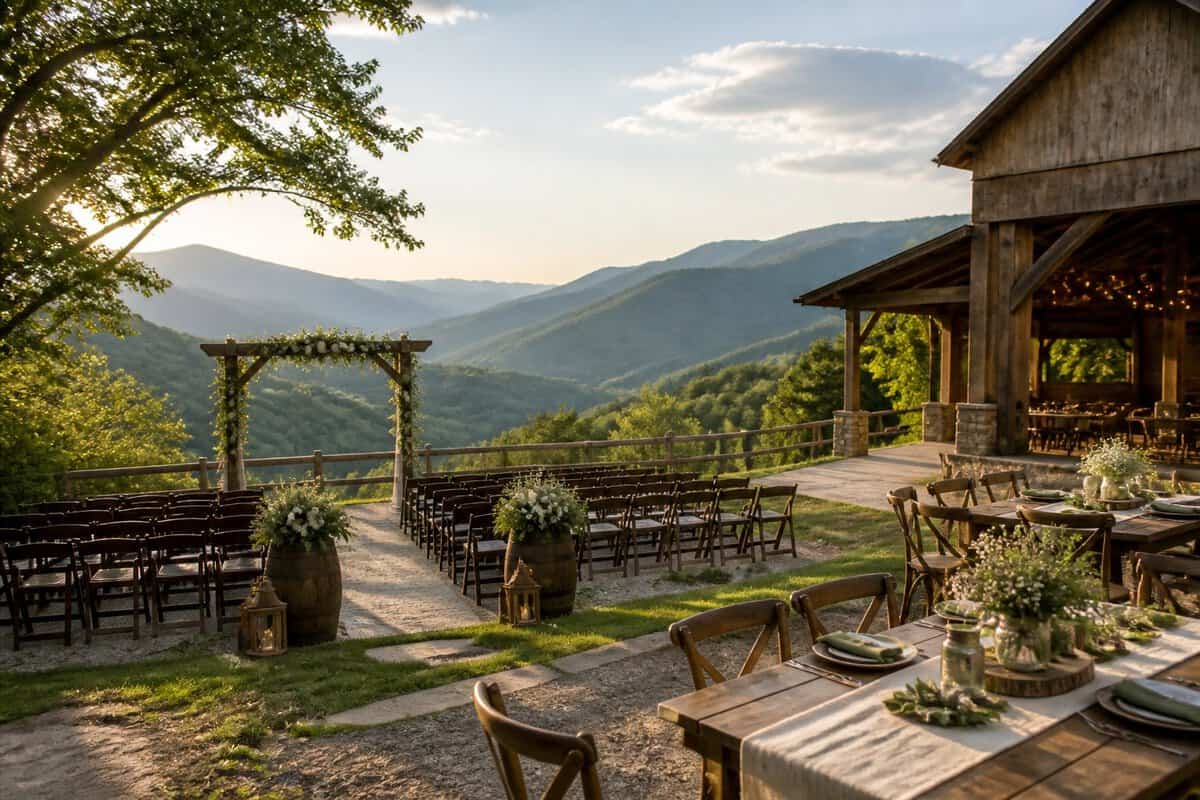
The most affordable mountain wedding plans focus on the total event cost, not only the venue rental. A lower rental fee can lose its value when you add travel, lodging, catering, permits, rentals, and weather backups.
You can compare small chapels, outdoor ceremony sites, cabins, and reception spaces across Tennessee and North Carolina. Start by setting your guest count and total budget, then ask each venue for a complete written estimate. For more ideas, explore these affordable wedding tips before contacting venues.
What Makes a Smoky Mountain Venue Affordable?
An affordable Smoky Mountain venue keeps the rental fee clear, limits extra charges, and includes useful basics such as seating or setup. Your guest count, event length, season, and reception plans shape the final price.
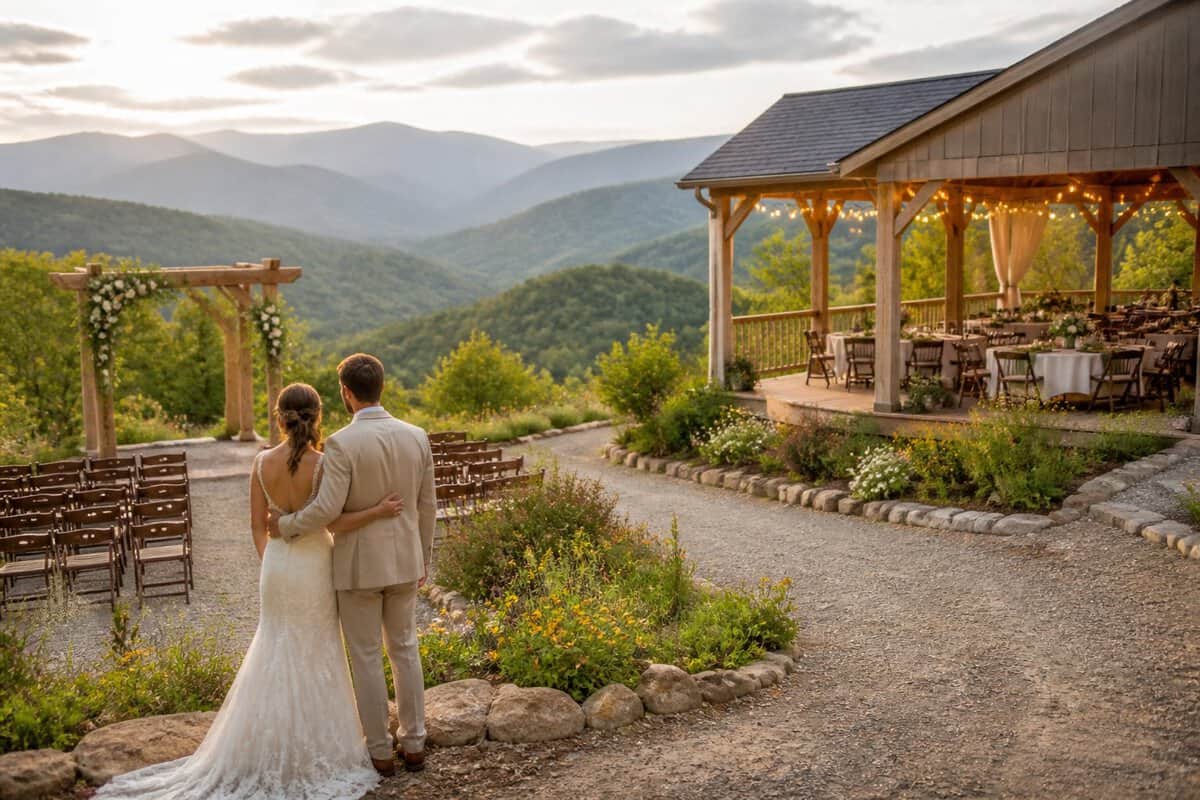
Small venues support affordable weddings because you pay for less space and need fewer rentals. Outdoor sites with natural scenery also reduce the amount of decor required.
Ask for itemized pricing before you compare wedding venues in the Smoky Mountains, since package names can hide important costs.
How Much Do Smoky Mountain Wedding Venues Cost?
Prices range from a modest permit or ceremony fee for a small public-site wedding to several thousand dollars for a private venue with reception services. A two-person elopement has a very different budget from a 100-guest celebration with catering and overnight lodging.
Request quotes for the same details from each venue:
- Guest count
- Ceremony and reception hours
- Preferred date
- Food and beverage needs
- Photography access
- Setup and cleanup
- Overnight lodging
Ask whether weekday and off-season dates receive lower rates. A short ceremony package may suit an intimate wedding, while a full-day rental works better when guests need time for dinner and dancing.
What Is Usually Included in a Venue Package?
Venue packages may include ceremony space, chairs, tables, an officiant, basic decorations, and setup. Some packages add photography, flowers, music, cake, or reception catering.
Read the package list line by line. Confirm the number of chairs, table linens, parking spaces, cleanup services, and hours included.
Ask who handles setup and whether you can bring outside vendors. A package with fewer features may fit your plans better if you do not need every service.
Which Fees Can Increase the Final Price?
Service charges, taxes, overtime, travel fees, cleanup, rentals, catering minimums, and lodging can raise your final price. Decor restrictions also affect the budget when a venue requires approved vendors or charges for candles, arches, or outside food.
Before signing, request a written estimate that lists:
- Venue rental and security deposit
- Taxes and service charges
- Chairs, tables, linens, and sound equipment
- Setup, breakdown, and cleaning
- Vendor fees and insurance requirements
- Overtime and cancellation terms
- Parking and guest transportation
Keep a separate amount for weather changes and last-minute needs. Reviewing what most wedding venues cost can help you spot an estimate that leaves out common charges.
Choose the Right Venue Style for Your Budget
Your venue style controls how much you spend on space, rentals, decor, and guest comfort. Outdoor ceremony sites, small indoor spaces, cabins, and full-service mountain venues each suit a different budget.
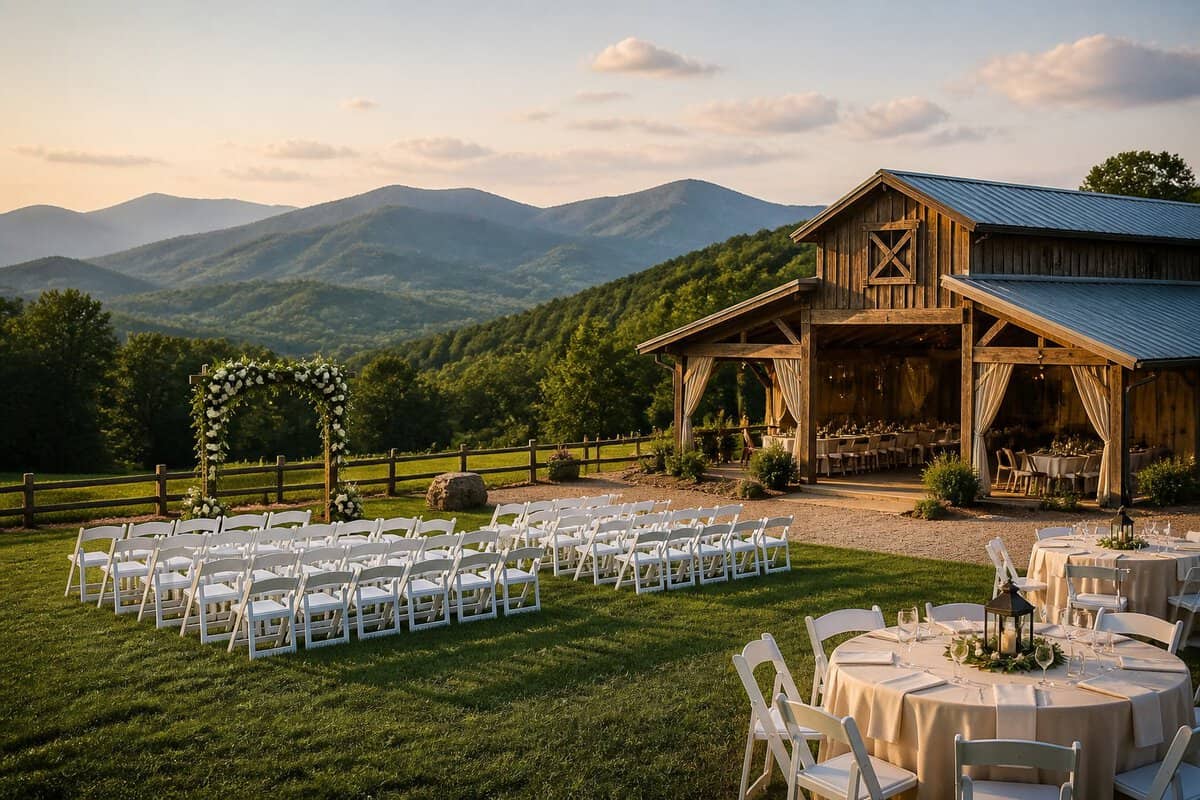
Choose the setting first, then confirm whether it supports your reception plans. A scenic ceremony location may have no kitchen, restrooms, covered seating, or space for a meal.
A venue with lodging can cost more upfront while reducing transportation and accommodation needs.
Outdoor Ceremony Sites With Natural Backdrops
An outdoor wedding site with panoramic mountain views can reduce decor costs because the landscape provides the main visual feature. Parks, private overlooks, gardens, and rustic properties may work well for a short outdoor ceremony.
Confirm these details before booking:
- Rain coverage or a nearby indoor option
- Restrooms and parking
- Walking distance from vehicles to the ceremony area
- Seating rules and rental access
- Noise limits and end times
- Permit or insurance requirements
A small arch, aisle flowers, and simple chairs may be enough for the ceremony. Review these affordable outdoor wedding ideas for ways to keep the setting polished without filling the space with decorations.
Chapels, Cabins, and Small Indoor Spaces
Chapels offer a weather-ready ceremony with seating, lighting, and restrooms in one location. Cabins and small indoor venues suit elopements and intimate weddings when you want a private meal or gathering after the vows.
Ask about kitchen access, noise rules, sleeping capacity, parking, and cleaning. A cabin that hosts guests may have limited reception seating, while a chapel may require you to book a separate restaurant or reception room.
Small spaces also need careful guest planning. Measure dining and dance areas, check table layouts, and confirm whether mobility needs are supported.
These tips for choosing the perfect venue for a small wedding can help you compare space before you pay a deposit.
Mountain Venues With Reception Space and Lodging
A mountain wedding venue with reception space and lodging can simplify a destination wedding for guests. You may save on transportation when the ceremony, meal, and overnight rooms share one property.
Compare the full weekend cost, including room rates, cleaning fees, food minimums, and required rental periods. Ask whether every guest must stay on-site and whether outside catering is allowed.
A venue with lodging works best when your group wants a shared weekend experience and the added rooms fit the budget.
Where Should You Look in the Smokies?
Gatlinburg, Sevierville, Pigeon Forge, and nearby communities offer convenient Tennessee locations, while North Carolina provides additional mountain settings on the eastern side of the range. Compare travel time, lodging, venue rules, and guest activities along with the ceremony view.
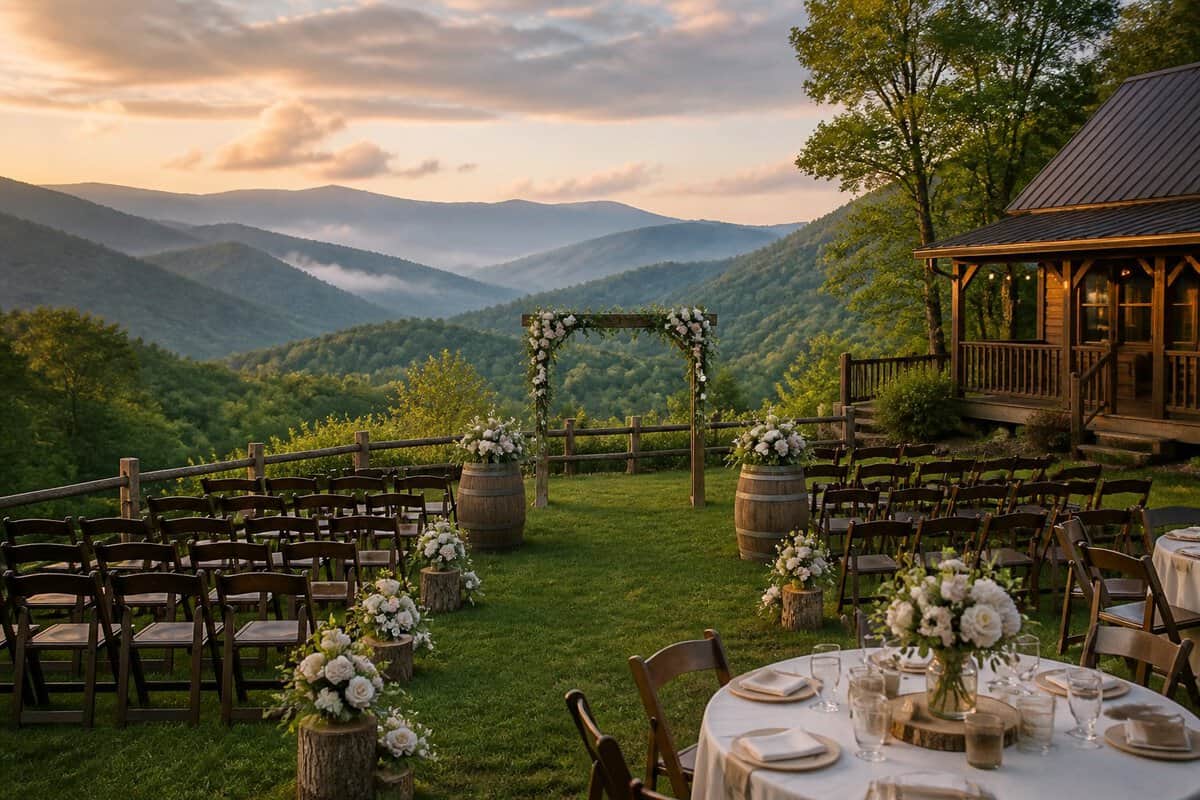
Location affects the guest experience and the hidden cost of transportation. A remote overlook may have a lower fee yet require shuttle service, while a venue near town may simplify lodging, meals, and vendor access.
Gatlinburg and Nearby Mountain Settings
Gatlinburg places you close to Great Smoky Mountains attractions, cabins, restaurants, and wedding vendors. You can find chapels, private estates, outdoor sites, and small reception spaces within a short drive of town.
Check road access and parking before choosing a mountain location. Steep drives, narrow roads, and seasonal traffic can affect arrival times.
Ask whether the venue provides a weather backup and whether guests can reach the ceremony without stairs or long walks.
Sevierville and Pigeon Forge Options
Sevierville and Pigeon Forge offer cabins, event barns, hotels, restaurants, and entertainment for destination wedding guests. These areas can work well when your celebration includes a reception, group lodging, or several days of activities.
Compare weekday rates, minimum guest counts, and event restrictions. Some venues focus on ceremonies, while others provide dining areas, kitchens, dance floors, and overnight rooms.
A property near major roads may also reduce shuttle costs for older guests and families.
Tennessee vs. North Carolina Wedding Locations
Tennessee locations near Gatlinburg, Sevierville, and Pigeon Forge provide convenient access to Smoky Mountain tourism services. North Carolina locations can offer quieter settings and different venue styles, especially near communities such as Bryson City and Cherokee.
Confirm marriage license rules with the county where you will marry. State and county requirements differ, and a venue booking does not replace legal planning.
Compare the drive from your guests’ homes, lodging supply, vendor travel charges, and weather patterns before selecting a side of the mountains. You can also review these best places to get married in Tennessee for additional location ideas.
Can You Get Married in Great Smoky Mountains National Park?
You can hold an outdoor ceremony in Great Smoky Mountains National Park when you obtain a Special Use Permit and follow the park’s location, group-size, timing, and conduct rules. The park offers a scenic setting, though it provides fewer private venue services than a commercial property.
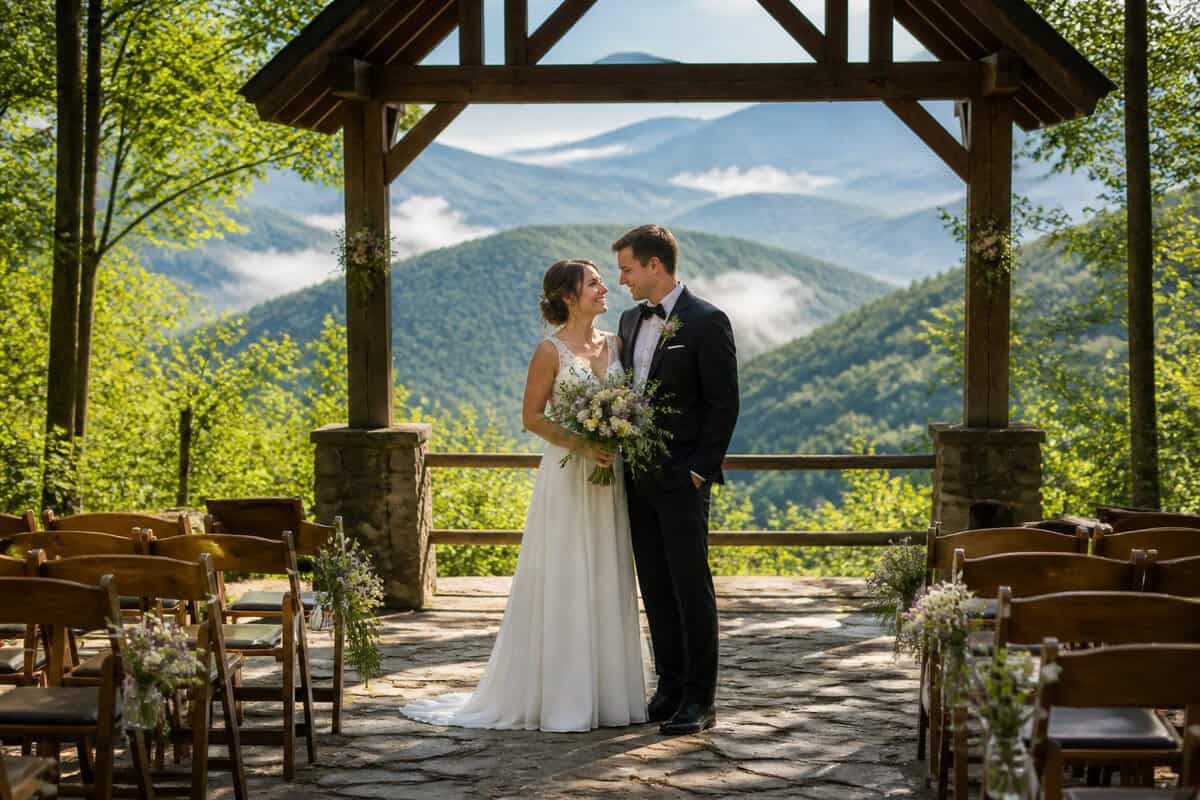
A park ceremony can reduce venue costs for a small group, yet you still need to plan transportation, photography, flowers, seating, lodging, and a reception location.
Review current park requirements before setting your date because approved locations and rules control how the ceremony operates.
Permit Rules and Ceremony Location Limits
Weddings, vow renewals, elopements, and similar ceremonies require a Special Use Permit in the park. The application includes a nonrefundable fee, and ceremonies must follow restrictions on location, group size, time, parking, decorations, and activities.
Apply early and provide accurate details about your guest count, ceremony site, date, vendors, and equipment. Ask the park about current application timing and approved locations.
A permit does not grant exclusive use of a public area, so visitors may remain nearby during your ceremony.
Cades Cove, Laurel Falls, and Clingmans Dome Considerations
Cades Cove offers historic scenery and a valley setting, while Laurel Falls and Clingmans Dome involve access, crowd, weather, and parking concerns. Popular locations may have heavy visitor traffic and limited space for a wedding party.
Check road closures, seasonal access, walking distances, and group-size rules before choosing a site. Laurel Falls requires a hike, which affects guests with mobility limits and the amount of equipment you can carry.
Clingmans Dome has high elevation and changing weather, so warm layers and a backup plan deserve attention.
Accessibility, Wildlife, and Leave-No-Trace Planning
Choose a ceremony site that fits your guests’ mobility needs and includes a clear plan for parking, walking, restrooms, and weather. Keep food, flowers, and personal items secured because wildlife encounters are possible.
Follow park rules for waste, decorations, music, flowers, and photography. Leave plants, rocks, historic features, and natural objects in place.
Arrange cleanup immediately after the ceremony and keep the group together in designated areas.
How to Plan an Affordable Destination Wedding
An affordable destination wedding starts with a guest count, venue package, travel plan, and weather backup that fit the same budget. Smoky Mountain celebrations become easier to manage when the ceremony, reception, lodging, and guest activities are planned as connected costs.
Your location sets the tone, while your schedule controls many expenses. A weekday ceremony, smaller guest list, shared lodging, and limited decor can free money for photography or a meal your guests will enjoy.
Match Guest Count to Venue Capacity
Set your guest count before touring venues because capacity affects the rental fee, seating plan, food minimum, lodging, and transportation. An intimate wedding with 10 to 30 guests opens more options than a large reception.
Ask each venue for its seated meal capacity, ceremony capacity, parking limit, and overnight capacity. Confirm whether children, vendors, and overnight guests count toward the maximum.
A venue that fits your group closely helps you avoid paying for unused rooms or oversized event areas.
Save on Decor With Mountain Views
Use the natural landscape as your main design feature and add a focused set of details, such as a ceremony arch, personal flowers, table candles, or welcome signs. Choose colors that complement the forest and mountain scenery.
Ask whether the venue includes chairs, tables, linens, arches, or basic lighting. Rent reusable pieces when possible and select flowers that handle the season and travel.
These affordable wedding ideas and budget venue decorating tips can help you prioritize details guests will notice.
Choose a Season and Create a Weather Backup Plan
Choose your date after reviewing weather, road conditions, visitor traffic, and venue rates. Spring and fall bring strong demand in many mountain areas, while winter and weekdays may offer more availability and lower prices.
Put the backup plan in the contract. Confirm the indoor location, decision deadline, extra rental costs, guest communication process, and refund terms.
Ask how the venue handles rain, wind, smoke, heat, and road closures. A clear plan protects your schedule and reduces rushed decisions.
Questions to Ask Before Signing a Contract
Ask for written answers to every cost, rule, and service that affects your wedding. Use this checklist during venue calls and tours:
- What is the total price with taxes, fees, deposits, and required services?
- How many hours include access, setup, ceremony, reception, and cleanup?
- What happens if rain, wildfire smoke, severe weather, or road closures affect the date?
- Which vendors can you hire, and are outside vendors allowed?
- Are chairs, tables, linens, lighting, sound equipment, and cleanup included?
- Does the venue require catering, lodging, insurance, or transportation?
- What are the cancellation, postponement, refund, and overtime policies?
- What accessibility features, parking spaces, and restroom options are available?
- Who is your day-of contact, and when will the final guest count be due?
Compare complete estimates side by side, then choose the venue that fits your budget, guest needs, and ceremony plans without relying on vague package promises.