
All-Inclusive Wedding Venues Europe: What’s Included
A destination wedding in Europe gives you striking scenery, local food, and a memorable experience for everyone who makes the trip. All-inclusive wedding venues in Europe bring many of the key services into one package, which helps you plan across time zones and manage costs with fewer separate contracts.
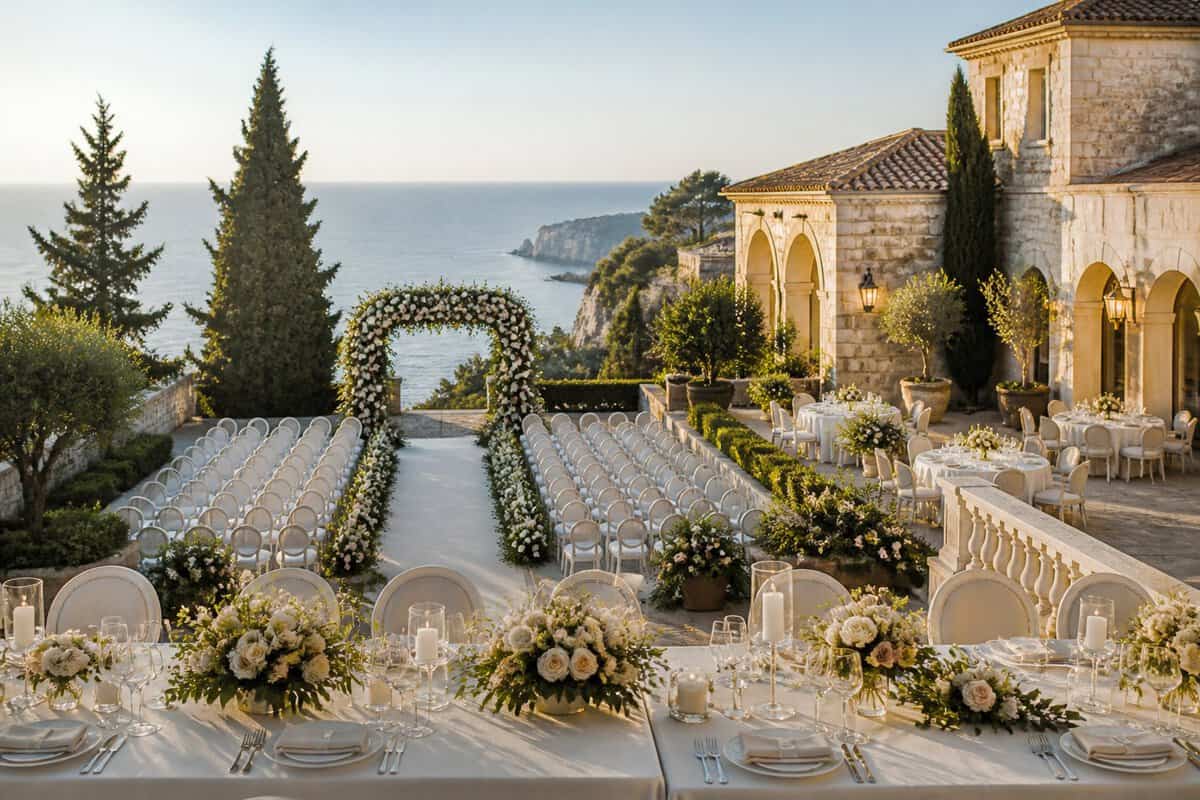
The best package gives you a clear list of inclusions, flexible choices for your celebration, and a realistic total price before you sign. You can find that balance at a coastal resort, private villa, countryside estate, or historic hotel.
If you want expert help matching your guest count and style to a European venue, explore your options and start planning your europe wedding with a trusted local team.
What Does All-Inclusive Mean for a European Wedding?
An all-inclusive European wedding package combines core venue, food, service, and event details under one coordinated agreement. The exact definition varies by property, so you need to review the package schedule and payment terms closely.
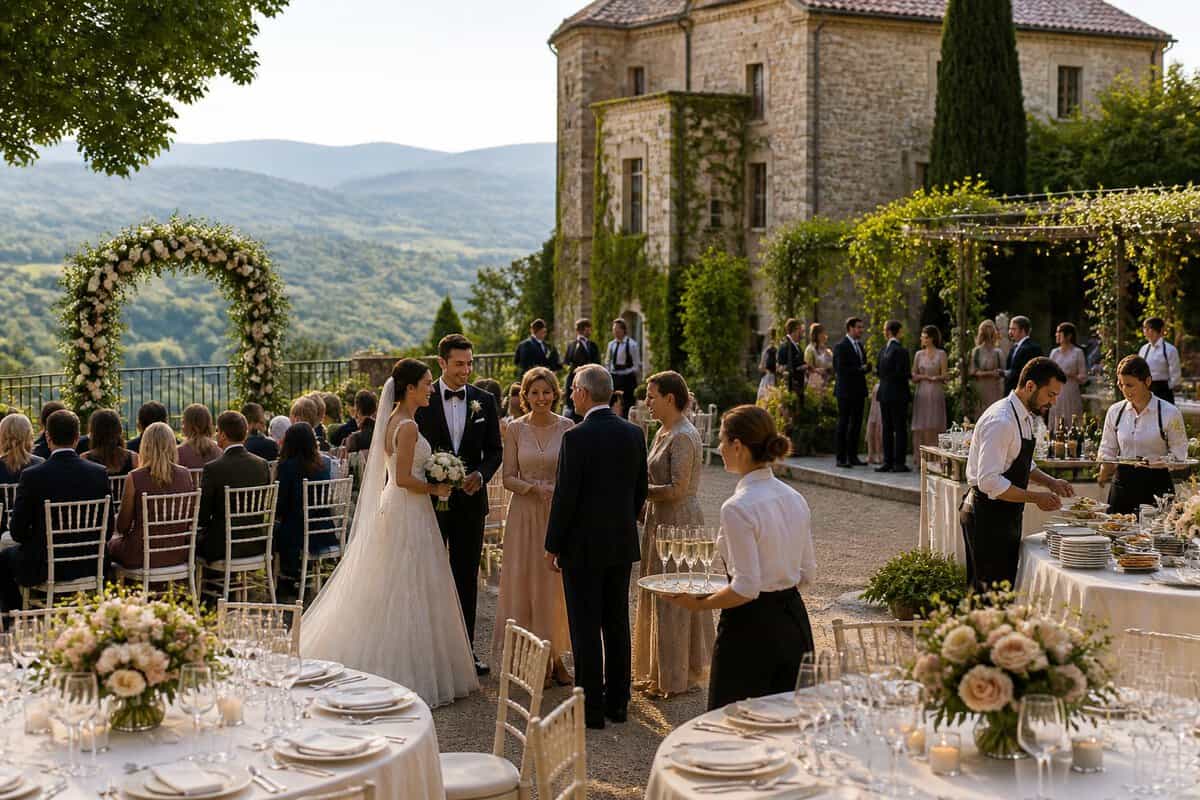
Packages serve many celebration sizes, from private elopements and micro weddings to larger receptions and vow renewals. Some wedding venues in Europe include accommodation and planning support, while others focus on the event itself.
Typical Inclusions in Venue Packages
A core package may include:
- Ceremony and reception spaces
- Tables, chairs, linens, glassware, and place settings
- A set menu, buffet, or family-style meal
- Beer, wine, soft drinks, and a defined bar service
- Basic floral arrangements and ceremony décor
- Event staffing and day-of coordination
- Cake or dessert service
- Sound equipment and background music
- A getting-ready room or private suite
Some venues add a photographer, entertainment, guest rooms, transfers, welcome dinner, or farewell brunch. Ask whether each item is included for every guest or limited to a package tier.
What Is Usually Priced Separately?
Budget separately for travel, guest accommodations, flights, hair and makeup, upgraded flowers, premium liquor, live music, extended photography coverage, and transportation outside the venue’s stated route. Legal fees, translation, document certification, officiant charges, and municipal fees also require separate confirmation.
A package might include a six-hour photographer, standard centerpieces, and a house bar. Extra hours, custom décor, imported wines, and specialty meals then receive separate prices.
Request a complete add-on menu before comparing proposals.
Venue-Led Packages vs. Planner-Led Packages
Venue-led packages keep most decisions with the property’s catering and event team. You gain a streamlined process and a single main contact, with choices shaped by the venue’s approved suppliers.
Planner-led packages give you broader access to independent vendors and locations. A planner can coordinate a villa, private chef, celebrant, photographer, and transportation across several contracts.
Confirm who invoices you, who holds deposits, and who handles problems on the wedding day.
How to Choose the Right Destination and Venue Style
Choose your destination and venue style by matching the setting to your guest list, travel needs, weather preferences, and desired level of privacy. A venue that looks perfect online still needs practical checks for access, bedrooms, noise limits, and indoor backup space.
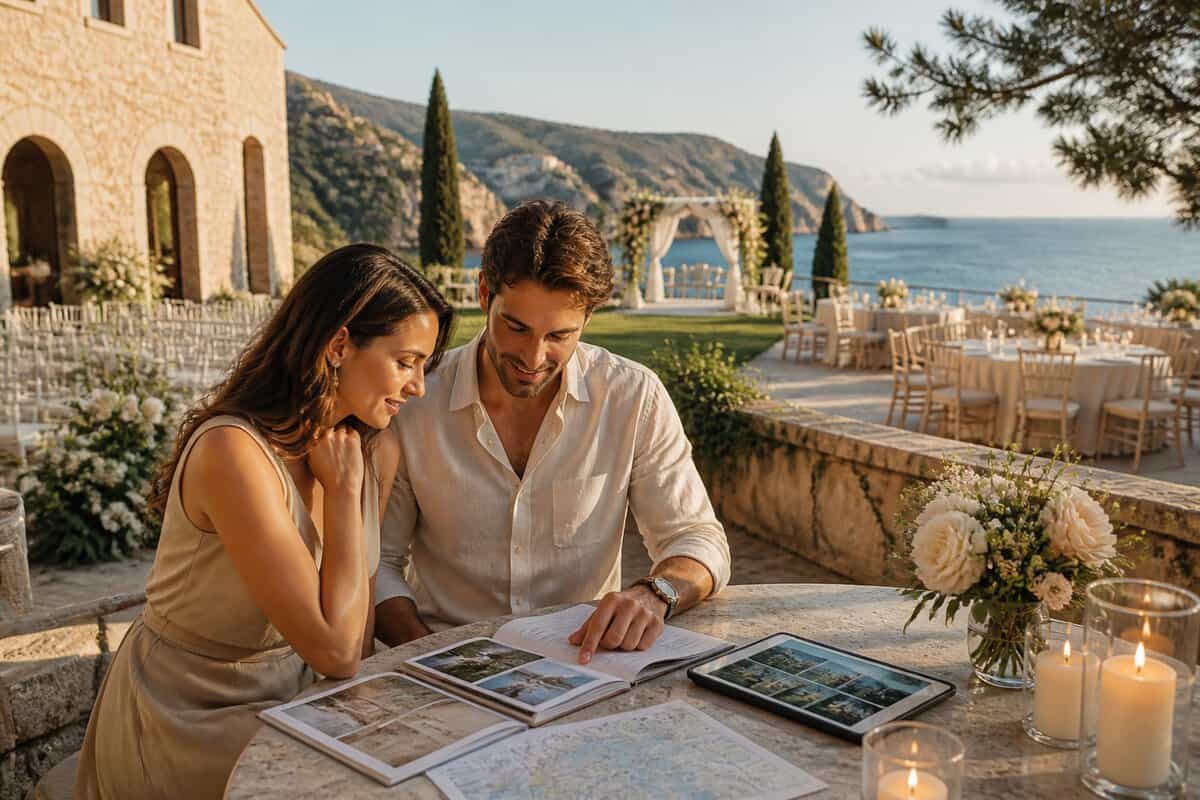
Your destination wedding experience will feel easier when the venue supports the way you want to celebrate. Consider whether your guests need on-site rooms, how far they will travel from an airport, and whether the property suits a formal dinner or relaxed gathering.
Coastal Resorts, Villas, and Beachfront Settings
Coastal resorts work well when you want ceremony, reception, rooms, meals, and guest activities in one location. They offer built-in staff and practical access to restaurants, pools, and transportation.
Private villas create a more personal setting for smaller groups. Check minimum-stay rules, sleeping capacity, pool safety, noise restrictions, kitchen access, and whether outside vendors are allowed.
Beachfront venues also need a firm wind and rain plan, since open-air ceremonies face changing conditions.
Country Estates, Fincas, and Farmhouses
Country estates, fincas, and farmhouses suit outdoor dinners, long stays, and relaxed celebrations. Their grounds can provide several event spaces, such as a courtyard for cocktails and a lawn for dinner.
Review road access, lighting, restroom locations, power supply, and shuttle requirements. Rural properties may sit far from hotels, so guest transportation can add cost and time.
Casa Sacoto and Mas Torroella represent the type of distinctive private setting you might consider when you want character, outdoor space, and an exclusive atmosphere. Confirm current capacity, package details, and availability directly with each property.
Historic Palazzos, Châteaux, and Boutique Hotels
Historic buildings bring architectural detail and a strong sense of place. They suit elegant dinners, intimate ceremonies, and celebrations with a clear cultural identity.
Ask about elevator access, guest mobility, music curfews, historic-surface restrictions, heating or cooling, and weather-ready reception rooms. Boutique hotels can make the guest experience smooth, though their room inventory may limit the size of your group.
Exclusive-Use Venues or Shared Resorts?
Exclusive-use venues give you privacy, control of the schedule, and a shared experience for your guests. They may require a full property buyout, minimum stay, or approved vendor list.
Shared resorts offer more room choices and flexible packages. You also share public areas with other travelers and may face fixed event times.
Compare privacy, room blocks, meal plans, and cancellation rules before choosing.
Which European Destinations Best Fit Your Wedding Vision?
Italy, Spain, France, Portugal, Croatia, and Greece each offer strong choices for a different wedding style, from lakeside elegance to relaxed island celebrations. Your best fit comes from weighing scenery, guest access, season, legal requirements, and total travel cost together.
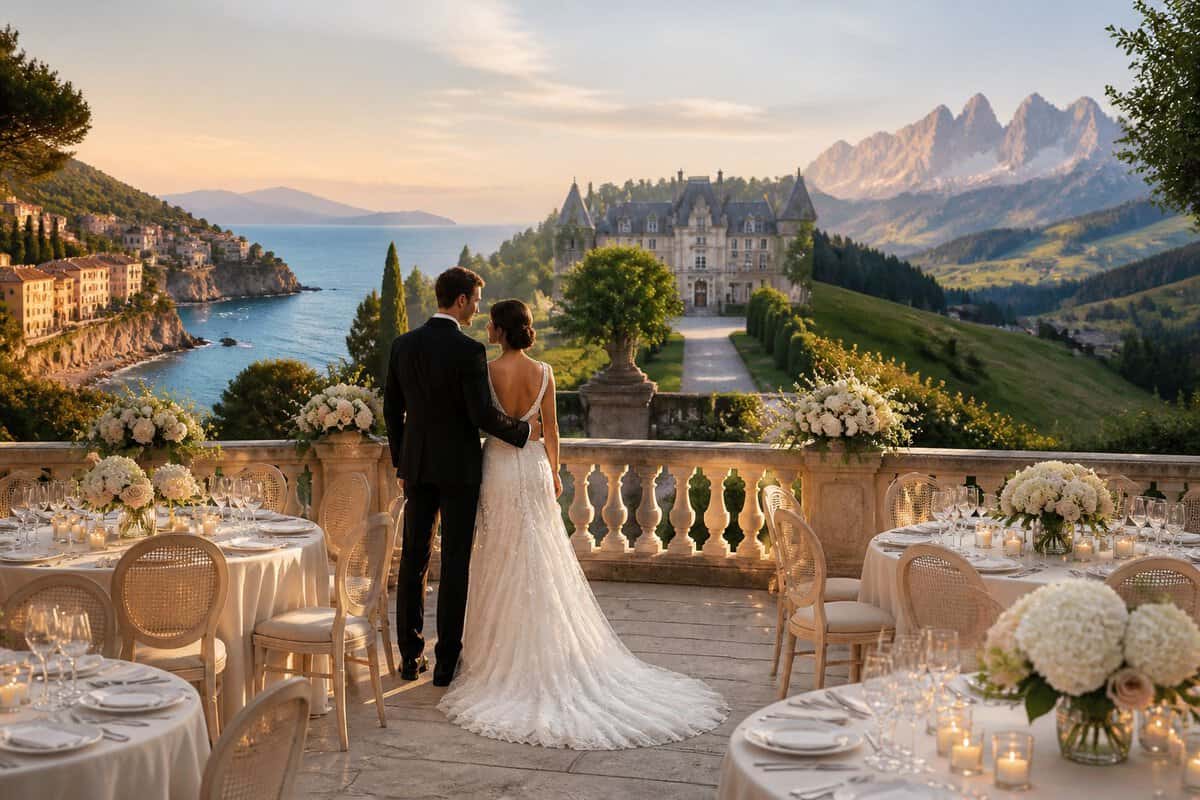
Think about your preferred meal style, ceremony setting, and guest experience. A major city can simplify flights and sightseeing, while a rural or island venue can give you greater privacy and a stronger sense of escape.
Italy: Lake Como, Amalfi Coast, Tuscany, and Puglia
Lake Como suits refined celebrations beside the water, with villas and grand hotels providing dramatic views. The Amalfi Coast offers cliffside terraces and intimate dinners, though steep roads and limited parking require careful transport planning.
Tuscany gives you vineyards, gardens, and country estates with room for multi-day events. Puglia brings masserias, olive groves, and a warm rustic style.
Check summer heat, transfer times, and room availability early in popular areas.
Spain: Barcelona, Mallorca, and Costa del Sol
Barcelona works for couples who want city energy, architecture, restaurants, and convenient transport. Mallorca offers beach clubs, rural fincas, and private estates across a compact island.
Costa del Sol combines reliable sunshine, resort infrastructure, golf properties, and coastal venues. Confirm whether your preferred venue allows outside catering or entertainment, since package rules differ by property.
France: The French Riviera and Countryside Escapes
The French Riviera suits glamorous celebrations near Nice, Cannes, and Saint-Tropez. Waterfront hotels and private villas create polished events with strong dining options.
French countryside venues offer châteaux, gardens, and slower-paced weekends. Ask about travel from the nearest airport, accommodation on the estate, catering style, and required event insurance.
Value-Focused Alternatives in Portugal, Croatia, and Greece
Portugal offers coastal resorts, vineyard estates, and attractive city venues around Lisbon, the Algarve, and Porto. Croatia provides stone villages, Adriatic views, and historic settings, with island transport requiring extra planning.
Greece gives you island terraces, seaside resorts, and intimate celebrations in destinations such as Crete, Rhodes, and Santorini. Compare ferry or transfer costs, shoulder-season weather, and guest accommodation before selecting an island.
How Much Should You Budget for the Celebration?
A European wedding budget needs to include the venue package, guest count, travel, accommodation, taxes, service charges, and every upgrade you want. Package prices become useful only when you know which services, hours, guests, and fees they cover.

For a practical planning framework, compare your expected total with guidance on how much should you spend on your wedding. Keep a separate allowance for travel and guest events, since those costs may sit outside the venue contract.
Understanding Venue Hire, Food, and Bar Minimums
Start with the venue hire fee, then identify catering prices per person, bar minimums, staffing charges, taxes, and service fees. Some properties quote a single package rate, while others charge separately for the ceremony space, reception room, furniture, and cleanup.
Ask whether menu tastings, cake cutting, corkage, late-night food, and children’s meals carry extra fees. Confirm the number of service hours and the price for extending the bar or reception.
How Guest Count Changes the Final Cost
Guest count affects food, drinks, rentals, staffing, transportation, and accommodation. A smaller wedding may need a minimum spend, while a larger group can increase the total through per-person charges.
Request a sample invoice for your expected number of guests. Run a second version with ten fewer guests, then compare the savings across catering, bar service, rentals, and transportation.
Peak Season, Shoulder Season, and Weekday Savings
Peak summer weekends command higher rates and fill popular venues early. Shoulder-season dates in spring or fall can reduce venue and room costs while still offering pleasant weather.
A Sunday, Monday, or weekday celebration may unlock lower hire fees and better supplier availability. Check local holidays, school breaks, rainfall patterns, and travel schedules before booking a discounted date.
Travel, Accommodation, and Welcome-Event Costs
Your full europe wedding budget should include flights, airport transfers, guest rooms, rehearsal or welcome dinners, day-after gatherings, and gratuities. Decide which costs you will host and which guests will pay themselves.
Room blocks can help guests plan, though a required minimum creates financial responsibility for you. Ask about release dates, cancellation terms, breakfast, resort fees, and transportation between hotels and the venue.
How to Book With Confidence
Book with confidence by securing a detailed contract that names every inclusion, fee, deadline, supplier responsibility, and cancellation condition. A video tour, live planning call, and sample invoice help you test the venue before making a deposit.
For smaller celebrations, compare tips for choosing the perfect venue for a small wedding with each property’s capacity and guest policies. The right agreement should support your guest experience from arrival through departure.
Questions to Ask Before Signing a Contract
Ask these questions in writing:
- What does the package include per person and per event?
- Which taxes, service charges, and overtime fees apply?
- What happens if the weather changes?
- Can you choose outside vendors?
- Who coordinates the ceremony and reception?
- What deposit schedule and cancellation terms apply?
- When are final guest numbers and meal choices due?
- How are allergies, accessibility needs, and children handled?
- What noise, firework, and music restrictions apply?
- Who owns responsibility if a supplier cancels?
Request current pricing, a floor plan, sample menus, the vendor policy, and a complete payment schedule with the contract.
Legal Ceremonies, Symbolic Ceremonies, and Paperwork
Legal ceremonies require country-specific documents, notice periods, translations, certificates, and an authorized officiant. Requirements vary by nationality and location, so confirm them with the local authority and your planner.
Symbolic ceremonies offer more design freedom and reduce legal paperwork. You can complete the legal marriage at home and hold a personalized ceremony abroad.
Civil, religious, and humanist ceremonies each have separate rules, so ask who handles translations and document checks.
When to Start Planning and Reserve Key Suppliers
Reserve popular venues and suppliers 8 to 12 months ahead, especially for Lake Como, Paris, coastal Spain, and peak summer dates. Intimate elopements sometimes fit a two- to four-month timeline when your date and location are flexible.
Book the venue first, then secure the planner, photographer, caterer, celebrant, and guest accommodations. Use when should I start booking things for my wedding to organize decisions by priority and timing.
Creating a Smooth Guest Experience Abroad
Give guests a clear travel page with airport options, transfer details, room deadlines, dress guidance, weather notes, and emergency contacts. Share a realistic schedule that includes rest time after arrival.
Arrange welcome support for older guests, children, and anyone with mobility needs. Provide local currency guidance, meal information, contact details for the venue team, and a plan for delayed flights.
A welcome dinner or casual gathering helps guests connect before the ceremony.