
All-Inclusive Wedding Venues in Los Angeles: Booking Guide
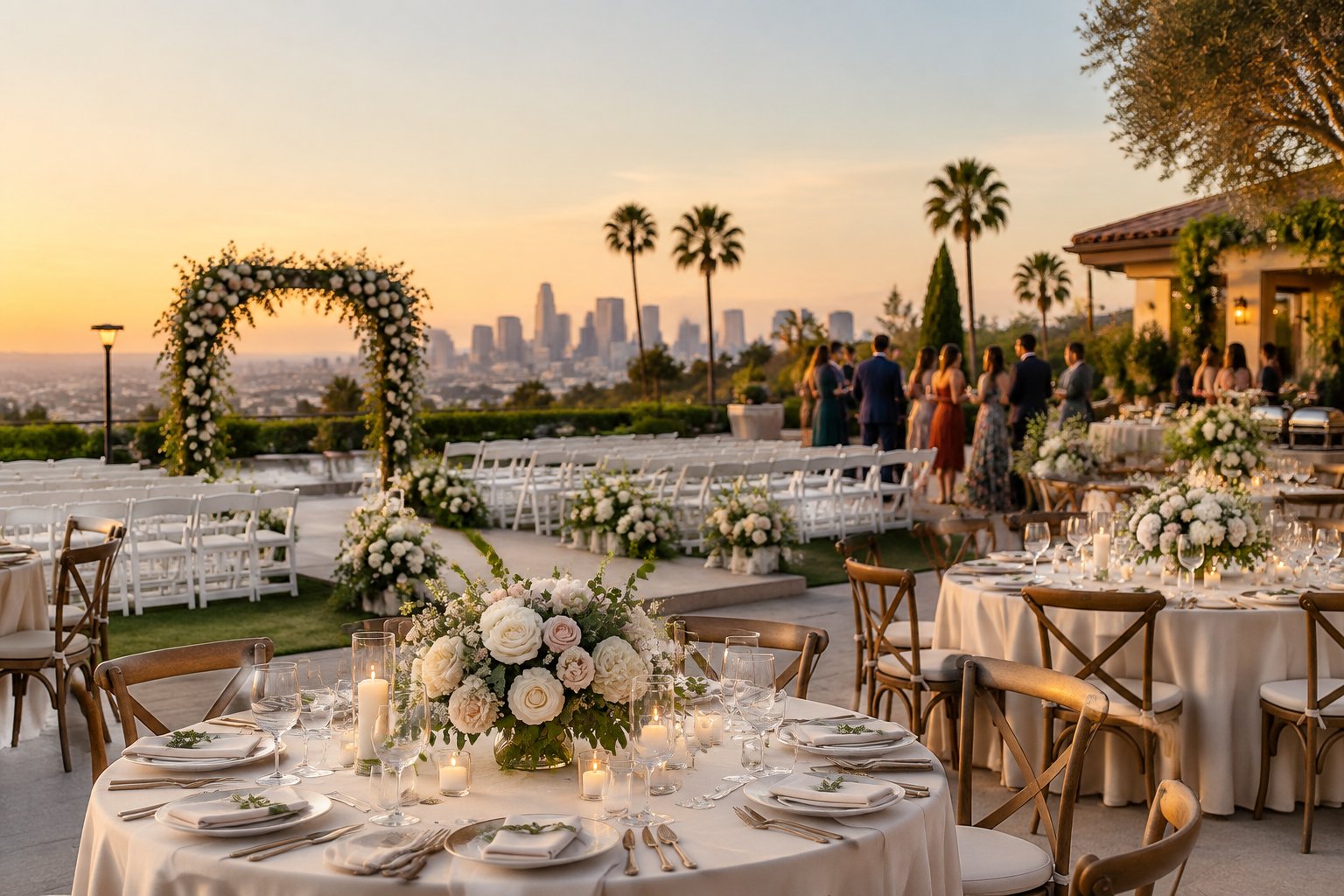
Los Angeles gives you a wide range of wedding settings, from grand ballrooms and historic landmarks to polished banquet halls and outdoor estates. For couples who want fewer vendor decisions and a clear planning path, all-inclusive wedding venues in Los Angeles are a strong choice because they combine the venue, catering, rentals, staffing, and event coordination in one package.
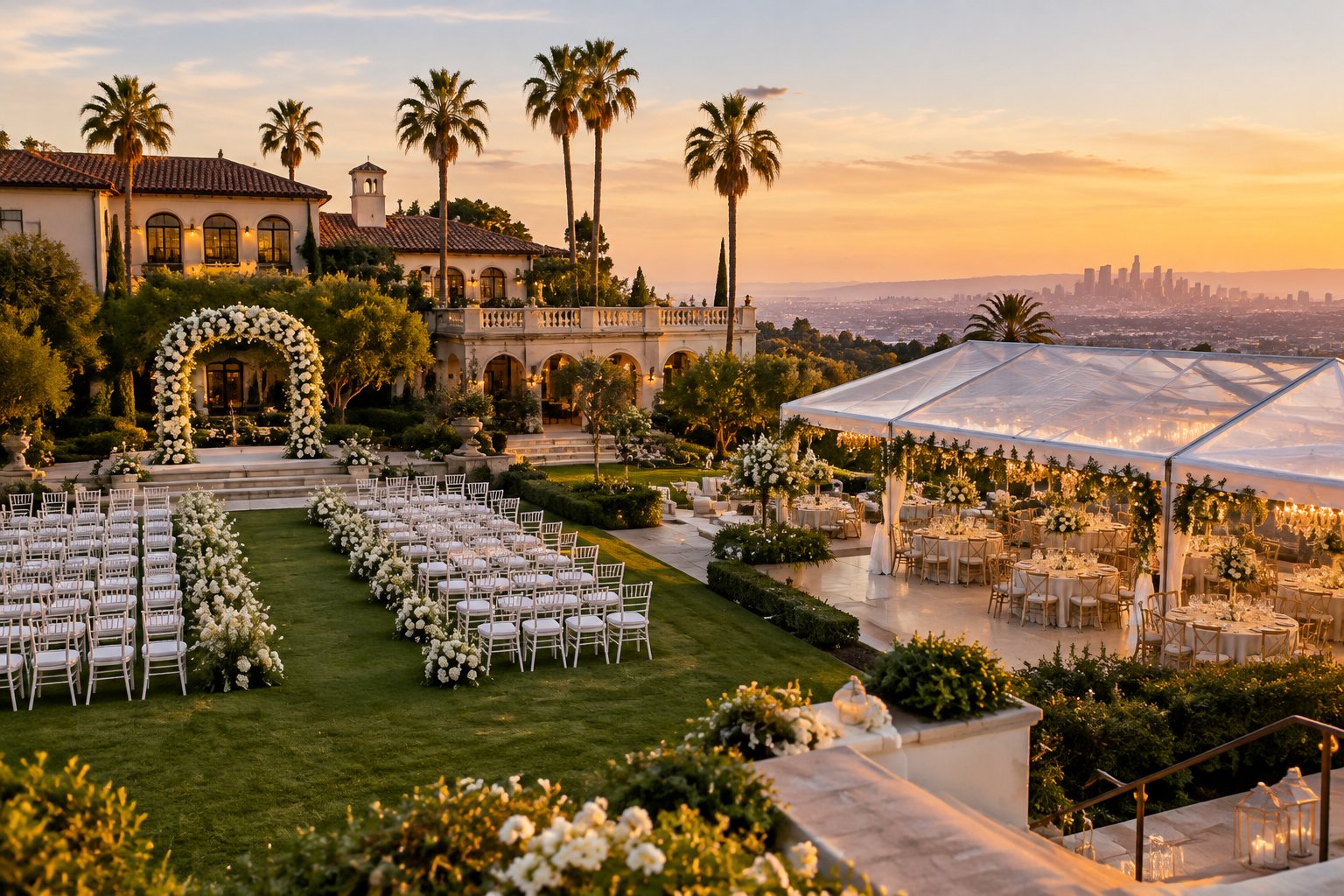
The word “all-inclusive” covers different package levels. One venue may include in-house catering and bar service, while another adds décor, music, floral design, or a floor manager.
Before you sign, compare the full list of inclusions, fees, guest capacity, and customization rules.
If you are ready to see how a bundled package could fit your celebration, explore all-inclusive wedding venues Los Angeles and schedule tours with venues that match your guest count and style.
What Does an All-Inclusive Package Include?
An all-inclusive wedding package brings several core services into one agreement, with venue rental, food, drinks, rentals, and event support forming the usual foundation. The exact list differs by property, so you need a written package description before comparing prices.
Which Essentials Are Usually Included?
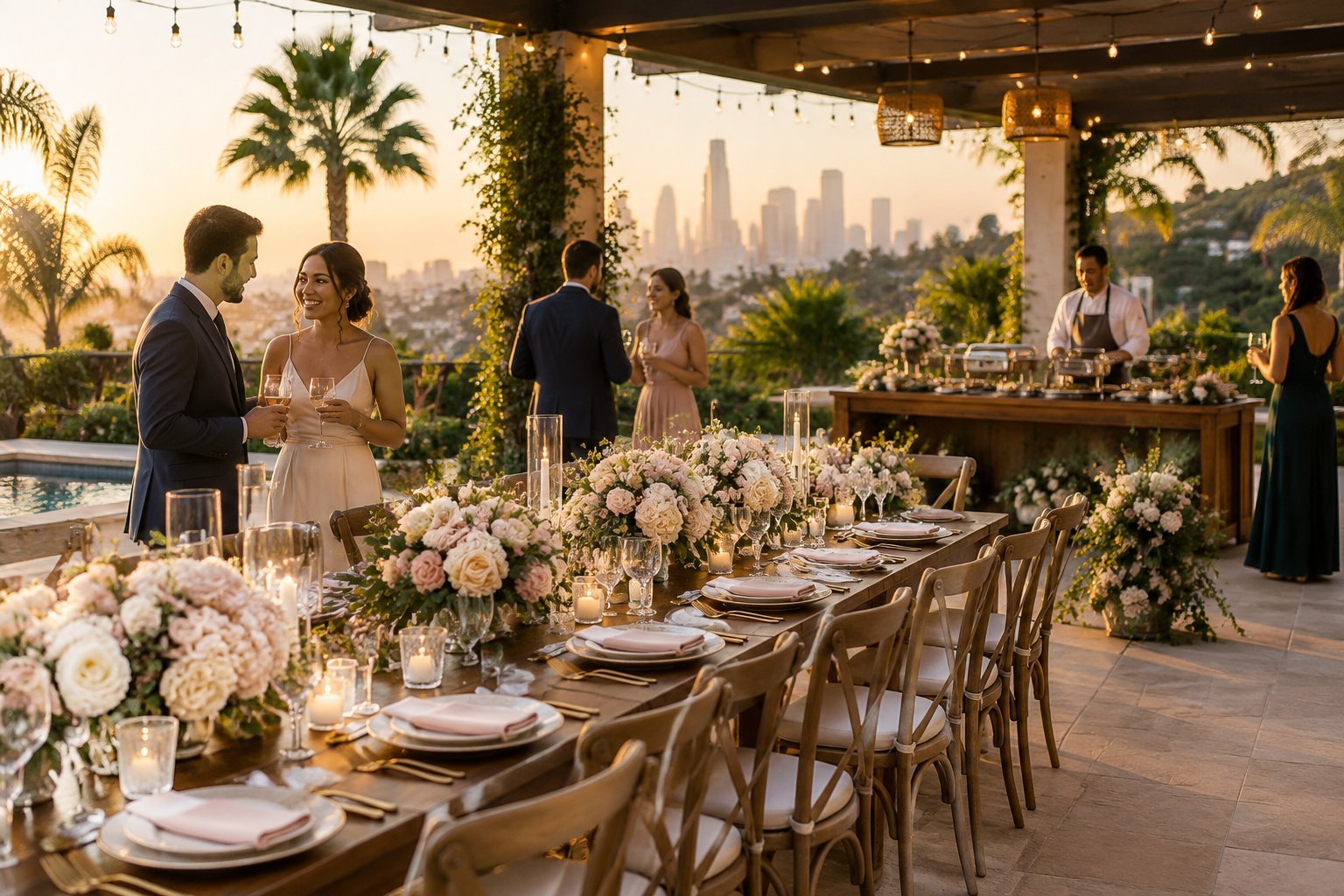
Most all-inclusive wedding venues include the main spaces for your wedding ceremony and wedding reception. Your package may also include:
- Venue rental for a set number of hours
- Tables, chairs, linens, glassware, and dinnerware
- In-house catering with selected menu options
- Beer, wine, or bar service
- Setup and breakdown
- Servers and banquet staff
- An event coordinator for logistics
- A bridal suite or getting-ready room
- Basic lighting and sound equipment
- A floor manager for the wedding day
Ask whether the event coordinator supports planning before the wedding or only manages the event schedule on the day itself. Those roles can differ widely.
Which Services Are Common Add-Ons?
Packages often offer upgrades for premium food, upgraded bar tiers, specialty cocktails, custom linens, enhanced lighting, and upgraded floral design. Cake, DJ services, photography, videography, photo booths, specialty rentals, and transportation may also carry separate charges.
Review the package menu for limits on hors d’oeuvres, entrée choices, bar hours, centerpiece styles, and cake service. A standard package can provide a polished foundation while still leaving room for selected upgrades.
How Much Flexibility Do Couples Have?
You usually have the most flexibility with menu selections, floor plans, décor colors, bar packages, and timeline details. Venue policies may limit outside catering, external bartenders, specialty rentals, or vendors who need large setup areas.
Ask to see photographs of past weddings that used the package you are considering. Then confirm which details shown in those photos were included and which were upgraded.
How Much Should You Budget for an LA Wedding Package?
Your LA wedding budget should include the package price plus food and beverage minimums, service charges, taxes, gratuities, parking, overtime, and selected upgrades. Guest count, date, ballroom size, and service level shape the final amount.
How Venue Rental and Food Minimums Affect the Total
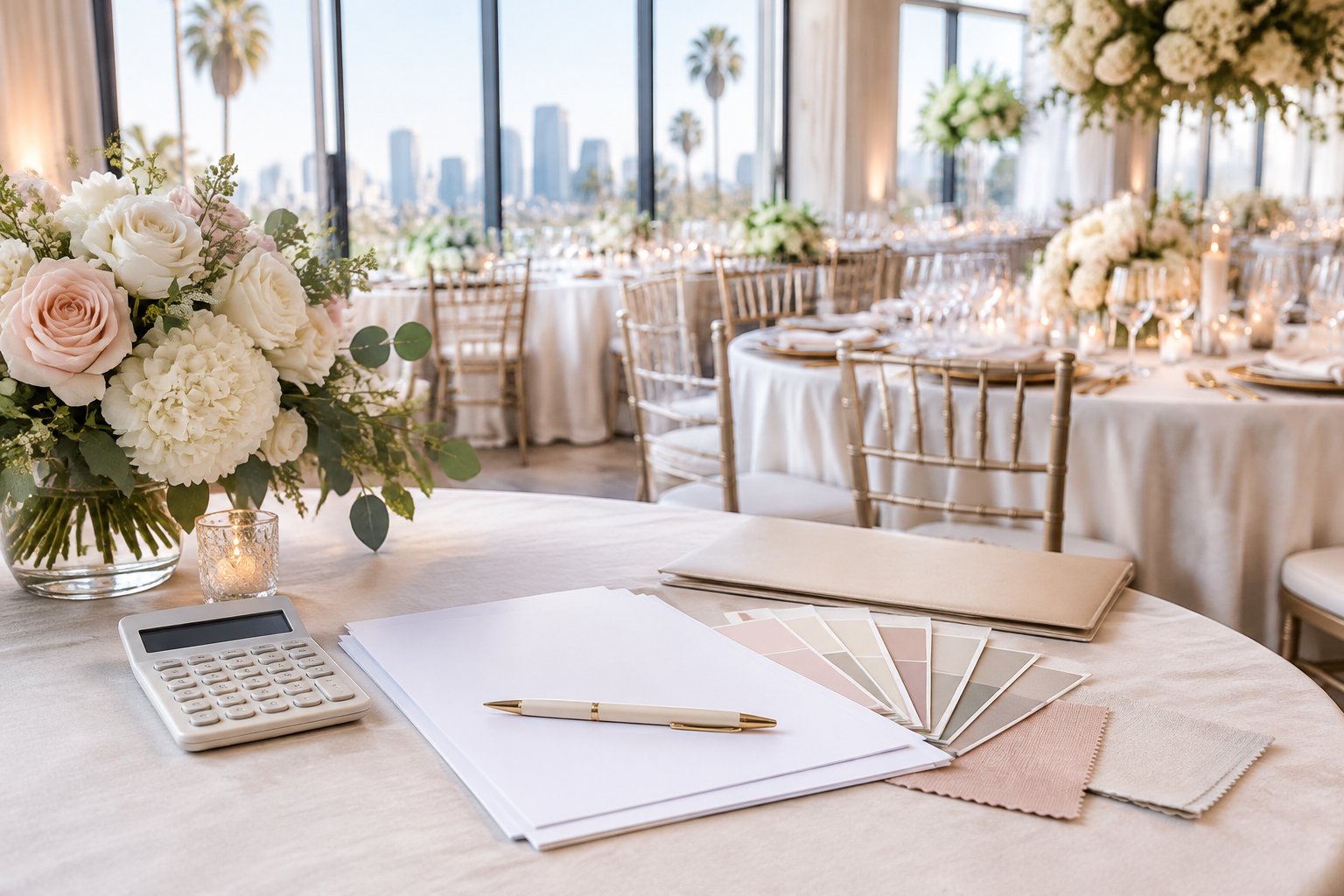
A venue may charge a separate rental fee, set a food and beverage minimum, or combine both into a per-person package. A rental fee gives you access to the space for a defined period. A minimum requires your catering and bar spending to reach a stated amount.
For example, a 150-person wedding with a $150 per-person minimum creates an initial food and beverage commitment of $22,500 before taxes, service charges, upgrades, and other costs. Ask whether ceremony service, cocktail hour, dessert, and late-night snacks count toward the minimum.
Your date also affects the quote. Saturday evenings during peak wedding months often carry different pricing from weekday, Sunday, or off-season dates.
Which Hidden Fees Should You Ask About?
Request a full fee sheet covering:
- Service charges and gratuity
- Sales tax
- Ceremony fees
- Cake-cutting fees
- Corkage fees
- Overtime
- Setup or breakdown extensions
- Security
- Valet parking
- Coat check
- Vendor meals
- Power, lighting, or sound needs
Ask whether the quote includes valet parking for every guest or only a limited number of vehicles. Confirm whether service charges apply to upgrades and whether taxes are added before or after those charges.
How to Compare Proposals Fairly
Place each proposal into the same categories: venue access, guest count, food, bar, rentals, staffing, coordination, décor, parking, taxes, and service charges. Mark every item as included, optional, excluded, or pending.
You can also calculate the projected cost per guest. Use the complete estimated total, then divide it by your expected attendance.
This gives you a clearer comparison than the advertised package price alone. For more planning help, review how much you should budget per person for a wedding.
Choose a Venue Style That Fits Your Guest List
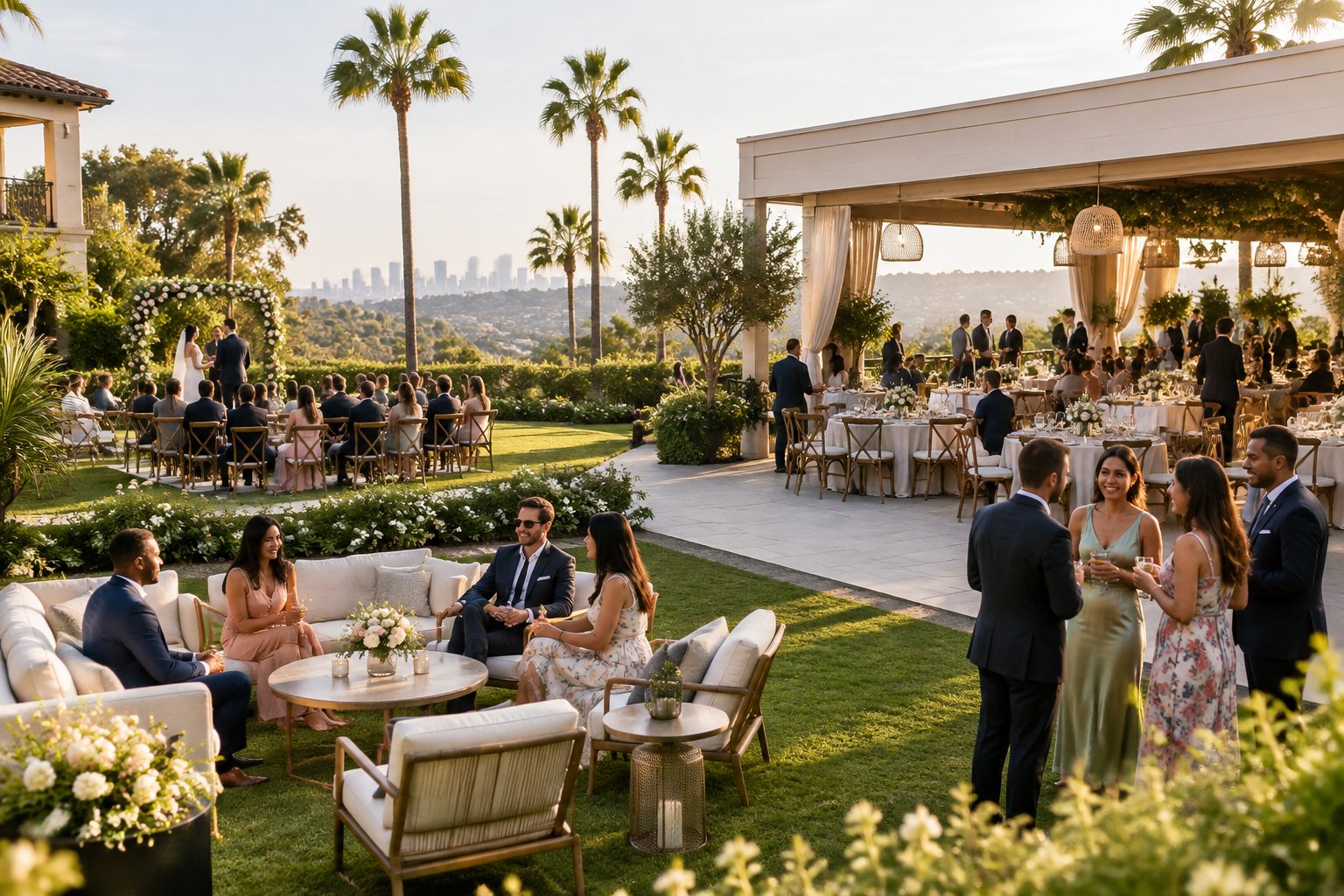
The right venue style gives your guest list enough room for dining, dancing, ceremony access, and comfortable movement. Ballrooms suit formal receptions, banquet halls support flexible layouts, historic spaces add visual character, and smaller rooms create a closer setting for intimate weddings.
Grand Ballrooms for Large Receptions
Grand ballrooms work well for large guest counts and formal wedding designs. High ceilings, crystal chandeliers, wide dance floors, and generous staging areas create a traditional reception atmosphere.
Ask how many guests fit with a dance floor, sweetheart table, buffet, band, photo booth, and lounge furniture in place. A room’s maximum capacity may describe a standing arrangement, so request a floor plan for your preferred seating style.
Modern Banquet Halls for Flexible Celebrations
A modern ballroom or banquet hall gives you a controlled indoor setting with adaptable lighting, built-in sound support, and multiple table layouts. These spaces suit cultural celebrations, large dinners, and receptions that need a broad dance floor.
Review the venue’s décor inventory before adding rentals. Tables, chairs, linens, centerpieces, lighting, and staging may already form part of the package.
Historic Downtown Spaces With Built-In Character
Historic Los Angeles spaces bring architectural details that reduce the need for heavy décor. Arched windows, restored interiors, dramatic staircases, and ornate ceilings create strong ceremony and reception backdrops.
Check loading access, elevator use, noise rules, photography areas, and guest flow. Older buildings may have specific limits on candles, amplified music, installation methods, and event hours.
Options for Intimate Weddings
Smaller celebrations benefit from rooms that feel warm at a lower guest count. Look for a clear dining area, a compact dance floor, a private getting-ready space, and a ceremony layout that does not leave the room feeling empty.
For more planning ideas, use these tips for choosing the perfect venue for a small wedding. Ask each venue to show a floor plan designed for your actual guest count.
Notable Los Angeles Areas and Venue Examples
Los Angeles venue searches become easier when you group options by location, guest access, and architectural style. Downtown landmarks offer historic atmosphere, Glendale and Burbank provide ballroom choices, and foothill or East LA County venues can give you more space outside the city center.
Downtown Los Angeles Landmarks
Downtown Los Angeles offers landmark spaces with strong visual identity. The Majestic Downtown brings a historic theater setting, while Redbird pairs a restaurant environment with a central location. Vibiana offers a cathedral-inspired event setting with distinctive architectural details.
Ask about guest arrival, nearby hotels, transportation, parking, event hours, and ceremony-to-reception transitions. Downtown traffic and street closures can affect arrival times, vendor deliveries, and shuttle schedules.
Glendale and Burbank Ballroom Options
Glendale and Burbank offer practical access from several parts of Los Angeles County, along with banquet halls and ballroom venues designed for larger celebrations. Metropol provides multiple ballroom styles, including a Modern Ballroom, Millennium Ballroom, Grand Ballroom, and Crystal Ballroom.
Published capacities at Metropol range from about 140 to 450 guests, depending on the room. Features listed for its spaces include chandeliers, dance floors, lighting systems, décor support, servers, valet coordination, and dedicated event staff.
Confirm the capacity and package terms for your selected room.
Foothill and East LA County Choices
Foothill communities give you additional choices for weddings that need expansive rooms, parking, or a quieter setting. Sierra La Verne by Wedgewood Weddings is one example to investigate alongside other Wedgewood Weddings properties.
When comparing venues outside central Los Angeles, calculate travel time for your guests and vendors. Check hotel availability, rideshare access, parking capacity, and shuttle needs before choosing a date.
What to Confirm on Your Venue Tour
Use your venue tour to verify the guest experience, package details, contract terms, and staff responsibilities in person. Bring your guest estimate, preferred date, ceremony plan, reception layout, and a written list of every cost you want included.
Questions About Capacity, Layout, and Event Flow
Ask these questions during the tour:
- What is the seated capacity with a dance floor?
- Can the ceremony and reception use separate areas?
- Where do guests go during cocktail hour?
- Is the bridal suite private and available for the full booking?
- Where will the DJ, band, cake, photo booth, and sweetheart table go?
- How long do you receive the room for setup and cleanup?
- What happens if the guest count changes?
Walk through the full event flow from guest arrival to the final departure. Look for aisle width, restroom access, elevator routes, coat storage, and areas where guests could become crowded.
Vendor, Décor, and Catering Policies to Review
Ask whether in-house catering is required and which menu choices count toward the food and beverage minimums. Review tasting fees, dietary accommodations, bar hours, cake policies, vendor meals, and outside alcohol rules.
Confirm whether you can bring your own planner, florist, DJ, photographer, rentals, or décor team. Ask the event coordinator to identify approved vendors and explain any vendor insurance requirements.
Review décor limits for candles, hanging installations, confetti, fog effects, floral foam, and wall attachments. Request photographs or samples for included linens, centerpieces, chairs, and table settings.
Parking, Access, and Contract Details
Confirm valet parking rates, self-parking options, accessible spaces, rideshare drop-off, and shuttle access. Ask where vendors unload and whether loading time counts against your rental period.
Your contract should state the date, event hours, guest minimum, package inclusions, payment schedule, cancellation terms, overtime rates, service charges, taxes, insurance needs, and staffing responsibilities. Ask who serves as your event coordinator and floor manager on the wedding day.
Then request the coordinator’s contact timeline before you book.