
All-Inclusive Wedding Venues Prices: What to Expect
All-inclusive wedding venues in the United States commonly price full-service packages between $5,000 and $25,000, with luxury celebrations reaching $40,000 or more. Your final price depends on guest count, location, date, menu, bar service, décor, and the package tier you choose.
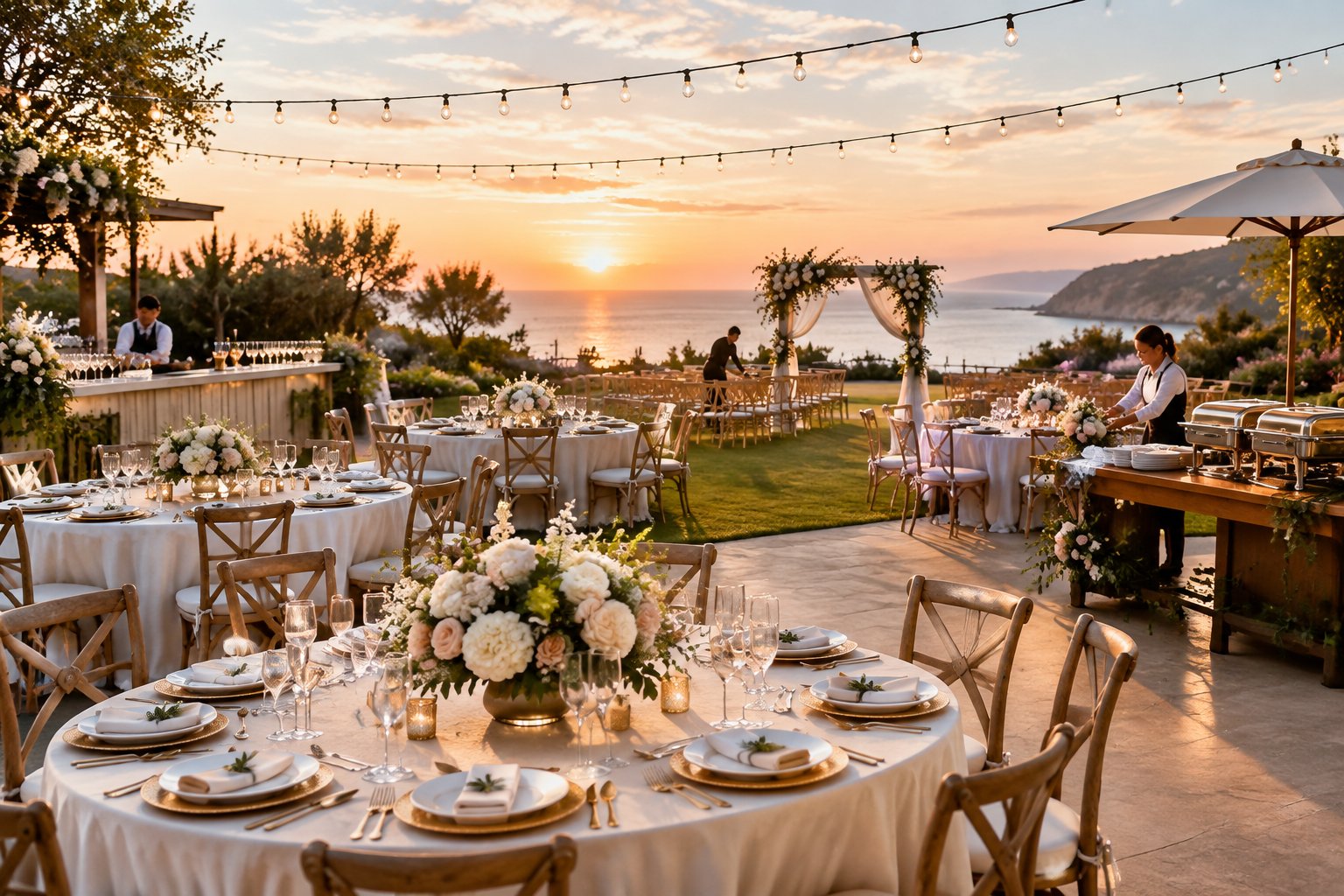
An all-inclusive wedding venue can make your wedding budget easier to manage because one proposal may cover the space, catering, rentals, staffing, and coordination. Review every line before you compare prices, since package names do not follow one standard across venues.
You can start comparing all-inclusive wedding venues and package levels to find an option that fits your guest list, style, and spending limit.
What Do All-Inclusive Wedding Venue Prices Usually Include?
Most all-inclusive wedding venue prices include the ceremony or reception space, catering, basic rentals, service staff, and a venue coordinator. Higher package tiers can add upgraded décor, premium drinks, flowers, entertainment, or photography.
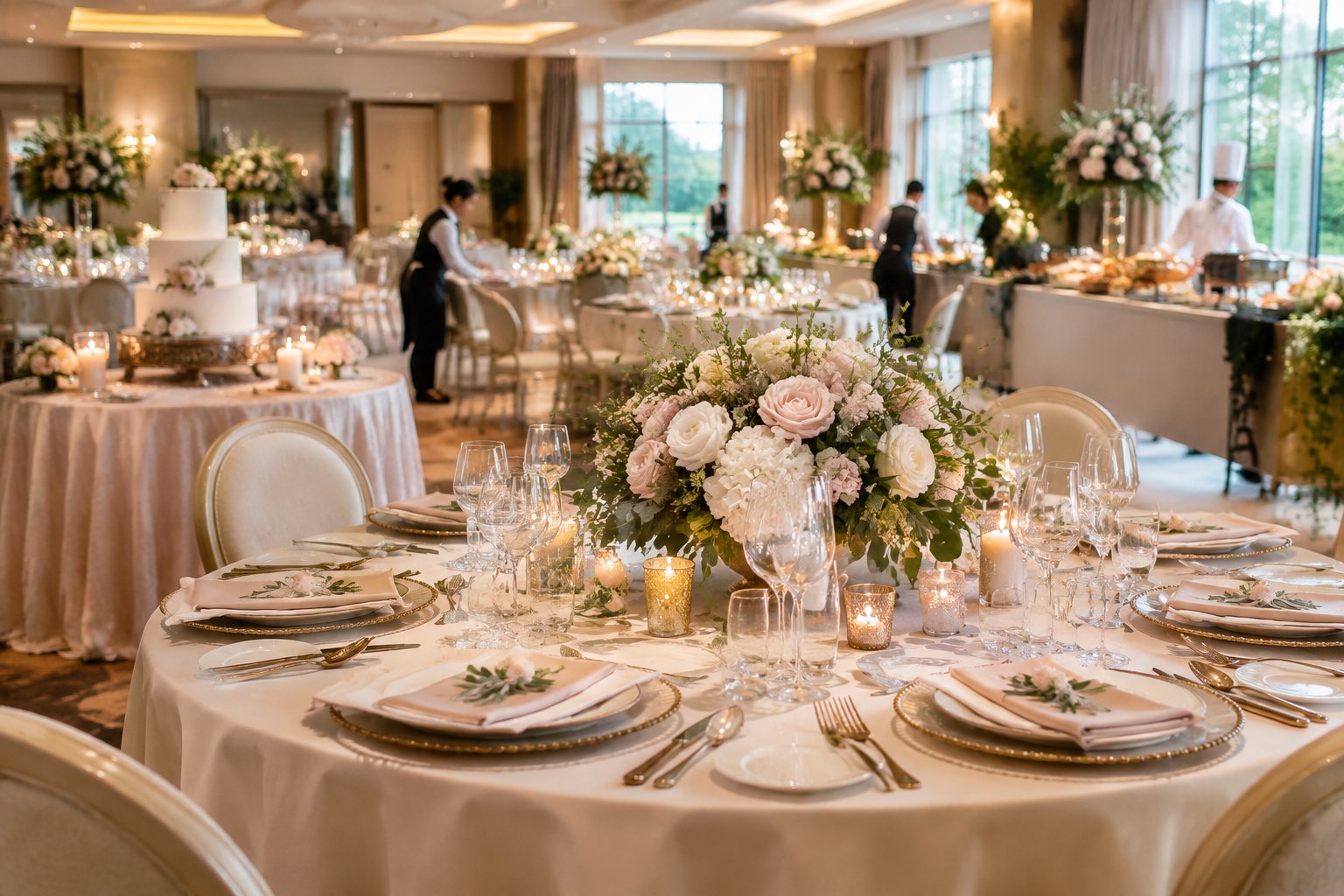
Your contract should show the exact quantities, service hours, menu choices, and upgrade costs. A package with a higher price may cover fewer outside vendors than a lower quote that leaves catering and rentals separate.
Core Inclusions in a Full-Service Package
A full-service package commonly includes:
- Ceremony and reception space
- Tables, chairs, basic linens, china, glassware, and flatware
- Wedding menu with buffet or plated meal service
- Cocktail hour with selected appetizers
- Beer, wine, or a limited open bar
- Wedding cake or dessert service
- Cake cutting and serving
- Champagne toast or sparkling wine toast
- Basic centerpieces or décor
- Setup, cleanup, and event staffing
- Wedding coordinator for venue logistics
- Dance floor and basic sound equipment
Some packages include a boutonniere, bouquet, ceremony arch, or specialty lighting. Flowers, photography, a DJ, and live entertainment frequently sit in an upgrade tier, so ask for the exact package sheet.
Common Exclusions and Paid Upgrades
Your base price can leave out premium liquor, signature cocktails, extended bar hours, upgraded linens, specialty chairs, custom florals, and extra décor. A wedding cake with a custom design may cost more than the standard cake listed in the package.
Other charges can include:
- Ceremony fee
- Additional reception hours
- Overtime staffing
- Vendor meals
- Valet parking
- Security
- Corkage
- Outside-vendor fees
- Insurance
- Transportation
- Special dietary menus
- Rehearsal space
Ask whether service charges and gratuities are included in the displayed price. A food and beverage total with a 20% service charge can change your wedding budget by thousands of dollars.
Venue Coordinator vs. Wedding Planner
A venue coordinator manages the property’s schedule, staff, setup, deliveries, and house rules. A wedding planner supports broader wedding planning, including vendor selection, design, timelines, guest communication, and decisions across the full event.
Ask these questions before assuming you have planning support:
- When does the coordinator begin working with you?
- Will they attend planning meetings?
- Who creates the detailed wedding timeline?
- Who manages vendors on the wedding day?
- Who handles personal décor and wedding-party questions?
- Can you hire an outside wedding planner?
A venue coordinator can keep the venue running smoothly. A wedding planner gives you wider planning help, especially when you want custom design or several outside vendors.
How Much Should You Budget for the Celebration?
Plan on about $5,000 to $25,000 for many all-inclusive weddings, with $50 to $250 per guest serving as a useful starting range. A 100-person celebration could therefore land near $5,000 to $25,000 before taxes, service charges, travel, and premium upgrades.
A venue quote becomes useful when it shows the full event cost for your date and guest count. Compare the same meal, bar, rental period, and service level across every proposal.
Per-Person Pricing vs. Flat-Rate Packages
Per-person pricing ties the main package cost to your confirmed guest count. It can work well for smaller celebrations because you pay for the people you invite, though food, drinks, rentals, and staffing may all rise together.
Flat-rate packages charge a set amount for the venue or a defined event size. This structure can offer value for larger weddings when the venue includes a room, staffing, rentals, and a food and beverage minimum.
Ask whether the quote uses:
- A per-person rate
- A venue rental fee
- A food and beverage minimum
- A package fee plus guest charges
- A minimum guest count
How Guest Count Changes the Total
Each added guest can increase catering, bar service, seating, linens, tableware, favors, and cake costs. A larger guest list can also move you into a bigger room or a higher package tier.
Use this calculation to compare quotes:
Estimated package cost = per-person rate × billable guests + fixed fees + taxes and service charges
Ask how children, vendors, and guests who do not drink are billed. Some venues offer reduced rates for children or nonalcoholic packages, while others apply the same package minimum to every attendee.
Service Charges, Taxes, and Other Fees
Service charges may apply to food, drinks, staffing, or the entire package. Taxes are often calculated after the package price and service charge, so check the order used in the venue’s estimate.
Build room in your wedding budget for:
- Sales or local taxes
- Mandatory gratuity
- Ceremony fee
- Cake-cutting fee
- Bartender or bar setup fee
- Security and parking
- Overtime
- Setup or room-flip labor
- Insurance and permits
Request a sample final invoice. It should show the base price, guest count, taxable items, service charges, tax rate, payment schedule, and balance due.
Price Differences by Venue Type and Location
Hotels, resorts, and banquet halls often offer the clearest all-inclusive pricing, while high-demand cities and luxury destinations raise the cost through food minimums, room rates, and premium services. Your date, guest count, and access to the venue can shift the quote as much as the building itself.
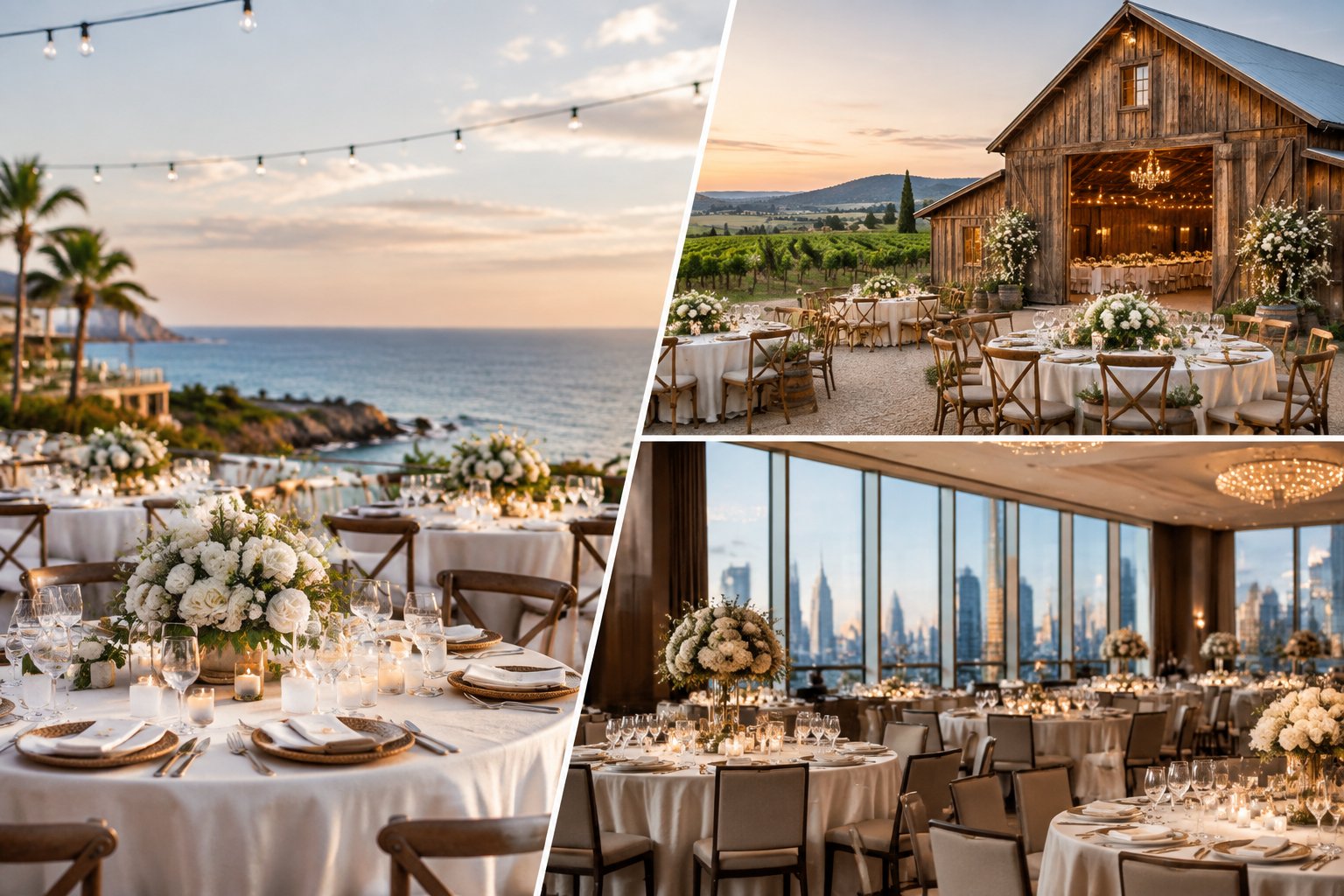
Compare venues using the same guest count and package scope. A lower rental fee may come with separate catering, rentals, staffing, and cleanup charges.
Hotels, Resorts, and Banquet Halls
Hotels and banquet halls commonly include tables, chairs, linens, catering, bar service, staff, and an event coordinator. Hotel packages can also connect your reception with guest rooms, parking, and breakfast options.
All-inclusive resorts bundle wedding services with a larger travel experience. Their packages may include a symbolic ceremony, basic flowers, cake, a toast, and a coordinator, while photography, private receptions, premium décor, and entertainment cost extra.
Banquet halls often use a food and beverage minimum. A Saturday date in a major city can require a higher minimum than a weekday or off-season date.
Local Packages in New York and Orange County
New York prices reflect high demand, labor costs, transportation, and limited event space. Manhattan and Brooklyn venues can carry higher food and beverage minimums, while nearby areas may offer more room for the same budget.
Orange County venues often price around coastal demand, resort amenities, and peak-season dates. A beachfront setting can increase the package cost, while an inland hotel or banquet hall may offer a wider range of included services.
When comparing New York, Brooklyn, or Orange County venues, check:
- Guest capacity and room layout
- Required caterer or bar provider
- Parking and transportation
- Reception end time
- Outdoor ceremony fees
- Minimum guest count
- Taxes and service charges
Beach Resorts in Mexico and the Caribbean
Mexico is popular for a tropical wedding because resorts in Cancun, Los Cabos, and Puerto Vallarta offer bundled ceremony and reception packages. Punta Cana, the Dominican Republic, Jamaica, Saint Lucia, and La Romana also offer resort options with several package tiers.
A beach wedding package may include a ceremony setup, bouquet, boutonniere, cake, toast, dinner, and basic drinks. Private reception fees, upgraded florals, live music, photography, and extra event hours can raise the total.
Ask whether the package price covers a private reception or places your group in a shared restaurant. Confirm local taxes, resort fees, travel costs, legal paperwork, and the rules for outside vendors before you reserve a tropical wedding.
What Does a Destination Wedding Package Cost?
An all-inclusive destination wedding package can range from about $5,000 to $25,000 for the wedding event, while the full celebration budget rises when you add travel, accommodations, guest activities, and extra events. Smaller Mexico and Caribbean celebrations often sit toward the lower end, while luxury resorts and larger groups cost more.
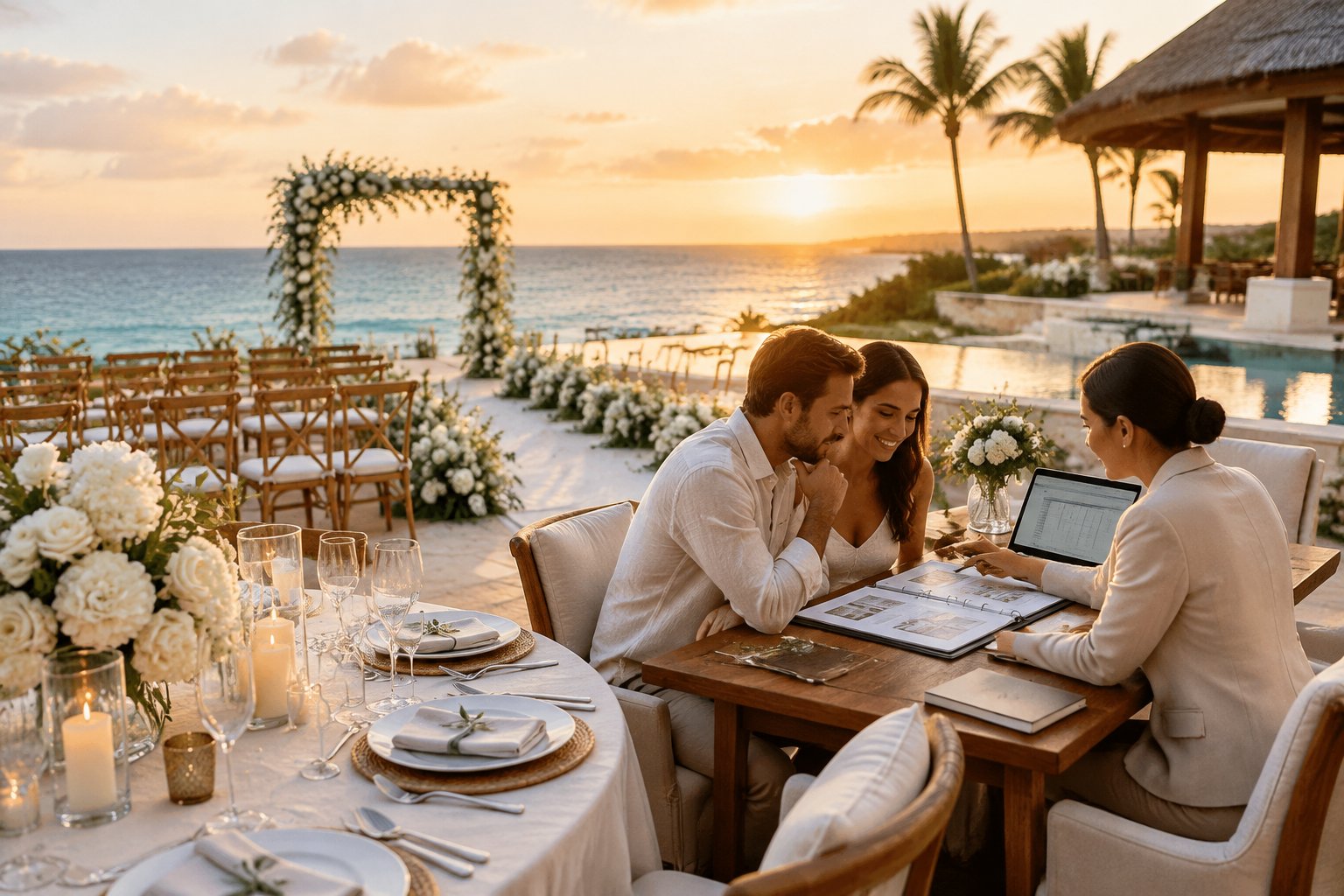
Resort quotes often separate the wedding package from room rates. Ask for a cost sheet that shows what you pay, what your wedding guests pay, and which resort perks depend on room bookings.
Wedding-Only Costs vs. Guest Travel Costs
The wedding-only price can include the ceremony, reception, meal, drinks, cake, flowers, and coordinator. Your full destination wedding cost also includes flights, airport transfers, accommodations, travel insurance, legal documents, and personal events.
Clarify who pays each item:
- Your wedding package
- Your own room and travel
- Guest rooms and travel
- Welcome event
- Rehearsal dinner
- Group transportation
- Photography and entertainment upgrades
- Vendor travel expenses
Some couples cover guest transportation or a welcome drink while guests pay for their rooms and flights. Communicate these costs early so guests can plan.
Accommodations and Minimum-Stay Requirements
Resorts can require a minimum number of room nights or a minimum stay for the couple and guests. A room block may unlock package perks, discounts, or a waived ceremony fee, though the terms differ by property.
Ask about:
- Required room nights
- Minimum stay for the couple
- Room-block deadlines
- Deposit and cancellation rules
- Resort fees and taxes
- Adult-only room categories
- Day passes for non-staying guests
- Transportation from the airport
A lower wedding package can come with a higher room commitment. Add the required room nights to your comparison so you see the full financial obligation.
Turning One Day Into a Wedding Weekend
A wedding weekend can include a welcome drink, rehearsal dinner, ceremony, reception, farewell breakfast, and group activities. Spa treatments and excursions add guest experiences, while private menus, transfers, and reserved spaces increase your event cost.
Set a separate budget for each event. Ask whether the resort offers a bundle for the rehearsal dinner or welcome gathering, and confirm the number of hosted guests included in each activity.
How to Compare Quotes Without Missing Hidden Costs
Compare itemized proposals that show the wedding menu, bar level, rentals, entertainment, staffing, taxes, service charges, and every upgrade. Two wedding packages with the same headline price can deliver very different guest experiences.
Start with the same date, guest count, reception length, ceremony plan, and service level. Then record each required fee in a spreadsheet so a low starting price does not hide a higher final total.
Request an Itemized Package Proposal
Ask each venue to list:
- Ceremony and reception spaces
- Access, setup, and breakdown hours
- Guest count and minimum spend
- Wedding menu and serving style
- Cocktail hour selections
- Open bar level and duration
- Wedding cake and cake service
- Rentals and décor
- Wedding coordinator duties
- Staffing and cleanup
- Taxes and service charges
- Overtime and cancellation terms
Request the proposal for your exact date. Peak Saturdays, holiday weekends, and popular travel months can use different rates.
Match Food, Drinks, Rentals, and Entertainment
Compare equal package levels. A buffet with beer and wine does not match a plated meal with premium liquor, and basic linens do not match custom décor.
Check whether each quote includes:
- Number of appetizers
- Entrée and vegetarian choices
- Dessert or wedding cake
- Cocktail hour duration
- Open bar brands
- Tables, chairs, linens, and flatware
- Dance floor and lighting
- DJ, band, or recorded music
- Ceremony sound equipment
Price upgrades separately so you know which features drive the difference between packages.
Check Vendor Rules and Contract Terms
A venue can require preferred vendors, in-house catering, approved bartenders, or an outside-vendor fee. Review these rules before you compare a package with a flexible venue.
Read the contract for:
- Deposit and payment dates
- Guest-count deadlines
- Cancellation and rescheduling terms
- Weather backup
- Overtime rates
- Insurance requirements
- Outside food and alcohol rules
- Vendor arrival and departure times
- Damage deposits
- Refund conditions
Ask the wedding coordinator to confirm every verbal promise in writing. Keep the final proposal, contract, floor plan, invoice, and approved changes together through the wedding date.