
All-Inclusive Wedding Venues: What’s Included and What It Costs
All-inclusive wedding venues bundle major wedding services into one coordinated package, giving you one place to manage the ceremony, reception, food, and key vendors. The arrangement can reduce planning work and make your wedding budget easier to track, though the word “all-inclusive” covers different package levels across the United States.
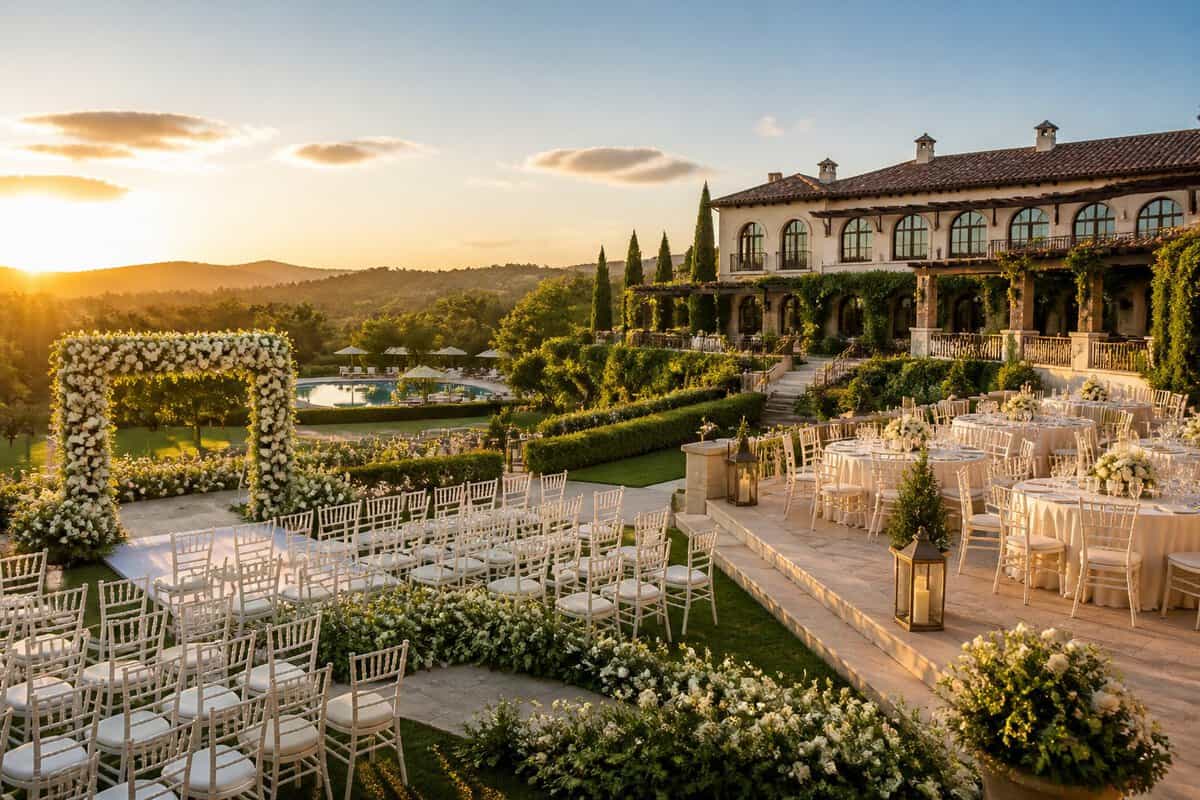
Before you book, ask for a line-by-line list of inclusions, upgrades, taxes, service fees, guest charges, and vendor rules. That document shows whether a package fits your wedding celebration and your preferred style.
You can compare your options with the all-inclusive wedding venues pros and cons guide, then schedule tours with venues that match your guest count and wedding day plans.
What Does an All-Inclusive Package Really Include?
All-inclusive wedding packages commonly include the venue, catering, basic rentals, bar service, cake, and day-of coordination, with details set by the contract. Your package level determines whether you receive a private reception, upgraded décor, professional photography, or a full wedding planner.
Core Services Included in Most Packages
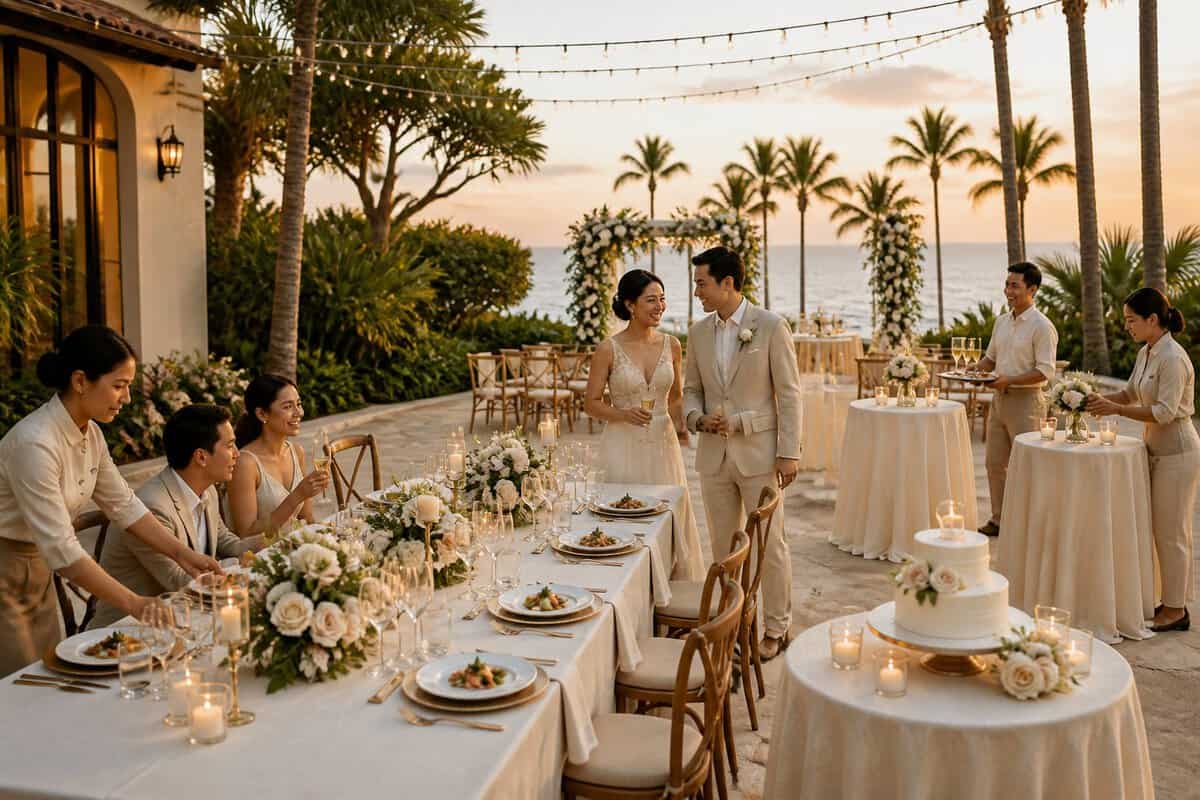
Most all-inclusive wedding packages cover the ceremony space, reception space, tables, chairs, linens, setup, cleanup, and basic décor. Catering may include a plated wedding menu or buffet, with a set number of entrée choices, sides, desserts, and nonalcoholic drinks.
Bar service might include beer, wine, house spirits, an open bar, or a limited service window. Ask whether premium drinks carry an extra charge and whether bartenders, glassware, mixers, and ice are included.
Other common items include:
- A wedding ceremony officiant or ceremony coordination
- A bouquet and boutonniere
- A cocktail hour
- A wedding cake
- A champagne toast or sparkling wine toast
- A DJ, sound system, or basic live entertainment
- A preferred vendor list
- A venue coordinator for the wedding day
Photography, videography, florals, transportation, and guest lodging appear in some packages and cost extra in others. Request exact quantities, service times, menu choices, and rental details in writing.
What Is Usually an Upgrade or Add-On?
Upgrades usually apply to private event spaces, extended reception hours, premium drinks, custom florals, specialty rentals, and enhanced entertainment. A package may include standard linens and centerpieces while charging more for colored linens, lounge furniture, custom signage, lighting, or hanging installations.
You might also pay extra for:
- A custom wedding menu or late-night food
- A larger wedding cake or specialty dessert table
- A signature cocktail
- A private cocktail hour
- Live entertainment beyond the included music service
- A second photographer or extended coverage
- Transportation and guest activities
- Rehearsal dinner events
- Outside vendors
Ask how many guests the base package covers. Resort packages sometimes include a small guest group, with additional guests charged per person. A beautiful ceremony location can also carry a separate site or exclusivity fee.
Venue Coordinator vs. Wedding Planner
A venue coordinator manages the property’s schedule, staff, setup, catering, and venue rules. A wedding planner supports your full planning process, including vendor communication, design decisions, timelines, guest logistics, and rehearsal details.
Confirm the coordinator’s duties and availability before signing. Ask who creates the wedding timeline, attends your planning meetings, handles outside vendors, manages the rehearsal, and stays through the reception. If the venue provides only event-day coordination, you might need an independent wedding planner.
How Much Do Full-Service Celebrations Cost?
Full-service wedding celebrations commonly fall between $10,000 and $20,000 for many package styles, while luxury properties, large guest lists, and destination events can cost far more. Your final price comes from the guest count, venue type, menu, bar, package level, date, and added services.

A site-fee venue may look less expensive at first because it lists venue rental costs alone. Catering, rentals, staffing, décor, entertainment, and coordination then appear as separate line items. Compare the complete event cost with the same guest count before deciding which pricing model fits your wedding budget.
Per-Person Pricing vs. Flat-Rate Packages
Per-person pricing charges you for each invited or attending guest. The rate may include food, drinks, rentals, staffing, and access to the reception space. A flat-rate package sets a fixed price for a defined service level, date, guest range, or event length.
Ask whether the rate includes taxes, gratuity, service charges, ceremony fees, cake cutting, and overtime. A package with a higher per-person price can fit your budget better if it includes more rentals and services.
How Guest Count Changes the Total
Guest count affects food, drinks, chairs, tables, linens, staffing, cake portions, and restroom needs. A 50-person wedding and a 150-person wedding require different resources, even when they use the same venue.
Request a sample proposal for your expected guest count. Ask for the cost of additional guests, children, vendors, meals for staff, and late RSVPs. A small guest list can also affect minimum spending requirements, especially at hotels and resorts.
Costs That May Not Be Included
Common exclusions include photography, videography, upgraded décor, transportation, invitations, attire, hair and makeup, favors, rehearsal dinner, welcome events, lodging, and honeymoon travel. Private cocktail hour service may also cost extra when the standard package uses a shared or semi-private space.
Check for taxes, gratuities, administrative fees, cake-cutting fees, corkage, service charges, overtime, cleanup fees, and damage deposits. Destination properties can add resort fees, local permits, vendor day passes, and travel costs for outside professionals.
How to Compare Packages Before You Book
Compare each package by total cost, service quality, guest experience, and contract limits. A useful comparison includes the wedding menu, bar hours, coordination support, vendor policy, reception privacy, and every required fee.

Bring the same guest count and event details to every venue. Ask each property for a written proposal so you can compare equal services instead of comparing headline prices.
Questions to Ask During a Venue Tour
Ask these questions during your tour:
- What does the base package include by quantity and service time?
- Is the ceremony site private?
- Who serves as your wedding planner or venue coordinator?
- How many menu choices come with the package?
- Is the bar beer and wine, house liquor, or premium drinks?
- Does the package include an open bar, welcome drink, cake, and toast?
- Which rentals and décor pieces are included?
- What happens if rain changes the ceremony location?
- Can you use vendors outside the preferred vendor list?
- What fees apply to outside vendors?
- What are the deposit, cancellation, overtime, and payment terms?
Ask to see a full sample contract and a current fee sheet before you place a deposit.
How to Read Food and Beverage Minimums
A food and beverage minimum is the amount you must spend on eligible meals and drinks. It may apply to the whole event, a specific room, or a particular service period.
Check whether the minimum includes taxes, gratuity, rentals, and staffing. Ask how the venue handles unused minimum spending. You might use the balance for a welcome drink, late-night snack, upgraded wedding menu, or additional bar hours if the contract allows it.
Compare buffet and plated meals by portion, staffing, service time, and included rentals. Confirm whether children, vendors, and rehearsal dinner guests count toward the minimum.
Flexibility, Customization, and Vendor Rules
Package flexibility determines how closely your wedding reflects your style. Ask whether you can adjust the wedding menu, replace a buffet item, select your cake baker, add a signature cocktail, or change the décor package.
Review the preferred vendor list carefully. Some venues require you to choose from approved professionals, while others permit outside vendors with insurance, access, delivery, or day-pass fees. Check rules for photography, florals, music, rentals, catering, and alcohol.
Get every approved change in writing. A verbal promise about a floral upgrade or welcome drink does not protect your budget unless it appears in the proposal or contract.
Which Venue Type Fits Your Wedding Vision?
Hotels, banquet halls, resorts, estates, and private-use stays offer different levels of convenience, privacy, design freedom, and guest lodging. Choose the venue type that supports your guest experience as well as your ceremony style.
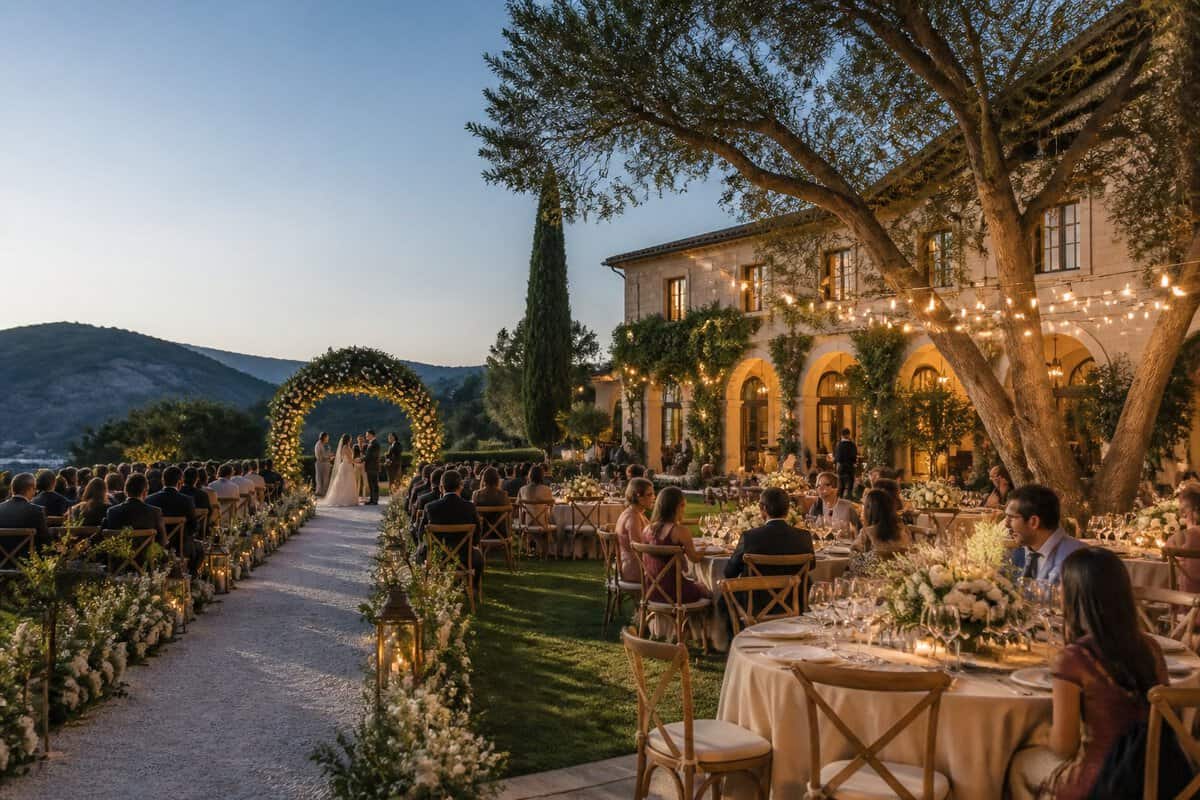
Your location can shape the entire wedding celebration. A ballroom in New York or Brooklyn creates a different experience from a garden estate near the Bay, Bath, or a coastal property in Hawaii.
Hotels, Banquet Halls, and Resort Properties
Hotels and banquet halls suit couples who want convenient indoor space, accessible lodging, and structured catering. Brands such as Hilton may offer ballrooms, guest rooms, food service, meeting areas, and an established event staff.
Resorts combine wedding services with lodging, restaurants, pools, activities, and guest support. They work well when your group wants a shared vacation. Review event privacy, room-block terms, restaurant access, and weather plans before booking.
Banquet halls can provide efficient reception layouts and large guest capacities. Ask whether the venue supplies the wedding planner, tables, linens, chairs, bar staff, cake service, and cleanup crew.
Wedding Estates and Private-Use Stays
A wedding estate gives you a distinctive setting with gardens, historic rooms, outdoor ceremony areas, or overnight accommodations. Private-use stays can offer more privacy and a full weekend setting for your closest guests.
Check the rental period, noise rules, parking, restrooms, heating and cooling, accessibility, cleanup, and lodging capacity. Some estates include coordination and catering, while others require you to build a vendor team through a preferred list.
Beach and Tropical Settings
A beach wedding creates a relaxed setting with natural scenery and a strong destination feel. Tropical properties in Hawaii and other warm locations often pair outdoor ceremony spaces with resort lodging and reception venues.
Ask about wind, rain, heat, tides, local permits, privacy, sound limits, and backup spaces. Beach décor, lighting, flooring, transportation, and private reception access can add substantial costs. A symbolic ceremony may simplify legal paperwork when you marry legally at home.
Planning a Destination Wedding at a Resort
A resort destination wedding bundles the ceremony, reception, lodging, meals, and guest activities into a travel-based experience. Your resort contract should state the package inclusions, guest requirements, event locations, taxes, fees, and private-event costs.
Resort planning works best when you reserve the venue and room block early, share clear travel details with wedding guests, and review every event charge before guests book flights.
What Resort Packages Cover for Couples and Guests
All-inclusive wedding packages often include a ceremony location, basic setup, chairs, bouquet, boutonniere, officiant or symbolic ceremony, cake, toast, and a reception meal. Some include a private cocktail hour, welcome drink, DJ service, live entertainment, or limited photography.
Guest room rates typically cover meals, selected drinks, resort activities, and standard amenities. Wedding events can still carry separate charges for private spaces, upgraded menus, premium drinks, décor, entertainment, transportation, and service fees.
Ask whether the package includes a set number of guests and how additional guests are priced. Confirm whether guests must stay at the resort, whether outside guests pay a day fee, and whether the resort charges vendor access fees.
Popular Destinations to Consider
Mexico offers many resort options in areas such as Puerto Vallarta and Cabo San Lucas. The Dominican Republic, including Punta Cana and La Romana, provides broad resort choices for beach celebrations. Jamaica, Costa Rica, and Saint Lucia suit couples seeking tropical scenery with different travel styles and property sizes.
Compare flight access, wedding department response times, weather patterns, legal requirements, room rates, and event privacy. Local permits can affect beach ceremonies and receptions, so ask the resort to list those costs before you sign.
You can use how do I choose a destination wedding to organize your priorities before comparing destination wedding resorts.
Adults-Only vs. Family-Friendly Resorts
An adults-only resort creates a quieter setting for couples who want an intimate celebration, nightlife, and spa treatments without children at the property. A family-friendly resort welcomes guests with children and usually offers larger room options, kids’ activities, and family services.
Ask about age rules, noise levels, ceremony schedules, pool areas, childcare, and guest transportation. Couples with mixed-age guests might choose a family-friendly property with an adults-only section or nearby adults-only sister resort.
Building a Multi-Day Wedding Weekend
A multi-day wedding weekend might include a welcome drink, group outing, rehearsal dinner, ceremony, private cocktail hour, reception, and farewell breakfast. Each event needs a location, guest count, menu, staffing plan, and transportation schedule.
Request a complete event proposal that separates wedding charges from group activities. Confirm whether premium drinks, live entertainment, spa treatments, room upgrades, and private dinners are included or billed separately.
Give guests a simple schedule with booking deadlines, airport guidance, resort policies, attire notes, and expected costs. A clear plan helps your group enjoy the destination without confusion about where to go or what each event includes.