
All-Inclusive Wedding Venues Salt Lake City: A Planning Guide
Salt Lake City gives you an unusual mix of city venues, historic gardens, and Wasatch Mountain views. Choosing an all-inclusive wedding venue in Salt Lake City can bring your venue, catering, flowers, cake, rentals, and service team into one easier planning process.
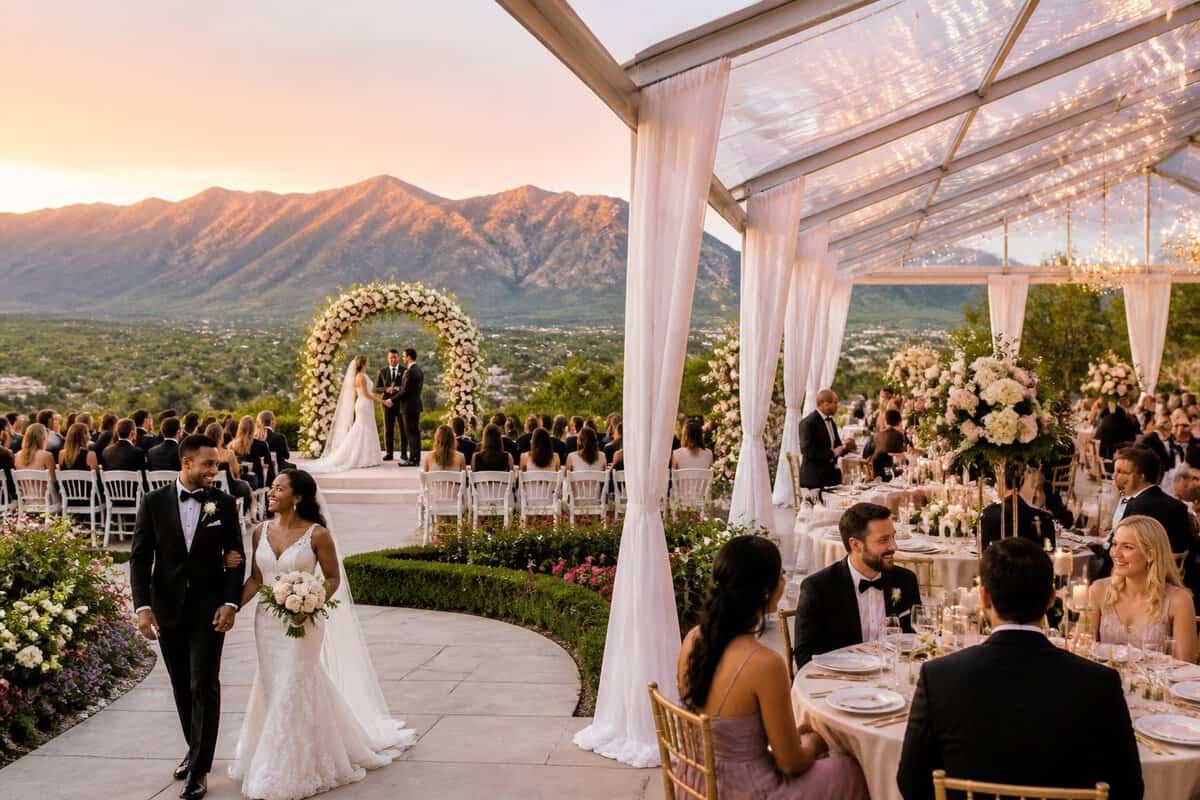
The best package is the one that matches your guest count, preferred setting, food plans, and full wedding budget with clear costs in writing. Package prices vary widely, so review each included service before you compare totals.
When you are ready to compare local options, Wedding Street can help you review all-inclusive packages by calling 801-548-5910.
What Does All-Inclusive Mean for Salt Lake City Weddings?
An all-inclusive wedding package combines several major wedding services under one planning arrangement, though the venue contract and outside vendors still need close review. You might receive a venue, catering, floral package, cake, setup, cleanup, and bar service in one coordinated plan.
A package through Wedding Street, for example, may be adjusted or purchased by service. A venue rental can remain under the venue’s own contract, while other services are organized through the package provider. Your wedding budget should reflect both parts.
Venue-Run Packages vs. Curated Vendor Bundles
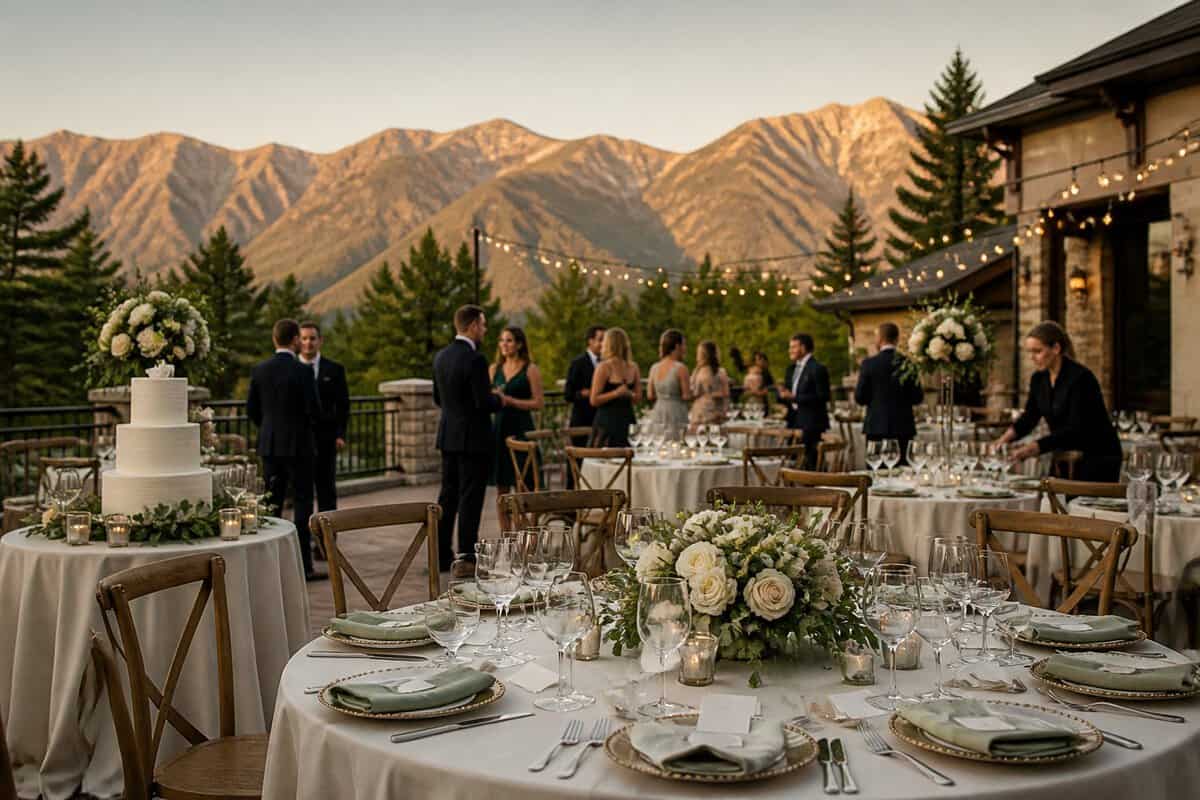
A venue-run package comes directly from the property. The venue may provide its own catering team, bar, tables, linens, staffing, and coordinator. This setup gives you one main contact and a clear set of property rules.
A curated vendor bundle brings several services together through a planner or package company. Wedding Street lists packages across many Salt Lake City wedding venues, allowing you to pair a selected venue with catering, flowers, cake, and related services.
Ask who holds each contract, who collects payment, and who handles changes. Those details show where responsibility sits if your guest count or menu changes.
What Is Usually Included and What May Cost Extra
Common package items include:
- Venue rental or venue coordination
- Buffet catering and service staff
- Tables, chairs, linens, and tableware
- Bridal and wedding party flowers
- Wedding cake
- Setup and cleanup
- Basic décor or a floral package
- Bar service or permission to bring alcohol
A sample catering package for 150 guests includes buffet service, dessert options, punch, citrus water, delivery, setup, cleanup, serving ware, and buffet staff. Menu upgrades, taxes, and an 18% service fee can raise the listed amount.
A floral package may include personal flowers for the couple, wedding party, and family members. A large floral package, premium blooms, pearls, rhinestones, extra décor, delivery outside the service area, photography, music, and officiant services can cost more.
Questions to Ask Before You Sign a Venue Contract
Ask these questions in writing:
- Which services are included in the quoted price?
- Which costs come from the venue contract?
- Does the price include tax and service fees?
- How does the package price change with your guest count?
- Who provides setup, cleanup, and day-of coordination?
- Can you use outside vendors?
- What are the bar, alcohol, and corkage rules?
- What happens if you cancel, postpone, or change the date?
- When are deposits and final payments due?
- What weather plan applies to an outdoor ceremony?
How Much Do All-Inclusive Wedding Packages Cost?
All-inclusive wedding packages in Salt Lake City can range from a few thousand dollars for a streamlined plan to $25,000 or more for a larger, premium celebration. A venue-only rental may sit near $5,000 to $15,000, while food, staffing, flowers, cake, bar service, and upgrades shape the final total.
Guest count and service level create the biggest price differences. A package designed for 150 guests has a different cost structure from an intimate dinner for 40 people.
How Guest Count, Season, and Location Affect Price
Guest count affects food, staffing, seating, tableware, cake portions, and rental needs. A larger guest list raises the total even when the venue fee stays fixed.
Saturday dates during spring, summer, and early fall receive high demand. Friday, Sunday, winter, and weekday dates may offer more availability and different pricing.
A downtown Salt Lake City venue also has a different cost profile from a mountain property in Little Cottonwood Canyon or a destination venue near Park City. Travel distance affects transportation, lodging, delivery, and vendor time. Include those costs when comparing Salt Lake City, surrounding suburbs, and mountain locations.
How to Compare Starting Prices With the Final Total
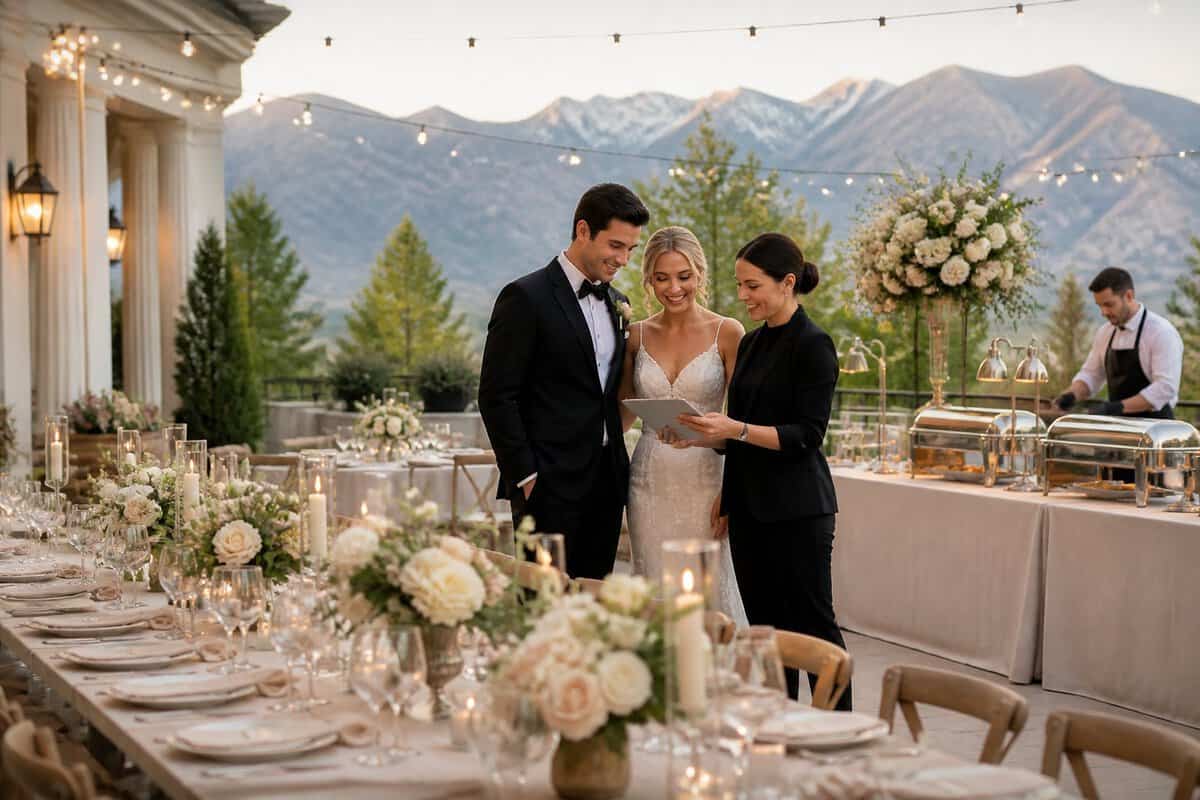
Treat a starting price as a first estimate. Request a line-item proposal that shows:
- Venue rental
- Food and beverage
- Service charges
- Taxes
- Rentals and linens
- Cake and floral services
- Staffing
- Delivery fees
- Ceremony fees
- Overtime
Wedding Street packages can include a custom three-tier cake, catering, and flowers, with venue rental handled through the selected property. Confirm the current quote, payment schedule, and venue terms before placing a deposit.
For help setting a realistic spending range, review this guide on how much should you spend on your wedding.
Common Add-Ons, Fees, and Upgrade Costs
Common extra charges include premium flowers, fondant cake designs, additional cake tiers, upgraded entrée selections, appetizers, alcohol, bartenders, corkage, specialty linens, décor, lighting, extra hours, and delivery outside the greater Salt Lake City area.
A catering package may let you upgrade from desserts to appetizers or a full dinner buffet. Tax and service fees can sit outside the advertised base price, so calculate the per-guest total after every addition.
City, Garden, and Historic Venue Options
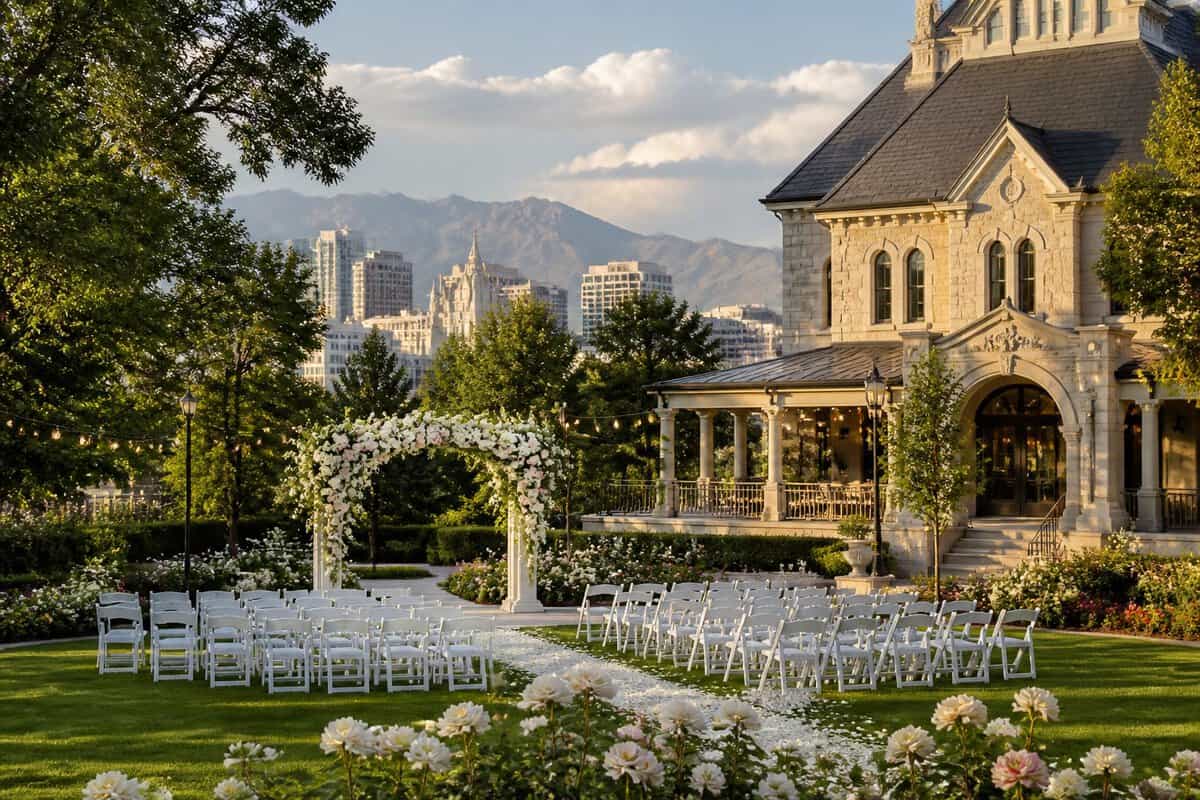
Salt Lake City wedding venues range from industrial spaces and coffeehouses to heritage gardens, farms, and large event centers. Your setting affects the ceremony style, guest flow, décor needs, parking, and weather plan.
The city and nearby communities offer flexible choices for couples who want urban access with Wasatch Mountain views. Historic and garden properties bring built-in character, while banquet spaces provide more control over seating and indoor reception plans.
Modern and Industrial Spaces in Salt Lake City
Modern spaces work well for couples who want clean lines, flexible décor, and a reception close to downtown lodging. Publik Coffee offers an industrial-chic setting with a distinct café atmosphere. Ember and Church and State can suit contemporary celebrations that rely on strong food and design details.
The Ivy House, also known as Ivy House Weddings and Events, provides another city option for couples comparing stylish interiors. The Grand Building and Magnolia Event Center are useful names to investigate when you need an indoor reception with room for formal dining and dancing.
When touring a modern space, ask about sound limits, catering access, loading areas, furniture, and the time available for setup.
Garden and Heritage Settings for Outdoor Ceremonies
Garden and heritage venues offer natural scenery that reduces the need for heavy ceremony décor. Cactus and Tropicals combines plant-filled surroundings with event capacity, while The Garden Place at Heritage Park brings a historic setting near This Is the Place Heritage Park.
Wheeler Farm, also called Wheeler Farms, suits couples who want a rural feel close to the city. The Chase Mill and areas connected with Thomas Monson can appeal to couples seeking historic architecture and landscaped grounds.
Ask about rain coverage, shade, restroom access, power, insect control, and ceremony-to-reception travel. Outdoor plans need a firm indoor backup with the same guest capacity.
Banquet Halls for Larger Receptions
Banquet halls simplify larger receptions because they provide an enclosed floor plan, organized service areas, and space for dining and dancing. Grand Falls Event Center, Crescent Hall, and Magnolia Event Center are examples to compare for formal receptions.
Le Jardin and The Azalea offer additional styles for couples who want a polished event setting. Compare ceiling height, dance-floor size, tables, chairs, staging, parking, and kitchen access before you focus on décor.
Mountain, Canyon, and Resort Celebrations Near the City
Mountain and resort venues near Salt Lake City give you dramatic Wasatch Mountains scenery, lodging options, and a destination feel within reach of the airport. Your package may cover venue services, while travel, rooms, transportation, and weather planning remain separate parts of the budget.
Little Cottonwood Canyon, Millcreek, Park City, and Deer Valley each create a different guest experience. Mountain roads, seasonal access, and lodging rates deserve attention before you invite out-of-town guests.
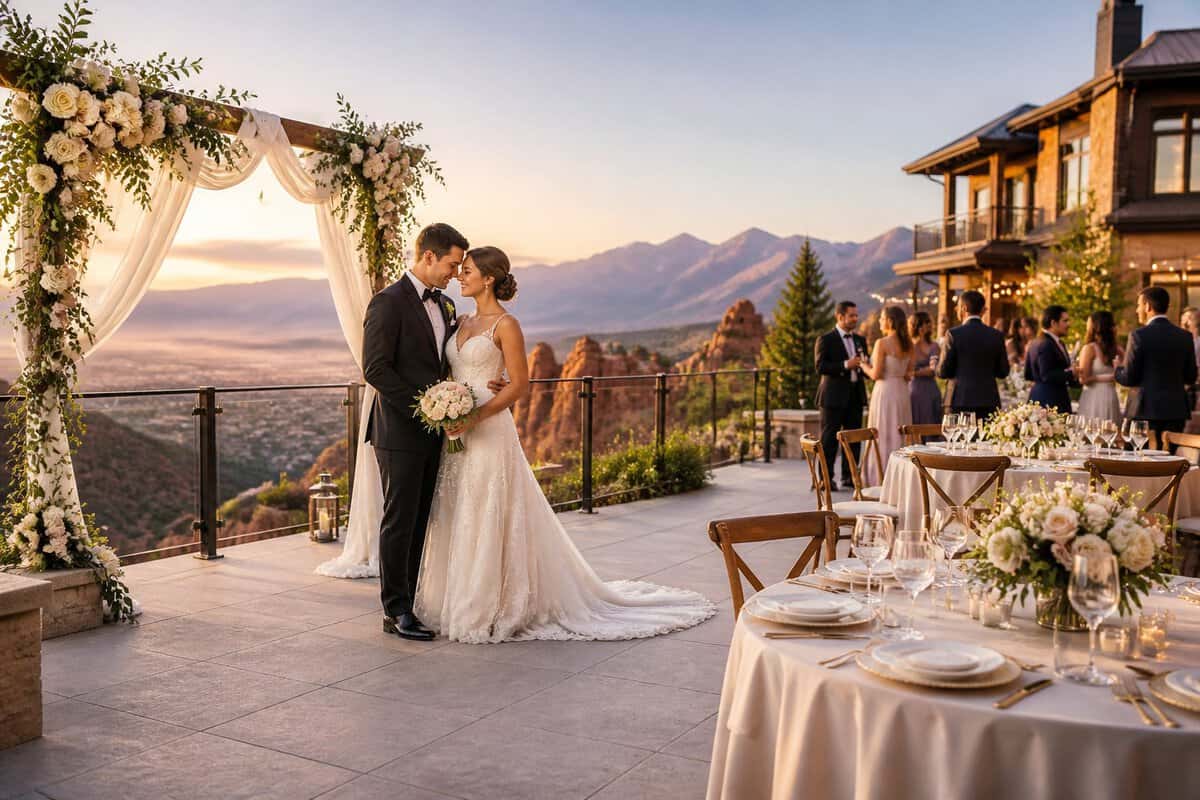
Canyon Venues With Wasatch Mountain Views
Millcreek Inn offers a canyon setting near Salt Lake City, while Log Haven and Louland Falls provide wooded scenery suited to ceremonies surrounded by nature. Solitude Mountain Resort, Alta’s Rustler Lodge, and Silver Fork Lodge bring higher-elevation settings with strong mountain character.
Review road access, parking, shuttle needs, guest lodging, music limits, and snow conditions. A mountain wedding requires a clear plan for vendors and guests traveling from the valley.
Park City and Deer Valley Destination Options
Park City and Deer Valley Resort provide destination wedding amenities, including lodging, dining, recreation, and resort event support. Pendry Park City offers a modern resort atmosphere, while Kimball Terrace can suit couples seeking mountain views near Park City’s services.
Ask whether the package includes ceremony seating, reception rentals, catering, bar service, staffing, and resort fees. Check room blocks early, especially for summer weekends and winter ski season.
Mountain Lodges for Four-Season Weddings
Mountain lodges work across several seasons when the property has indoor ceremony and reception space. Summer brings open-air views, fall adds changing color, and winter creates a snow-season setting with indoor comfort.
Confirm heating, parking, accessibility, power, restroom capacity, and vendor delivery routes. Your contract should explain weather decisions, rescheduling terms, and the deadline for moving an outdoor ceremony indoors.
Suburban and Wasatch Front Venues Worth Comparing
Suburban venues along the Wasatch Front give you more parking, flexible layouts, and access to communities south of Salt Lake City. Sandy, South Jordan, and Draper offer options for couples who want convenient venues without a downtown setting.
You can compare barns, halls, ranches, art spaces, and indoor-outdoor properties. Travel time from guest hotels, highway access, and nearby services should guide your shortlist.
Sandy, South Jordan, and Draper Choices
Draper Day Barn offers a barn-style setting, while Suncrest brings elevated views and a residential mountain feel. Crescent Hall, Le Jardin, and The Azalea provide polished spaces for ceremonies and receptions.
Millennial Falls, Grand Falls Event Center, Siempre, and Woodhaven Pointe add options across the southern Wasatch Front. Compare each property’s ceremony space, reception capacity, catering rules, parking, and rental hours.
Intimate Venues for Smaller Guest Lists
Smaller weddings benefit from spaces that feel full with fewer tables and shorter guest travel. Carmelle, Northampton House, Knot and Pine, and Alpine Art Center can suit intimate celebrations with a focused guest list.
Barwire & Lace brings a distinctive style for couples who want a less traditional event atmosphere. Ask about minimum spends, private-use hours, furniture, sound rules, and whether the property supports both ceremony and reception in one booking.
For more planning ideas, use these tips for choosing the perfect venue for a small wedding.
Larger Indoor-Outdoor Reception Spaces
Larger properties help you separate the ceremony, cocktail hour, dinner, and dancing while keeping guest movement clear. River View Ranch Event Venue, Grand Falls Event Center, and Woodhaven Pointe are worth comparing when you need substantial indoor and outdoor capacity.
Review the rain plan, tent rules, power supply, parking, restrooms, catering access, and end time. A site visit during the same season as your wedding can reveal heat, shade, traffic, and noise conditions.
How to Choose the Right Package for Your Wedding Day
Choose your package by matching the venue’s guest experience, service rules, travel needs, and weather plan to your priorities. A beautiful property becomes a poor fit when its catering policy, parking, or timing conflicts with your celebration.
Start with your guest count and preferred date. Then compare the full proposal, contract terms, vendor rules, and backup plans across two or three finalists.
Match the Venue to Your Guest Experience and Priorities
Consider how guests will arrive from Salt Lake City International Airport, where they will stay, and how easily they can move between ceremony and reception spaces. A nearby banquet hall may suit a formal dinner, while a ranch or garden venue may better fit an outdoor wedding.
List your top priorities before touring. You might value a mountain view, a strong in-house menu, a short rental window, accessible parking, or a private getting-ready suite.
Ask each venue to show a sample floor plan for your guest count. Include the ceremony aisle, buffet or plated service, bar, dance floor, DJ area, cake table, gift table, and accessible routes.
Confirm Catering, Vendor, and Alcohol Policies
Catering rules shape your final cost and menu flexibility. Ask whether you must use the venue’s caterer, whether outside food is allowed, and how dietary needs are handled.
Market Street Grill is one example of a food style you might compare when reviewing local catering options. Confirm whether the package includes staffing, service ware, setup, cleanup, cake cutting, and coffee or water service.
Ask who supplies the bartender, whether licensed alcohol service is required, and whether a corkage fee applies. For more menu-planning help, read how to choose the right wedding caterer. Get every vendor exception and approved outside-vendor list in writing.
Plan Travel, Lodging, and Weather Contingencies
Travel planning should cover airport access, hotel blocks, parking, shuttles, rideshare pickup, and mountain road conditions. Remote properties such as Sleepy Ridge Weddings, The Barn on State St, Homestead Midway Utah, and La Caille can create different transportation needs from a city venue.
Keep an indoor ceremony option available when your primary plan uses outdoor space. Confirm the decision deadline, who makes the weather call, whether a room flip is possible, and what happens to décor if the plan changes.
A complete proposal should show the venue fee, food and beverage, taxes, service charges, rentals, staffing, overtime, lodging-related costs, and any weather contingency expenses before you sign.