
All-Inclusive Wedding Venues With Lodging: A Planning Guide
Choosing all inclusive wedding venues with lodging gives you one place for the ceremony, reception, guest rooms, and shared weekend events. That setup reduces travel between locations and gives your guests more time to connect.
The best property combines clear package pricing, comfortable accommodations, and spaces that fit your guest count and wedding style. Before you sign, confirm what the package includes, which rooms are reserved for guests, and how taxes, service fees, and upgrades affect the total.
You can compare all-inclusive wedding venues by reviewing the property, package details, room options, and event schedule together. If you have a favorite location in mind, reach out to the venue team to check availability and request an itemized quote.
What Does an All-Inclusive Venue With Lodging Include?
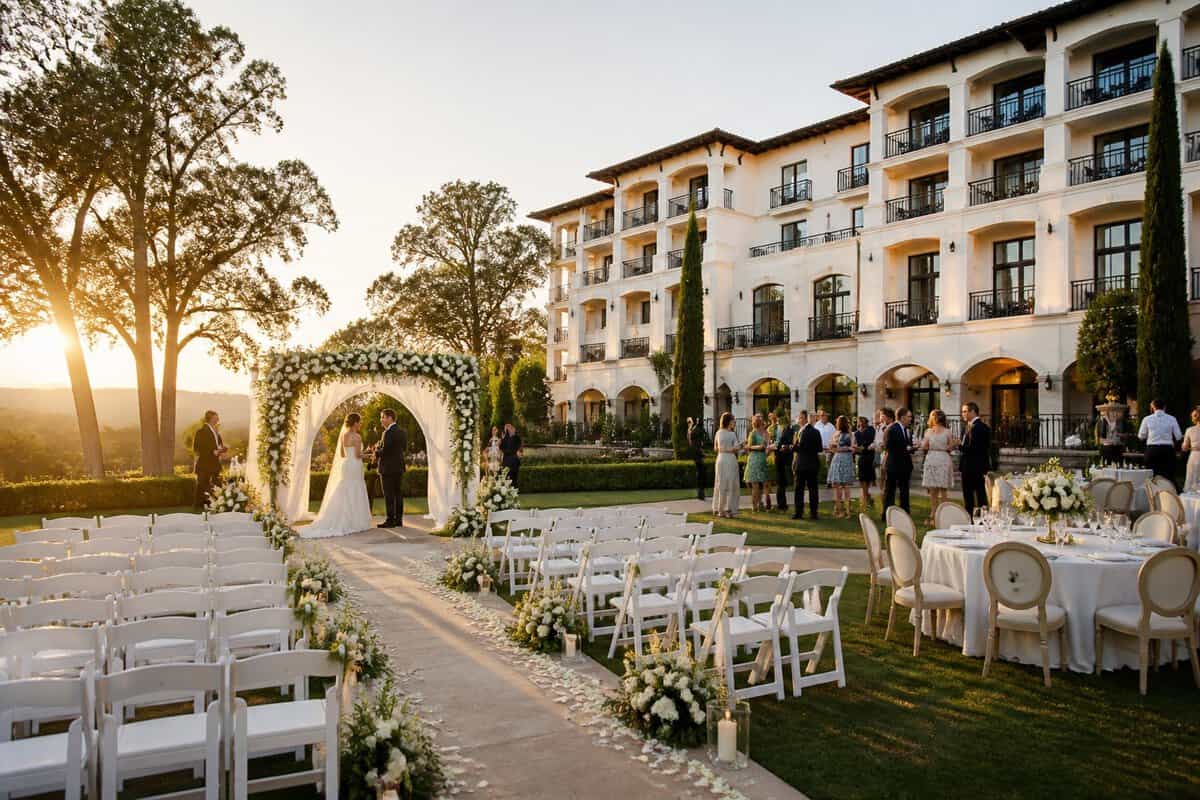
An all-inclusive venue with lodging combines wedding event services and overnight accommodations under one property or coordinated booking plan. Your package might include the wedding ceremony space, catering, rentals, bar service, and a wedding coordinator, while guest rooms follow a separate room-block agreement.
The exact offer depends on the property, package tier, season, and guest count. Ask for an itemized proposal that lists every included service and fee.
Core Wedding Services and Inclusions
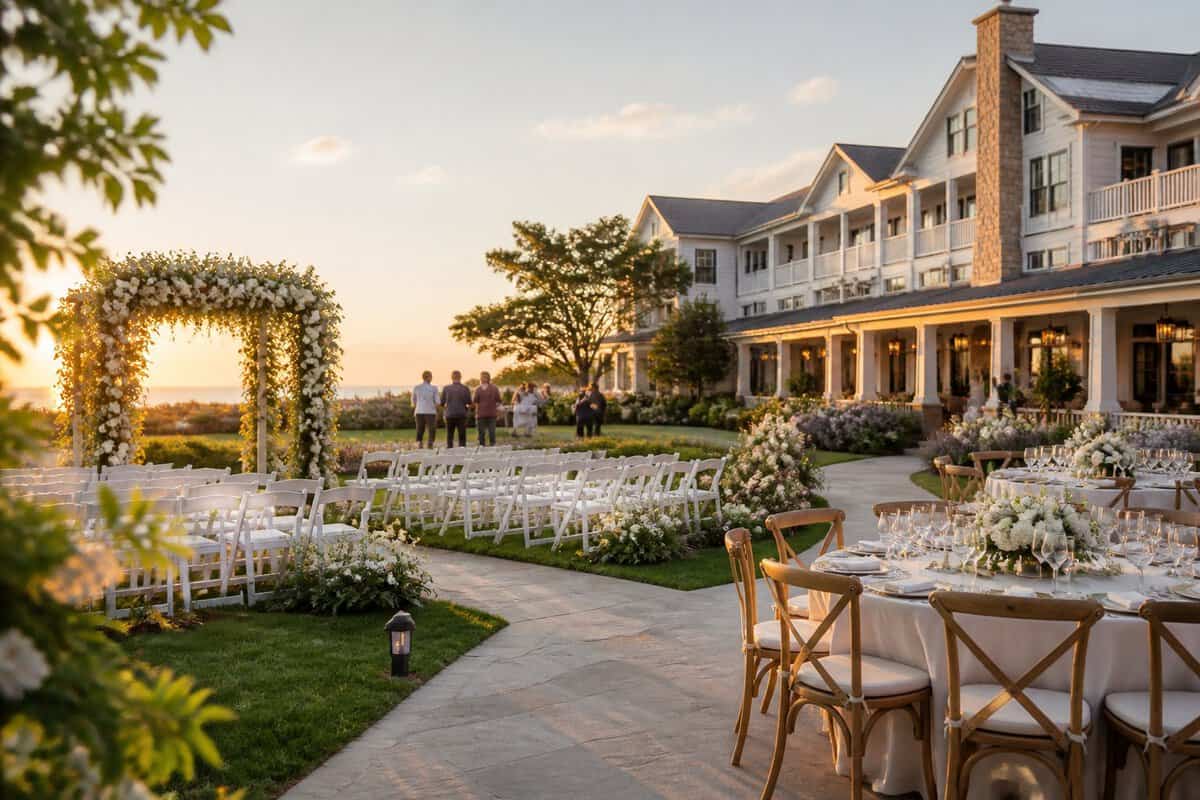
Core wedding services often include:
- Ceremony and reception spaces
- Tables, chairs, linens, glassware, and dinnerware
- A wedding coordinator or planning contact
- Cocktail-hour appetizers and a wedding menu
- Beer, wine, or an open bar for a set number of hours
- Wedding cake or another dessert option
- Basic ceremony décor and centerpieces
- Setup and cleanup
- A sparkling wine toast or champagne toast
Some all-inclusive wedding packages include a DJ, sound equipment, basic floral arrangements, or a symbolic ceremony led by a venue-approved officiant. Legal ceremonies can require separate documents, officiant fees, and government charges.
Review the package language closely. “All-inclusive” describes a bundle, yet each venue defines that bundle in its own way.
On-Site Accommodations and Property Buyouts
Lodging can range from hotel rooms and suites to cottages, villas, cabins, or private guesthouses. Confirm the number of beds, bathroom access, accessibility features, check-in times, parking, and distance from rooms to the event spaces.
A property buyout reserves the full venue and its lodging for your group during a set period. This option creates more privacy and control over the schedule.
Ask whether the buyout includes every room, a required minimum stay, cleaning charges, security, and exclusive use of shared spaces. A room block reserves a set number of rooms without giving you control of the entire property.
Check the release date, booking deadline, attrition policy, and responsibility for unreserved rooms.
What Is Usually an Add-On?
Photography, videography, premium floral design, hair and makeup, transportation, attire, invitations, and guest travel frequently sit outside the base package. Premium liquor, custom cocktails, upgraded linens, specialty lighting, live entertainment, late-night food, and extended reception hours also raise the price.
Ask for the unit cost of each upgrade and confirm whether a service charge, tax, gratuity, or outside-vendor fee applies. Request a sample final invoice so you can compare the full event cost with other all-in-one wedding venues.
Why Choose a Stay-On-Site Wedding Weekend?
A stay-on-site wedding weekend gives you one connected setting for the ceremony, reception, lodging, and extra celebrations. Guests spend less time arranging rides and more time participating in the events you plan.
A good property supports a relaxed schedule with clear arrival instructions, comfortable rooms, dining areas, and quiet spaces for guests who need a break.
More Time Together Across Multiple Events
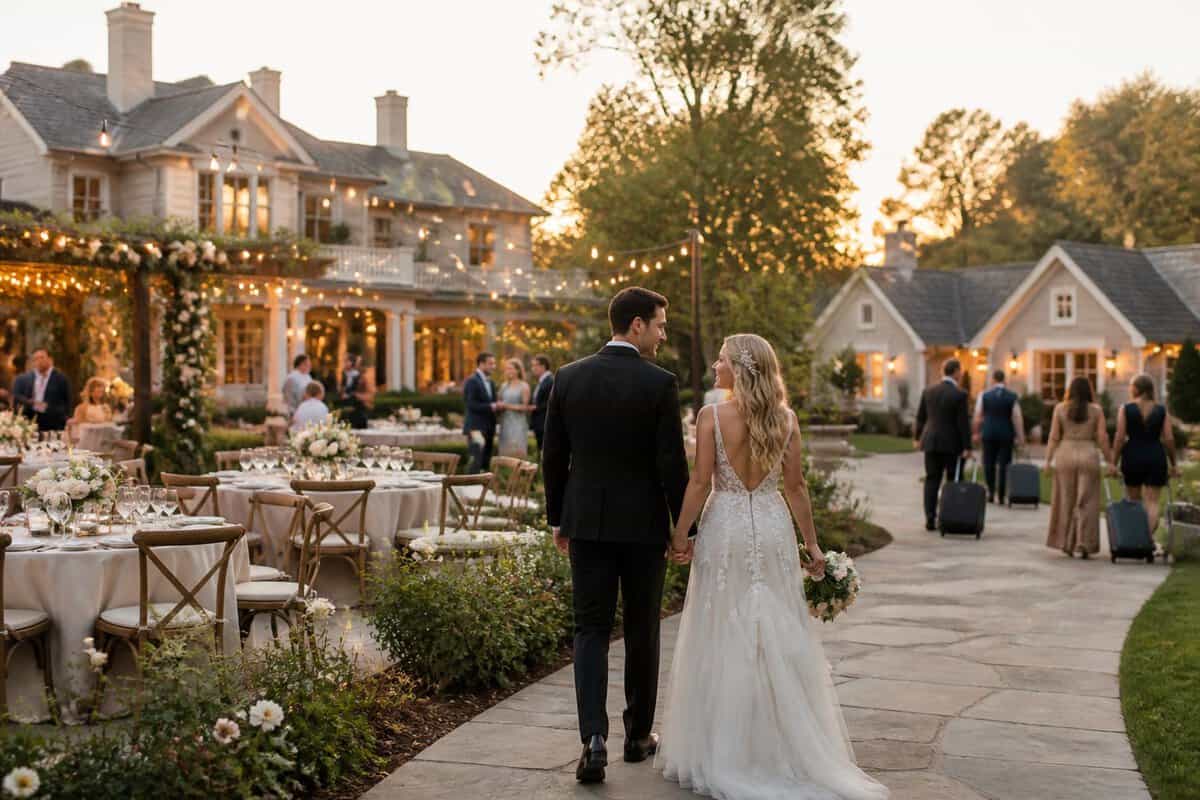
Multi-day wedding weekends let you welcome guests before the wedding day. You might schedule a welcome dinner on arrival night, a rehearsal dinner for close family, and a casual farewell brunch after the reception.
The property might also offer a pool, lawn games, spa services, hiking, or local tours. Leave open time in the itinerary so guests can rest and explore at their own pace.
When you plan several events, confirm how each space transitions into the next activity. A private dining room near the guest rooms can make the welcome dinner easy, while a separate lawn or terrace can give the cocktail hour its own setting.
Privacy, Convenience, and Guest Experience
On-site lodging keeps your wedding party close to the getting-ready rooms, ceremony area, and reception. Guests with mobility needs also have a clearer route when the property provides accessible rooms, ramps, elevators, and nearby parking.
A private estate or buyout offers more control over music, shared spaces, and event timing. A resort provides more amenities and room choices, along with staff who manage food service, housekeeping, and guest requests.
Give every guest a simple itinerary with check-in details, dress guidance, meal times, transportation information, and a day-of contact number.
When Lodging May Not Be the Right Fit
Stay-on-site lodging works best when your guests want a shared trip and the property has enough rooms for the group. A local venue with nearby hotels might suit you better when most guests live close, travel is difficult for older relatives, or several guests need flexible room types.
Compare the room rates with nearby options before you require a room block. Check whether guests must stay for a minimum number of nights and whether the event contract makes you responsible for unused rooms.
How Much Do All-Inclusive Wedding Weekends Cost?
All-inclusive wedding weekends range from modest local celebrations to luxury events priced at tens of thousands of dollars. Guest count, location, season, lodging, package level, and add-ons drive the final cost.
A useful quote separates the wedding venue fee, food and beverage charges, lodging, taxes, service fees, and optional upgrades.
Comparing Venue, Lodging, and Resort Pricing
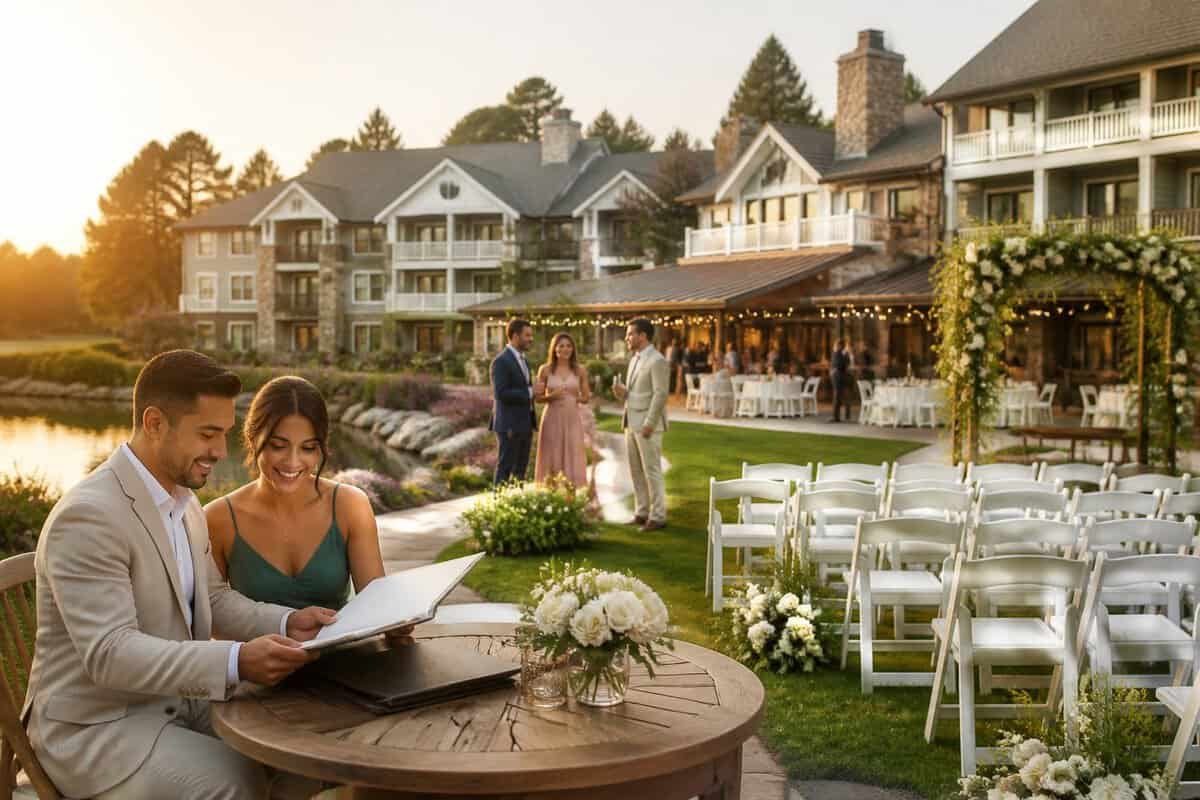
A local estate might charge a flat site fee and a separate per-person catering rate. A hotel can combine guest rooms with a food-and-beverage minimum. All-inclusive resorts may charge a wedding package fee while guests pay their own room and meal rates.
Build a complete estimate that includes:
- Venue rental or property buyout
- Ceremony and reception services
- Catering and bar service
- Guest rooms and required room nights
- Rentals, staffing, taxes, and service charges
- Transportation and vendor fees
- Photography, flowers, entertainment, and décor upgrades
For a broader budget check, compare your estimate with guidance on how much should you spend on your wedding.
Per-Person Packages vs. Full-Property Rates
Per-person pricing covers costs that rise with attendance, such as meals, drinks, cake, seating, and dinnerware. A $150 package for 100 guests equals $15,000 before taxes and added fees.
A full-property rate covers exclusive use of the venue and lodging for a set period. It can provide privacy and schedule control, though the minimum rate may exceed the cost of a smaller event.
Ask the venue to price your celebration at three guest counts, such as 50, 100, and 150. Include children, vendors, and required staff meals in the count.
Costs to Confirm Before Signing a Contract
Request written answers about the minimum guest count, minimum spend, room-night requirement, deposit schedule, cancellation terms, and date-change rules. Confirm whether the quote includes gratuities, taxes, insurance, overtime, cleanup, security, and vendor meals.
Ask whether the venue charges corkage, cake-cutting, outside-vendor, delivery, parking, or resort fees. Check the rain plan, noise curfew, event end time, and charges for extra setup or breakdown hours.
Your contract should show the package price, lodging terms, payment dates, refund rules, and every required fee.
Choosing the Right Property for Your Guest Count and Style
Choose a property that fits your guest count, sleeping needs, travel plans, event style, and preferred level of privacy. The setting should support the full schedule, including arrival, ceremony, reception, and departure.
Visit in person when possible, or request a detailed virtual tour with room layouts, event capacities, and sample floor plans.

Estate and Private-Home Celebrations
A wedding estate suits intimate celebrations that prioritize privacy, character, and flexible shared time. Estates might include gardens, guest cottages, kitchens, pools, terraces, or indoor backup rooms.
Ask about overnight capacity, neighboring homes, parking, music limits, fire rules, catering access, and required event staff. Private homes may have fewer rooms and tighter restrictions than a luxury private resort.
An Orlando lakefront estate, for example, might offer scenic outdoor ceremonies and nearby city access. Check whether the property permits amplified music, late-night events, tent installations, and outside vendors.
Historic properties such as a historic Italian castle can create a strong visual style, though imported décor, travel, and limited access routes can add planning work.
Resort Weddings and Beach Getaways
Resorts work well for larger guest groups that want rooms, dining, activities, and event services in one place. A beach wedding or tropical wedding also gives you a vacation setting with outdoor ceremony options.
Ask where private events take place, whether the beach is open to the public, and what indoor space protects your celebration from rain, wind, and heat. Confirm photography rules, sound limits, reception privacy, and transportation across the property.
Review the resort’s wedding packages beside the room rates. A low package price can come with a room-night minimum, booking deadline, or required guest count.
Questions to Ask About Rooms, Events, and Restrictions
Use these questions during tours and contract reviews:
- How many guests can sleep on-site, and how many rooms have accessible features?
- Do guests need to stay for a minimum number of nights?
- Is the ceremony space private, and what is the weather backup?
- How many weddings or private events occur on the same date?
- What are the music, alcohol, décor, and outside-vendor rules?
- Who manages room assignments and guest questions?
- What time can vendors load in, and when must the event end?
- Which taxes, service charges, deposits, and cleaning fees apply?
A written answer helps you compare properties with the same standards.
Top Locations for an All-Inclusive Wedding Getaway
The best location balances guest travel, event style, lodging quality, local rules, and the full trip budget. U.S. estates offer easier domestic logistics, while Mexico and Caribbean destinations create a resort-centered vacation.
Compare flight access, transfer time, weather, passports, legal ceremony rules, and room availability before you choose.
U.S. Estates Near Major Cities
A U.S. estate near a major city keeps airport access, local vendors, and guest travel manageable. New York offers historic properties, waterfront venues, and nearby lodging for city celebrations. Florida options include lakefront estates, coastal resorts, and warm-weather properties near Orlando.
Domestic venues also make it easier to host guests who cannot take a long trip. You can schedule more site visits and coordinate with local photographers, florists, musicians, and transportation companies.
Review best wedding locations for additional setting ideas, then narrow your list by guest count and travel time.
Mexico and Caribbean Resort Destinations
Mexico offers broad resort choices in Cancún, Los Cabos, and Puerto Vallarta. Cancún provides major airport access and large properties. Los Cabos suits desert-coast scenery and luxury resorts. Puerto Vallarta combines beaches, restaurants, and a walkable local setting.
Punta Cana features many all-inclusive resorts with beach ceremony spaces and group services. Jamaica, including Montego Bay, provides established resort wedding teams and Caribbean scenery. Saint Lucia brings dramatic landscapes and smaller, more intimate resort settings.
Check passport rules, marriage documents, translation needs, blood-test requirements, weather policies, hurricane procedures, and transfer times. Review whether guests pay for rooms, meals, and activities separately from your wedding package.
Planning a Destination Wedding Guest Experience
Give guests a clear travel plan with airport details, transfer instructions, room booking deadlines, local currency guidance, dress notes, and event times. Set a deadline for room reservations that allows the property to release unused rooms without penalties.
A destination wedding feels easier when the schedule includes rest periods and optional activities. Share resort amenities, nearby excursions, child-care options, and accessibility information before guests commit.
Use how long should you stay for a destination wedding to help guests plan the right length of trip. Keep legal ceremony requirements separate from symbolic ceremony plans so every couple and guest knows what the wedding day represents.
How to Book and Coordinate Your Celebration
Book after you confirm the property’s capacity, lodging terms, package inclusions, event restrictions, and complete price. Your wedding planner, wedding coordinator, and venue team should share one written schedule and one current budget.
Reserve the date only after the contract identifies the ceremony, reception, lodging, payments, cancellations, and required vendors.
Build a Realistic Multi-Day Timeline
Start with guest arrival and check-in, then place each event around travel time and property quiet hours. A sample schedule might include:
- Thursday: Guest arrivals and welcome dinner
- Friday: Rehearsal, free time, and casual gathering
- Saturday: Getting ready, wedding ceremony, cocktail hour, reception, and after-party
- Sunday: Farewell brunch and departures
Keep setup, photography, meals, transportation, and room access on the same timeline. Ask when vendors can enter and when the venue must be cleared.
Align Your Planner, Coordinator, and Venue Team
Your wedding planner handles broader wedding planning, vendor communication, design decisions, and personal priorities. Your venue wedding coordinator manages property rules, room access, catering, staffing, setup, and the wedding-day flow.
Confirm who approves the wedding menu, manages the open bar, cues the ceremony, moves guests to the cocktail hour, and handles late changes. Assign one decision-maker from your side so the venue team receives clear instructions.
Schedule planning calls at key points: after booking, after the menu selection, before the rooming list deadline, and during the final month.
Review Contracts, Room Blocks, and Payment Terms
Read the event contract and lodging agreement together. Confirm the deposit amount, payment dates, room-block deadline, minimum room nights, attrition terms, cancellation policy, postponement rules, damage deposits, insurance, and refund conditions.
Make sure the contract lists:
- Ceremony and reception locations
- Guest capacity and minimum spend
- Menu, bar hours, cake, and toast service
- Lodging inventory and room rates
- Setup, cleanup, staffing, and overtime
- Outside-vendor and décor policies
- Rain plan, noise curfew, and event end time
Keep the signed contract, guest room list, floor plans, vendor contacts, and final invoice in one shared folder. Use a detailed wedding planning organization tips checklist to track each deadline through the wedding weekend.