
Are You Supposed to Wear Your Wedding Band on Top or Bottom of Your Engagement Ring? Find the Perfect Stack!
Choosing how to wear your rings can feel a bit confusing, especially when it comes to your wedding band and engagement ring. Typically, the wedding band goes on the bottom, closer to your heart, while the engagement ring sits on top. This traditional order symbolizes that your marriage is the foundation of your union, with the engagement ring above representing your promise and love.
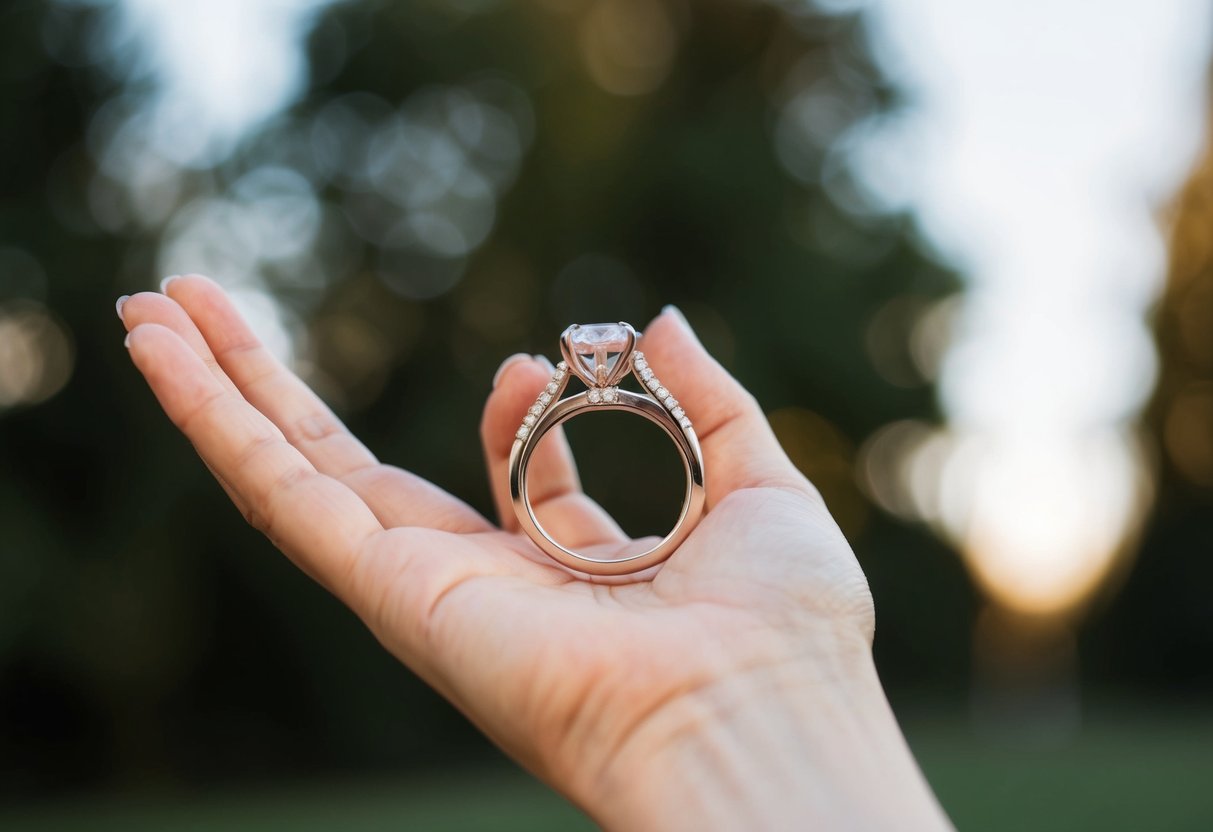
Understanding this order isn’t just about tradition; it’s also about personal preference. Many people feel a strong connection to the meaning behind their rings. You may choose to mix it up according to what feels best for you or reflects your unique story.
The question of how to wear your rings can spark a meaningful conversation about love and commitment. As you explore your options, remember that the most important thing is what resonates with you.
Understanding Ring Traditions
Ring placement has deep roots in history and varies across cultures. Knowing these traditions can enrich your understanding of what your wedding band and engagement ring symbolize in your life.
Historical Significance of Ring Placement
The tradition of wearing rings on the left hand comes from the belief in the “vena amoris,” or the vein of love, thought to connect directly to the heart. This idea dates back to ancient civilizations, including the Romans and Egyptians, who used rings as symbols of eternal love.
When you wear your wedding band on top of your engagement ring, it emphasizes the wedding band’s significance as a commitment made after the engagement. This layered placement showcases the transition from dating to a lifelong partnership. Each ring represents a step in your journey together, with the band symbolizing your vows.
Cultural Variations in Wearing Wedding Rings
Cultural practices greatly influence how people wear their wedding rings. In many Western cultures, it’s common to wear the wedding band on top of the engagement ring on the left hand. This signifies that the wedding band is the more important symbol of union.
Conversely, some cultures opt to wear rings on the right hand. In countries like Germany and Russia, couples typically wear their wedding bands on the right hand, emphasizing different meanings around love and commitment.
These variations show that while the rings you wear are personal, they also reflect a rich tapestry of traditions. Each style has unique significance, allowing you to choose what feels right for you.
Wedding Band and Engagement Ring Basics
When it comes to wearing your rings, there are important details to consider. Understanding the differences between an engagement ring and a wedding band, the significance of the wedding ceremony, and how to combine both rings can help you wear them with confidence.
Differences Between Engagement Rings and Wedding Bands
Engagement rings are typically given during the proposal. They often feature a prominent center stone surrounded by smaller diamonds or intricate designs. They symbolize the promise of marriage.
Wedding bands, on the other hand, are exchanged during the wedding ceremony. They are usually simpler in design and can be made of various metals. While the engagement ring is a statement piece, the wedding band serves as a complement, symbolizing the commitment you make to each other.
The Wedding Ceremony and Ring Exchange
During the wedding ceremony, the couple exchanges rings as a sign of their vows. Traditionally, the wedding band is placed on the left ring finger first, followed by the engagement ring on top. This order represents the commitment made in marriage, with the wedding band closest to your heart.
Some people may choose to switch the rings’ order after the ceremony. This ensures comfort and maintains the tradition of wearing the wedding band on the bottom. The way you choose to wear your rings is a personal decision based on tradition or comfort.
Combining Engagement Ring with Wedding Band
After the wedding, many couples wear both rings together. The common practice is to place the wedding band on the bottom and the engagement ring on top. This creates a beautiful stacked look.
If you have additional rings, like an anniversary band, you can choose to wear them above the engagement ring. Remember, it’s essential that the rings fit well together. If they don’t, consider resizing the bands for a comfortable fit. Whether you mix styles or keep them traditional, the key is to wear them in a way that feels right for you.
Choosing Your Style and Comfort
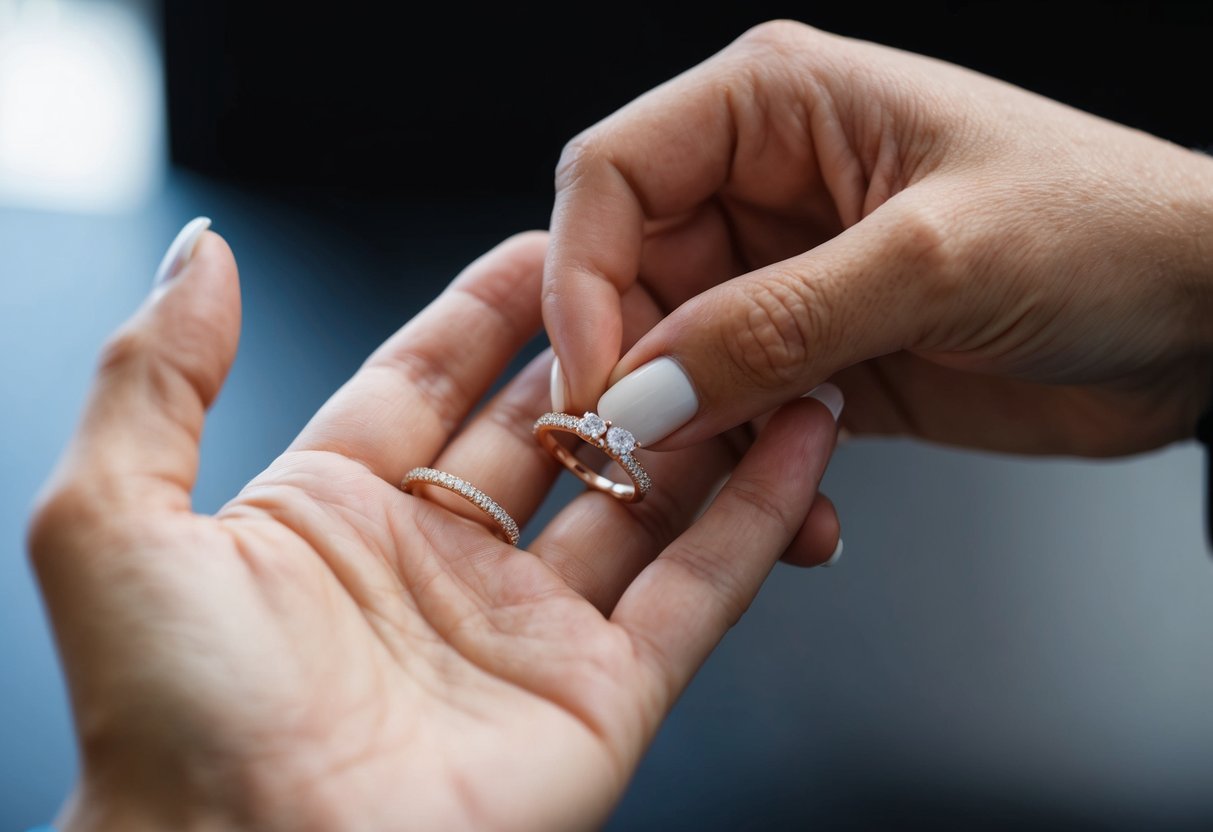
When deciding how to wear your wedding band and engagement ring, your personal style and comfort are key. Each person’s preference can vary, making it important to choose what feels right for you.
Personal Preference and Ring Placement
Your choice of ring placement often comes down to personal preference. Some people prefer the wedding band on top of the engagement ring, while others may choose to wear the engagement ring on top.
This decision can depend on several factors, such as the design of your rings and how they fit together. If your engagement ring is more prominent, it might look nice on top. Alternatively, if you enjoy the idea of the wedding band closest to your heart, wearing it on top is a great choice.
Don’t hesitate to mix things up according to your mood or outfit!
Practical Considerations for Wearing Your Rings
Comfort is key when wearing both your wedding band and engagement ring. Make sure that the rings fit well together and do not cause any irritation.
Consider factors like your daily activities. For instance, if you work with your hands often, you might find it more comfortable to wear the wedding band alone.
Also, think about the width of your rings. A wider band may take up more space on your finger, which could affect how your engagement ring sits. Finding the right combination can make a big difference in how your rings feel throughout the day.
Eternity and Anniversary Rings
Eternity and anniversary rings are beautiful additions to your ring collection. You can wear these rings in various ways, depending on your style and preference.
Some people choose to stack eternity rings alongside their wedding band or engagement ring for a layered look. This can symbolize ongoing love and commitment. Others may prefer to wear them on a different finger or even separately.
When placing an eternity ring, consider how it fits with your existing rings. If you enjoy a more understated look, wearing it on a different finger may be best. Your comfort and personal style should always guide your choices!
Final Thoughts on Wedding Band Placement
When it comes to wedding band placement, tradition suggests you wear your wedding band closest to your heart. This means you should place it on the bottom of your engagement ring.
This order represents your eternal bond with your partner. Your wedding band symbolizes commitment, and having it closest to your heart emphasizes this strong connection.
Most people wear their wedding bands on the left ring finger. This is common in many cultures, as it has deep meaning in the context of love and marriage.
If you choose to wear your rings together, stacking them can look beautiful. Some find it helpful to secure the engagement ring on top for added comfort. Others appreciate wearing just one ring for simplicity and style.
Ultimately, the choice is yours. There is no right or wrong way to wear your rings. The best method is the one that feels most special to you and reflects your relationship.
Feel free to mix and match styles as well. Your wedding band can be a simple design, while your engagement ring may have more detail. What matters most is that these rings symbolize your commitment and love.