
Average Catering Cost for a Wedding: 2026 Pricing Guide
The average catering cost for a wedding in the U.S. is about $80 per guest for food and service, while an all-in budget with drinks, tax, service charges, and gratuity often reaches $110 to $140 per guest. For 100 guests, plan on roughly $8,000 for the base meal or $11,000 to $14,000 for a fuller reception package.
Your final wedding catering costs depend on guest count, meal style, location, menu choices, and the services included. A plated dinner with a full open bar will sit at a different price point than buffet catering with a limited bar and dessert stations.
Start with your guest list and an all-in spending limit before requesting proposals. You can also compare your estimate with this guide to how much you should budget per person for a wedding, then ask caterers for itemized quotes that show food, beverage, labor, rentals, fees, and tax.
What Is a Realistic Per-Person Catering Budget?
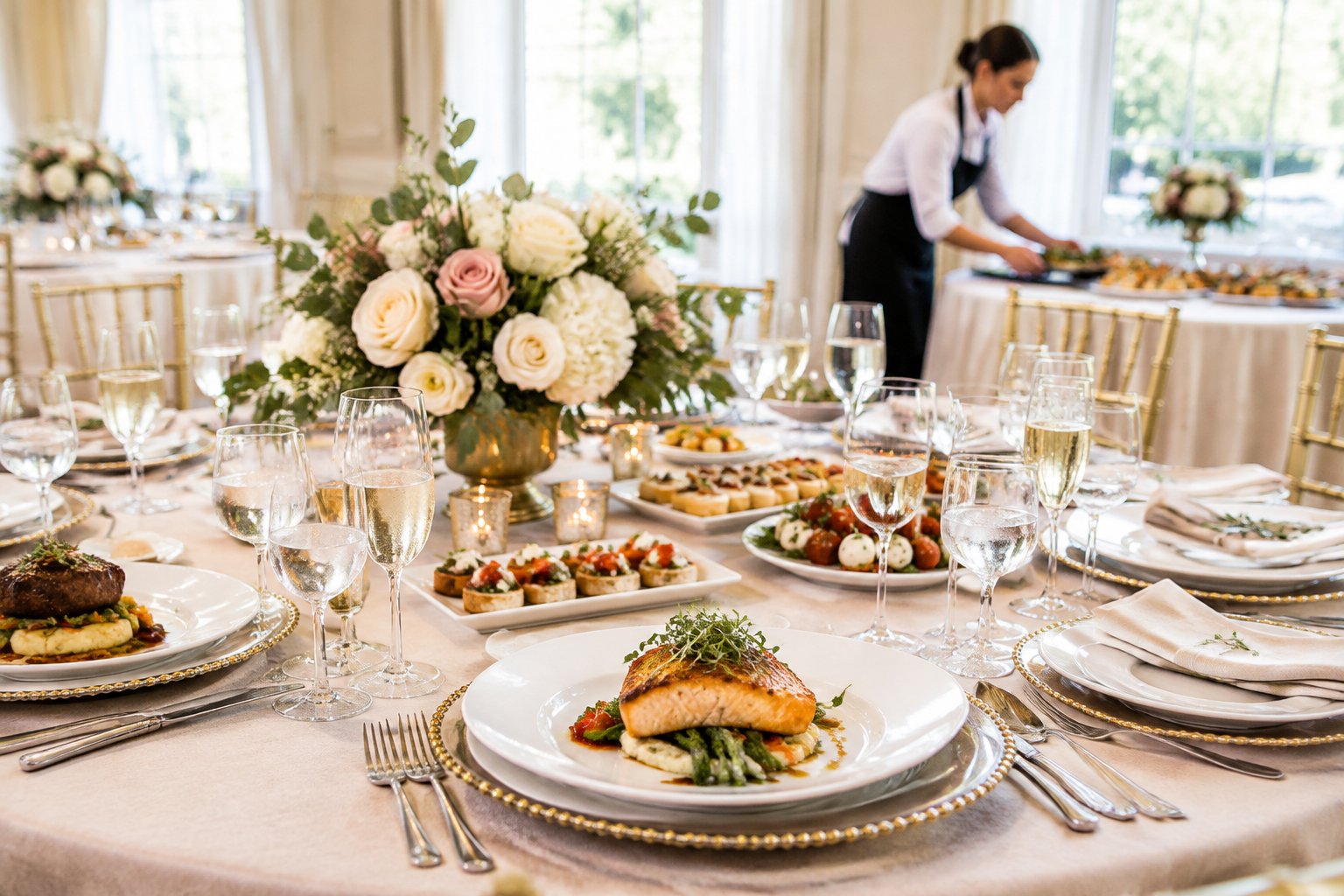
A realistic wedding catering budget is $70 to $150 per person before or after certain fees, with about $110 to $140 per guest serving as a useful all-in planning range for many full-service receptions. Ask each caterer whether the quoted cost per person includes labor, rentals, drinks, tax, service charges, and gratuity.
Your wedding catering cost in the U.S. can shift sharply by city and service level. A guest count calculator or catering calculator helps you compare the cost of catering for 100 guests, catering for 150 guests, and catering for 200 guests before you book a venue.
National Price Benchmarks and Why They Differ
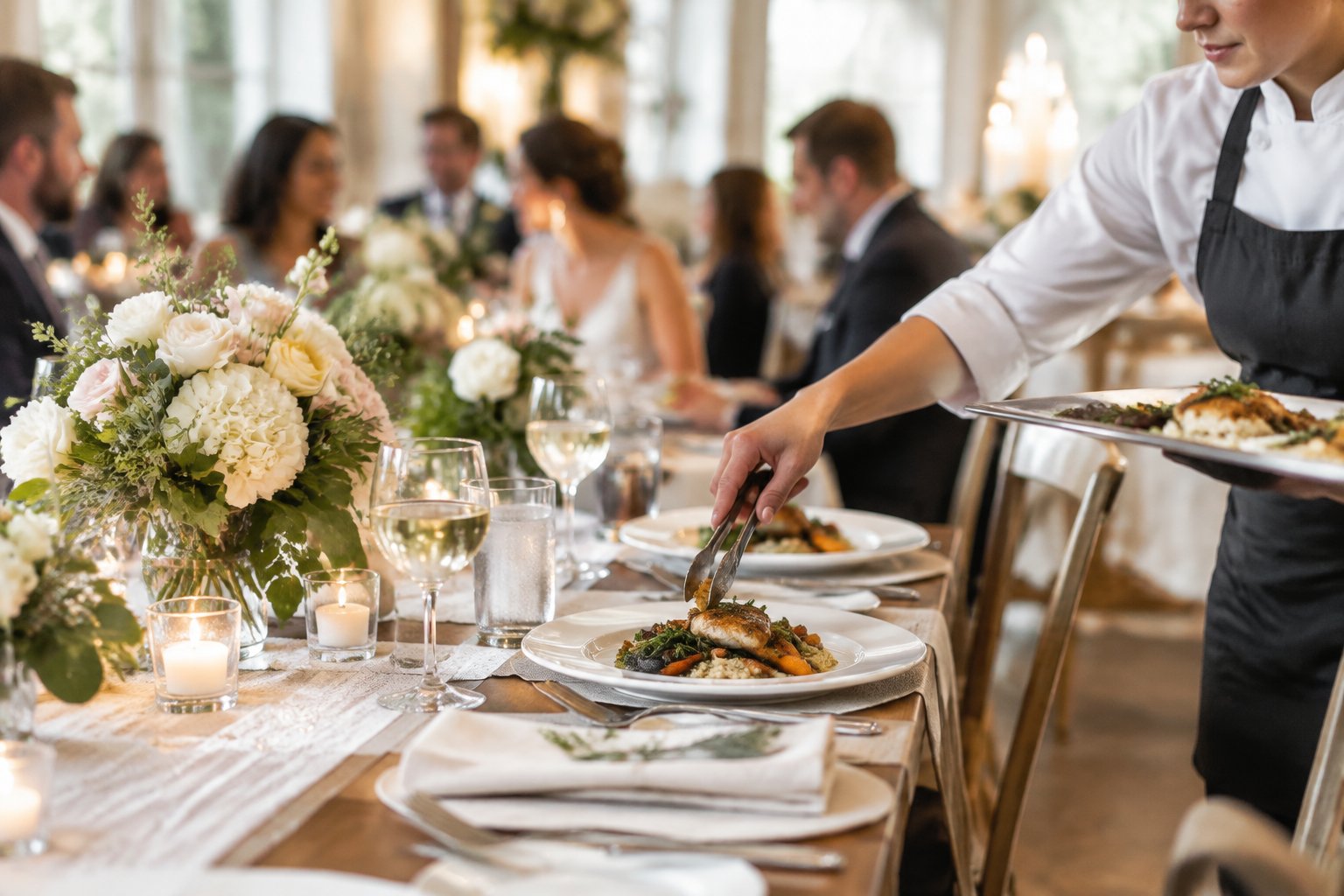
A national average wedding catering cost of about $80 per person provides a starting point for food and basic service. Many couples spend between $70 and $100 per guest for a mid-range meal, while premium menus and formal service can reach $175 to $300 or more per person.
Major cities such as New York, Los Angeles, San Francisco, and Chicago often carry higher labor, venue, and transport costs. Rural markets may offer lower menu prices, though travel fees and limited local availability can affect the quote.
The meal format also changes wedding catering prices:
- Buffet or family-style service: about $70 to $120 per guest
- Plated dinner service: about $100 to $200 or more per guest
- Food trucks or casual catering: about $20 to $60 per guest
- Luxury stations and premium menus: about $175 to $300 or more per guest
These ranges describe planning estimates. Your contract controls the final amount.
How to Calculate Your Starting Food Budget
Multiply the catering cost per person by the number of people who will eat. Use your expected attendance, including children and vendor meals when the caterer charges for them.
For example:
- 100 guests × $80 = $8,000 for the base meal
- 150 guests × $100 = $15,000 for food and service
- 200 guests × $120 = $24,000 for food and service
Then add a planning cushion of 25% to 35% for tax, service charges, gratuity, bar service, rentals, delivery, cake cutting, and overtime. A $10,000 food proposal could require a wedding budget of $12,500 to $13,500 after added charges.
You can also use a wedding meal cost per person guide to compare a simple meal with a multi-course reception.
What Catering for 100, 150, and 200 Guests Can Cost
| Guest count | Base estimate at $80 per guest | All-in planning range at $110 to $140 per guest |
|---|---|---|
| 100 guests | $8,000 | $11,000 to $14,000 |
| 150 guests | $12,000 | $16,500 to $21,000 |
| 200 guests | $16,000 | $22,000 to $28,000 |
A 100-person wedding can cost less per guest when the menu and staffing are simple. Small weddings still face fixed expenses such as delivery, kitchen labor, rentals, and event management, so a lower guest count does not always produce a matching percentage reduction.
Set your guest count early, then request quotes using the same menu, service time, bar plan, and rental list. That gives you a fair comparison between caterers.
How Meal Style Changes the Final Bill
Plated dinner service usually costs the most because it requires more servers and precise timing, while buffet catering, family-style dining, food trucks, and lunch receptions can reduce labor and menu costs. Your meal style also sets the pace and feel of the wedding reception food.
A formal dinner may include passed hors d’oeuvres, cocktail hour appetizers, several courses, and table service. A casual format may focus on one filling main dish, a few sides, and a dessert station.
Plated Dinner Service
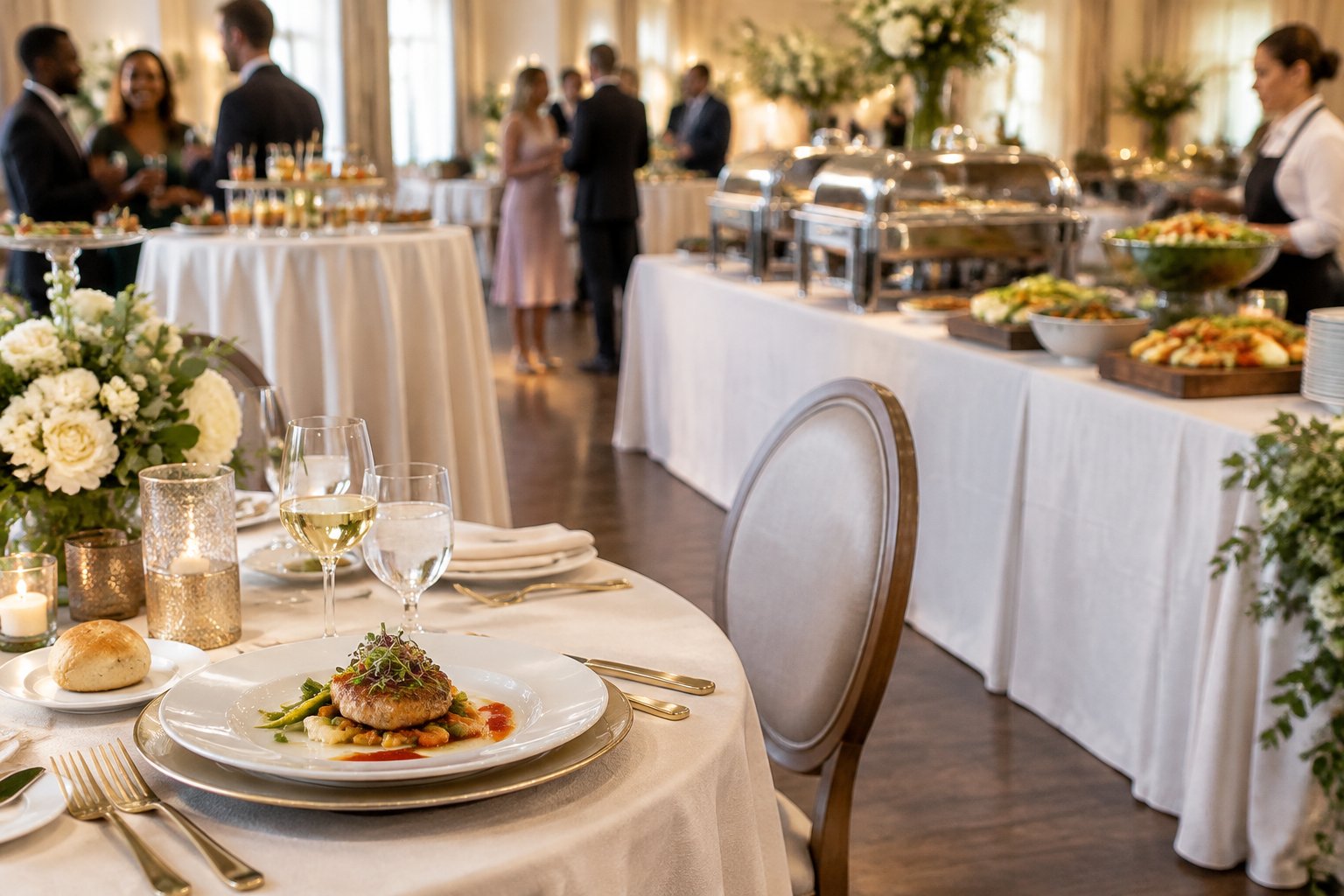
A plated dinner gives each guest a prepared meal at the table. The package may include a salad, entrée, side dishes, dessert, and a choice of two entrées collected through RSVP cards.
Plated service needs a larger service staff. Servers must deliver meals in a coordinated sequence, clear plates, handle special diets, and keep the reception schedule moving. Premium proteins such as filet mignon, lobster, and high-end seafood raise the food cost further.
Ask whether the quote includes:
- Passed hors d’oeuvres
- Salad and bread service
- Entrée choices
- Vegetarian and allergy-friendly meals
- Coffee and tea
- Dessert or wedding cake service
- Plates, flatware, glassware, and linens
Buffet Service and Family-Style Dining
Buffet service places prepared food at one or more stations while guests serve themselves. Family-style dining places platters on each table for guests to share.
Both formats offer menu variety with less table-side labor than plated service. A buffet may need attendants to refill dishes and manage portions. Family-style meals need enough table space and extra food on hand so every guest can enjoy each dish.
Use double-sided buffet lines or multiple serving stations for larger receptions. This reduces waits and keeps guests from missing important moments on the dance floor.
Cocktail-Style Receptions and Food Stations
A cocktail-style reception builds the meal around hors d’oeuvres, small plates, grazing tables, and interactive food stations. Options might include a carving station, pasta station, taco bar, sushi display, or late-night snack table.
Food stations create movement and allow guests to choose what they want. Price each station separately because premium ingredients, culinary attendants, and specialty equipment can raise the quote.
Plan enough substantial food for the event length. Cocktail hour appetizers alone may not satisfy guests through a four-hour reception unless you offer several rounds and filling choices.
Food Trucks and Lunch Receptions
Food trucks often cost about $20 to $60 per guest, depending on cuisine, service time, travel, and minimum charges. Ask how many trucks or serving windows the vendor needs for your guest count, since one truck can create long lines at a large wedding.
A lunch reception can lower wedding food costs through less expensive proteins, lighter portions, and shorter bar service. Brunch menus with eggs, pastries, fruit, waffles, and coffee also offer a different schedule and price point.
What Does a Wedding Catering Package Include?
A wedding catering package may include food, beverages, servers, basic rentals, setup, and breakdown, yet every caterer defines the package differently. Request an itemized list so you know which services are included and which appear as add-ons.
Seasonal ingredients and local ingredients can shape the menu and price. Your proposal should also identify dietary restrictions, vendor meals, delivery distance, and the number of service hours.
Food, Beverages, and Dietary Accommodations
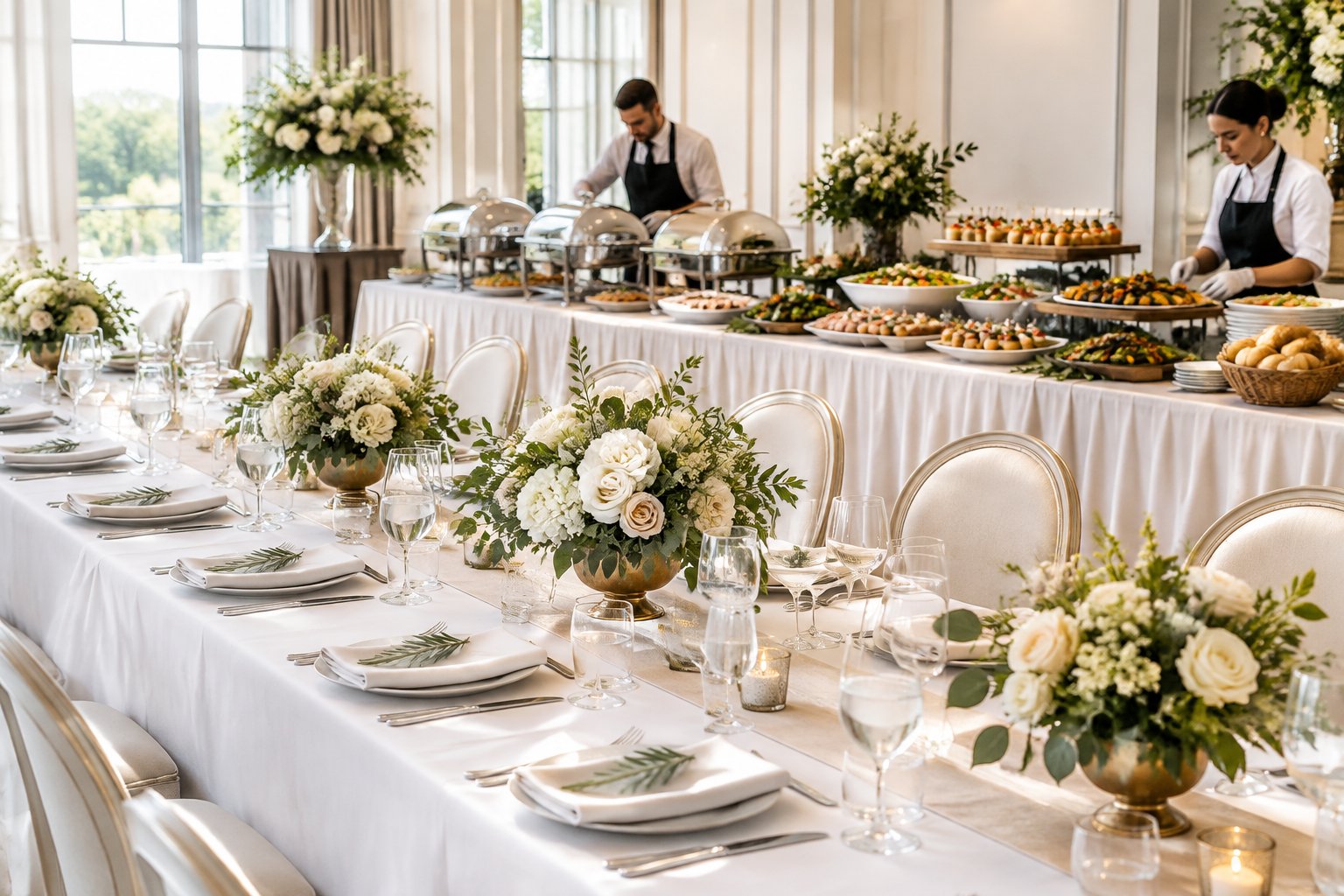
Food may include appetizers, salads, entrées, side dishes, bread, dessert, coffee, and tea. Some catering packages price cocktail hour appetizers separately from dinner.
Ask whether the beverage plan includes water, soft drinks, coffee, beer, wine, liquor, mixers, and ice. A full bar package requires more alcohol, bartenders, glassware, storage, and setup than a beer-and-wine plan.
Tell the caterer about vegetarian, vegan, gluten-free, dairy-free, halal, kosher, and allergy-related needs before signing. A small number of special meals may fit within the package, while extensive menu changes can add labor and ingredient costs.
Staffing, Setup, and Breakdown
Staffing may include chefs, servers, bartenders, a captain, and an event manager. The team may also handle buffet attendance, plate clearing, trash removal, and coordination with your wedding planner.
Setup and breakdown cover tasks such as unloading equipment, arranging food tables, setting place settings, replenishing dishes, packing supplies, and cleaning the service area. Ask when the team arrives and how long the contracted service lasts.
Delivery and transport charges can apply when the caterer travels from a commercial kitchen or brings equipment to an off-site venue. Confirm whether the fee includes mileage, loading, parking, and return transport.
Rentals, Tableware, and Cake Service
Basic rentals may include plates, flatware, serving utensils, water glasses, coffee cups, and standard linens. Chargers, upgraded china, colored linens, specialty glassware, furniture, and display pieces may cost extra.
Clarify whether the caterer supplies:
- Dinnerware and serving pieces
- Plates, chargers, and flatware
- Glassware and bar equipment
- Linens and napkins
- Buffet tables and food warmers
- Cake knives and serving utensils
Your wedding cake may be separate from the catering package. Ask about the cake cutting fee, refrigeration, plating, and dessert service. A caterer may also charge a set rate for vendor meals, so list your photographer, DJ, planner, band, and other working vendors before the final count.
Which Extra Fees Should You Add to the Quote?
Add 25% to 35% to the menu price as a planning reserve for service charges, sales tax, gratuity, bar costs, rentals, delivery, cake cutting, vendor meals, and overtime. Use the final catering quote, not the advertised per-person rate, when you set your wedding budget.
Ask each caterer to show every fee in dollars and percentages. A proposal with a lower menu rate can cost more after charges are added.

Service Charges, Sales Tax, and Gratuity
A service charge often ranges from 18% to 22% of the food and beverage subtotal. It may cover administration, staffing, equipment, and event operations. It does not always function as gratuity for the staff.
Sales tax depends on your state and on which services the caterer taxes. Some locations tax food, rentals, alcohol, service charges, or several of these categories.
Gratuity may be included, recommended, or left to your discretion. Read the contract language carefully and ask whether the service charge goes to the team. Build your tip plan before the wedding day so you do not face an unexpected cash need.
Bar Options and Alcohol Fees
A full open bar includes liquor, wine, beer, mixers, and bartenders. A limited bar might offer beer and wine or a smaller selection of spirits. A cash bar charges guests for their drinks and may require venue approval.
A signature cocktail can give you a focused drink menu with fewer spirits and mixers. You may also face a corkage fee when you supply your own wine or liquor. Ask about bottle handling, ice, mixers, glassware, bartending, and unused alcohol.
Compare the full bar price with a limited bar and signature cocktails using the same service hours. The lower package can work well when your guests prefer wine and beer.
Minimums, Overtime, and Venue-Related Charges
Caterers and venues may set food and beverage minimums, minimum guest counts, or minimum bar spending. You pay the required minimum even when your final attendance falls below it, depending on the contract.
Overtime charges apply when the reception, bar, kitchen, or cleanup runs past the contracted time. Ask for the hourly rate and the grace period.
Venue-related costs may include kitchen fees, exclusive-caterer fees, delivery access charges, parking, security, trash removal, and outside-vendor fees. Confirm who handles setup and breakdown when the venue requires a specific schedule.
What Drives Costs Up or Down?
Guest count, location, service staff, menu complexity, date, and rental needs drive wedding catering costs more than any single menu item. Review these factors together because a change in one area can affect several lines on your catering quote.
A wedding caterer prices food, labor, equipment, transport, and time. Your final proposal should reflect the venue’s rules and the number of guests who need meals.
Location, Date, and Caterer Minimums
Major metro areas carry higher wages, rent, insurance, and transport costs. Remote venues can also cost more when the caterer must bring kitchen equipment, staff, tables, and serving supplies.
Saturday evening dates command strong demand. Friday, Sunday, weekday, and off-season dates may offer more flexible pricing, subject to the caterer’s minimums.
Ask about travel fees, venue exclusivity, kitchen access, loading times, and required insurance. These details can change the price before you select a menu.
Menu Complexity and Ingredient Choices
A limited menu with seasonal ingredients keeps purchasing and prep more focused. Premium proteins, seafood, specialty imports, multiple entrée choices, and elaborate hors d’oeuvres increase ingredient and labor costs.
Local ingredients may offer freshness and a strong sense of place, while seasonal menus can help control availability and waste. Dietary accommodations require careful planning, especially when separate preparation areas or specialty ingredients are needed.
Request a tasting that matches your proposed menu. Changing the entrée after the tasting can affect staffing, equipment, and the final price.
Guest Count, Staffing, and Rental Needs
Every additional guest adds food, beverage, tableware, labor, and seating needs. A larger guest count may also require more servers, bartenders, buffet attendants, tables, glassware, and transport capacity.
Plated dinner service uses more servers than buffet service. Food stations need attendants, while a food truck needs enough service windows to keep lines moving.
Your wedding planner can help match the staffing plan to the timeline and venue layout. Ask for the staff count, service ratio, setup crew, and cleanup team in writing before comparing catering quotes.
Ways to Save on Wedding Catering Without Shortchanging Guests
The most effective ways to save on wedding catering are reducing the guest count, choosing a focused menu, simplifying the bar, and comparing quotes by their all-in totals. These changes protect food quality while reducing labor, waste, and extra charges.
Keep the guest experience in view when you make changes. A well-planned buffet, lunch reception, or food truck can feel intentional when the service flow, seating, and menu fit the celebration.
Prioritize the Guest List and Menu Tasting
Use a guest list calculator to decide whom you can invite within your wedding budget. Each guest affects food, drinks, rentals, staffing, and venue costs, so a smaller list reduces more than the meal line.
Schedule a menu tasting before you commit. Focus your tasting on the dishes you plan to serve, then choose a limited set of crowd-friendly options. Seasonal ingredients can lower costs and give the menu a fresh feel.
Ask whether children, vendors, and guests who decline the meal receive different rates. Confirm the final-count deadline and the charge for late additions.
Choose a Smarter Bar and Dessert Plan
A limited bar with beer and wine reduces liquor, mixer, glassware, and staffing costs. Signature cocktails can add personality while keeping the spirit selection focused. A cash bar also changes your expense, though you should check venue rules and guest expectations before choosing it.
For dessert, compare wedding cake, sheet cake, mini desserts, and dessert stations. A smaller display cake paired with kitchen cake can lower decorating and serving costs when the baker and venue allow it.
You can also serve dessert after dinner and skip a separate late-night sweets station. Ask whether the cake cutting fee applies to every dessert item.
Compare Quotes on an All-In Basis
Send each caterer the same guest count, menu, service hours, bar plan, rental list, venue address, and dietary needs. Then compare the total after service charges, sales tax, gratuity, delivery, rentals, cake cutting, vendor meals, and overtime.
Look for unclear phrases such as “market price,” “additional labor,” or “venue-required fees.” Ask the caterer to convert each percentage into a dollar estimate for your expected guest count.
A wedding planner can review the proposal and flag timing or venue requirements before you sign. Keep the chosen quote, contract, guest count, and payment schedule together so the final invoice matches the plan.