
Average Cost for Wedding Flowers: 2026 Price Guide
The average cost for wedding flowers in the United States is about $2,800 in 2026, while many couples spend between $2,000 and $5,000 for ceremony and reception flowers. A smaller celebration with personal flowers and modest centerpieces may cost around $1,500, while a full-service design with premium blooms and large installations can reach $7,500 or more.
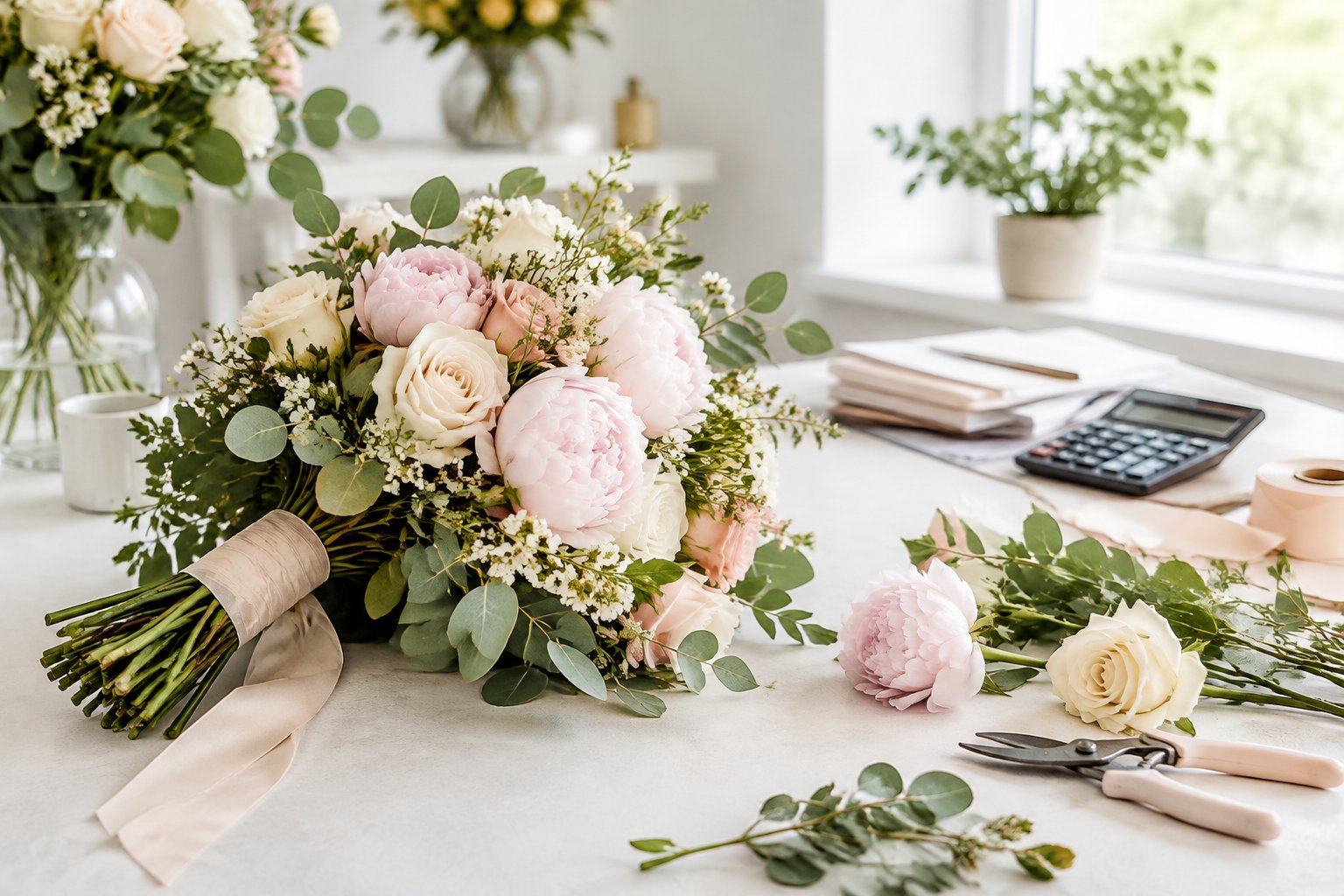
Your wedding flower cost depends on guest count, location, flower choices, season, arrangement size, and labor. A floral budget near 8% to 10% of your wedding budget gives you a useful starting point, with 15% making sense when lush floral design is a major priority.
Set your budget before meeting a wedding florist, then share your color palette, style, and must-have pieces. You can also compare practical planning advice on how much should I spend on my wedding flowers before requesting quotes.
What Couples Typically Spend in 2026
Most couples spend $2,000 to $5,000 on wedding flowers in 2026, with a national average wedding flower cost near $2,800. That average includes personal flowers, a bridal bouquet, wedding party flowers, and reception centerpieces, while larger floral installations push the wedding florist cost higher.
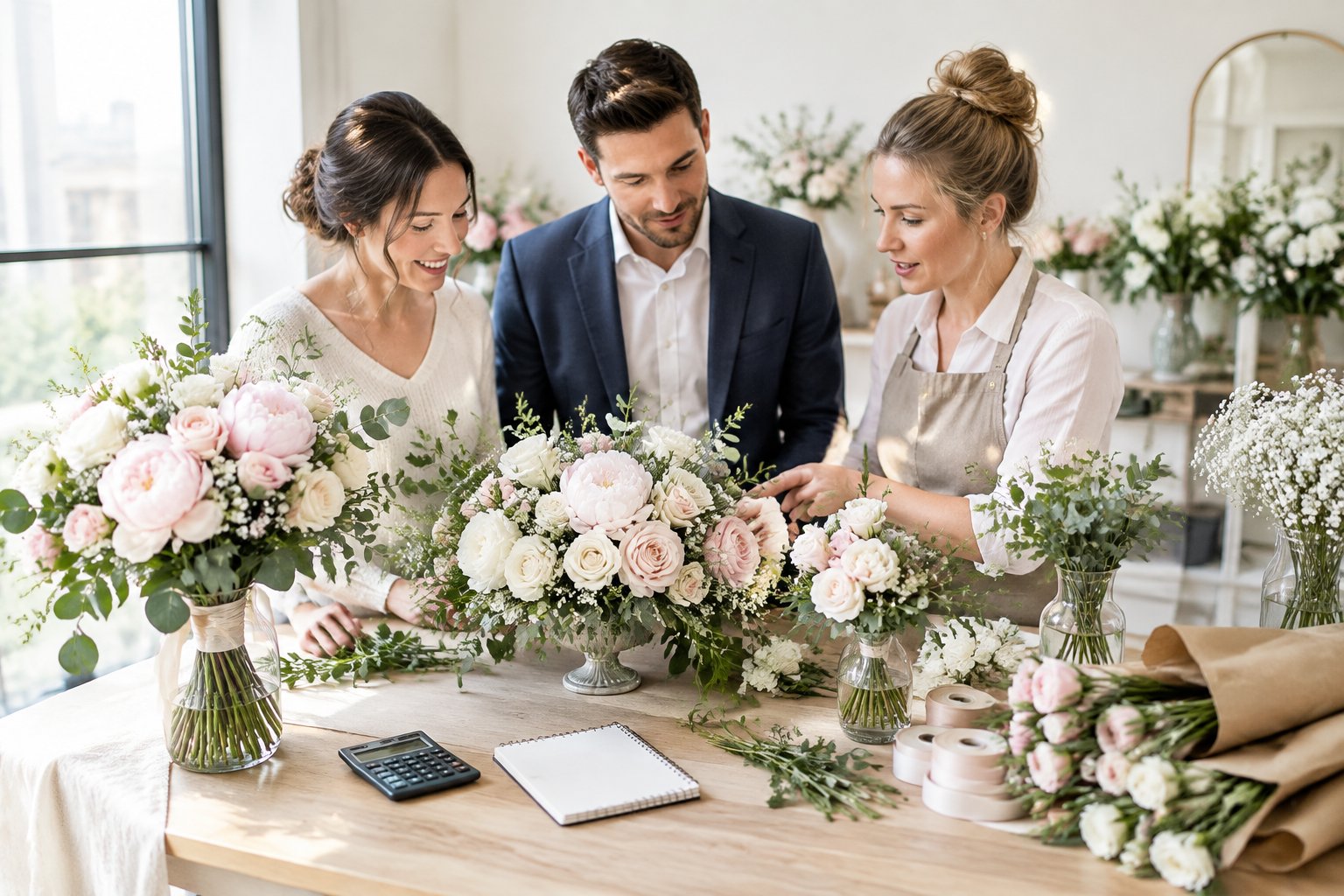
Your final number reflects the size of the celebration and the design level you choose. A modest order may cover bouquets, boutonnieres, and simple table arrangements.
A full floral plan with a ceremony arch, aisle flowers, cocktail-hour decor, and reception installations requires more stems, supplies, and labor.
Why Published National Averages Differ
Published averages measure different floral scopes. A figure near $2,800 often reflects what couples spent across a broad range of weddings, including simple designs. Higher estimates count fuller floral design, larger centerpieces, premium flowers, and statement installations.
The spending ranges show why the average cost of wedding flowers does not fit every wedding:
- Lower-cost quartile: about $900
- Median-cost quartile: about $1,900
- Upper-cost quartile: about $4,800
A quote near $2,800 may cover personal flowers, a simple ceremony feature, and modest centerpieces. A flower-filled venue with an elaborate arch belongs in a higher budget tier.
How Guest Count, Region, and Venue Affect the Total
Guest count raises costs through table count, aisle length, and venue size. Recent spending patterns place average flower costs near $1,600 for weddings with 1 to 50 guests, $2,400 for 51 to 100 guests, and $3,300 for celebrations with more than 100 guests.
Region also shapes pricing. Average regional spending has ranged from about $2,400 in the West to $3,600 in the Mid-Atlantic. Higher labor costs, studio expenses, delivery distances, and premium wedding markets raise local quotes.
Your venue affects the design plan as well. A blank industrial space may need entry flowers, ceremony decor, and additional rentals. A landscaped garden or ornate venue may need fewer large installations.
How Much of the Overall Wedding Budget Should Go to Florals?
Plan 8% to 10% of your wedding budget for standard floral coverage. A $30,000 wedding would place that starting range near $2,400 to $3,000.
A floral-heavy celebration may need 15% or more. Use the higher share when you want a large floral arch, tall centerpieces, hanging installations, or flowers throughout the venue. Include delivery, setup, breakdown, rentals, containers, and taxes in your working budget.
What Does Each Floral Item Cost?
Individual floral items commonly range from $15 for a boutonniere to more than $2,000 for a fully covered ceremony arch. Your bridal bouquet, personal flowers, centerpieces, and ceremony flowers form the main parts of the wedding flower cost.
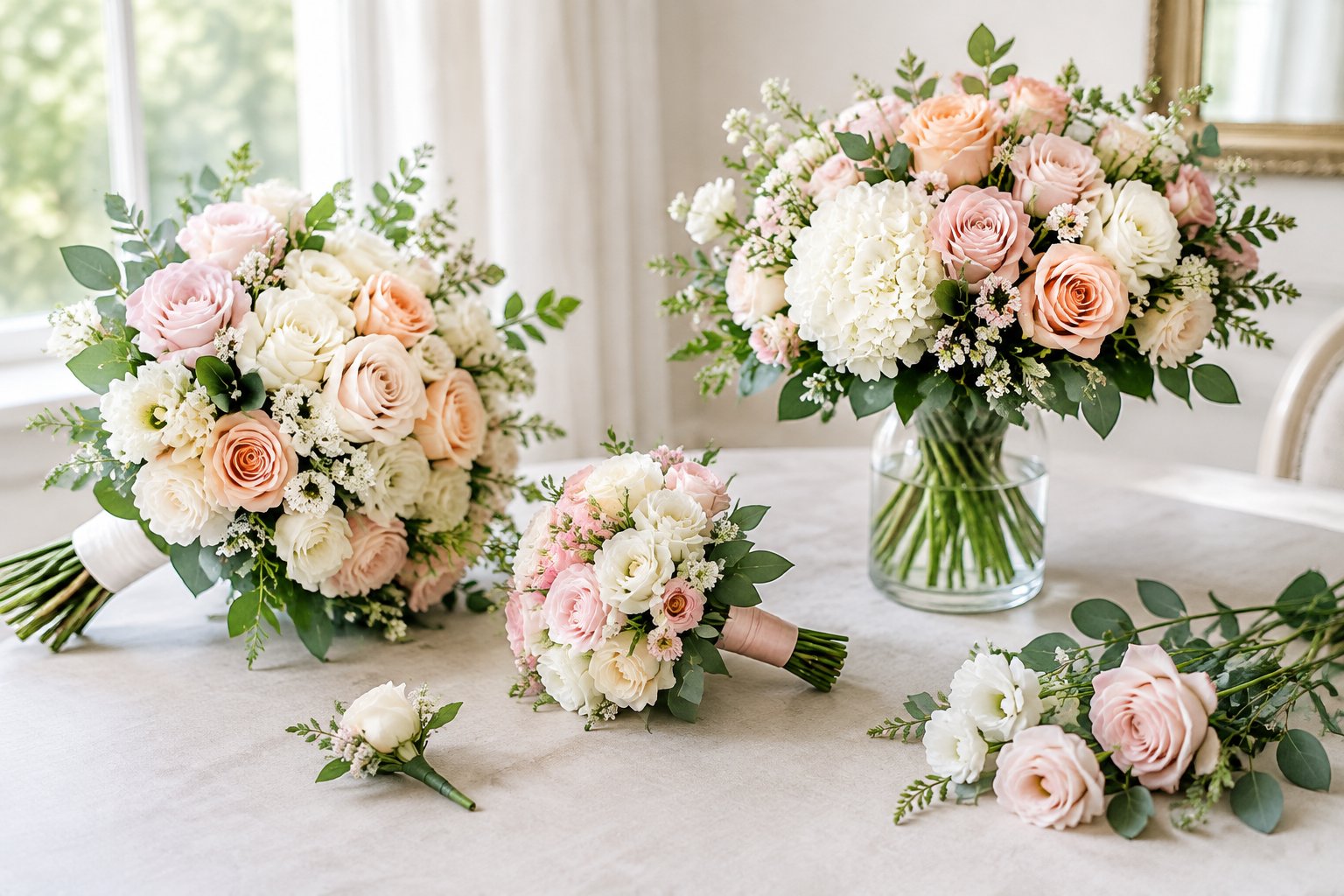
Itemized pricing helps you adjust the design without removing every floral element. A smaller bouquet, fewer aisle markers, or lower centerpieces can reduce the quote while preserving the pieces guests notice most.
How Much Does a Bridal Bouquet Cost?
A bridal bouquet costs about $150 to $350 for many designs, with premium or cascading styles reaching $500 or more. The average bridal bouquet cost rises with stem count, bouquet size, specialty blooms, hand-wiring, and trailing foliage.
A compact bouquet with roses, carnations, seasonal flowers, and greenery sits near the lower end. Garden roses, peonies, orchids, dahlias, and a cascading shape move the price upward.
How Much Do Bridesmaid Bouquets and Personal Flowers Cost?
Bridesmaid bouquets cost about $75 to $150 each, with premium versions reaching $200 or more. Smaller nosegays, single-variety designs, or bouquets built from seasonal flowers help control the total when you have several attendants.
Personal flowers commonly fall into these ranges:
- Boutonnières or boutonnieres: $15 to $35 each
- Premium boutonnieres: $40 to $65 each
- Corsages: $25 to $50 each
- Premium corsages: $60 to $85 each
- Flower girl petals or basket flowers: $25 to $75
- Hair flowers: $15 to $50
Count every person who needs a floral piece, including the couple, wedding party, parents, grandparents, officiant, ushers, and ring bearer. Small items add up across a large wedding party.
What Do Ceremony and Reception Pieces Cost?
Ceremony flowers range from about $400 for limited accents to $2,500 or more for a large floral arch and aisle design. A lightly decorated ceremony arch may cost $300 to $800, while fuller coverage with premium flowers can exceed $2,000.
Reception pricing depends on table count and arrangement height:
- Low centerpiece: $75 to $150
- Tall centerpiece: $150 to $250
- Premium tall centerpiece: $300 to $500 or more
- Cake florals: $50 to $150
- Head table garland: $150 to $500
- Cocktail-hour arrangement: $50 to $150
Aisle markers often cost $50 to $100 each, while larger altar arrangements rise with size and flower coverage. Ask your florist to design ceremony flowers for reuse at the reception when the venue schedule allows it.
What Drives a Florist Quote Up or Down?
Flower variety, stem count, season, design complexity, and installation labor determine most wedding florist quotes. The price covers more than fresh flowers, including consultation, sourcing, preparation, containers, transportation, setup, and cleanup.
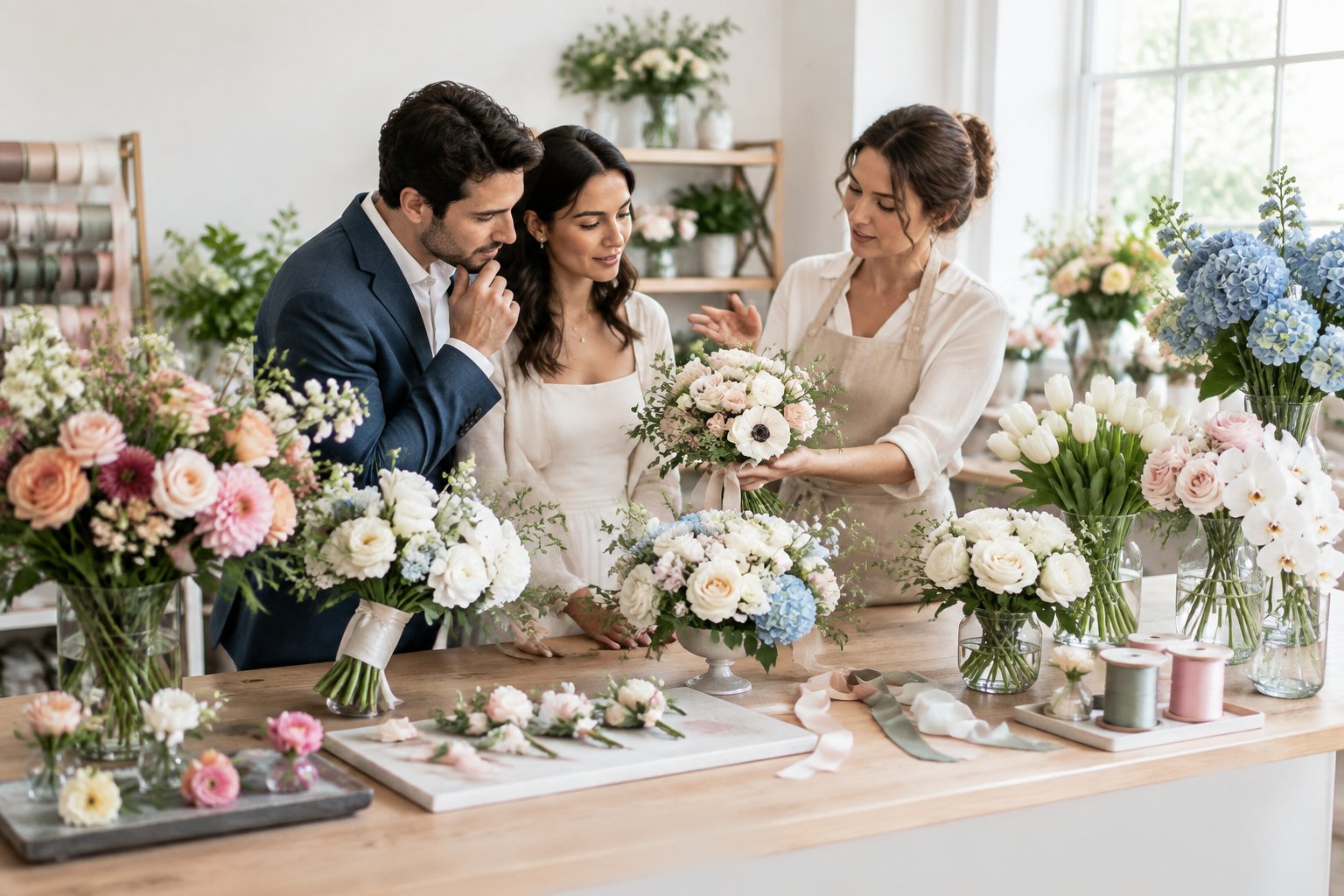
A professional florist also plans recipes for each arrangement, conditions the flowers, protects them in storage, and coordinates delivery with your venue. Ask for these services as separate line items so you know what your quote includes.
Flower Variety, Stem Count, and Arrangement Size
Premium flowers cost more per stem, and larger designs require more stems. A bouquet filled with garden roses or peonies uses a larger floral allowance than one built with carnations, standard roses, and greenery.
Arrangement size affects both materials and labor. A 12-inch bouquet, a compact centerpiece, and a full floral arch each require different recipes. Share your preferred shape and fullness with the floral designer so the quote reflects your intended scale.
Greenery fills space and adds texture. Eucalyptus, ferns, Italian ruscus, and other foliage can create a lush look with fewer premium blooms.
Seasonality, Sourcing, and Availability
In-season flowers cost less when local supply is strong. Out-of-season flowers may require special ordering, longer shipping, or imported stock. Weather can also reduce availability and raise the price of a flower that would usually fit your date.
Ask which local flowers and seasonal flowers suit your wedding month. Flexibility lets your florist select comparable colors and shapes when a favorite variety becomes scarce.
Winter weddings sometimes carry higher sourcing costs for flowers that grow locally during warmer months. Summer and fall dates may offer more locally grown flowers in many regions.
Design Complexity, Delivery, and Installation Labor
Hand-tied bouquets need less labor than cascading designs with wired stems, trailing pieces, or delicate mechanics. Floral installations require planning, structure, ladders, transport protection, venue coordination, and on-site construction.
Delivery, setup, breakdown, rental retrieval, refrigeration, processing, and cleanup may appear as separate charges. Ask whether your quote includes:
- Delivery to each location
- Ceremony installation
- Reception setup
- Breakdown after the event
- Rental vessels and structures
- Travel fees
- Labor for moving reusable arrangements
A simple arbor accent may cost a few hundred dollars, while a full floral arch, hanging installation, or ceiling treatment can reach several thousand.
Which Flowers Fit Different Budgets?
Roses, carnations, daisies, baby’s breath, and greenery help stretch a floral budget, while peonies, orchids, garden roses, and gardenias raise the per-stem cost. You can create a polished design at any budget by balancing focal blooms with flowers that add volume.
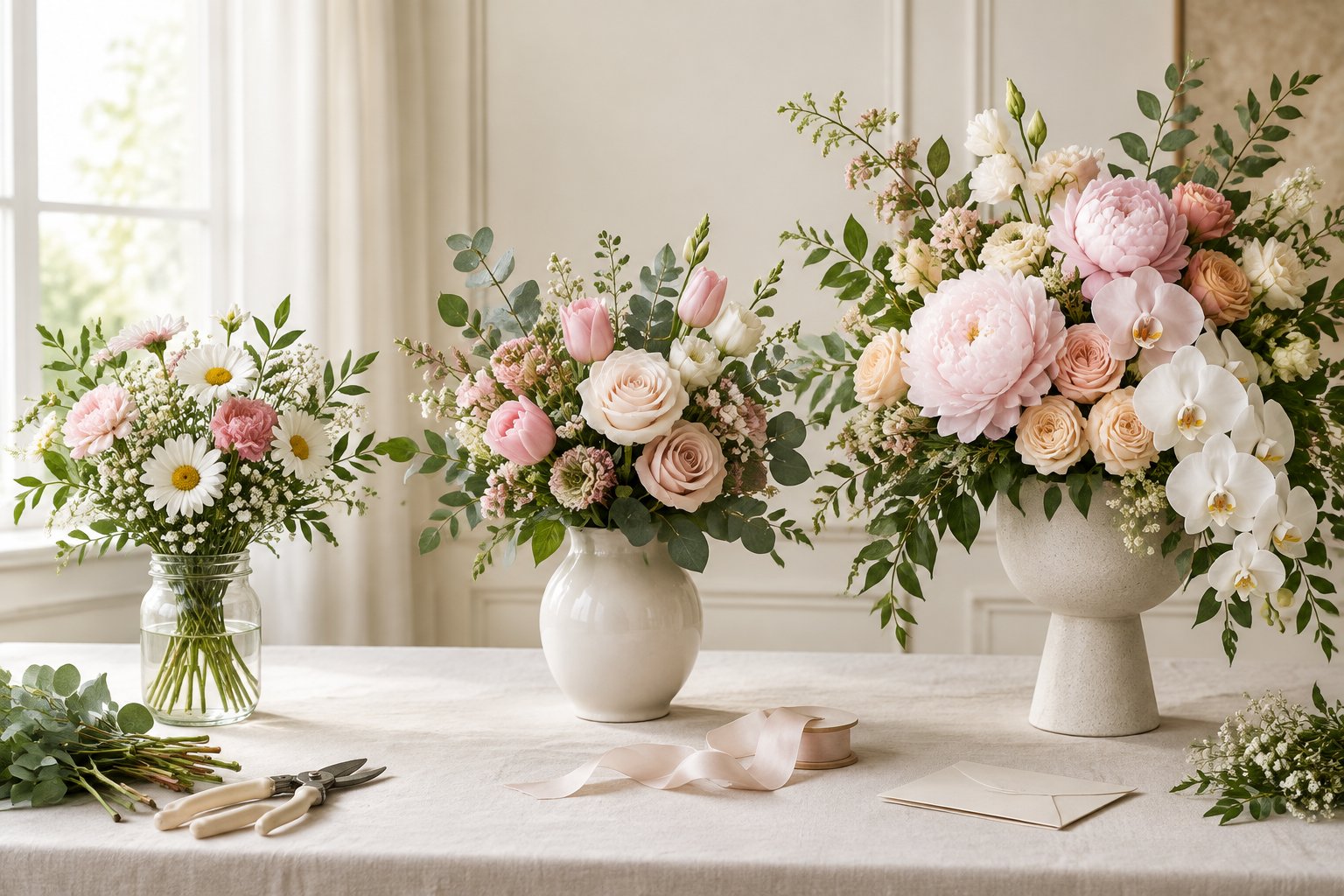
Your florist can recommend similar shapes and colors at different price points. Give the designer your palette and budget, then allow substitutions when a preferred flower is unavailable or expensive for your date.
Premium Blooms That Raise the Price
Peonies, garden roses, orchids, gardenias, dahlias, ranunculus, calla lilies, and cherry blossoms can increase the quote. Their price rises further when you request them out of season, in large quantities, or for a full floral installation.
Peonies may cost about $12 to $20 per stem in season and $25 to $35 out of season. Garden roses often cost $7 to $12 per stem, while orchids and specialty imported flowers can carry a higher price.
Use premium blooms as focal points in your bridal bouquet, ceremony arrangement, or head table. A few standout stems create visual interest across an arrangement.
Affordable Flowers and Greenery That Add Volume
Carnations, daisies, standard roses, tulips, lilies, baby’s breath, and hydrangeas offer color and volume at accessible price points. Hydrangeas fill space well, while carnations provide dense texture and strong color.
Succulents, eucalyptus, ferns, Italian ruscus, and forsythia add shape and movement. A greenery-forward arrangement can look full with fewer flower stems.
Single-variety designs also help control labor and sourcing. A large baby’s breath arrangement or a bowl of seasonal tulips creates a clear style without requiring many flower types.
How to Choose Flowers by Season
Match your flower list to your wedding month before you set the final design. Spring supports tulips, ranunculus, flowering branches, and some peonies. Summer brings dahlias, hydrangeas, garden roses, and locally grown flowers in many areas.
Fall works well with dahlias, roses, chrysanthemums, foliage, and warm-toned seasonal flowers. Winter designs often use roses, orchids, calla lilies, anemones, tulips, evergreens, and textured greenery.
Ask about local flowers available near your venue. A flexible palette gives your florist room to source fresh flowers that suit the date and reduce out-of-season premiums.
How to Lower Floral Costs Without Losing Impact
Lower your floral costs by concentrating flowers in high-visibility areas, reusing ceremony pieces, and mixing fresh blooms with greenery and other decor. These choices reduce stem count and labor while keeping your ceremony and reception visually connected.
Start with your bridal bouquet, ceremony focal point, and reception tables. Reduce low-visibility details first, such as extra aisle markers, cocktail-hour arrangements, or small welcome-sign accents.
Prioritize High-Visibility Floral Moments
Spend more on pieces that appear in photos or stay in front of guests for hours. A bridal bouquet, ceremony arch, sweetheart table, and selected centerpieces deserve priority.
Use candles, table decor, bud vases, and greenery to fill lower-priority areas. Alternating statement tables with smaller arrangements creates rhythm while reducing the number of large floral installations.
A compact ceremony design can frame the couple without covering the entire arch. Ask your florist to place flowers where guests and cameras naturally focus.
Repurpose Ceremony Arrangements at the Reception
Design ceremony flowers for a second location whenever timing, construction, and venue rules allow. Aisle markers can move to the reception entrance, bridesmaid bouquets can decorate tables, and altar arrangements can frame a sweetheart table.
Large floral arches require additional labor to move and reinstall. Confirm the transfer plan, timing, crew, and fee before adding reuse savings to your budget.
Tell your florist about the full event schedule at the consultation. A clear plan helps the team build arrangements that travel safely.
When Silk Flowers and DIY Options Make Sense
Silk flowers suit pieces that must withstand heat, long travel, or early setup. They work well for some arches, hair accessories, aisle accents, and keepsake arrangements. Compare how much to spend on fake wedding flowers before choosing this route.
DIY works best for forgiving designs such as bud-vase centerpieces, simple greenery, and candle tablescapes. Bulk flowers may reduce material costs, yet you need cool storage, buckets, conditioning time, design supplies, helpers, and a delivery plan.
A hybrid plan keeps the bridal bouquet, ceremony installation, and delivery with a professional florist while your group handles simple reception pieces. Confirm the florist’s policy on outside flowers and venue setup before ordering supplies.