
Average Cost of Flowers at a Wedding: 2026 Pricing Guide
For most U.S. couples, the average cost of wedding flowers in 2026 falls between $2,500 and $5,000, with smaller floral plans near $1,500 and full-service designs with installations reaching $7,500 or more. Your wedding flower budget covers personal flowers, ceremony décor, reception centerpieces, delivery, setup, and design labor.
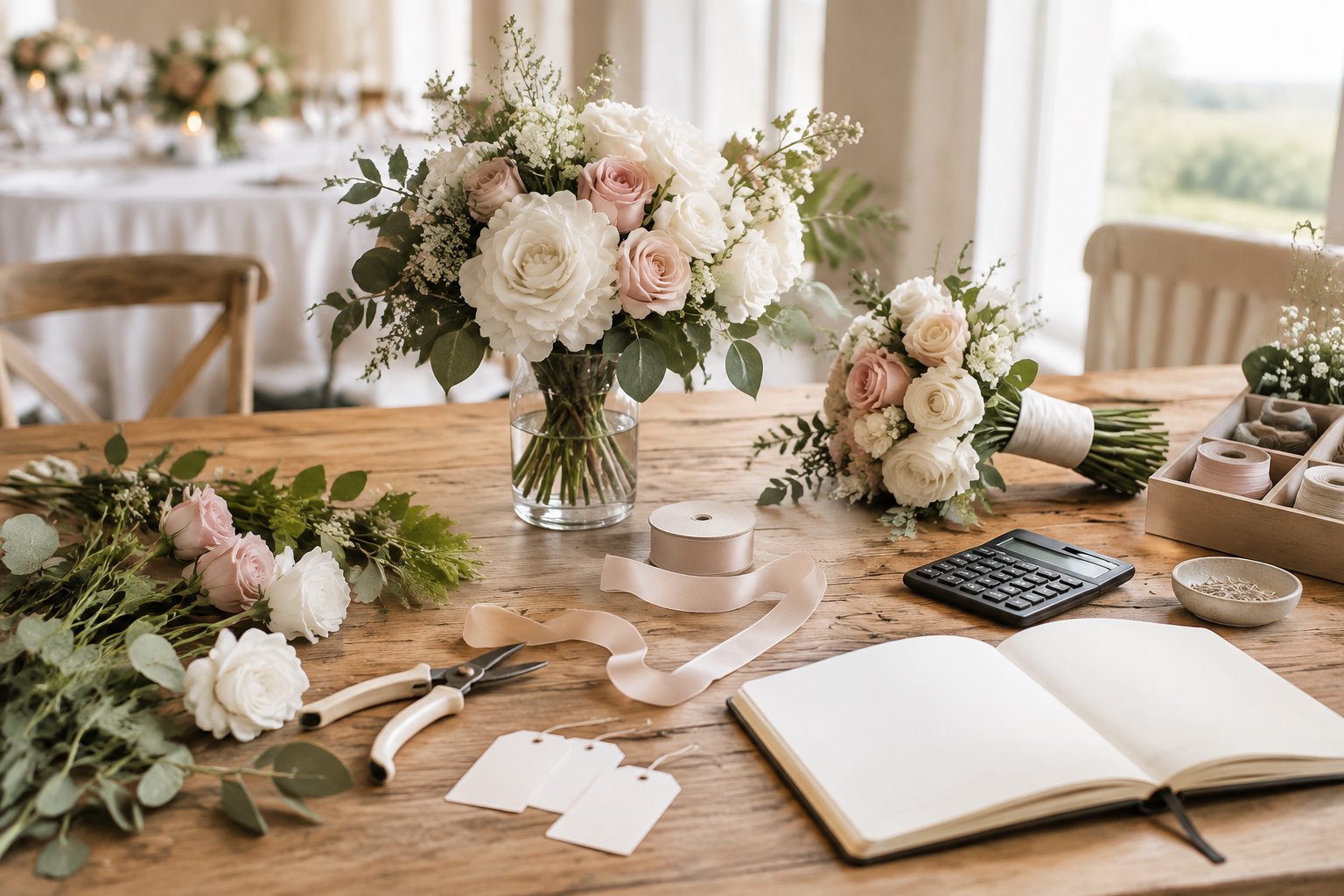
A practical starting point is 8% to 12% of your wedding budget. A $30,000 wedding, for example, could support about $2,400 to $3,600 in flowers.
You can also set a fixed amount first, then ask a florist to build the most important arrangements within that limit. Your guest count, wedding venue, date, flower choices, and design style all affect wedding flower costs.
Share your budget early during a florist consultation, and ask for substitutions that protect the look you want. You can also explore these wedding florist tips before requesting quotes.
The 2026 Wedding Flower Budget at a Glance
Most couples spend about $2,500 to $5,000 on wedding flowers in 2026, while a focused plan can cost less and a large installation-focused design can exceed $10,000. The average wedding flower cost includes more than stems, so compare quotes by checking design labor, delivery, setup, rentals, and taxes.
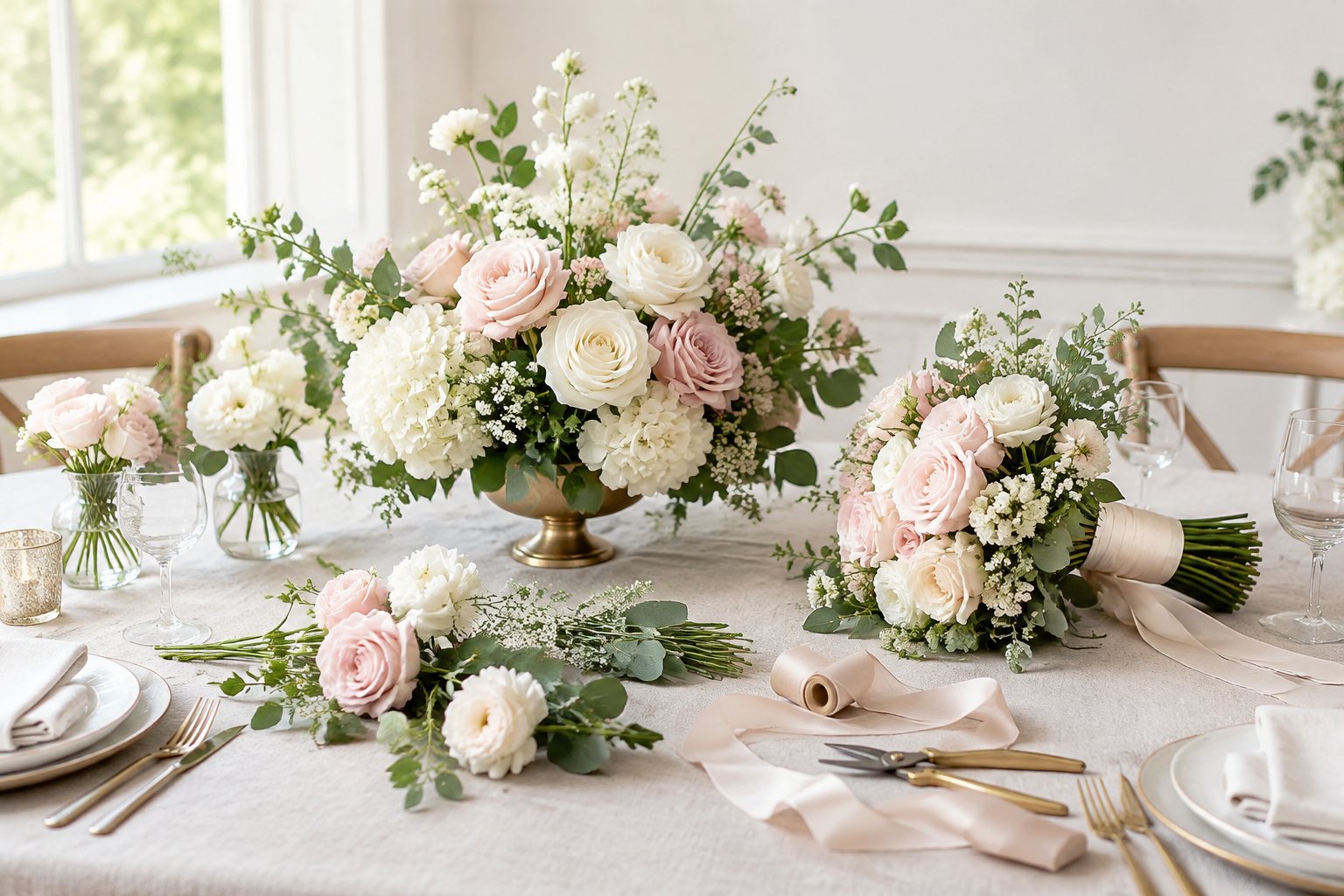
Why National Averages Vary So Much
A national range gives you a planning baseline, not a guaranteed wedding flowers cost. A simple order with a bridal bouquet, a few boutonnieres, and small reception pieces may stay below $2,500.
Full-service work with ceremony arrangements, large reception centerpieces, and a floral arch moves closer to $5,000 to $7,500. Prices also differ by city.
Florist overhead, delivery distance, venue rules, local labor rates, and flower availability all affect the quote. A wedding in a major metropolitan area often has higher wedding florist costs than an event in a smaller market.
How Much of Your Wedding Budget Should Go to Flowers?
Plan about 8% to 12% of your wedding budget for flowers. A modest wedding budget may support a focused floral plan, while a design-led celebration may assign 15% or more to floral décor.
Write down your priorities before meeting a florist. You might place the bridal bouquet, ceremony focal point, and reception tables at the top.
This helps you protect high-visibility pieces when the quote includes more items than your budget allows.
How Guest Count and Location Change the Total
Guest count affects the total through the number of reception tables, bridesmaid bouquets, boutonnières, and corsages. A 50-person wedding may need five to seven centerpieces, while a 150-person wedding may need 15 or more.
Your wedding venue also shapes the quote. A venue with a beautiful garden or architectural backdrop may need less ceremony décor. A blank ballroom may require more floral installations, rentals, and labor to create the same visual impact.
What Does Each Floral Item Typically Cost?
Individual wedding flower prices commonly range from about $25 for a boutonnière to $4,000 or more for a large floral arch, with personal flowers and centerpieces making up much of the order. Your final wedding bouquet cost depends on size, flower variety, season, ribbon, and design detail.

Use these ranges as planning estimates. Ask each florist what the quote includes, since delivery, setup, containers, candles, and breakdown may appear as separate charges.
How Much Does a Bridal Bouquet Cost?
A bridal bouquet commonly costs $150 to $350. A compact hand-tied bouquet with standard roses, seasonal flowers, and greenery sits near the lower end.
A large garden-style bouquet with premium flowers, trailing foliage, or complex mechanics can reach $500 or more. The average cost of a bridal bouquet rises with stem count.
Peonies, garden roses, orchids, and lily of the valley also carry a higher price than standard roses, carnations, or chrysanthemums. For more detail, compare current average bridal bouquet prices.
What Do Bridesmaid Bouquets, Boutonnieres, and Corsages Cost?
Plan for these approximate ranges:
- Bridesmaid bouquet: $75 to $175 each
- Boutonnière: $15 to $35 each
- Corsage: $35 to $75 each
- Flower crown: $75 to $200
- Hair flowers: $25 to $100
- Toss bouquet: $50 to $125
The number of attendants drives the total quickly. A wedding party with six bridesmaids and six groomsmen adds several hundred dollars before corsages for parents or grandparents.
How Much Do Ceremony Flowers Cost?
Ceremony flowers range from $500 to $4,000 or more, depending on the design. A few aisle markers and two altar arrangements cost far less than a fully covered floral arch.
Common ceremony flowers include:
- Aisle markers: $40 to $150 each
- Aisle arrangements: $100 to $350 each
- Altar arrangements: $250 to $1,000 each
- Floral arch: $1,500 to $4,000 or more
- Large floral installation: $2,500 to $10,000 or more
Ask whether the design can move to the reception. A ceremony arrangement built in a portable container is easier to repurpose than flowers attached to a fixed structure.
What Do Reception Centerpieces Cost?
Reception centerpieces commonly cost $75 to $250 per table, while lush or tall designs can cost $300 to $500 or more. A low centerpiece uses fewer mechanics and less labor.
Tall centerpieces add vessel rentals, support structures, and extra setup time. Alternating large arrangements with bud-vase groupings can lower the average cost per table.
Candles, greenery, and single-flower designs also create visual variety without requiring every table to carry a large floral centerpiece.
What Do Flower Girl and Cake Flowers Cost?
A flower girl basket with petals often costs $25 to $75, while a flower crown ranges from $75 to $200. Cake flowers or cake florals commonly add $50 to $200, depending on the number of blooms and whether the florist prepares a food-safe placement method.
Small details add up when you order many of them. Keep these pieces coordinated with the main wedding flower arrangements so your florist can use compatible flowers and leftover stems efficiently.
What Drives a Florist Quote Up or Down?
A wedding florist quote reflects flower costs, design labor, mechanics, delivery, setup, rentals, and the risk of working with delicate fresh flowers on a fixed event schedule. Two weddings with the same color palette can have very different totals because scale and installation work change the labor involved.
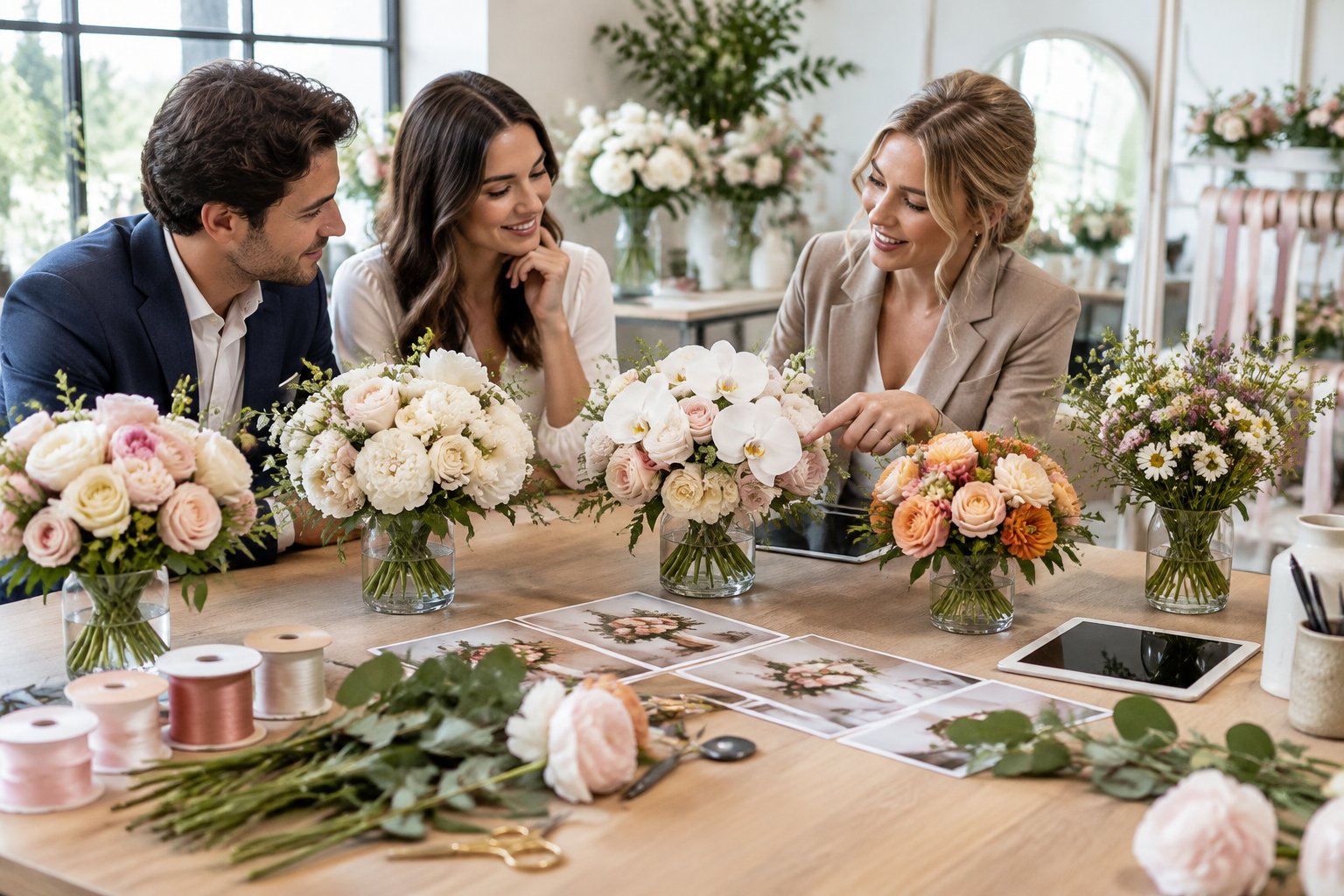
Give your florist a clear budget and a flexible flower brief. Photos help communicate the style, while openness to seasonal blooms gives the floral designer more ways to meet your target.
Flower Varieties and Stem Counts
Premium flowers cost more per stem, and large arrangements need more stems. A compact bouquet of standard roses uses fewer costly ingredients than an oversized design filled with peonies, garden roses, orchids, or imported flowers.
Color also affects pricing. A rare shade may require special sourcing, while a florist working with a broader palette can choose fresh flowers at better market prices.
Ask for a look-based proposal, such as “soft garden style,” instead of naming every flower as a requirement.
Seasonality, Local Sourcing, and Imports
Seasonal flowers and locally grown flowers have shorter supply chains and better availability during their natural growing period. Out-of-season flowers may require greenhouse production, long-distance shipping, or imports, which raises the price.
Holiday demand can also affect availability. Valentine’s Day and Mother’s Day place pressure on certain flower supplies, especially roses.
If a specific bloom defines your design, choose a wedding date near its natural season or approve a similar seasonal substitute.
Design Complexity, Labor, and Logistics
A florist charges for more than arranging flowers. Floral design includes ordering, processing, hydration, conditioning, recipe planning, vessel preparation, construction, delivery, placement, and cleanup.
Large floral installations need extra mechanics and safety planning. Tight venue access, stairs, long delivery distances, limited setup windows, and a separate ceremony and reception location also add labor.
Ask whether the quote includes teardown and whether moving ceremony flowers requires a second crew.
What a Professional Florist Includes in the Price
A professional florist may include:
- Floral sourcing and substitutions
- Flower processing and refrigeration
- Design and arrangement labor
- Vases, containers, or structural mechanics
- Delivery and venue placement
- Installation and teardown
- Coordination with your wedding venue
Every proposal handles these costs differently. Request an itemized quote that lists the design fee, delivery, setup, rentals, taxes, and service charges.
You can also use these questions to ask a florist for a price before signing.
Which Wedding Flowers Fit Your Budget?
Greenery, carnations, chrysanthemums, alstroemeria, standard roses, daisies, and baby’s breath offer strong coverage at accessible prices, while peonies, garden roses, orchids, gardenias, and lily of the valley push a floral budget higher. Your florist can combine a few premium stems with fuller, lower-cost flowers to create depth.
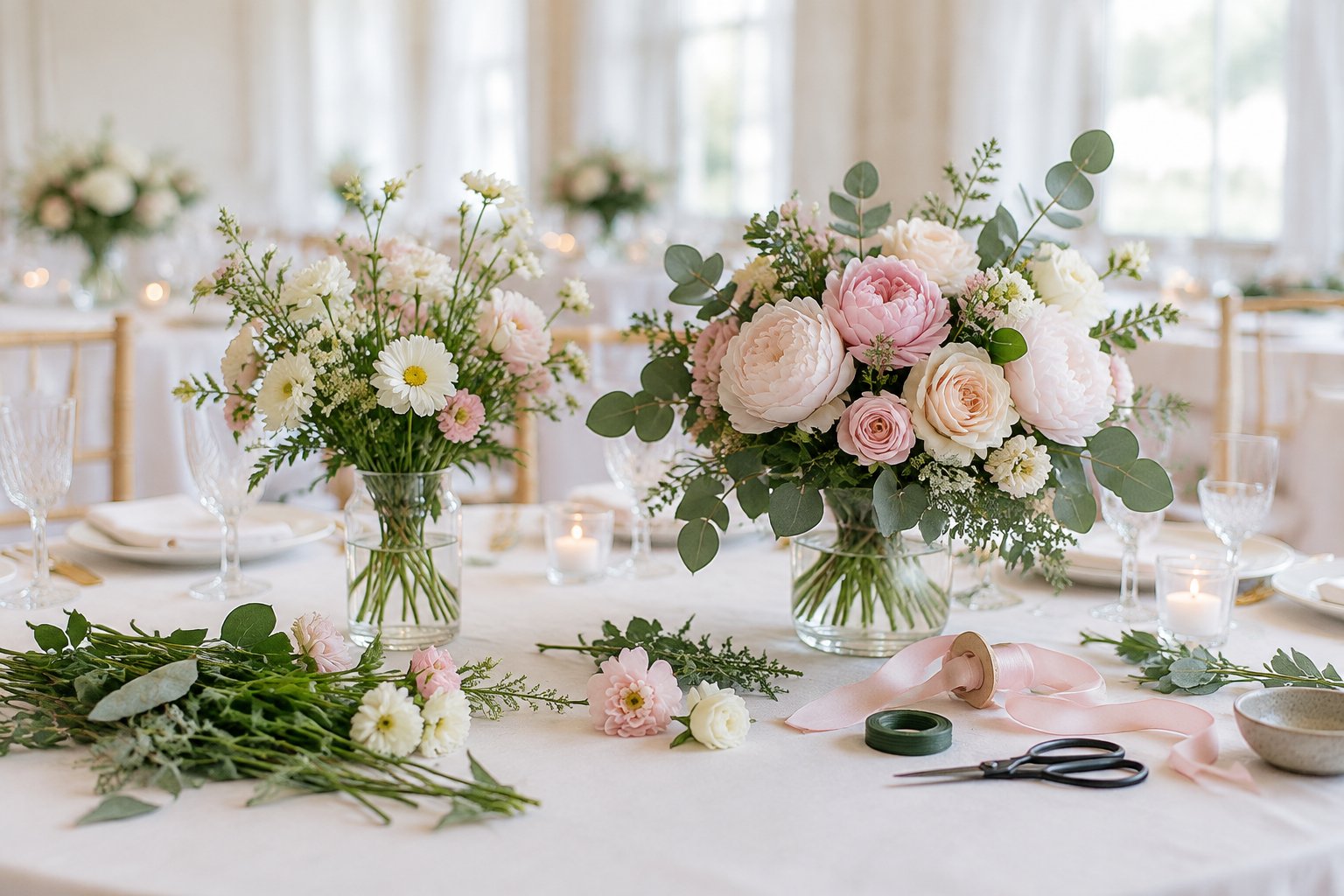
Flower availability changes with the region and date. Treat these groups as broad planning guidance, then ask your florist which blooms will be fresh and affordable for your wedding week.
Budget-Friendly Flowers That Still Look Elevated
Greenery gives arrangements volume and texture. Eucalyptus, Italian ruscus, ferns, and other types of ruscus work well in bouquets, garlands, and centerpieces.
Affordable blooms with strong design value include:
- Baby’s breath for full clouds of texture
- Carnations for dense, ruffled coverage
- Daisies for a relaxed garden style
- Chrysanthemums for durable focal blooms
- Alstroemeria for color and long vase life
- Lisianthus for a soft rose-like shape
- Standard roses for versatile bouquets and centerpieces
- Tulips and sunflowers when they are in season
A limited flower palette can look polished. Two or three flower types supported by greenery often create a cleaner result than a crowded mix of expensive varieties.
When Premium Flowers Raise the Price
Peonies, garden roses, ranunculus, dahlias, orchids, calla lilies, lilies, and gardenias often require a larger budget. Their price rises further when they are out of season, imported, or requested in a specific color.
Lily of the valley, cherry blossoms, and forsythia also require careful sourcing and may need special handling. Reserve premium flowers for the bridal bouquet, ceremony focal point, or head table where guests and photographers will see them most.
Wedding Flowers by Season
Spring supports tulips, ranunculus, peonies in some regions, lilacs, and many varieties of greenery. Summer brings sunflowers, dahlias, garden roses, hydrangeas, and locally grown field flowers.
Fall works well with dahlias, chrysanthemums, roses, berries, and warm-toned foliage. Winter designs can use roses, orchids, lilies, evergreens, dried elements, and carefully sourced imports.
Your florist can suggest in-season flowers that match the color and shape of a favorite bloom.
How to Reduce Floral Spending Without Losing Impact
You can reduce wedding flower spending by prioritizing visible pieces, reusing ceremony arrangements, adding greenery and candles, and choosing DIY or silk flowers for suitable details. These choices preserve the visual focus of your wedding while reducing the number of labor-heavy arrangements.
Prioritize the Most Visible Floral Moments
Start with the flowers that appear in the most photos or stay in front of guests for the longest time. A strong priority list might include the bridal bouquet, ceremony focal point, reception tables, and sweetheart table.
Reduce lower-impact items first. You might use fewer aisle markers, skip cocktail-hour flowers, choose greenery for boutonnieres, or remove small cake and welcome-sign accents.
Tell your florist which pieces are essential so the quote reflects your priorities.
Repurpose Ceremony Pieces for the Reception
Plan repurposing before the florist designs the arrangements. Ceremony arrangements can move to the sweetheart table, reception entrance, bar, or guest-book table.
Bridesmaid bouquets can sit in vases on reception tables after the processional. Movement requires labor and timing. Confirm whether your florist handles the transition, whether the venue permits it, and whether the ceremony and reception locations are close enough for the plan to work.
Use Greenery, Candles, Lanterns, and Potted Plants
Greenery fills space with less floral volume. Candles and lanterns add height, glow, and texture to reception tables.
Potted plants, herbs, or small succulents can serve as décor and guest favors. Mix floral tables with candle-focused tables to reduce the number of large arrangements.
Keep open flames within the rules set by your wedding venue, and ask your florist or rental company about safe containers.
Decide Whether DIY or Silk Flowers Make Sense
DIY works best for forgiving pieces such as bud vases, simple greenery clusters, and small favor arrangements. Fresh flowers need hydration, cool storage, processing, and assembly close to the event, so include transportation and setup time in your cost calculation.
Review the cost of making your own wedding bouquet before choosing this route.
Silk flowers offer predictable color, keepsake value, and flexible setup timing. Order samples before committing because texture and scale vary by seller.
A hybrid plan can use fresh personal flowers with silk ceremony pieces or rental arrangements for large decorative areas.