
Average Cost of a Male Wedding Band: Price Guide
A men’s wedding band in the United States commonly costs about $300 to $800, with many couples spending close to $600 for a quality, everyday ring. Simple alternative-metal bands can cost less than $200, while wide gold bands, platinum designs, and diamond-accented men’s wedding rings can reach several thousand dollars.
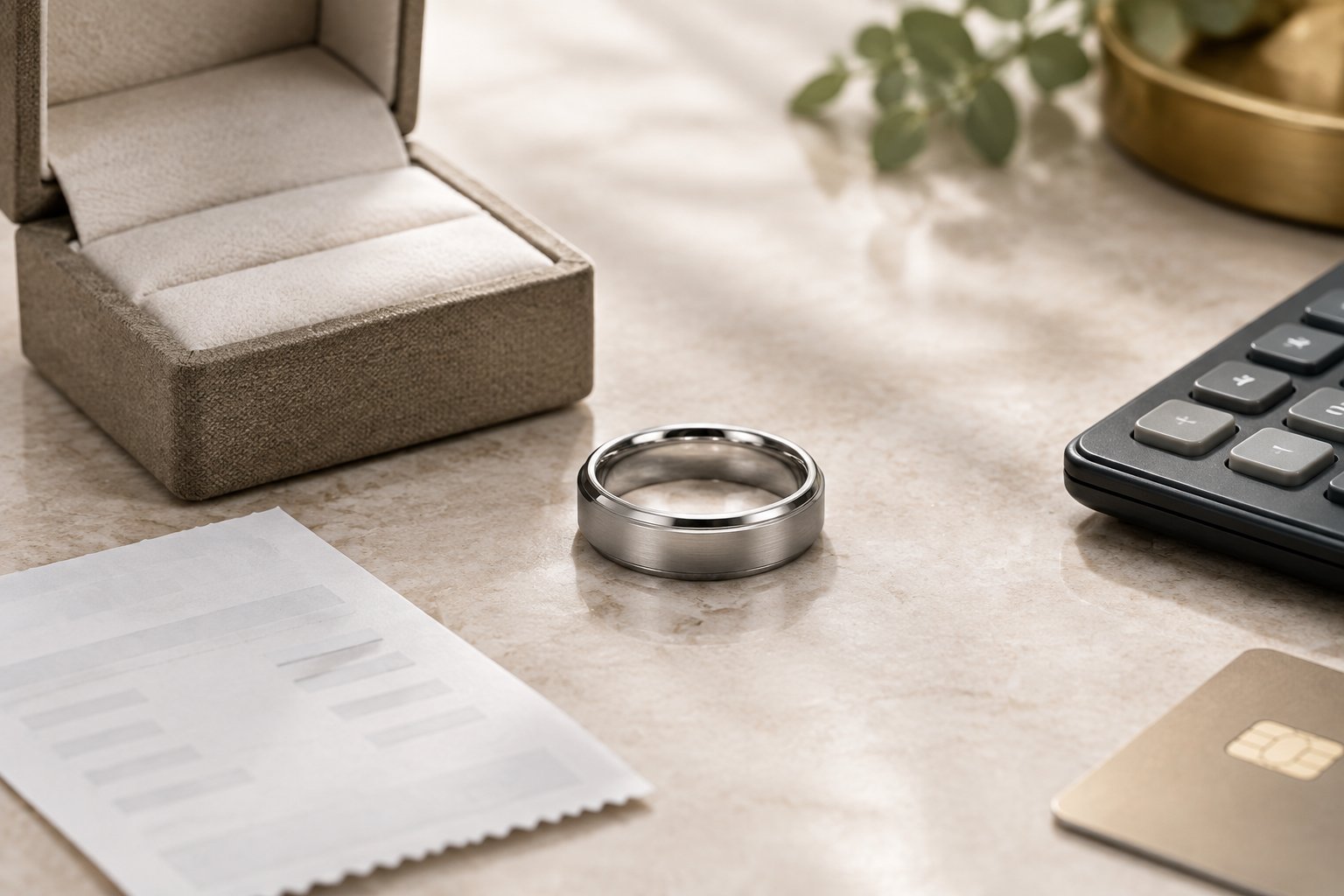
Your lifestyle should guide the purchase as much as your budget. A lightweight titanium band suits active daily wear, while 14k gold gives you a classic look with a balance of value and durability. Platinum, custom work, and diamond accents raise the wedding band cost quickly.
You can compare styles and prices, then choose a ring that feels comfortable for daily wear and fits your financial plans. If you want more help setting a spending limit, review this guide to how much should a man spend on his own wedding ring.
What Should You Expect to Spend?
You should plan on spending about $300 to $800 for a standard men’s wedding band, with material, width, design, and stones pushing the price below or above that range.
Prices near $100 can cover basic silver, titanium, or tungsten styles. A well-made 14k gold band often falls between $500 and $1,200. Platinum and diamond-accented rings can pass $2,000, especially when the band is wide or custom-made.
Why the Average and Median Can Tell Different Stories
An average adds every purchase together and divides the total by the number of buyers. A few luxury purchases can pull that figure upward.
The median shows the middle purchase, with half of buyers spending less and half spending more. For this reason, a reported average cost of men’s wedding band may sit near $600 or $850 while many shoppers choose rings below that level.
Use the average as a planning reference, then check prices for the metal and design you prefer.
Typical Budget, Mid-Range, and Premium Price Tiers
Your budget can fit into one of these broad ranges:
- Budget, $75 to $300: Silver, titanium, stainless steel, and basic tungsten bands. These rings suit simple tastes and active lifestyles.
- Mid-range, $300 to $1,200: 10k or 14k gold, refined tungsten designs, wider bands, and modest engraving.
- Premium, $1,200 to $3,000 or more: Platinum, 18k gold, custom designs, heavier bands, and diamond accents.
- Luxury, $3,000 and up: Large diamond details, rare materials, extensive custom work, and designer pricing.
A lower price does not automatically mean poor quality. Check the metal details, ring thickness, warranty, and return terms before you buy.
How to Set a Personal Ring Budget
Start with a number you can pay without using high-interest debt. Then reserve part of that amount for sizing, engraving, insurance, and future care.
Consider how you use your hands each day. A plain, durable band may serve you better than a delicate design if you work with tools, exercise frequently, or spend time outdoors.
Decide which features deserve your money, then set a firm maximum before you browse.
How Does Ring Material Change the Price?
The metal often creates the largest difference in wedding band cost, with alternative metals at the low end, 14k gold in the middle, and platinum at the top.
Gold pricing also reflects karat, ring weight, and market prices. A wide 14k gold band contains more metal than a narrow band, so two rings with the same purity can have very different prices.
What Does a 14k Gold Band Cost?
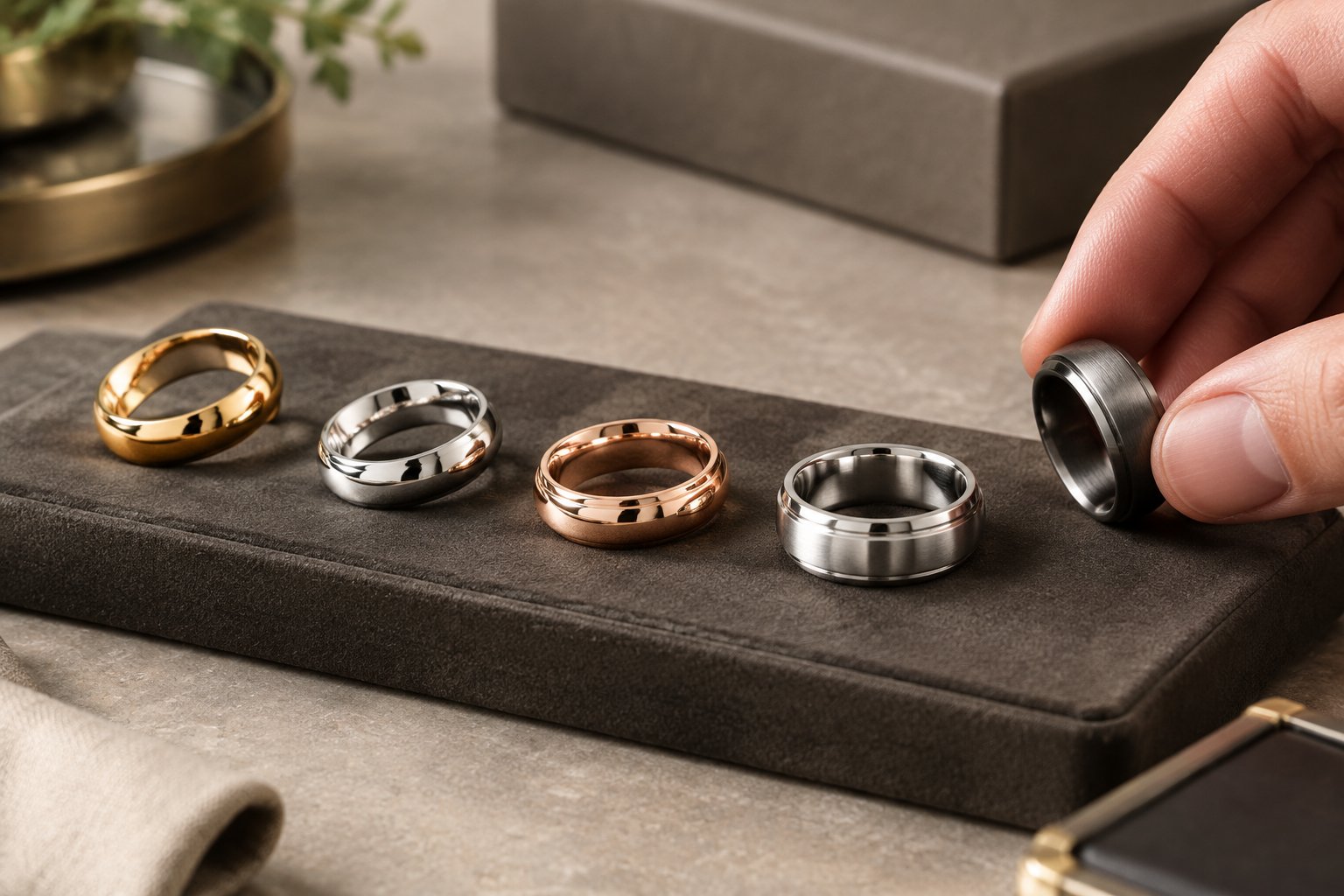
A simple 14k gold band often costs about $500 to $1,200. Wider rings, heavier profiles, designer labels, and textured finishes can raise that amount.
14k gold contains 58.3% pure gold mixed with stronger alloys. That balance gives you a classic precious-metal ring with good resistance to daily wear.
Yellow gold provides a warm traditional color, while white gold offers a bright, modern appearance.
10k gold costs less because it contains less pure gold. It also has a harder feel, which suits shoppers who want a lower-cost gold option.
White Gold and Rose Gold Price Considerations
White gold and rose gold often sit in a similar price range to yellow gold at the same karat and weight. White gold receives rhodium plating for a bright white finish.
Periodic replating keeps that appearance fresh and adds a maintenance cost over time.
Rose gold gets its pink tone from copper in the alloy. It does not need rhodium plating, which makes upkeep more predictable.
Ask whether the quoted price includes the desired karat, finish, sizing, and any required maintenance.
When Platinum Is Worth the Premium
Platinum makes sense when you want a dense, naturally white metal with a premium feel. Jewelry platinum is highly pure, so the ring can weigh more than a similar white gold design.
That extra weight and the metal’s rarity raise the purchase price. Platinum develops a soft patina as it wears.
Many people like that aged finish, while others prefer professional polishing. Choose platinum when its weight, purity, and long-term look fit your priorities and budget.
Affordable Alternative Metals for Everyday Wear
Alternative metals can deliver strong daily performance at a lower cost:
- Titanium: Lightweight, comfortable, and suitable for sensitive skin.
- Tungsten carbide: Heavy, scratch-resistant, and available in many modern finishes.
- Stainless steel: Affordable and easy to style.
- Sterling silver: Flexible in design and priced below gold, though it scratches and tarnishes more easily.
Titanium and tungsten rings often cost about $100 to $500. Many alternative metals cannot be resized, so confirm your ring size and review the exchange policy before ordering.
Which Design Details Raise the Final Price?
Width, metal weight, custom labor, and diamond accents raise the price of a men’s wedding ring more than basic surface finishes do.
A plain band keeps labor and material needs low. Added texture, inlays, stones, and unusual shapes require more production time and increase the final quote.
Ring Width, Weight, and Metal Purity
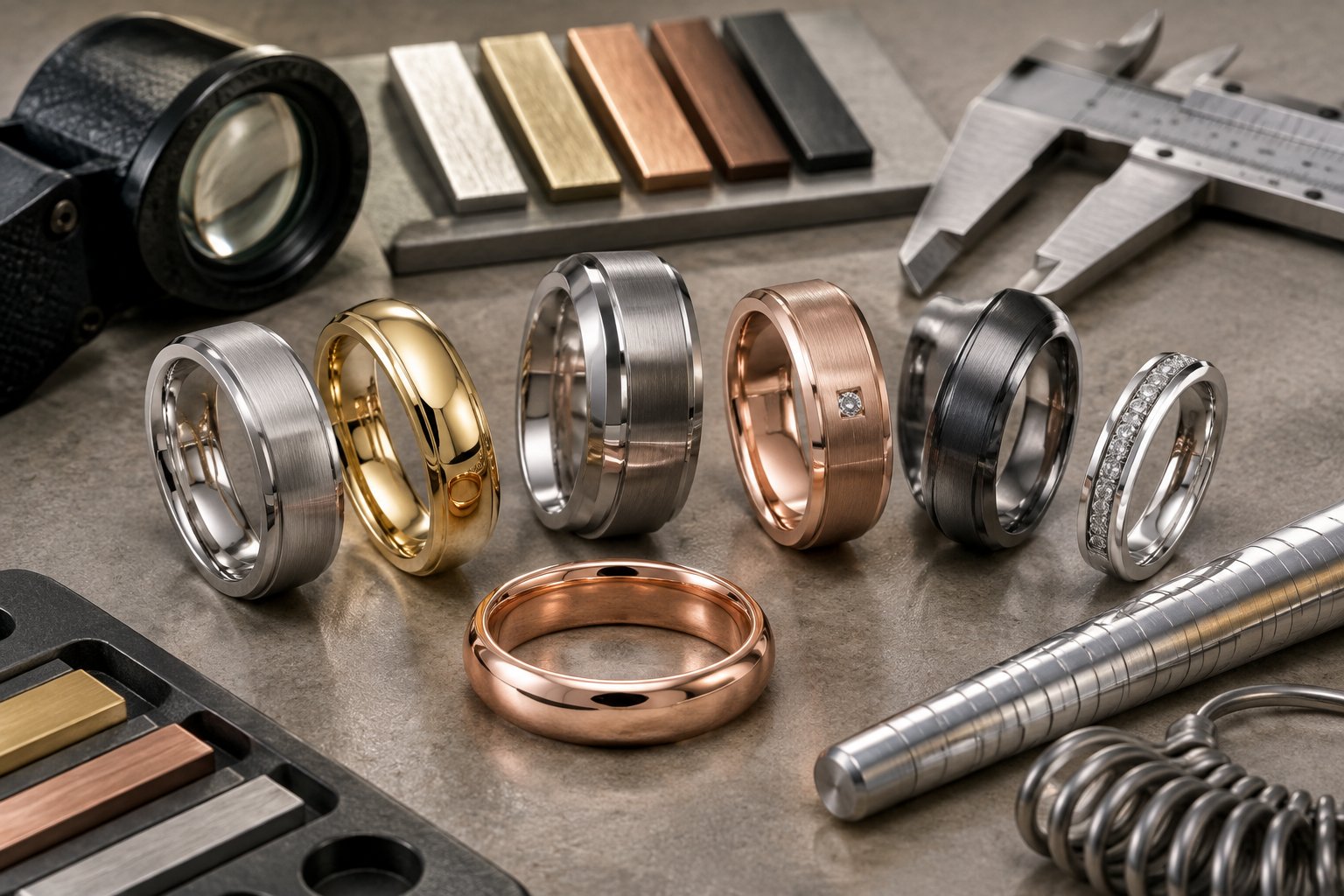
A 7mm band uses more metal than a 4mm band made from the same material. That difference becomes more noticeable with gold and platinum, where the metal itself carries a high value.
Higher karat gold also contains more pure gold. An 18k band can cost more than a similar 14k band, while a 10k band offers a lower entry price.
Your ring size affects the amount of material required as well. A very thin band may feel less sturdy during daily wear. Ask about the band’s thickness, not only its width, before placing an order.
Finishes, Engraving, and Custom Designs
Polished, brushed, hammered, and satin finishes create different looks. The finish may add a modest charge, especially when it requires handwork or a special production process.
Engraving often costs about $50 to $150. A custom shape, mixed-metal design, or special inlay can add several hundred dollars.
Custom orders also need extra time for design approval and production, so leave several weeks before your wedding date.
The Cost of Diamond Accents and Other Stones
A single small stone adds less to the price than a row of diamonds or a full pavé design. Cost reflects stone size, quality, number, setting style, and the labor needed to secure each gem.
Lab-grown diamonds can reduce the price of a diamond-accented band. Sapphires and other colored gemstones offer another way to add color and personality.
Ask for a detailed stone description and confirm whether the quoted price includes the setting.
Comfort-Fit Bands and Resizing Considerations
Comfort-fit bands have rounded inner edges that make all-day wear easier. This feature adds little to the price on many standard designs, so it is worth considering during fitting.
Gold and platinum bands can often be resized by a skilled jeweler. Tungsten, titanium, and some ceramic designs require an exchange or replacement if your size changes.
Check the jeweler’s sizing policy before choosing one of these materials.
Where Should You Shop for the Best Value?
Online retailers often provide broad selection and easy price comparisons, while local jewelry stores give you in-person fitting, service, and support.
Your best value comes from comparing the same metal, width, thickness, finish, and warranty across several sellers. A low sticker price can lose its appeal when shipping, resizing, engraving, or return costs appear at checkout.
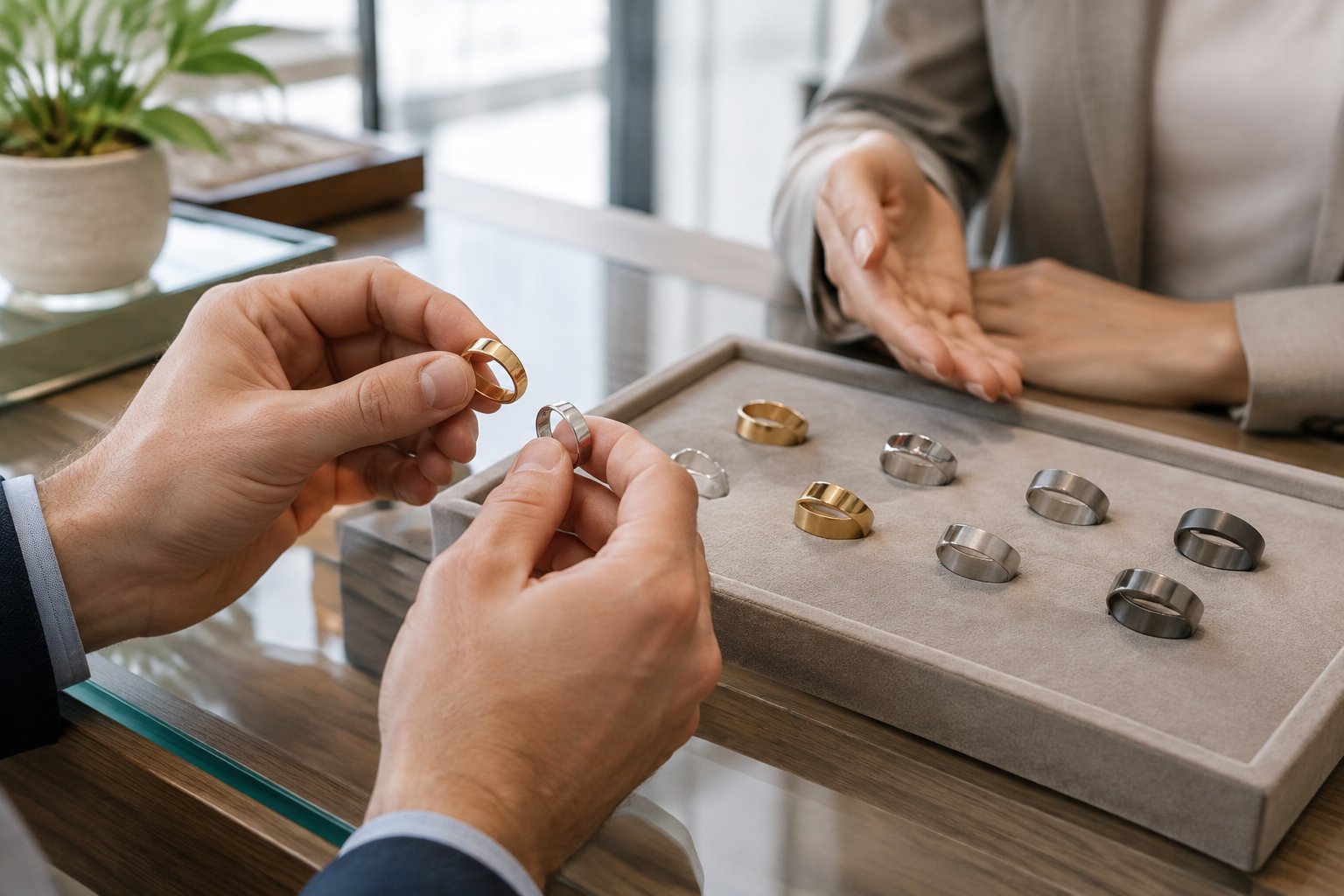
Online Retailers vs. Local Jewelry Stores
Online shopping lets you browse many men’s wedding bands and compare prices from home. Product pages may show metal content, measurements, size options, and customer policies in one place.
Local jewelry stores let you feel the ring’s weight, test comfort, and receive help with sizing. You can also ask about polishing, resizing, repairs, and future maintenance before buying.
Check delivery times carefully for made-to-order rings. Read the return policy for engraved, resized, or customized pieces because these items may have special terms.
What to Expect From Blue Nile and James Allen
Blue Nile offers a broad online selection across metals and styles. Its direct online model supports price comparison, and its U.S. orders include free shipping with a 30-day return period for eligible items.
James Allen carries many men’s wedding band designs and offers engraving on eligible rings. Its online service includes free shipping, customer support, and a money-back return policy for qualifying purchases.
Review the exact product terms before ordering. Engraving, custom work, and certain diamond purchases can affect return eligibility.
Comparing Jared With Independent Jewelers
Jared combines online shopping with more than 200 stores across the country. You can browse a large selection, arrange store pickup for eligible items, and return most qualifying purchases within 30 days.
Independent jewelers offer personal service and custom guidance. They may help you select a different thickness, alter a design, source a special metal, or arrange long-term maintenance.
Ask for a written quote that lists the ring, taxes, sizing, engraving, warranty, and delivery date.
When Etsy Is a Good Choice for a Unique Band
Etsy suits you when you want handmade work, unusual materials, vintage styling, or a direct relationship with an independent maker. You can find distinctive designs across many price ranges.
Check the seller’s reviews, metal stamps, sizing method, production time, and return rules. Ask whether the ring is solid metal, plated, or made with an inlay.
A clear listing and responsive seller make a major difference with a made-to-order purchase.
How Can You Save Without Compromising on Quality?
You can lower wedding band cost by prioritizing durable construction, comparing equal specifications, and choosing a simpler design before cutting material quality.
A plain 14k gold band may provide more long-term flexibility than a highly detailed ring made from a metal that cannot be resized. Alternative metals also offer strong value when you confirm their care and sizing limits.
Choose Features That Matter Most to You
Write down the features you care about before you shop. You might value a specific metal, a comfort-fit interior, a matte finish, or a meaningful engraving.
Spend on those priorities and remove details that add little value for you. A narrower band can reduce material cost, while a brushed finish can provide a distinctive look without the price of multiple stones.
Keep enough thickness for daily wear.
Compare Like-for-Like Ring Quotes
Compare rings with the same:
- Metal and karat
- Width and thickness
- Ring size
- Finish and interior profile
- Stones and setting style
- Engraving, shipping, and warranty terms
A $600 quote may include sizing and delivery, while a $500 listing may add those charges later. Request the complete price before you compare offers.
Watch for Sales, Return Policies, and Warranties
Sales can reduce the purchase price, especially during major holiday periods or store events. Confirm that the sale item still includes the warranty and return rights you need.
Check the deadline for returns and whether engraved or resized bands qualify. A warranty may cover manufacturing defects while excluding scratches, loss, accidental damage, or normal wear.
Save the receipt, appraisal, and product details after purchase.
Budget for Insurance and Future Maintenance
Include ring care in your ownership budget. Gold may need polishing, white gold may need rhodium plating, and stone settings benefit from periodic inspection.
Insurance protects your purchase against covered loss, theft, or damage. Keep photos and an appraisal with your records, then ask your insurer whether the ring needs a separate jewelry policy or scheduled coverage.