
Average Cost of Wedding Catering Buffet: 2026 Guide
For a U.S. wedding in 2026, the average cost of wedding catering buffet service is about $40 to $110 per guest for food and basic service, with many couples using $55 to $85 per person as a practical planning range. A 100-guest buffet can start near $4,000 for a simple menu and reach $11,000 when you add premium food, staff, rentals, drinks, taxes, and service fees.
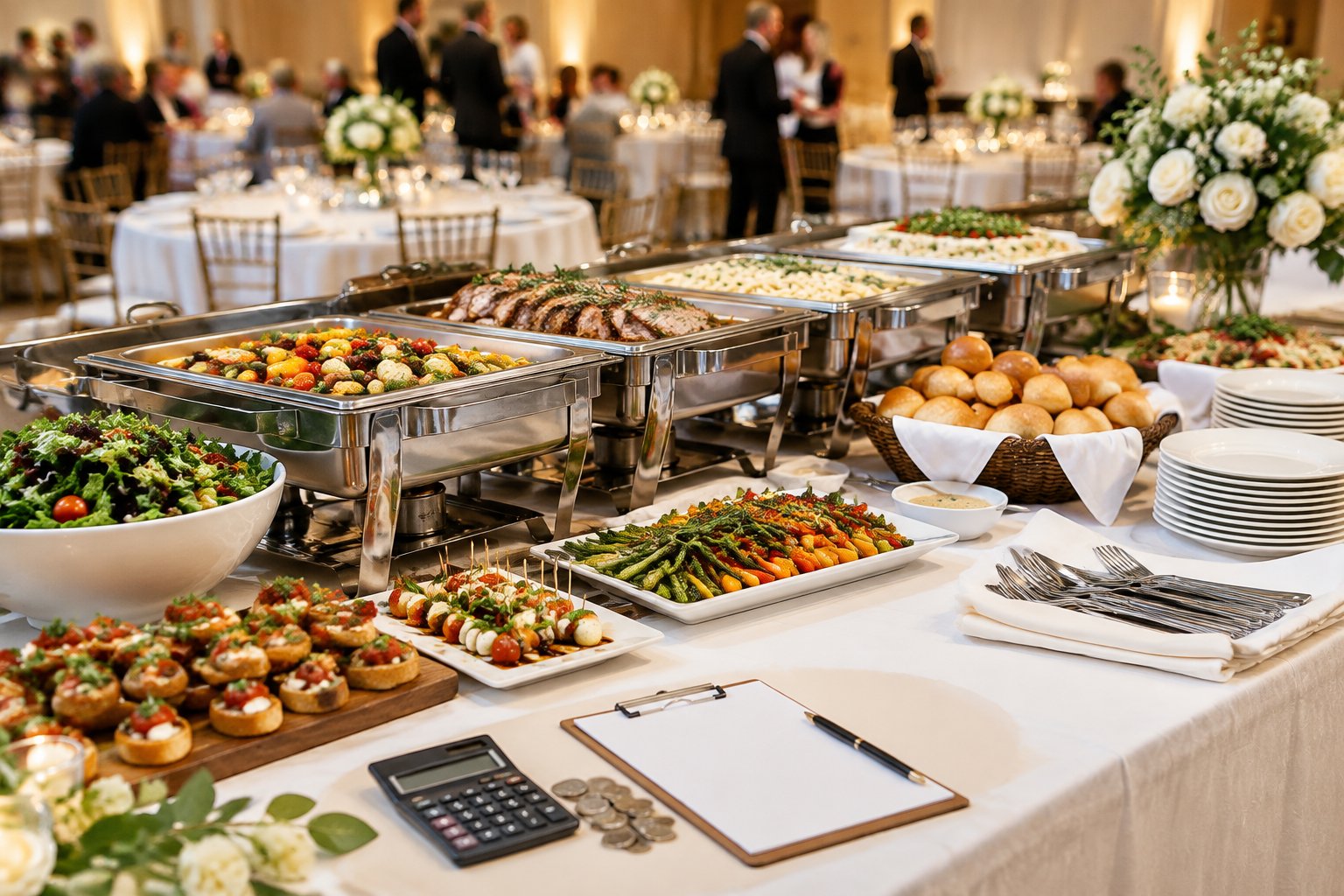
Your final wedding catering cost depends on your guest count, location, menu, service level, and venue rules. Food and beverage often take about 20% to 30% of your wedding budget, so separating the meal price from the full event bill helps you set a useful target.
Start by requesting itemized quotes from wedding caterers in your area. If you want help shaping a realistic wedding budget, compare each proposal by its food, labor, rentals, beverage service, and added fees.
What Does a Wedding Buffet Usually Cost per Guest?
The average cost of wedding catering buffet service falls between $40 and $110 per guest for food and basic service, while a full-service buffet with drinks and event fees may reach $100 to $150 or more per guest.
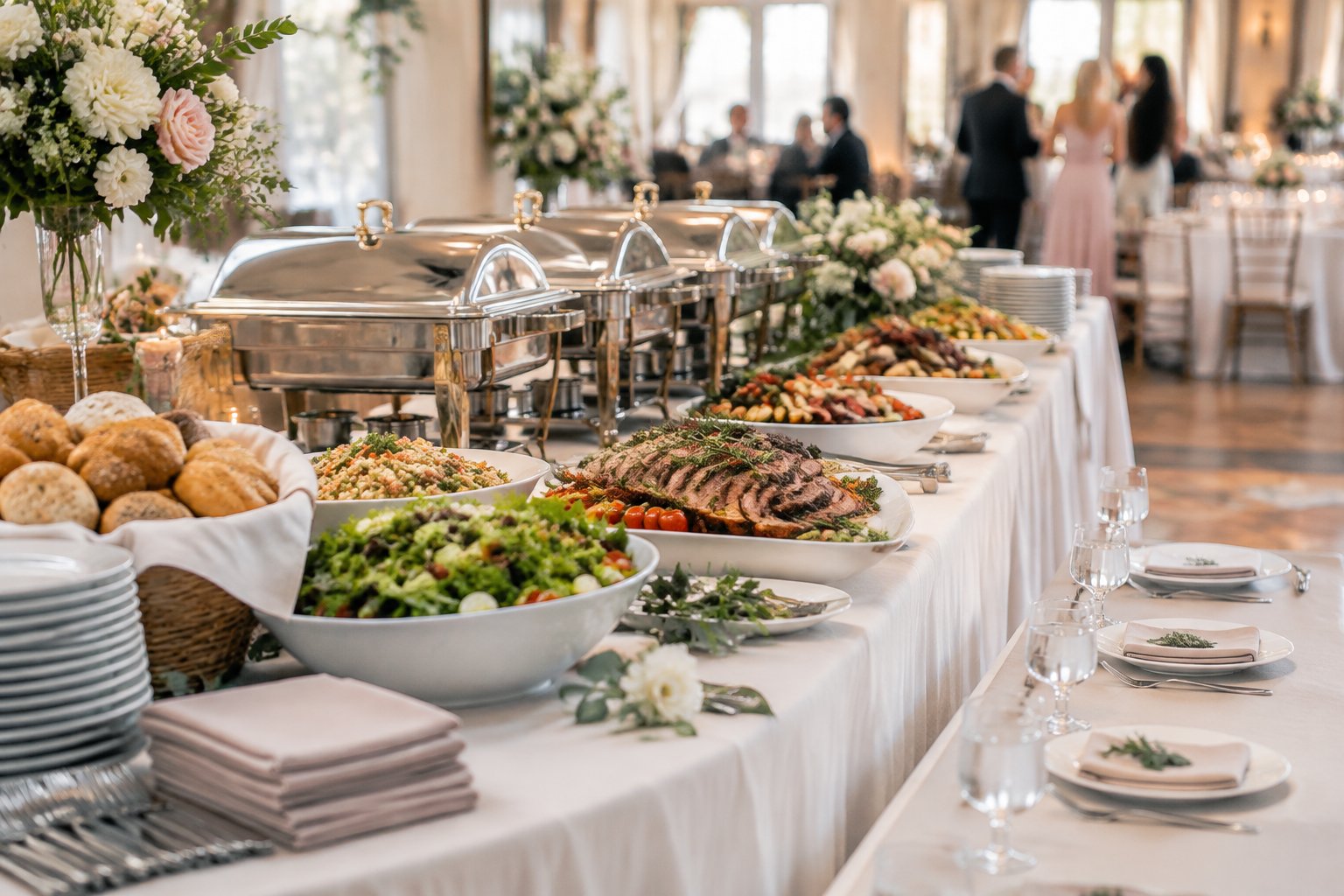
Your location and venue shape the quote as much as the menu does. A rural reception with a simple buffet may sit near the low end. A downtown venue with limited kitchen access, premium ingredients, and extended service hours can push the price higher.
Typical Food-Only and Full-Service Price Ranges
A food-only buffet quote may include prepared entrées, side dishes, salads, bread, and basic serving equipment. A full-service quote can add buffet setup, servers, cleanup, tableware, linens, beverages, and coordination.
Use these planning ranges:
- Simple buffet: $40 to $55 per guest
- Mid-range buffet: $55 to $85 per guest
- Premium buffet: $85 to $110 or more per guest
- Full-service reception: $100 to $150 or more per guest after drinks and fees
The national average wedding catering cost across service styles is about $80 per person. Buffet service often lands below plated dinner service because guests serve themselves and the kitchen does not plate every meal.
For a closer estimate, review how much should a wedding meal cost per person alongside your caterer’s proposal.
Why National Averages Vary by Market
Wedding catering prices differ across the United States because labor, rent, transportation, and demand vary by market. Major cities such as New York, Los Angeles, and San Francisco may run $100 to $200 per guest for broad catering packages. Rural and suburban areas may fall closer to $50 to $85.
Your venue also affects food costs. A venue with a commercial kitchen can reduce transportation and equipment needs. A remote property may require a mobile kitchen, extra staff, delivery mileage, and additional setup time.
Saturday evening dates during peak wedding season command higher rates. Friday, Sunday, weekday, brunch, and lunch receptions give you more room to control the catering budget.
A Simple Formula for Estimating Your Total
Use this formula:
Estimated catering total = billable guests × food price per guest + fixed fees + percentage-based fees
For example:
- 150 guests × $70 buffet price = $10,500
- Delivery and setup = $500
- Rentals = $900
- Service charge and tax = added according to the contract
Your final bill rises when you include an open bar, cocktail-hour appetizers, specialty rentals, cake service, overtime, and gratuity. Ask the caterer to show each charge on a separate line so you can compare quotes fairly.
How Guest Count Changes the Total Buffet Bill
Guest count drives the largest part of your catering bill, while minimums, staffing thresholds, vendor meals, and rental quantities affect the price per person.
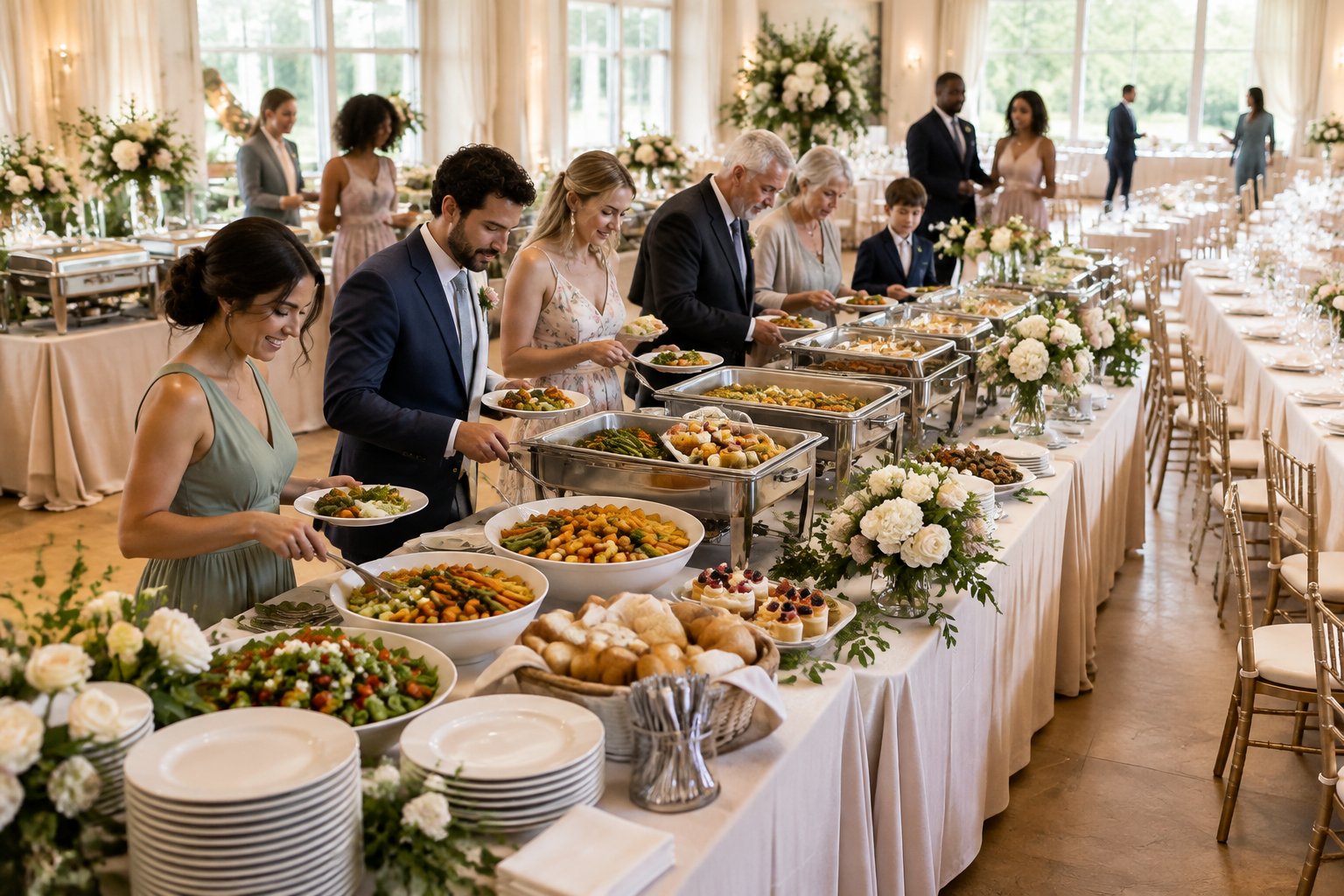
A larger guest list raises the total invoice through food, drinks, tableware, and labor. Smaller weddings may carry a higher rate per guest because delivery, kitchen preparation, and staffing costs spread across fewer people.
Catering for 150 Guests Cost
For 150 guests, a food-and-basic-service buffet can cost about $6,000 to $16,500, using a $40 to $110 per-person range. A mid-range planning estimate of $70 per guest creates a $10,500 starting budget before bar service, taxes, gratuity, and rentals.
Build your count from adults, children with paid meals, the couple, and vendors who need food. Photographers, DJs, planners, musicians, and venue staff may receive vendor meals at a reduced price.
Catering for 200 Guests Cost
For 200 guests, buffet food and basic service may cost $8,000 to $22,000. A $70 per-person estimate produces a $14,000 starting point.
Large receptions may qualify for volume pricing, especially when you choose a set menu and standard rentals. Added guests still increase the need for buffet replenishment, serving utensils, plates, glasses, chairs, and staff.
A guest list calculator can help you build a billable count before you request wedding catering packages.
Minimums, Volume Pricing, and the Final Guarantee
Caterers may set a minimum guest count, minimum food spend, or minimum staffing charge. A 50-person wedding can still require a chef, delivery vehicle, setup crew, and service captain, so the per-person price may exceed a 150-person quote.
Ask these questions before signing:
- What guest count triggers the minimum?
- Are children and vendor meals included in the guarantee?
- When is the final count due?
- Does the price change for late additions?
- What happens if guests cancel after the guarantee date?
Your final guarantee controls food quantities, place settings, staff planning, and much of the invoice. Confirm the count in writing and keep a copy of the deadline in your planning notes.
What Is Included in a Buffet Catering Quote?
A buffet catering quote may include food, buffet setup, servers, basic rentals, and cleanup, while beverages, bar service, linens, delivery, and specialty equipment often appear as separate charges.
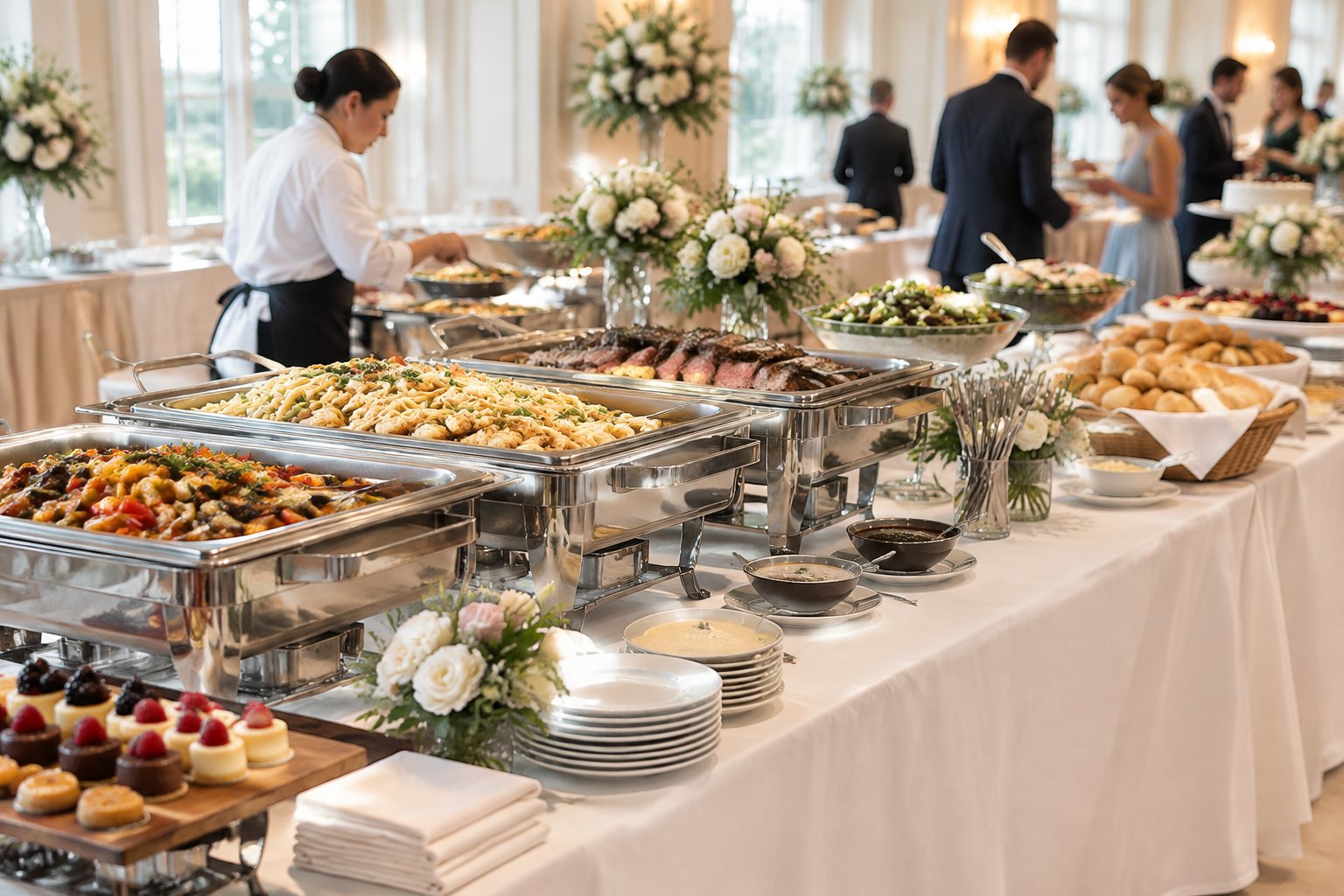
Catering quotes use different package names, so compare the line items instead of the headline price. Ask whether the proposal covers cocktail hour, dessert, nonalcoholic drinks, staff meals, and venue-required services.
Food, Buffet Setup, and Waitstaff
Food may include salads, sides, entrées, sauces, bread, and dessert. Some packages include one protein, while others offer two or more choices. Premium ingredients and additional menu selections increase the cost.
Buffet setup may cover tables, chafing dishes, serving utensils, labels, and food replenishment. Servers or waitstaff may set tables, clear plates, refresh the buffet, and handle cleanup. Captains coordinate the service team and communicate with your planner or venue manager.
Ask about staffing ratios and service hours. A buffet requires fewer servers than plated service, yet it still needs enough staff to prevent long lines and keep food fresh.
Beverages and Bar Service
Beverage packages may include water, coffee, tea, soda, juice, beer, wine, or cocktails. Bar service can include bartenders, glassware, mixers, ice, permits, and a bar setup.
Confirm whether the price covers the cocktail hour, dinner, toast, and the full reception. Ask whether the caterer supplies bartenders and whether your venue permits outside alcohol.
Rentals, Setup and Breakdown, and Delivery
Rentals may include china, flatware, glassware, linens, tables, chairs, serving equipment, and specialty pieces. Some caterers include basic items while charging separately for upgraded china, charger plates, colored linens, or glassware.
Setup and breakdown fees cover the time required to unload equipment, arrange the buffet, clear food, wash or pack rentals, and remove waste. Delivery fees may reflect mileage, staffing, fuel, stairs, parking, or a remote venue.
Review venue requirements before booking. A location may require licensed servers, a kitchen fee, a cleanup deposit, recycling procedures, or specific insurance documents.
Which Menu and Service Choices Raise Buffet Costs?
Premium proteins, chef-attended stations, expanded desserts, dietary accommodations, and late-night snacks raise buffet catering prices through added food, equipment, labor, and preparation time.
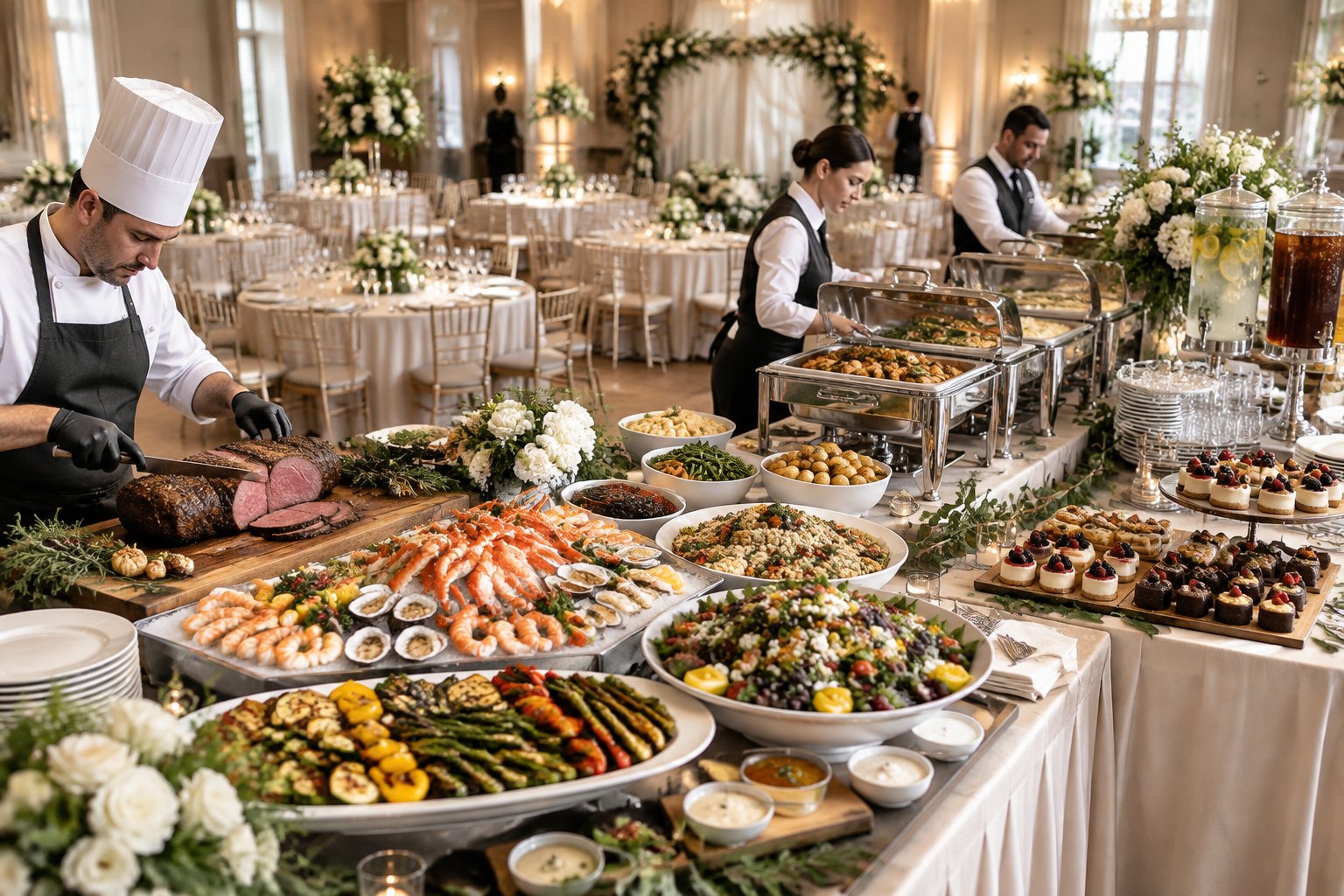
A focused menu gives you more control over food costs. Every extra entrée, appetizer, station, and special request adds planning and production work, even when the guest count stays the same.
Premium Proteins, Seafood, and Seasonal Ingredients
Chicken, pasta, rice dishes, and seasonal vegetables often fit a lower budget. Filet mignon, wagyu beef, prime rib, lobster, shrimp, and other seafood move the menu into a higher price tier.
Seasonal and local ingredients may offer strong flavor with better availability. Imported products, scarce ingredients, and custom cultural dishes require a conversation with your caterer about sourcing and preparation.
Dietary accommodations also affect the quote. Gluten-free, vegan, vegetarian, kosher, halal, and allergy-safe meals may require separate ingredients, preparation areas, labels, or staff procedures.
A menu tasting helps you choose dishes before the final count. Ask whether menu tastings are included or charged separately.
Food Stations, Taco Bars, and Interactive Add-Ons
Food stations often cost more than a standard buffet because they need extra equipment, display pieces, ingredients, and attendants. Carving stations, pasta stations, raw bars, and chef-led displays create an interactive experience with added labor.
A taco bar can fit a moderate budget when it uses prepared fillings, standard toppings, and self-service. A chef-attended taco station with fresh tortillas, several proteins, and made-to-order toppings costs more.
Plan guest flow carefully. Multiple stations need enough space, signs, serving utensils, and staff to keep lines moving.
Desserts, Cake Service, and Late-Night Snacks
Dessert stations may include cookies, pies, candy, s’mores, pastries, fruit, or specialty sweets. Adding a dessert table beside the wedding cake increases both food and display costs.
Ask about cake cutting fees before you book a bakery. Cake cutting fees or cake-cutting fees may be charged per slice, per guest, or as a flat labor fee. Confirm who supplies plates, forks, napkins, and storage.
Late-night snacks such as sliders, pizza, fries, tacos, or chicken and waffles add another service period. Price them by the guaranteed count and ask whether the caterer charges extra for late-night staffing, reheating, or delivery.
How Does a Buffet Compare With Other Reception Styles?
Buffet service usually costs less than plated dinner service, while family-style, cocktail receptions, food trucks, and brunch weddings offer different balances of labor, formality, menu range, and guest flow.
A service style shapes your reception timeline and floor plan. Compare the full package, including staffing, rentals, food quantities, and beverage service.
| Service style | Typical food and service price | Staffing | Guest experience |
|---|---|---|---|
| Buffet | $40 to $110 per guest | Moderate | Variety and movement |
| Plated dinner | $85 to $175+ per guest | High | Formal table service |
| Family-style dining | $65 to $125 per guest | Moderate | Shared table platters |
| Cocktail reception | $35 to $90 per guest | Moderate to high | Appetizers and mingling |
| Food trucks | $30 to $75 per guest | Vendor-based | Casual and interactive |
| Brunch wedding | $30 to $70 per guest | Low to moderate | Daytime, relaxed meal |
Buffet vs. Plated Dinner Service
Buffet service reduces plate-by-plate labor and gives guests access to several dishes. You still need staff for replenishment, clearing, food safety, and cleanup.
Plated dinner service provides controlled portions and a formal pace. It requires more servers, kitchen coordination, place settings, and timing for each course. Guests may choose an entrée in advance, which adds RSVP and seating-chart work.
A buffet fits a relaxed reception with menu variety. A formal plated dinner suits an event built around table service and timed courses.
Family-Style Dining and Cocktail Receptions
Family-style dining places shared platters on each table. It creates a communal meal and requires table space, replenishment, and servers who can refresh dishes.
A cocktail reception replaces a full seated meal with passed appetizers, stationed food, or heavy hors d’oeuvres. Price the menu by the number of pieces per guest and the length of the reception. Guests need enough substantial food when dinner is not served.
Cocktail hour appetizers can also lead into a buffet, giving you a welcome period before the main meal.
Food Trucks and Brunch Weddings
Food trucks may cost $30 to $75 per guest, with possible charges for travel, staffing, power, parking, and service minimums. Check weather plans, venue access, guest flow, and local permits.
Brunch weddings use menus such as eggs, pastries, fruit, pancakes, breakfast meats, and coffee. Daytime service can reduce food and bar costs while creating a lighter reception schedule.
How to Keep Buffet Catering Within Budget
You can lower wedding catering costs by choosing an off-peak date, limiting menu scope, setting a clear bar plan, and reviewing every fee before signing.
Your wedding budget works best when you compare the complete invoice instead of focusing on the per-person food price. Keep a separate estimate for food, beverages, rentals, service, taxes, gratuity, and contingency funds.
Choose the Right Date and Menu Scope
Peak wedding season and Saturday evening dates bring stronger demand and higher rates. A weekday, Friday, Sunday, or off-season wedding may open the door to lower pricing.
Choose two entrées, a few crowd-friendly sides, and seasonal produce. A smaller menu reduces purchasing, prep time, buffet equipment, and waste.
Ask about package discounts for standard menus. You can also compare lunch, brunch, barbecue, drop-off catering, or a simple buffet when a formal dinner exceeds your wedding budget.
For more ideas, review how do you keep food cheap at a wedding.
Build a Smarter Bar Plan
An open bar or full bar adds liquor, mixers, bartenders, ice, glassware, and longer service time. Beer and wine provide a narrower package with fewer products to manage.
A limited bar can include beer, wine, and one or two signature cocktails. Signature cocktails give you a defined shopping list and a focused menu.
A cash bar shifts payment to guests and may be restricted by venue rules or local regulations. Confirm the number of bartenders, service hours, alcohol quantities, corkage policy, and whether the caterer handles permits.
Review Fees Before You Sign
Ask the caterer to list the service charge, service fees, gratuity, sales tax, corkage fee, delivery, rentals, setup, breakdown, and overtime charges. A quoted $70 per guest can rise sharply after percentage-based fees and event add-ons.
Check whether the service charge includes gratuity or goes toward business operations. Confirm the taxable amount and payment schedule with the caterer.
Give your wedding planner a copy of the contract and ask the venue to review its requirements. Before you sign, request a final estimate that shows the guaranteed guest count, vendor meals, bar plan, rental list, staffing hours, and every known fee.