
Average Cost of Wedding Catering Per Person: A Pricing Guide
Wedding catering in the United States commonly costs about $70 to $150 per guest for food and service, with around $80 per person serving as a useful national planning point. Your all-in bill rises when you add taxes, service charges, rentals, bar service, premium ingredients, and extra staff.
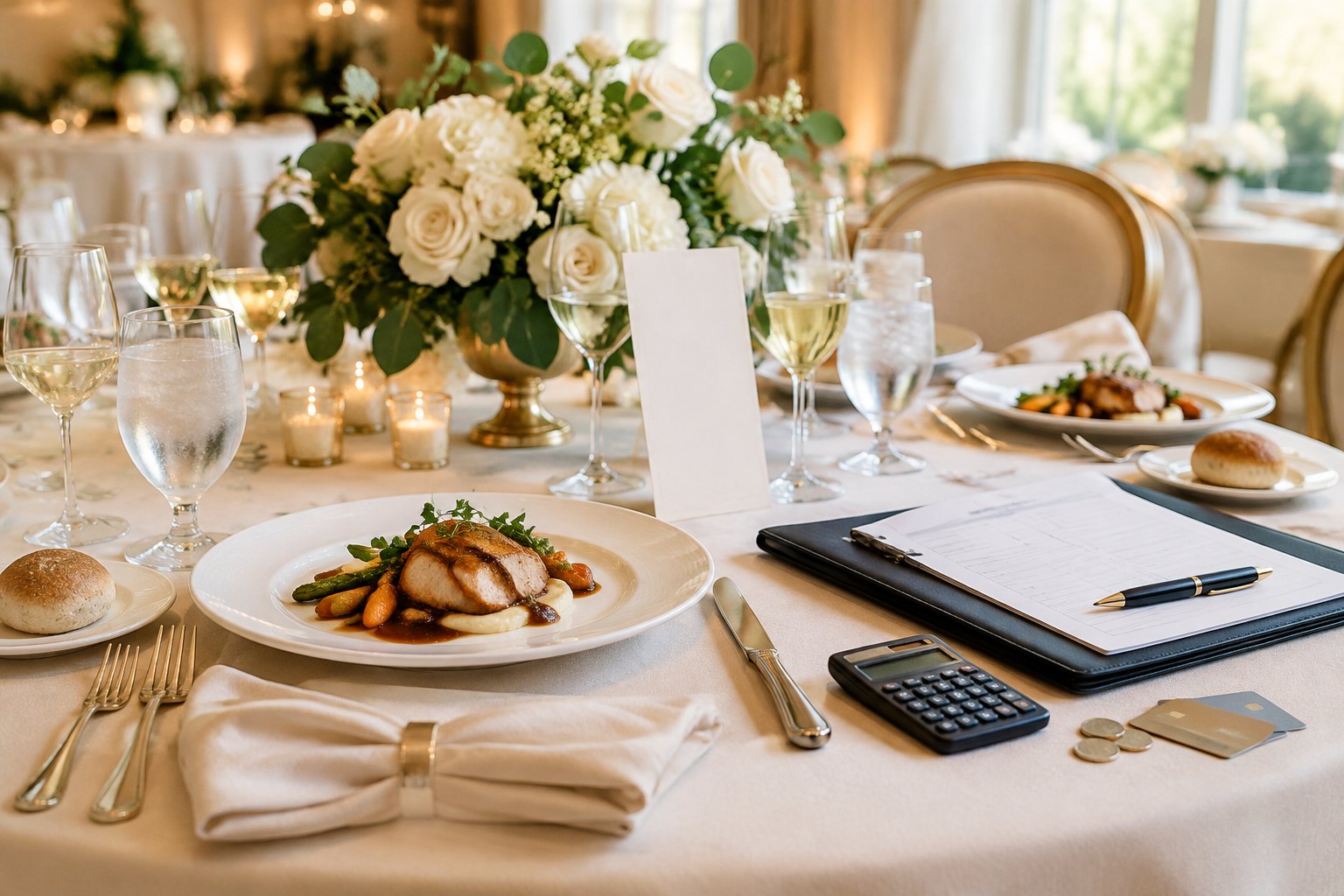
For 100 guests, that means setting aside roughly $7,000 to $15,000 before certain extras. A casual drop-off meal can land below that range, while a plated dinner with premium proteins and a full bar can move well above it.
Your guest count is only one part of the price. The service format, venue requirements, menu, wedding date, location, and quote terms all affect what you pay. Request itemized proposals from local caterers so you can compare the full cost. If you are still shaping your menu, reviewing how much should a wedding meal cost per person can help you set a starting budget.
Typical Per-Guest Price Ranges by Catering Style
Drop-off meals can cost about $15 to $30 per guest, buffets $25 to $70, family-style service $35 to $70, and plated dinners $50 to $120 or more before added fees. Premium wedding packages with extensive appetizers, specialty stations, dessert, and bar service can reach $150 to $250 per person.
Your market changes these figures. Major U.S. cities often price above national ranges, while rural areas may have lower menu rates but higher travel or delivery charges. Saturday evening receptions during peak wedding months also command higher quotes.
What Does a Drop-Off or Buffet Meal Usually Cost?
Drop-off catering runs about $15 to $30 per person for prepared food delivered in trays. You handle serving, table setup, and cleanup, or assign those tasks to venue staff and family members.
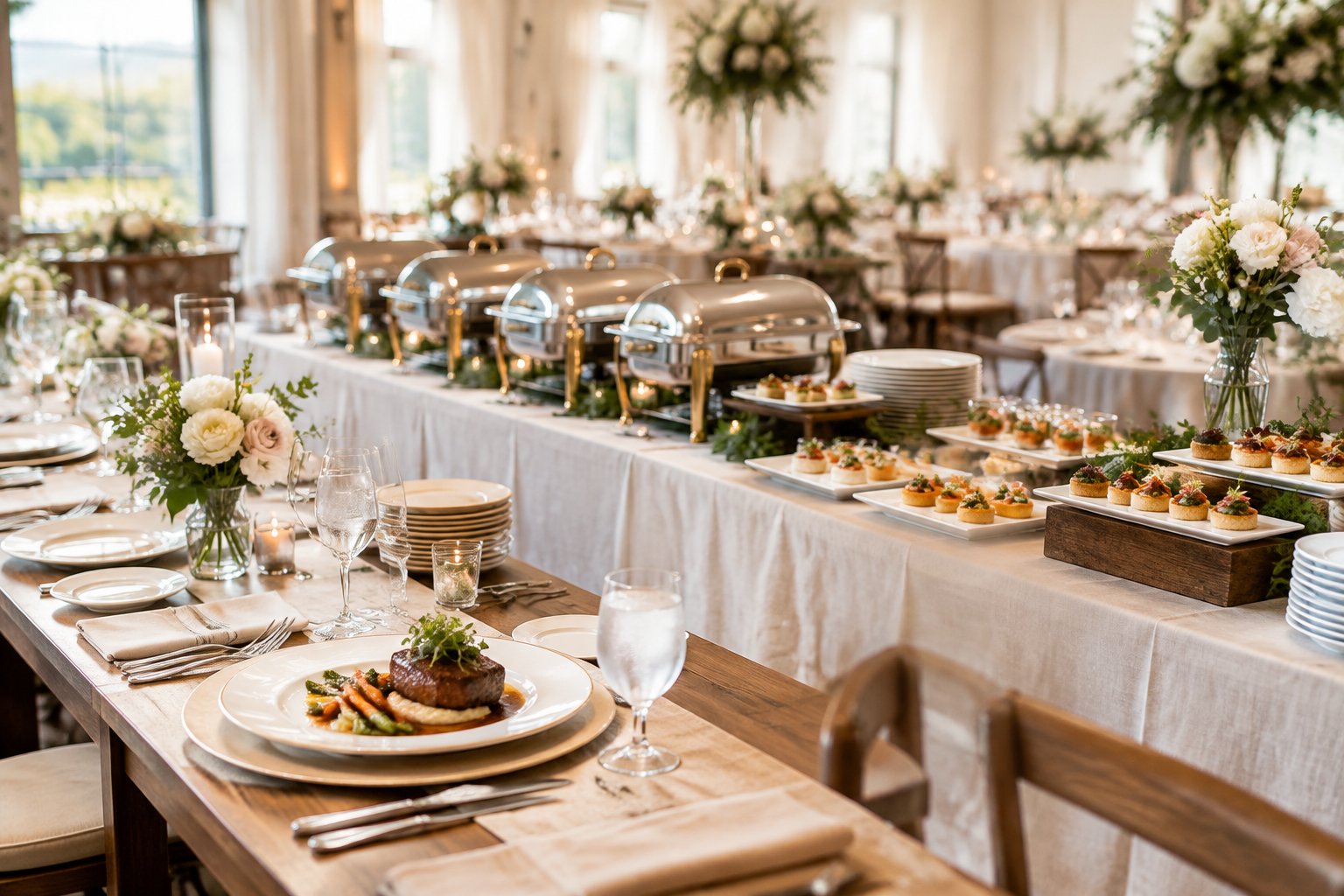
Disposable plates and utensils might be included, while chafing dishes, linens, and delivery fees can cost extra. A staffed buffet often costs $30 to $70 per guest.
This price can include setup, serving equipment, replenishment, and limited service staff. A buffet gives guests several choices and helps control labor costs.
Build in enough serving space and plan more than one line if you have a large reception.
How Much More Is Plated Dinner Service?
A plated dinner commonly costs $50 to $120 or more per person because the caterer needs additional servers, precise timing, plated presentation, and more kitchen coordination. Premium proteins such as steak, seafood, and lamb increase the food cost further.
Ask whether the quote includes guest meal selections, place cards, table service, bread service, and clearing each course. A plated format also needs a reliable final guest count so the kitchen can prepare the correct number of each entrée.
Are Food Stations, Family-Style Meals, and Food Trucks Worth It?
Food stations often fall between buffet and plated pricing, with many packages ranging from $50 to $90 per guest. They work well when you want guests to move around and choose from options such as pasta, carving, tacos, or seafood.
Family-style meals often cost about $35 to $70 per person. Shared platters create a warm table setting, though the caterer needs enough food and table space for each group.
Food trucks can run about $15 to $35 per guest for casual menus. Check the service window, power needs, parking access, weather plan, and minimum charge before booking. A truck may need extra time to serve a large guest list.
What Is Included in a Caterer’s Per-Person Quote?
A per-person quote may include food and basic service, while drinks, rentals, labor fees, taxes, and gratuity often appear as separate lines. Read every proposal to see whether the quoted rate covers the complete reception meal or only the menu items.
The clearest proposals list quantities, staffing, equipment, delivery, cleanup, and every fee. Ask the caterer to identify charges calculated per guest, as a percentage, and as a flat amount.
Food, Nonalcoholic Drinks, and Dessert
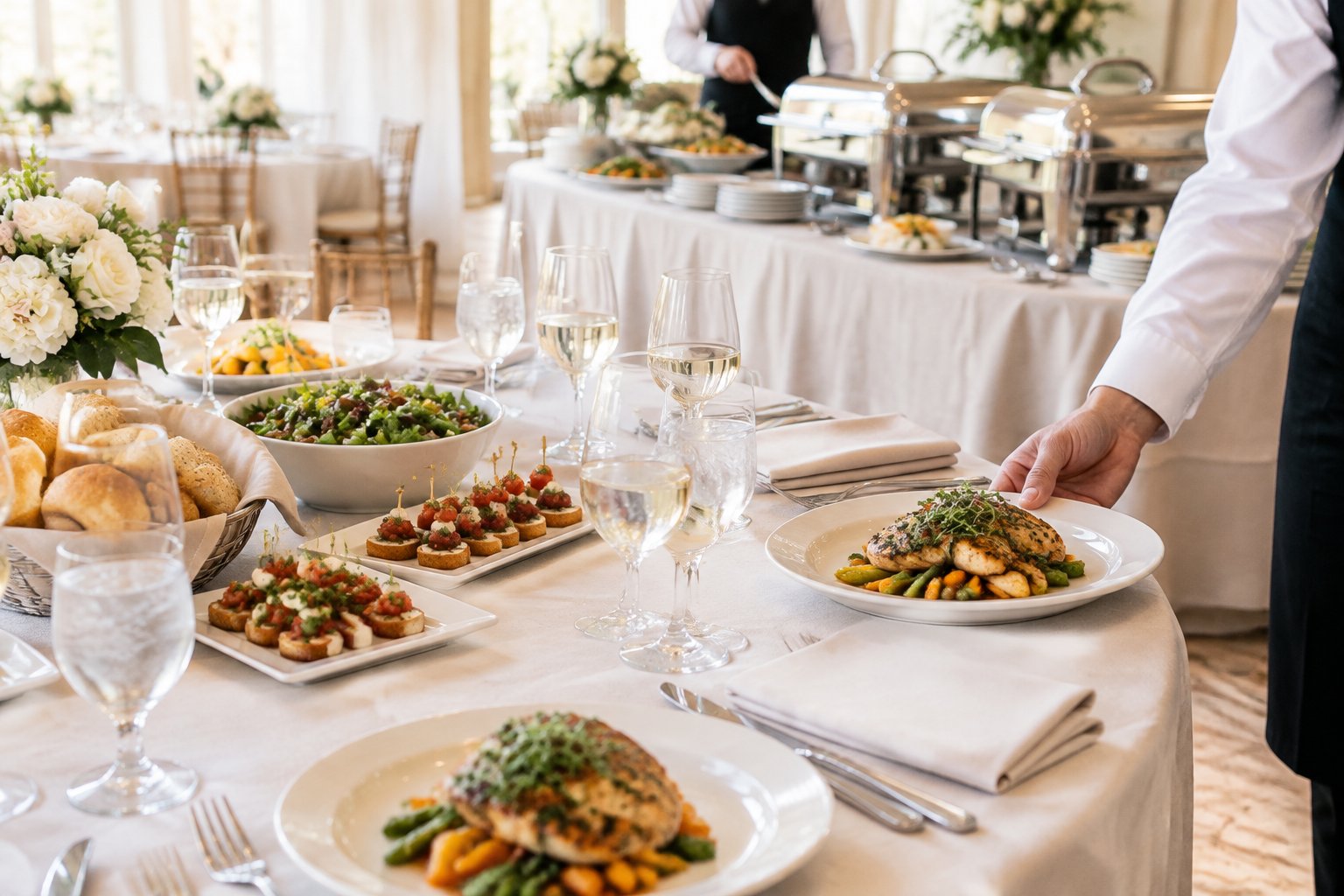
Food may include cocktail-hour appetizers, a main course, side dishes, salad, bread, and late-night snacks. Confirm serving portions and whether children’s meals or vendor meals use a different rate.
Coffee, tea, water, lemonade, and soft drinks can add about $2 to $4 per person. Alcohol is often priced separately, with beer-and-wine packages around $10 to $20 per guest and fuller bar packages reaching $20 to $50 or more.
Dessert may include cake, cupcakes, pastries, or a dessert station. Cake cutting and plating fees can add a few dollars per slice. Ask whether the caterer supplies cake knives, plates, forks, and coffee service.
Staffing, Setup, Cleanup, and Equipment
Staffing covers chefs, servers, bartenders, captains, dishwashers, and event managers. Plated service needs more front-of-house staff than drop-off delivery.
Setup and cleanup may cover buffet tables, food placement, trash removal, dishwashing, and packing equipment. Confirm the start and end times included in the contract, plus the hourly rate for overtime.
Equipment charges may include chafing dishes, serving utensils, china, glassware, flatware, linens, tables, chairs, coolers, and portable cooking equipment. Some venues require rented items even when the caterer supplies basic equipment.
Service Charges, Taxes, and Gratuities
A service charge often adds 18% to 22% to the food or service subtotal. It pays for business overhead and event operations, while gratuity may be a separate voluntary or required amount.
Sales tax depends on your state and the items being purchased. Ask whether tax applies to food, rentals, labor, service charges, or the full taxable subtotal.
Your contract should state whether gratuity is included, required, suggested, or left to your choice. A clear example showing the final amount helps you avoid calculating a percentage on the wrong subtotal.
The Biggest Factors That Change Your Final Bill
Guest count, menu complexity, venue requirements, and location create the largest swings in your wedding catering bill. A lower per-person rate still produces a higher total when more people attend, while a small reception can face minimum spending rules.
AMS, or the American menu and service market, differs sharply by region. Compare quotes from caterers who regularly work at your venue and know its loading areas, kitchen rules, and rental requirements.
Guest Count and Minimum Spending Requirements
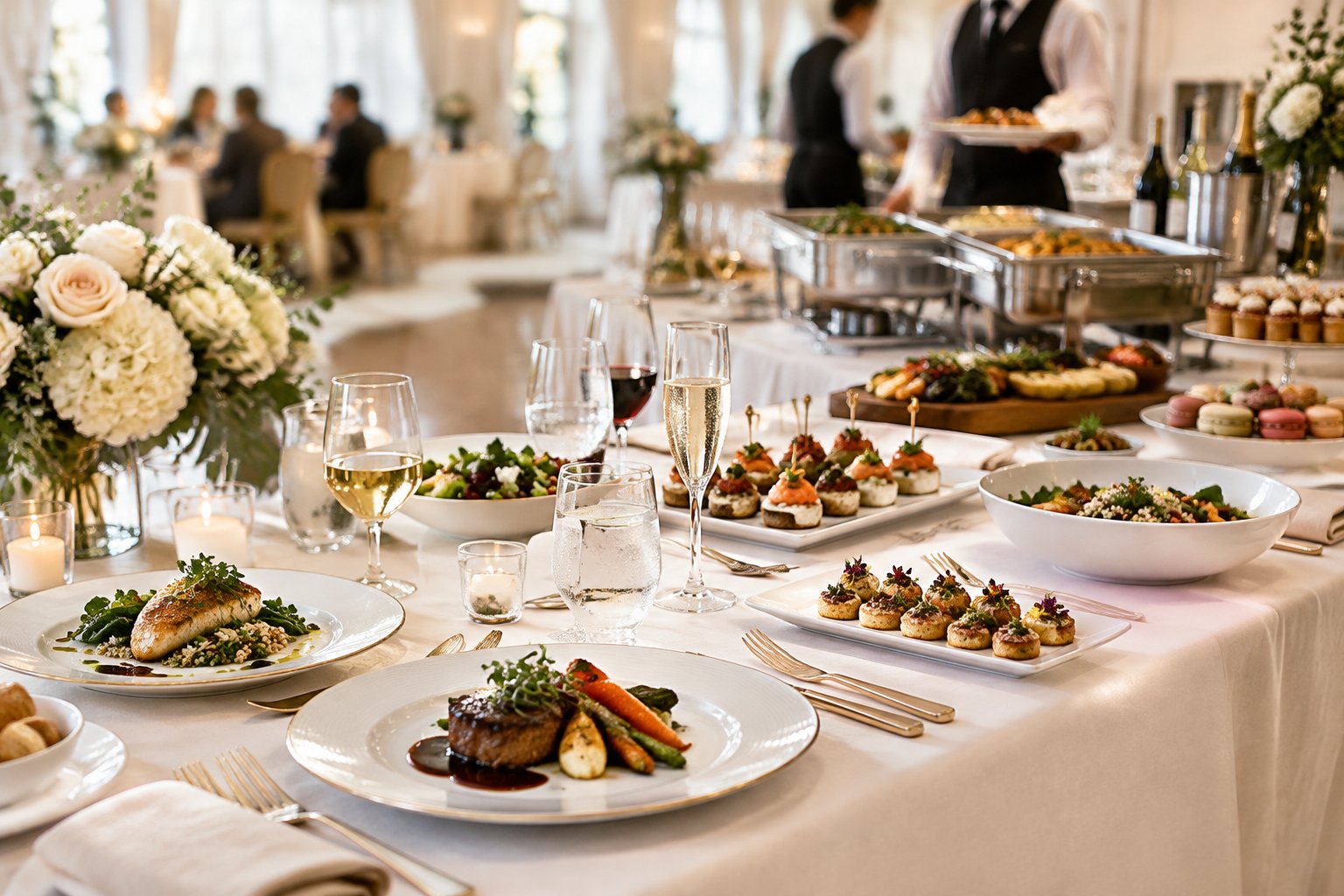
Caterers calculate food, staff, rentals, and many fees by the number of guests. A 100-person reception at $80 per person creates an $8,000 food-and-service subtotal before taxes and other charges.
Small weddings can face a minimum food or labor spend. If your guest count falls below that minimum, the caterer might charge the difference as a required fee.
Include vendors who need meals, such as your photographer, planner, DJ, and videographer. Ask whether children receive reduced pricing and when your final guaranteed count is due.
Menu Selections and Dietary Accommodations
Chicken, pasta, seasonal vegetables, and grain-based dishes usually cost less than filet mignon, lobster, and multiple premium entrées. A focused menu also reduces prep work, equipment needs, and food waste.
Dietary accommodations require careful planning. Ask how the caterer handles vegetarian, vegan, gluten-free, kosher, halal, nut-free, and other requests. Separate preparation areas and individually labeled meals can add labor or ingredient costs.
Venue Rules, Rentals, and Travel Fees
A venue with a commercial kitchen may reduce equipment and transport needs. A tent, private property, or historic building can require portable ovens, water supplies, generators, extra prep tables, and longer setup time.
Your venue might require an approved caterer, specific insurance, union labor, or exclusive rental partners. Review these rules before signing a catering contract.
Travel fees cover mileage, fuel, lodging, tolls, or delivery labor when the venue sits outside the caterer’s normal service area. Get these charges in writing.
How to Build an Accurate Catering Budget
Build your budget from the all-in guest cost, then add a contingency and compare every proposal line by line. A $75 menu rate can become $100 or more after service charges, rentals, tax, gratuity, and beverage costs.
Use a spreadsheet with columns for the caterer, guest count, menu, included services, added fees, tax, gratuity, deposit, and final balance. This makes small differences easy to spot.

Calculate the All-In Cost Per Guest
Add the food subtotal, appetizers, nonalcoholic drinks, alcohol, rentals, delivery, setup, staffing, service charge, tax, gratuity, cake cutting, and overtime allowance. Divide that total by the number of paying guests.
For example, a 100-person reception with an $8,000 food subtotal, $1,500 in rentals and labor, and $2,000 in service charges, tax, and gratuity costs $11,500, or $115 per guest.
Keep vendor meals and children’s meals in separate rows when they use different rates. Include the ceremony staff or other vendors if the caterer requires meals for them.
Set Aside a Contingency for Last-Minute Changes
Reserve about 5% to 10% of the catering budget for attendance changes, extra rentals, overtime, replacement meals, delivery adjustments, and final menu upgrades. A larger cushion helps when the venue has complex access rules or a long setup window.
Your final guest count can change food quantities and staffing. Keep the contingency available until the final invoice is paid.
Compare Catering Proposals Line by Line
Ask each caterer to quote the same guest count, meal format, appetizer level, beverage plan, rental package, service hours, and dessert arrangement. A lower headline price can exclude items another proposal includes.
Check these lines carefully:
- Menu and portion sizes
- Appetizers and late-night food
- Staff count and hourly schedule
- China, glassware, linens, and serving equipment
- Delivery, setup, cleanup, and disposal
- Service charge, tax, and gratuity
- Bar labor, mixers, ice, and corkage
- Deposit, cancellation terms, and overtime
A written question about every unclear line gives you a cleaner comparison and fewer surprises at the final payment stage.
Ways to Lower Catering Costs Without Shortchanging Guests
The most effective savings come from choosing an efficient service format, narrowing premium add-ons, and selecting a less expensive reception time. Guests notice fresh food, enough portions, and smooth service more than an oversized menu.
Protect the parts of the meal that shape the experience for you. Save on extras that add labor or rental costs without changing what guests receive.
Choose a High-Impact, Lower-Cost Meal Format
A buffet, family-style meal, or food station can reduce service labor compared with a plated dinner. A hybrid plan, such as a plated salad followed by a buffet entrée, gives you formal presentation with a simpler main service.
Choose one or two entrée options and build the menu around seasonal produce. Chicken, pasta, tacos, barbecue, and vegetarian dishes can provide variety at a lower price than several premium proteins.
Ask whether the caterer offers a smaller package with fewer passed appetizers, basic rentals, and a focused dessert choice. Keep enough food for the reception length and guest count.
Adjust the Bar and Dessert Plan
Beer and wine cost less than a full premium bar. A limited bar with two signature cocktails gives guests a clear selection while reducing liquor inventory, mixers, and bartender workload.
A dessert table, cupcakes, or a small display cake with sheet cake for serving can lower cake costs. Confirm the venue’s cake-cutting policy before choosing this plan.
Serve coffee, tea, water, and one nonalcoholic specialty drink instead of a wide beverage menu. Keep hydration stations available throughout the reception.
Save With Timing, Season, and Guest-List Choices
Friday, Sunday, brunch, lunch, and off-season receptions often receive lower menu or labor rates. Ask your preferred caterer about date-based pricing before you remove a service you value.
A smaller guest list reduces food, beverage, rental, and staffing costs at the same time. Confirm your must-invite list early so you can compare venues and caterers using a realistic head count.
Hold the reception at a venue with useful kitchen equipment and included tables, chairs, or basic serviceware. Avoid paying for duplicate rentals when the venue already supplies them.
Food Safety and Special-Diet Planning
Safe wedding catering starts with early allergy details, documented food-handling procedures, and a clear plan for guests with medical needs. Your caterer should know the requirements before final menu approval so the kitchen can plan ingredients, preparation, labeling, and service.
Food safety affects every guest, from a young kid to an older relative or someone managing a serious condition. Ask for specific procedures and give the caterer accurate information without sharing more private medical detail than necessary.
How to Handle Children’s Meals and Allergy Requests
Count each kid who needs a meal and ask whether children’s portions have a separate price. Familiar options such as pasta, chicken, vegetables, or fruit can reduce waste and make service easier.
Collect allergy requests through your RSVP process and send a consolidated list to the caterer. Identify the allergen, the guest’s name or table, and whether cross-contact must be prevented.
Ask for labeled plates and a server briefing before the meal begins. Guests with severe allergies should be told which foods the caterer prepared for them and where those plates will be served.
Questions to Ask About Safe Food Handling
Ask how the kitchen controls temperature, prevents cross-contact, stores ingredients, transports food, and handles leftovers. Confirm whether staff hold hot and cold foods at safe temperatures during service.
Ask whether the caterer has required local permits, trained food handlers, and a written process for allergen requests. For a buffet, find out how often dishes are replaced and how the team protects serving utensils from being mixed.
The FDA Food Code provides a model for food safety practices used by state and local agencies. Your caterer should also follow the rules that apply to the event location.
When a Guest’s Medical Needs Require Extra Care
A guest with an allergy, diabetes, celiac disease, kidney disease, or another condition may need an individually prepared meal. Ask the guest what information they want shared and let the caterer explain what the kitchen can safely provide.
Hospitals and ERS teams use detailed dietary and emergency procedures because small ingredient or cross-contact errors can carry serious consequences. A wedding kitchen needs a practical version of that care, including ingredient labels, separate utensils, and a named staff contact.
NIS and CAS can refer to different health or safety organizations, so confirm the exact guidance relevant to your venue, caterer, or guest’s care team. If a medical need is severe or uncertain, encourage the guest to bring a safe meal approved by their clinician and coordinate discreet storage and service with the caterer.