
Average Cost of Wedding Flower Centerpieces Explained
For most U.S. weddings, the average cost of wedding flower centerpieces is about $100 to $300 per reception table, with low floral arrangements near the lower end and tall, premium designs reaching $500 or more. Your final floral budget also includes flower types, containers, labor, delivery, setup, and the number of tables.
Centerpieces often take a large share of your wedding flower budget because guests see them throughout the reception. A smaller floral budget can still create a polished room when you combine fresh blooms with candles, greenery, or rental vases. For a closer estimate, visit the wedding flowers planning guide and compare your table count with the style you want.
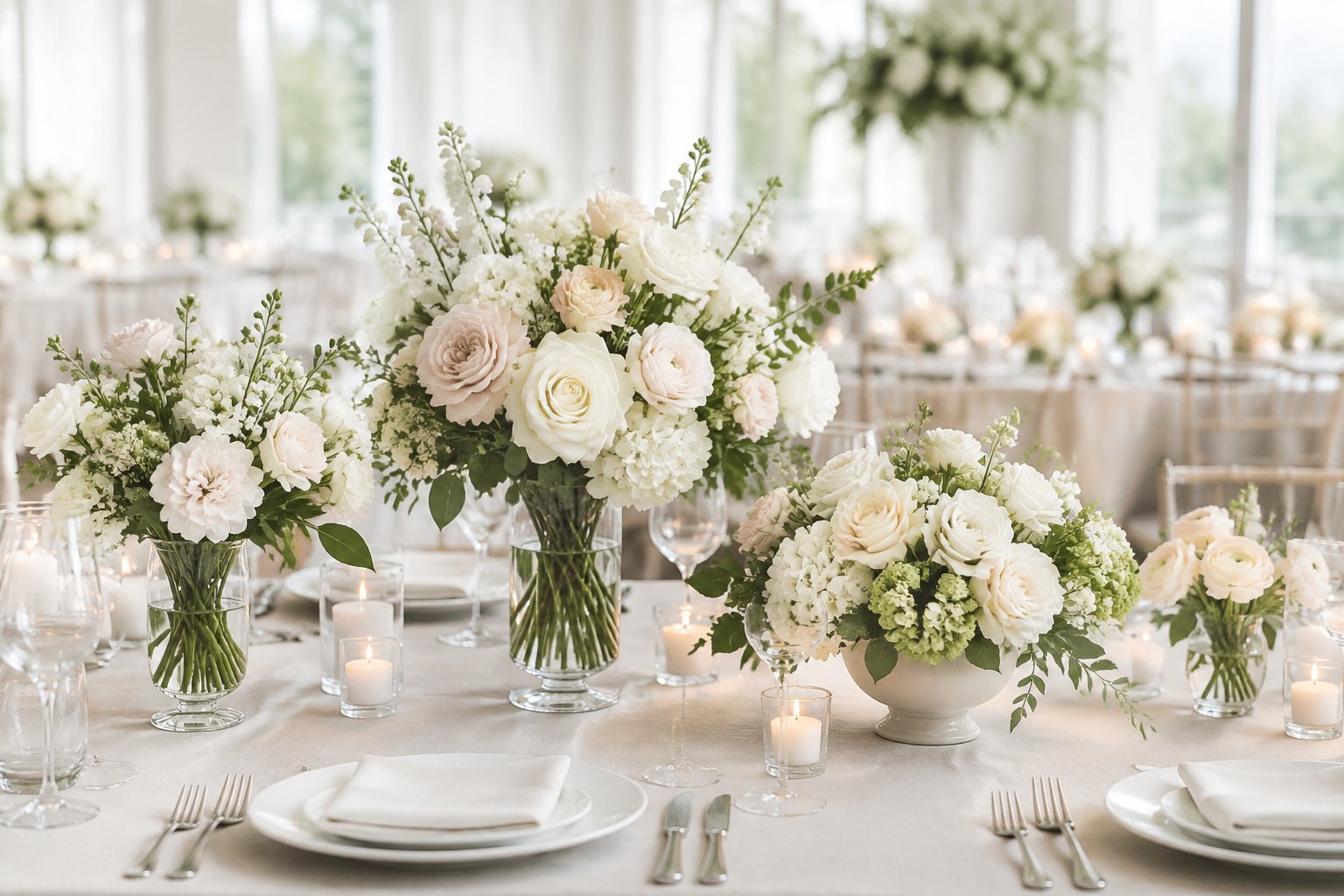
What You Can Expect to Pay Per Reception Table
Plan on $100 to $300 per table for most professional floral centerpieces, with simpler designs below that range and statement pieces above it. Your choice of vessel, flower volume, height, and greenery shifts the price quickly.
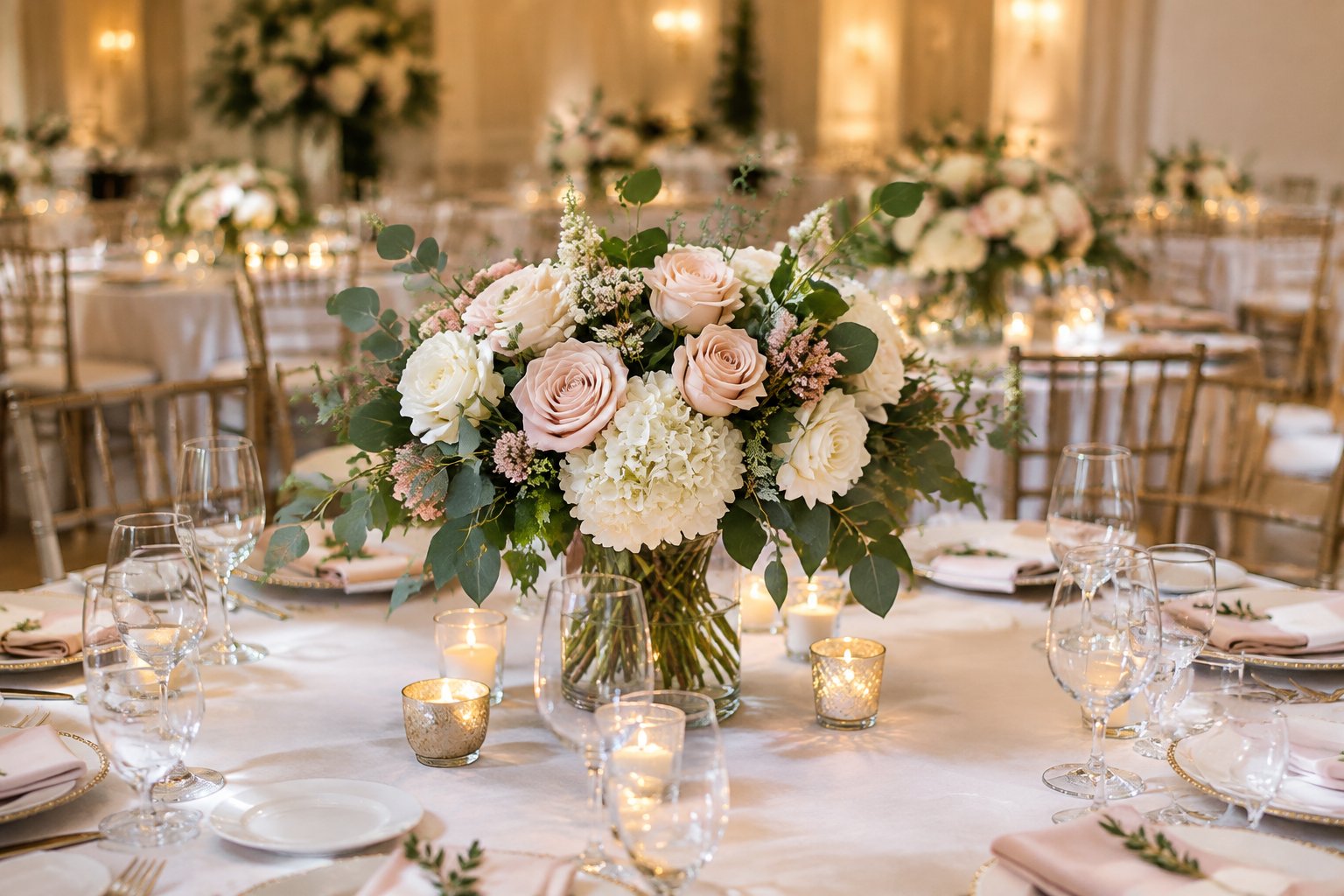
Typical Price Ranges for Floral Centerpieces
A professional florist may quote these broad ranges:
- Simple floral centerpieces: $50 to $150 per table
- Low, lush arrangements: $75 to $250 per table
- Mid-range floral arrangements: $100 to $300 per table
- Tall centerpieces: $250 to $500 or more per table
- Luxury installations: $500 or more per table
Ask whether the quote includes vases, candles, greenery, delivery, setup, and teardown. A lower stem price can become a larger invoice when those services appear as separate charges.
Low Arrangements, Bud Vases, and Greenery Runners
Low arrangements keep conversation open across the table and work well for round tables, long farm tables, and venues with lower ceilings. A compact arrangement in a simple vessel may cost $50 to $150, while a fuller design with more flowers can reach $200 or more.
Bud vases offer one of the easiest ways to control centerpiece costs. A group of three to six small vases with one to three stems each may cost $30 to $75 for a light design or $75 to $225 for a fuller grouping.
Greenery runners range from about $15 to $30 per linear foot for greenery only. Adding flowers can bring the cost to $30 to $60 or more per foot. Candles placed along the runner add warmth without requiring a dense floral design.
Tall and Statement-Making Designs
Tall designs often cost $250 to $500 or more because they need extra stems, sturdy mechanics, elevated vases, and added design labor. Flowers placed high above the table also need enough volume to look full from every angle.
A tall centerpiece works best in a room with generous ceiling height. Ask your florist to keep the flowers above guest eye level so the arrangement frames conversations instead of blocking them.
How to Calculate Your Total Centerpiece Budget
Multiply your per-table estimate by the number of reception tables, then add any separate fees for rentals, delivery, setup, and taxes. This method gives you a working budget before you request detailed proposals.
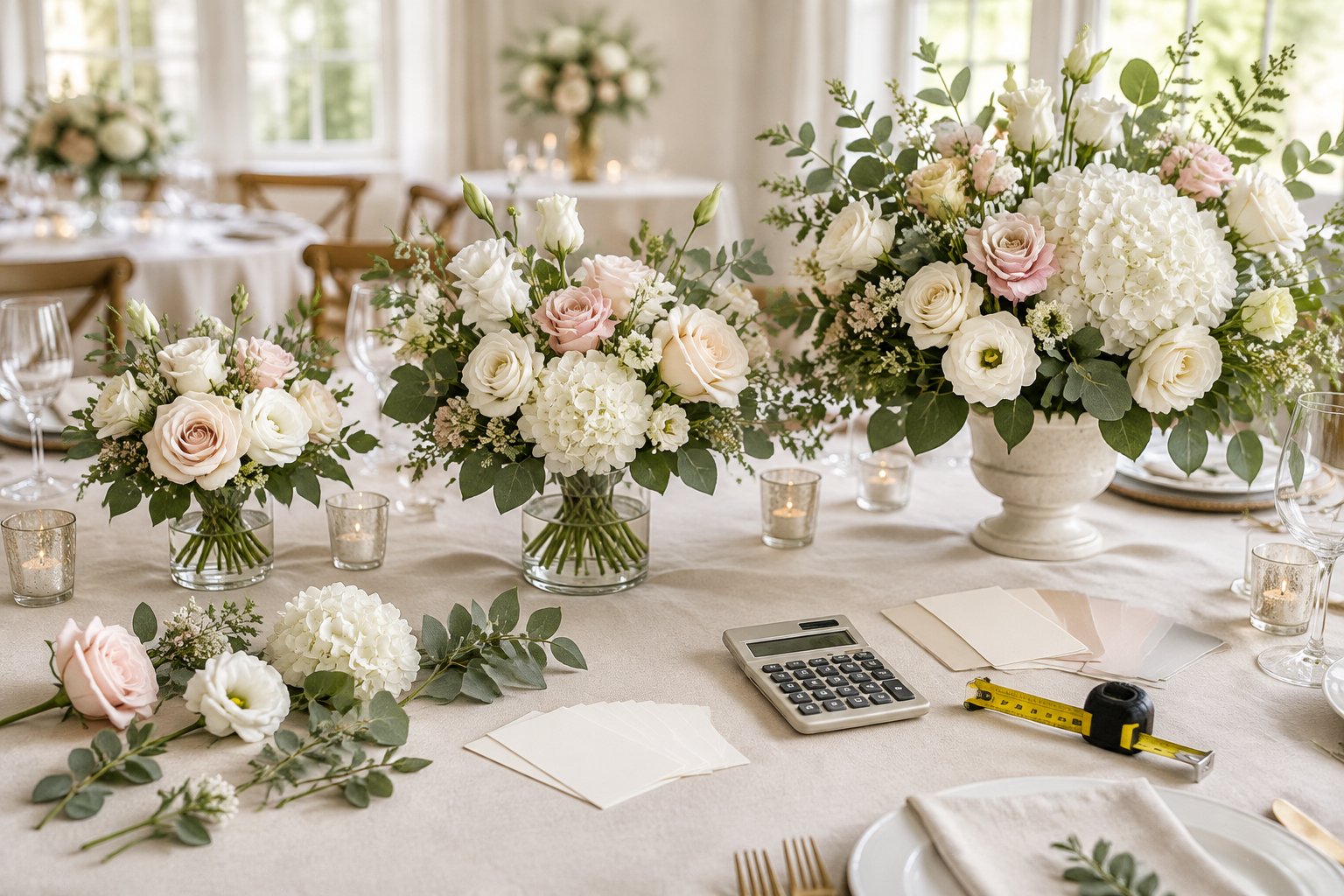
Your wedding venue, guest count, table shape, and geographic location all affect the number and size of arrangements. A professional florist can also adjust the design recipe to fit your budget.
Multiply the Per-Table Price by the Number of Tables
Estimate your table count by dividing the guest count by the seats at each table. A reception with 100 guests and 10-seat tables needs about 10 guest tables. Add separate pieces for the sweetheart table, cake table, welcome table, or bar when those spaces need flowers.
Use this formula:
Number of tables × centerpiece price = estimated centerpiece subtotal
For example, 12 tables at $150 each equal $1,800 before delivery, setup, rentals, and taxes.
Sample Costs for Small, Medium, and Large Receptions
| Reception size | Table count | Low floral style | Mid-range style | Tall or luxury style |
|---|---|---|---|---|
| Small | 8 tables | $400 to $1,200 | $800 to $2,400 | $2,000 to $4,000+ |
| Medium | 15 tables | $750 to $2,250 | $1,500 to $4,500 | $3,750 to $7,500+ |
| Large | 25 tables | $1,250 to $3,750 | $2,500 to $7,500 | $6,250 to $12,500+ |
These figures cover table centerpieces only. Your full floral budget also needs room for personal flowers, ceremony flowers, delivery, and other reception arrangements.
What Is Included in a Florist Quote?
A complete quote may include:
- Flower stems and greenery
- Design labor
- Vases, compotes, stands, or other containers
- Candle rentals or candle supplies
- Delivery to the wedding venue
- Room setup
- Strike or pickup after the reception
- Consultation and proposal work
Request an itemized proposal from each wedding florist. Confirm the tax rate, minimum order, replacement policy for unavailable flowers, rental deposits, and the exact number of arrangements.
What Makes One Arrangement Cost More Than Another?
Flower selection, arrangement size, design complexity, and event logistics create the largest price differences between centerpieces. Two tables with the same color palette can have very different totals when one uses premium blooms or detailed mechanics.
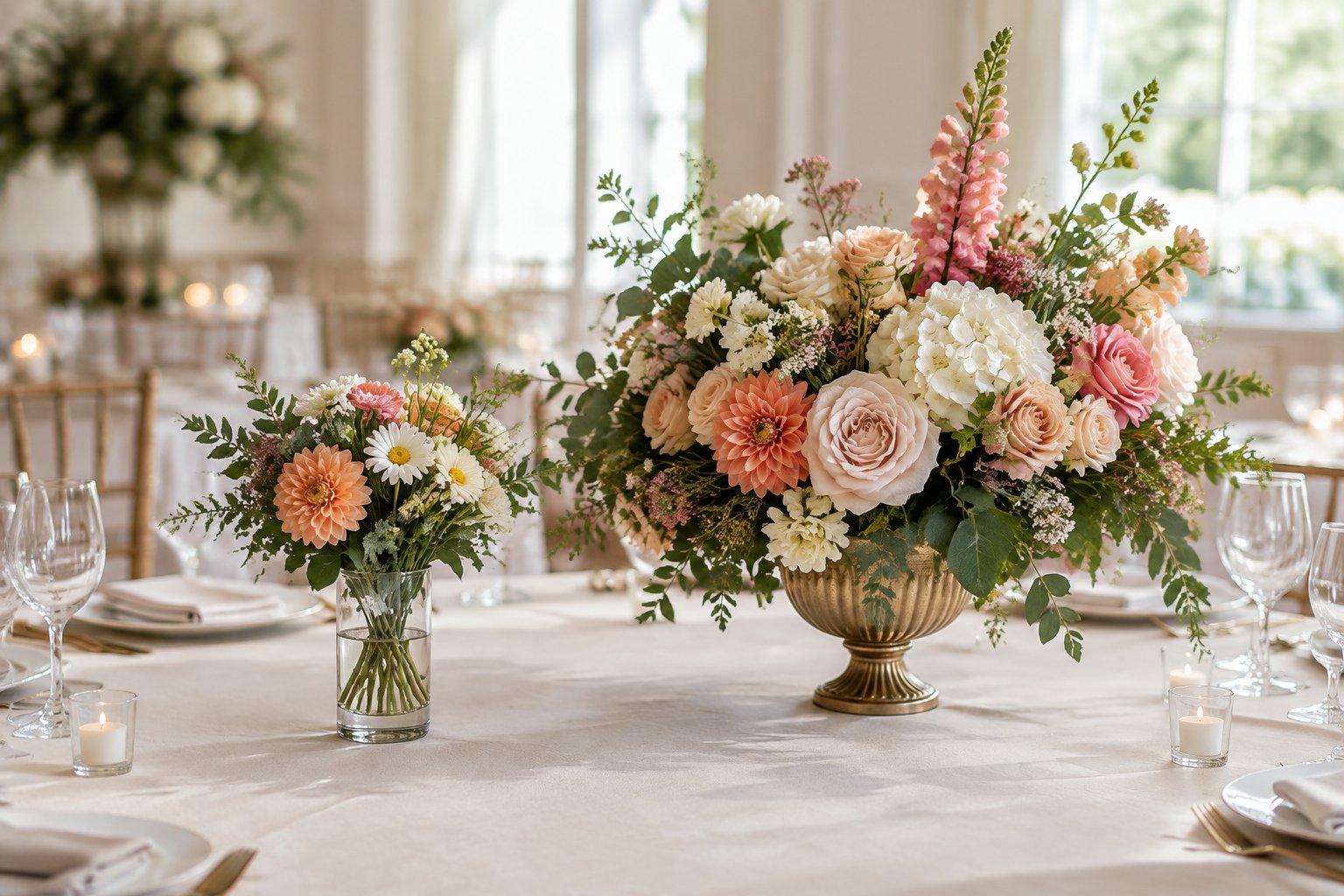
Your floral designer can suggest similar-looking flowers that suit your date, venue, and budget. A flexible flower recipe gives the designer room to respond to market availability.
Fresh, Seasonal, and Premium Flower Choices
Fresh flowers require careful sourcing, hydration, processing, and timing. In-season flowers from nearby growers often cost less because they have shorter shipping paths and better availability.
Premium flowers such as peonies, garden roses, ranunculus, and some dahlias carry higher stem prices. Hydrangeas create volume with fewer stems, while standard roses, lisianthus, sunflowers, baby’s breath, and carnations can help fill arrangements at a lower cost.
Greenery also changes the look and price. Eucalyptus, ruscus, and ferns add shape and volume, though specialty greenery may cost more than common foliage.
Height, Size, and Floral Design Complexity
A larger arrangement uses more flowers, more water, and a larger container. Tall centerpieces also need supports that keep the design stable during delivery and the reception.
A floral designer charges for time spent conditioning stems, building mechanics, arranging each piece, loading supplies, and making adjustments at the venue. Hand-wired details, cascading shapes, hanging elements, and dense installations raise labor costs.
Containers, Rentals, Setup, and Delivery
Vases and specialty containers may be included in the design price or listed as rentals. Elevated stands, candelabras, compotes, and custom vessels can add deposit, cleaning, and replacement charges.
Delivery and setup depend on distance, venue access, room size, and the number of arrangements. A venue with stairs, limited loading access, or a narrow setup window may require additional labor. Ask who returns rental items after the celebration and whether breakdown appears on the invoice.
Which Centerpiece Style Fits Your Budget?
Candle and greenery designs offer the lowest cost, low floral arrangements suit mid-range budgets, and tall designs create the most dramatic effect at the highest per-table price. Your table shape, ceiling height, guest sightlines, and reception style should guide the choice.
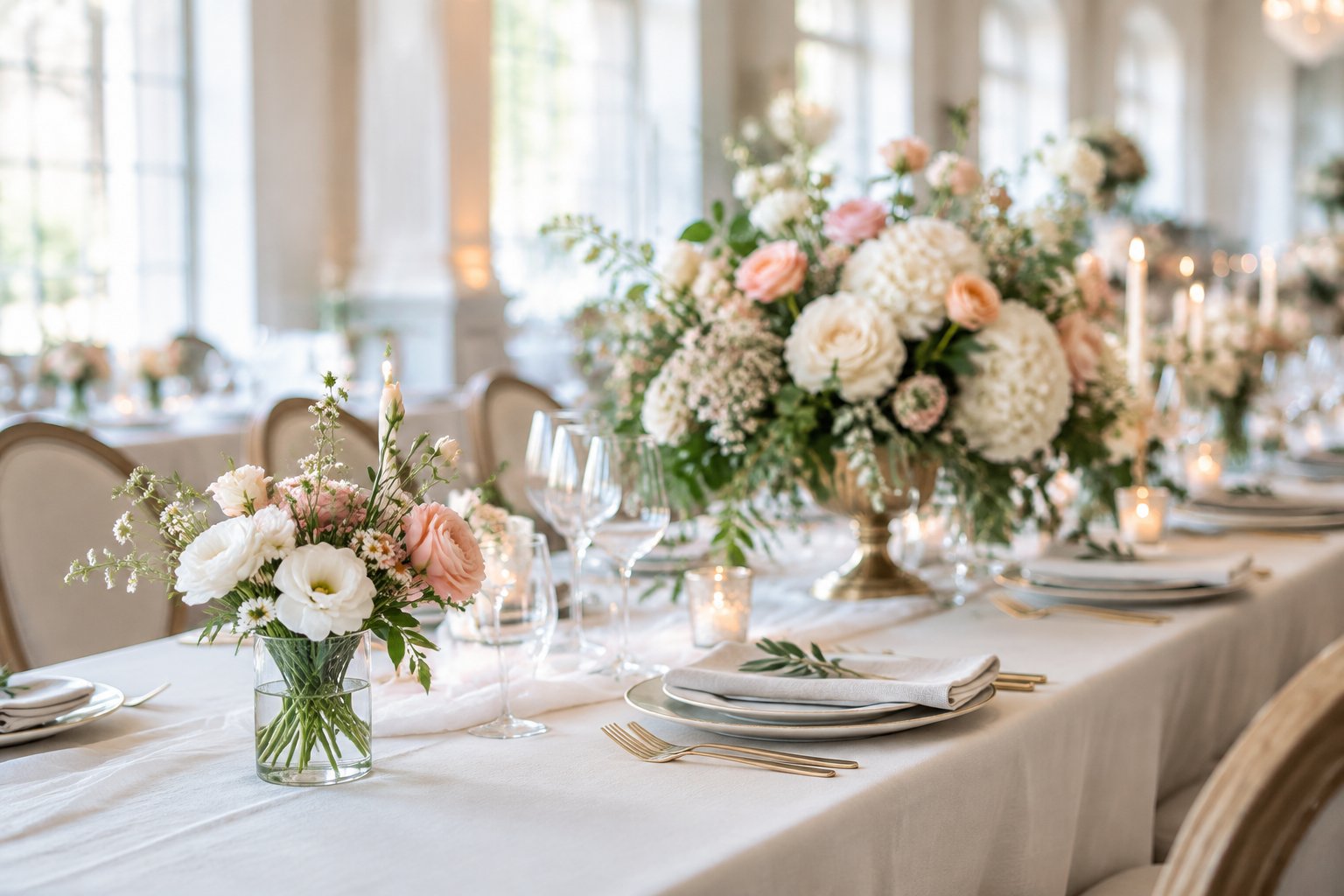
Mixing styles across the room can keep the design cohesive while placing more flowers where guests and photographers will notice them most.
Affordable Candle and Greenery Designs
A cluster of taper candles, greenery, and a few bud vases can create a warm tablescape for about $25 to $100 per table, depending on rentals and flower volume. Greenery runners with LED candles work well for long tables and venues with fire restrictions.
Ruscus, eucalyptus, ferns, herbs, and a few seasonal stems provide texture at a controlled cost. Use a consistent vessel or candle color to keep several low-cost elements looking intentional.
Classic Low Floral Arrangements
Low floral arrangements commonly cost $100 to $250 per table. A compote, ceramic bowl, or low glass vessel gives you a classic shape that keeps the floral design within the conversation zone.
This style suits nearly any reception setting. You can create a fuller appearance by combining standard roses, hydrangeas, lisianthus, seasonal flowers, and greenery, then reserve a smaller number of premium blooms for focal points.
Elevated and Luxury Tablescapes
Tall centerpieces and lush tablescapes start near $250 per table and rise with flower volume, vessel height, and installation work. They suit ballrooms, tents, lofts, and venues with high ceilings.
A luxury design may include elevated floral arrangements, hanging elements, multiple vessels, premium blooms, candles, and coordinated linens. Ask for a design that keeps the base of each table usable for place settings and dining service.
Silk Flowers and Other Non-Floral Alternatives
Silk flowers provide a reusable option for couples who want consistent color and advance setup. Quality, realism, arrangement density, and rental terms affect the price. You can review how much to spend on fake wedding flowers when comparing purchased and rented designs.
Other alternatives include dried flowers, potted herbs, fruit, lanterns, books, and candle clusters. These elements work well alone or alongside a few fresh flowers for texture and scent.
DIY vs. Hiring a Wedding Florist
DIY wedding centerpieces cost less in materials for simple designs, while a professional florist adds design skill, reliable timing, delivery, and venue setup. Your available help, wedding schedule, flower plan, and comfort with fresh flowers should shape the decision.
When DIY Wedding Centerpieces Are Worth It
DIY works well for candles, greenery, single stems, dried flowers, and small bud-vase groups. Bulk orders can lower the stem price, especially when you choose in-season flowers and use the same recipe across every table.
Budget for vases, buckets, floral shears, tape, flower food, water, refrigeration, transport, and replacement stems. You also need a clear plan for buying, conditioning, arranging, storing, and placing each centerpiece.
The Hidden Time, Waste, and Setup Costs of DIY
Fresh flowers arrive on a tight schedule and need cool storage, clean water, and careful handling. Someone must collect the flowers, trim stems, assemble arrangements, transport them, place them at the venue, and clear the materials after the reception.
Waste can increase when stems arrive damaged or a design needs more flowers than expected. Ask a friend, planner, or coordinator to manage setup only if that person has enough time and clear instructions.
When Professional Floral Design Delivers Better Value
A professional florist or floral designer brings sourcing knowledge, design experience, mechanics, delivery equipment, and a trained setup team. This support becomes valuable when you want tall arrangements, many tables, complex color matching, or ceremony flowers moved to the reception.
A hybrid plan can control costs: hire a wedding florist for the ceremony focal point, bridal flowers, and statement tables, then use candles or simple greenery on guest tables. Compare the full service quote with your DIY supply list before choosing. You can also read should you hire a florist for a wedding for help weighing time and service.
How to Stretch Your Floral Budget Without Losing Impact
Choose seasonal flowers, reuse ceremony pieces, concentrate large designs in visible areas, and coordinate centerpieces with personal flowers. These changes lower waste while preserving a finished look throughout the wedding venue.
Choose Seasonal Blooms and Flexible Flower Recipes
Ask your florist which flowers will be in season on your wedding date. Give a color palette and preferred texture, then allow substitutions among similar flowers. Standard roses, dahlias, hydrangeas, lisianthus, sunflowers, and local seasonal blooms can create volume without relying on one expensive variety.
Use premium flowers as accents and fill the rest of each arrangement with greenery and affordable blooms. A flexible recipe also helps your florist respond to supply changes without redesigning every table.
Use Ceremony Flowers Again at the Reception
Plan the move before signing the floral proposal. Altar arrangements can decorate the sweetheart table, aisle clusters can frame the cake table, and ceremony flowers can be placed near the bar or entrance.
Confirm who transports each piece, when the move happens, and whether the venue allows rearrangement during the event. A coordinator or florist assistant can handle the transition while guests move to the reception.
Prioritize a Few High-Impact Tables
Place your largest floral budget on the sweetheart table, head table, guest entrance, cake table, or a room focal point. Use smaller arrangements, candles, or greenery for the remaining tables.
This approach gives photographers several strong details while keeping the number of premium pieces manageable. Ask your florist to repeat one color, flower, or vessel throughout the room so the designs feel connected.
Balance Centerpieces With Personal Flowers
Your floral budget also covers the bridal bouquet, wedding bouquet, bridesmaid bouquets, boutonnieres, corsages, and toss bouquet. Count these pieces before setting a centerpiece limit.
If your bridal bouquet uses premium flowers, repeat those blooms in one reception arrangement and use lower-cost flowers elsewhere. Bridesmaid bouquets can later move to the sweetheart table or gift table when the ceremony ends.