
Average Price of Wedding Flowers: 2026 Cost Guide
For most U.S. couples, the average price of wedding flowers in 2026 is about $2,500 to $5,000, with many couples spending close to $2,800 for a moderate floral plan. A smaller order may land near $1,500, while full-service designs with large installations can reach $7,500 or more.
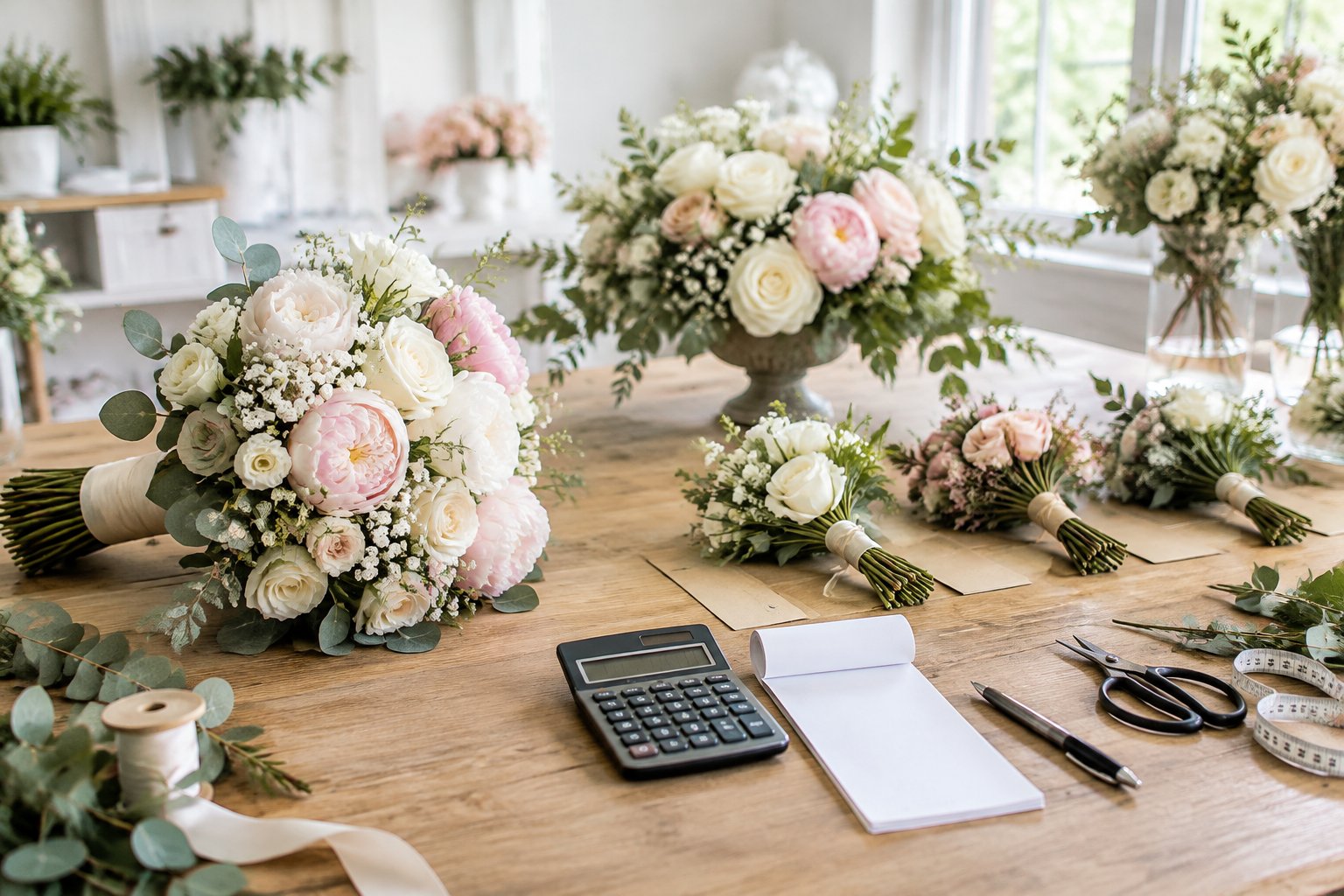
Your wedding flower costs cover more than stems. Personal flowers, ceremony décor, reception centerpieces, delivery, setup, design labor, rentals, and cleanup all shape the final wedding flower budget.
A helpful starting point is 8% to 10% of your total wedding budget, adjusted for your guest count and design goals. Set your floral budget before you choose specific blooms, then share it openly with a professional florist. You can also use wedding flower ideas to define your style before requesting quotes.
What Is a Realistic Wedding Floral Budget?
A realistic wedding flower budget falls between $2,500 and $5,000 for many U.S. weddings, with smaller plans near $1,500 and statement designs above $7,500. Your venue, guest count, flower choices, and need for installations decide where your wedding flower cost lands.

Typical 2026 Spending Ranges
Use these ranges to set an early planning target:
- Simple floral plan: $1,000 to $2,000
- Moderate wedding flowers: $2,500 to $5,000
- Full-service floral design: $5,000 to $8,000
- Large installations or luxury blooms: $8,000 and above
A simple plan might include a bridal bouquet, a few personal flowers, limited ceremony décor, and small reception arrangements. A moderate plan adds bridesmaid bouquets, centerpieces, aisle flowers, and professional delivery and setup.
A full-service florist quote can include a ceremony arch, hanging floral installations, tall centerpieces, a flower wall, specialty rentals, and a large design crew.
How Much of the Wedding Budget Should Go to Flowers?
Plan to spend about 8% to 10% of your total wedding budget on flowers. For a $30,000 wedding, that creates a floral budget of about $2,400 to $3,000. A $50,000 wedding supports a starting range of $4,000 to $5,000.
Your priorities can move that percentage. A garden venue with built-in beauty may need fewer flowers. A plain ballroom with a floral arch and large centerpieces may require more. A wedding planner can help you decide which spaces deserve the largest share.
Keep a separate allowance for taxes, delivery, setup, breakdown, rentals, and last-minute changes. Ask your florist whether those charges appear inside the quote or as separate line items.
How Guest Count Changes the Total
Guest count affects your wedding flower costs through table quantity and personal flowers. More guests require more centerpieces, place settings, aisle seating, and members of the wedding party.
A 50-guest wedding may spend $2,000 to $4,500 with focused designs. A 100-guest wedding with 10 to 12 tables may fall near $3,500 to $7,000. A 150-guest celebration can pass $8,000 when the plan includes large centerpieces or floral installations.
Your venue layout also matters. Long banquet tables may need continuous floral runners. Round tables may use one arrangement each, which makes the number of tables easy to calculate.
What Does Each Wedding Floral Item Cost?
Personal flowers often cost less than large ceremony and reception designs, while centerpieces and installations drive the largest increases. A clear item list helps you compare a florist quote with your wedding flower budget.
How Much Does a Bridal Bouquet Cost?
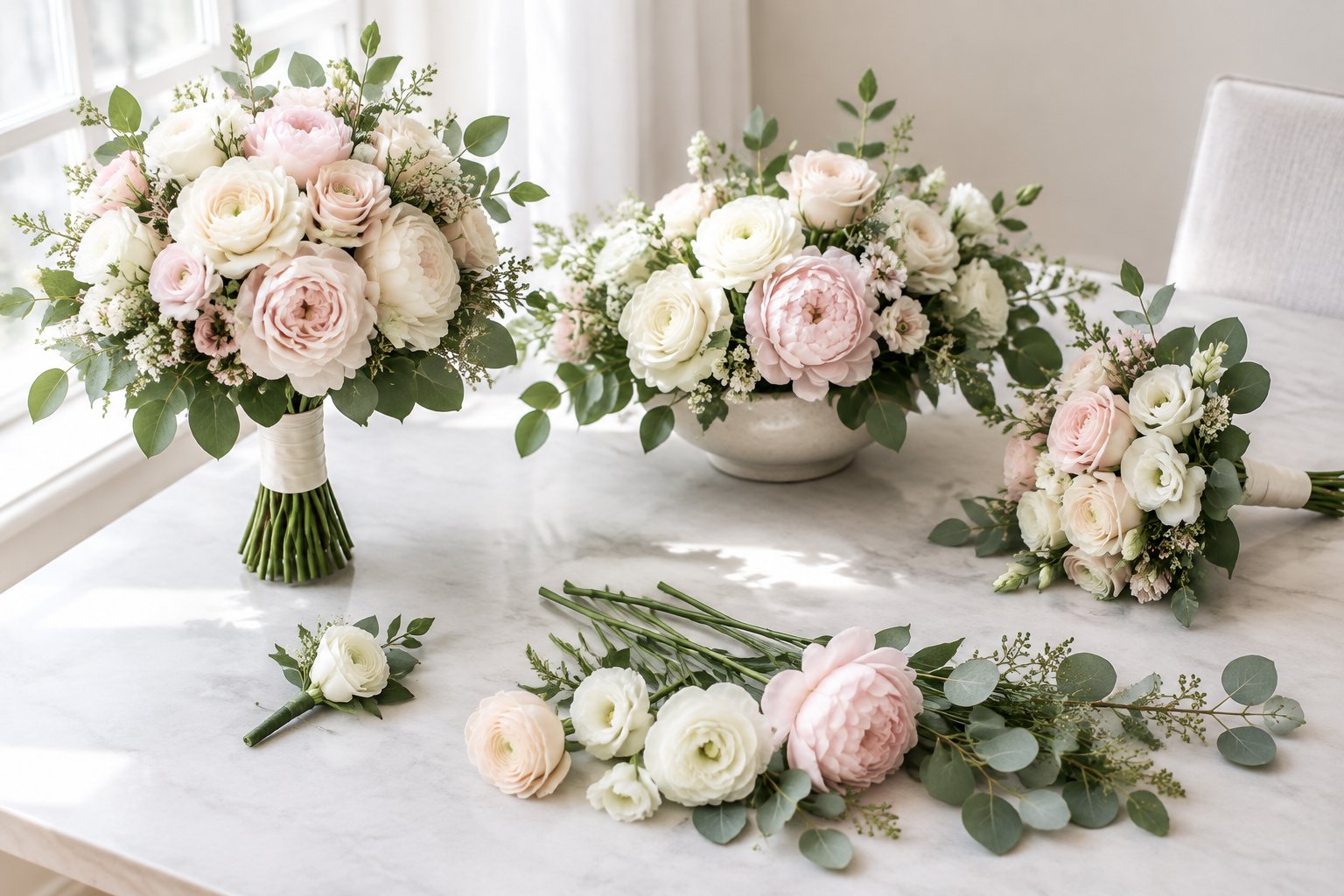
A bridal bouquet costs about $150 to $500 in 2026, with a smaller hand-tied bouquet near the lower end and a large, loose, or premium design at the top.
The average cost of a bridal bouquet rises with size, flower variety, ribbon, cascading shape, and labor. Peonies, garden roses, orchids, and lily of the valley push the price higher. A compact bouquet of standard roses, carnations, seasonal blooms, and greenery keeps the bridal bouquet cost more controlled.
For more planning detail, compare how much is the average bridal bouquet with your preferred bouquet shape and flower mix.
What Do Bridesmaid Bouquets and Personal Flowers Cost?
Common 2026 ranges include:
- Bridesmaid bouquets: $65 to $200 each
- Boutonnieres: $15 to $50 each
- Corsages: $30 to $75 each
- Wrist corsage: $35 to $85
- Flower girl basket: $35 to $100
- Flower girl petals: $15 to $50
- Toss bouquet: $40 to $100
- Hair flowers: $25 to $150
A larger wedding party increases the total through both materials and design time. Matching every personal flower to the bridal bouquet also raises sourcing and preparation work.
You can create a unified look with smaller bouquets, simplified boutonnieres, or a shared color palette.
What Do Ceremony and Reception Flowers Cost?
Ceremony and reception flowers can range from $1,000 for focused décor to more than $10,000 for large-scale installations.
- Aisle markers: $50 to $150 each
- Altar arrangements: $100 to $500 or more
- Ceremony arch: $500 to $2,500 or more
- Floral arch: $1,000 to $5,000 or more
- Low reception centerpieces: $75 to $250 each
- Tall reception centerpieces: $200 to $600 or more each
- Sweetheart table flowers: $150 to $700
- Cake flowers: $50 to $200 or more
Reception centerpieces multiply quickly because you need one design for each table. A 12-table reception with $150 centerpieces creates an $1,800 centerpiece line before delivery, setup, and tax.
What Do Smaller Floral Extras Cost?
Small details add polish, though they still need space in your floral budget. Cake flowers, toss bouquets, hair flowers, welcome-table arrangements, and flower girl petals can add several hundred dollars.
Ask your florist to group these details into one proposal. That approach makes it easier to trade a lower-priority item for a larger bouquet or stronger ceremony focal point.
You can also place bridesmaid bouquets near the cake table or sweetheart table after the ceremony when the design allows it.
Which Choices Raise or Lower Your Florist Quote?
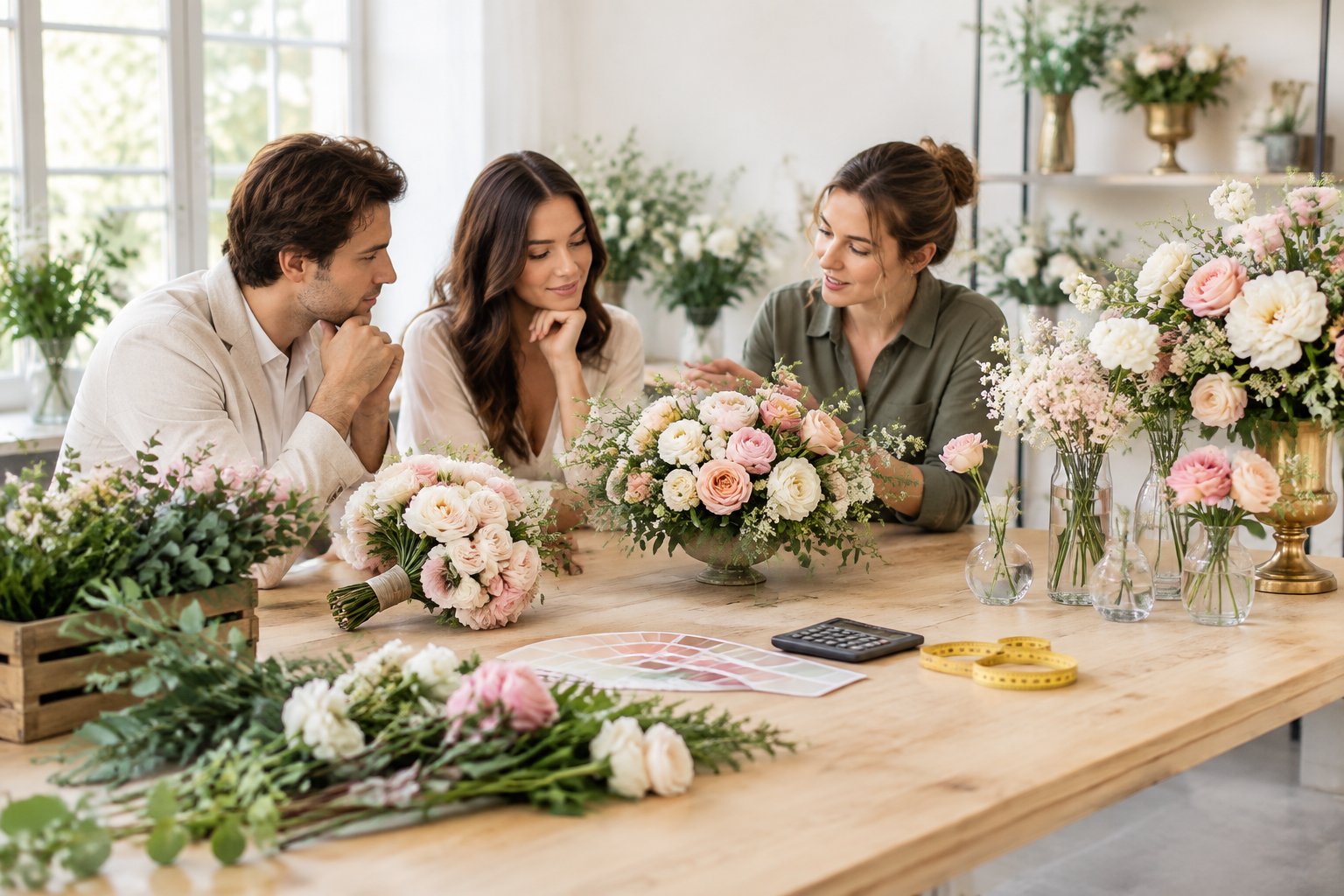
Your florist quote reflects flower supply, arrangement size, design complexity, labor, delivery, setup, rentals, and cleanup. In-season flowers and a focused design reduce costs, while imported blooms and large floral installations increase them.
Why Flower Variety and Season Matter
In-season flowers cost less when local supply is strong. Out-of-season flowers may require special ordering, longer shipping, or imported stock, which increases the stem price and sourcing work.
Your wedding florist can suggest similar blooms that match your preferred shape and color. Standard roses, carnations, daisies, alstroemeria, and seasonal greenery offer flexible choices. Locally grown flowers also reduce transport needs in many markets.
Fresh flowers need careful handling from delivery through the event. Delicate blooms require more preparation and may carry extra risk during transport. Ask which flowers are available during your wedding month before you build your design around a single variety.
How Design Scale and Labor Affect Pricing
Large designs require more stems, mechanics, vessels, team members, and installation time. A full floral arch takes more work than a vase arrangement, even when both use the same flowers.
Labor rises with:
- Oversized bouquets
- Cascading shapes
- Hanging floral installations
- Flower walls
- Tall centerpieces
- On-site construction
- Room flips between ceremony and reception
- Breakdown and removal
Potted plants can provide volume with less stem work, especially in lounge areas or along an aisle. Your florist may also use rental structures, reusable vessels, and greenery to create scale without filling every surface with flowers.
What a Full-Service Florist Quote Usually Covers
A full-service florist quote may include design planning, flower sourcing, conditioning, arranging, delivery, venue setup, installation, rentals, breakdown, and cleanup. Each proposal handles these items differently, so read the service details before comparing totals.
Ask whether the quote includes:
- Personal flowers
- Ceremony décor
- Reception centerpieces
- Floral installations
- Delivery mileage
- Setup and teardown
- Rental vessels or structures
- Tax and service fees
- Weather or substitution terms
Give your florist a spending range and a list of priorities. A clear budget lets the professional florist place premium flowers where guests will see them most.
Which Flowers Fit Different Price Points?
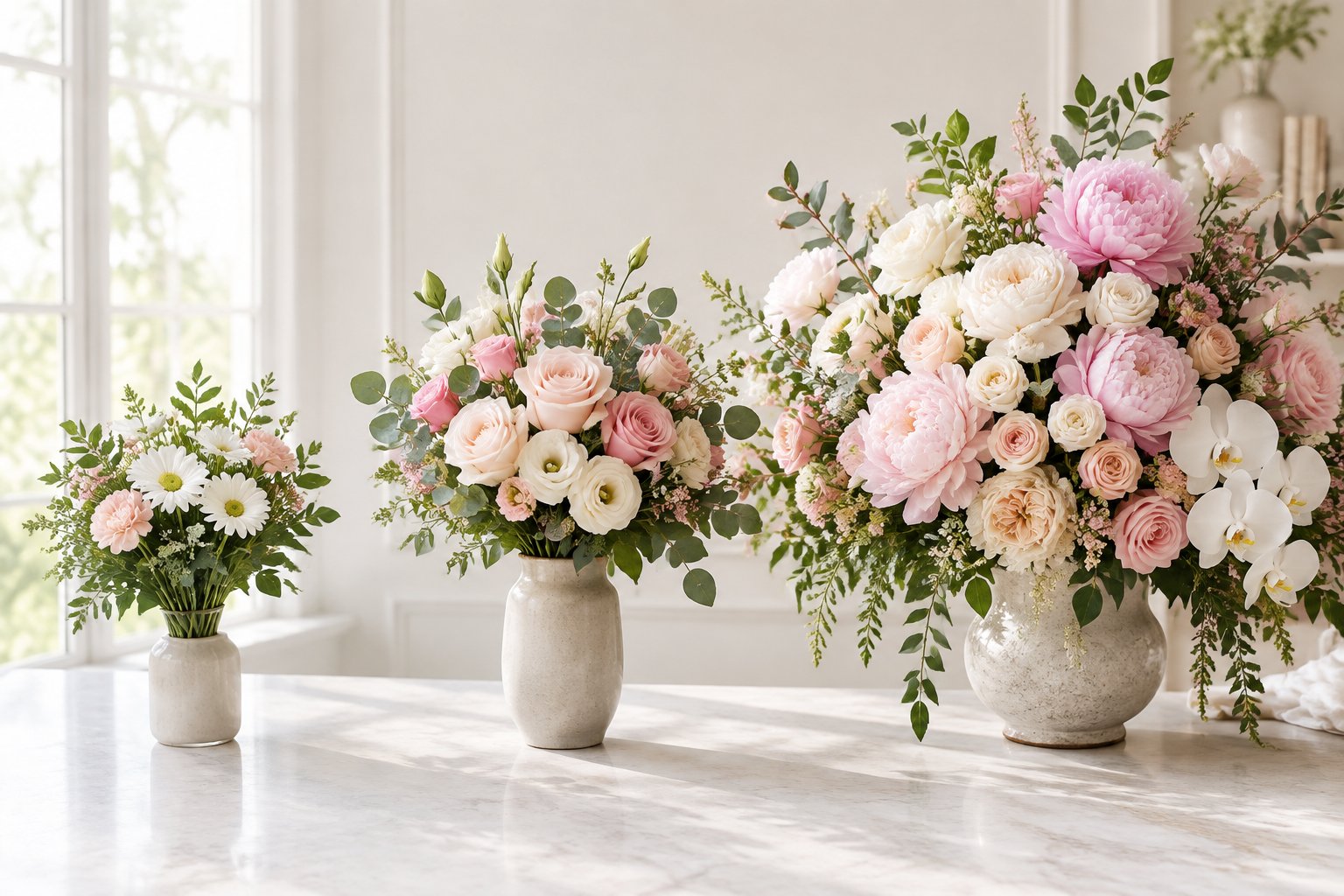
Budget-friendly flowers create fullness, mid-range blooms support classic wedding designs, and premium flowers bring a higher stem cost through seasonality, scarcity, or delicate handling. Mixing price points gives you control over the final floral budget.
Budget-Friendly Flowers That Still Look Special
These flowers offer strong value and work across bouquets, centerpieces, and ceremony arrangements:
- Carnations
- Daisies
- Alstroemeria
- Chrysanthemums
- Baby’s breath
- Stock
- Standard roses
- Sunflowers
- Zinnias
Carnations provide dense texture and come in many colors. Alstroemeria lasts well in arrangements, while baby’s breath creates airy volume. Stock adds height and fragrance without requiring a large number of premium stems.
Greenery also stretches a design. Eucalyptus, ferns, and ruscus add movement and fullness around a smaller number of focal blooms.
Mid-Range Blooms for Classic Designs
Mid-range flowers give you a polished look with moderate pricing:
- Tulips
- Lisianthus
- Hydrangeas
- Lilies
- Calla lilies
- Ranunculus
- Dahlias
- Amaryllis
- Anemones
Availability affects these flowers throughout the year. Hydrangeas fill a vase quickly, while tulips and ranunculus create a refined seasonal look. Your florist can combine mid-range flowers with standard roses or stock to keep the design full.
Premium Flowers That Increase Costs
Premium blooms include:
- Garden roses
- Peonies
- Orchids
- Lily of the valley
- Specialty dahlias
- High-grade calla lilies
Peonies and garden roses bring large heads and a romantic garden style, though they carry higher prices during limited seasons. Orchids require careful sourcing and handling. Lily of the valley is delicate and scarce, which makes it one of the costliest wedding flowers.
Use premium blooms in the bridal bouquet, ceremony focal point, or sweetheart table. Surrounding them with affordable flowers and greenery lets you keep their visual impact without using them in every arrangement.
You can also compare which flowers are most expensive for a wedding before choosing your must-have blooms.
How Can You Save Money on Wedding Flowers?
The strongest savings come from prioritizing visible areas, choosing seasonal flowers, reusing arrangements, and simplifying labor-heavy designs. You can lower your wedding flower cost while keeping a polished look.
Prioritize High-Impact Floral Moments
Spend first on the pieces that appear in the most photos and stay in front of guests:
- Bridal bouquet
- Ceremony focal point
- Reception centerpieces
- Sweetheart table
- Cake flowers
Use candles, linens, potted plants, or smaller bud vases in lower-priority areas. A few large arrangements placed at the entrance or bar can create a focal point without decorating every surface.
Ask your florist to create one signature design and repeat its colors or foliage in smaller arrangements. Fewer flower varieties also make bulk purchasing easier.
Reuse Ceremony Flowers at the Reception
Repurpose ceremony flowers when the venue layout and schedule allow it. Aisle markers can move to the bar or head table, arch flowers can be rearranged near the sweetheart table, and bridesmaid bouquets can sit in vases after the ceremony.
Plan this move before signing the proposal. A room flip requires transport, labor, and timing, so the added service fee needs to be compared with the cost of new reception flowers.
Greenery such as eucalyptus, ferns, Italian ruscus, and olive branches adds volume during both parts of the day. Ask your florist which pieces can survive the move without losing their shape.
When DIY, Wholesale, or Silk Flowers Make Sense
DIY flowers fit a small order with simple bouquets, bud vases, or single-flower arrangements. Fresh flowers need conditioning, cool storage, and assembly close to the wedding, so assign the work to someone who can manage it without taking time from the celebration.
Wholesale flowers from suppliers such as FiftyFlowers can lower stem costs when you know the quantities and have help with preparation. Build in time for processing, supplies, transport, and waste before comparing the total with a professional florist.
Silk flowers work well for arches, rentals, keepsake bouquets, and designs you want to assemble weeks ahead. Order samples first because color, texture, and quality vary across products. Compare how much to spend on fake wedding flowers with your fresh-flower proposal.
Sample Flower Budgets for Different Wedding Styles
Sample budgets show how the same floral budget can support different priorities. The plans below use personal flowers, ceremony décor, reception centerpieces, labor, delivery, and tax as separate planning categories.
A Simple Budget Wedding Floral Plan
Estimated floral budget: $1,800 to $2,500
- Bridal bouquet: $250
- Four bridesmaid bouquets: $300
- Boutonnieres and corsages: $250
- Focused ceremony flowers: $450
- Six simple reception centerpieces: $450
- Delivery and setup: $300
This plan uses seasonal flowers, greenery, and compact designs. It skips a full ceremony arch and places the strongest floral detail on the bridal bouquet and ceremony focal point.
Carnations, standard roses, baby’s breath, stock, and eucalyptus can create fullness at this price. Repurposing the ceremony flowers at the reception adds another focal point without ordering a second large design.
A Mid-Range Wedding Floral Plan
Estimated floral budget: $3,500 to $5,000
- Bridal bouquet: $350
- Five bridesmaid bouquets: $650
- Personal flowers: $500
- Ceremony arch accents and aisle markers: $1,000
- Ten reception centerpieces: $1,250
- Cake flowers and sweetheart table: $400
- Delivery, setup, and breakdown: $600
This plan supports a cohesive look across a medium-size wedding. It can include hydrangeas, lisianthus, ranunculus, standard roses, seasonal dahlias, and greenery.
Add a few garden roses or peonies to the bridal bouquet and ceremony focal point, then use more affordable flowers across the tables. A mid-range plan benefits from clear reuse instructions, especially when the ceremony and reception share a venue.
A Statement-Focused Floral Plan
Estimated floral budget: $7,500 to $10,000 or more
- Bridal bouquet: $500
- Wedding party flowers: $1,000
- Full ceremony arch: $2,500
- Aisle and welcome flowers: $750
- Reception centerpieces: $2,000
- Sweetheart table and cake flowers: $750
- Delivery, installation, breakdown, rentals, and labor: $2,000
This design centers the wedding around a dramatic ceremony arch, lush reception tables, and premium flowers such as garden roses and peonies. Large floral installations require a design team, sturdy mechanics, delivery planning, and venue access.
If you want a statement look with tighter spending, reserve premium flowers for the arch and bridal bouquet. Use seasonal greenery, hydrangeas, standard roses, and locally grown blooms to carry the remaining arrangements.