
Average Wedding Band Cost: Rings and Live Music
For most U.S. couples, the average wedding band cost is about $500 to $2,000 per ring, while a live wedding band commonly costs $3,000 to $8,000 for the reception. Your final wedding budget depends on materials, gemstones, ring design, musician count, location, performance time, and production needs.
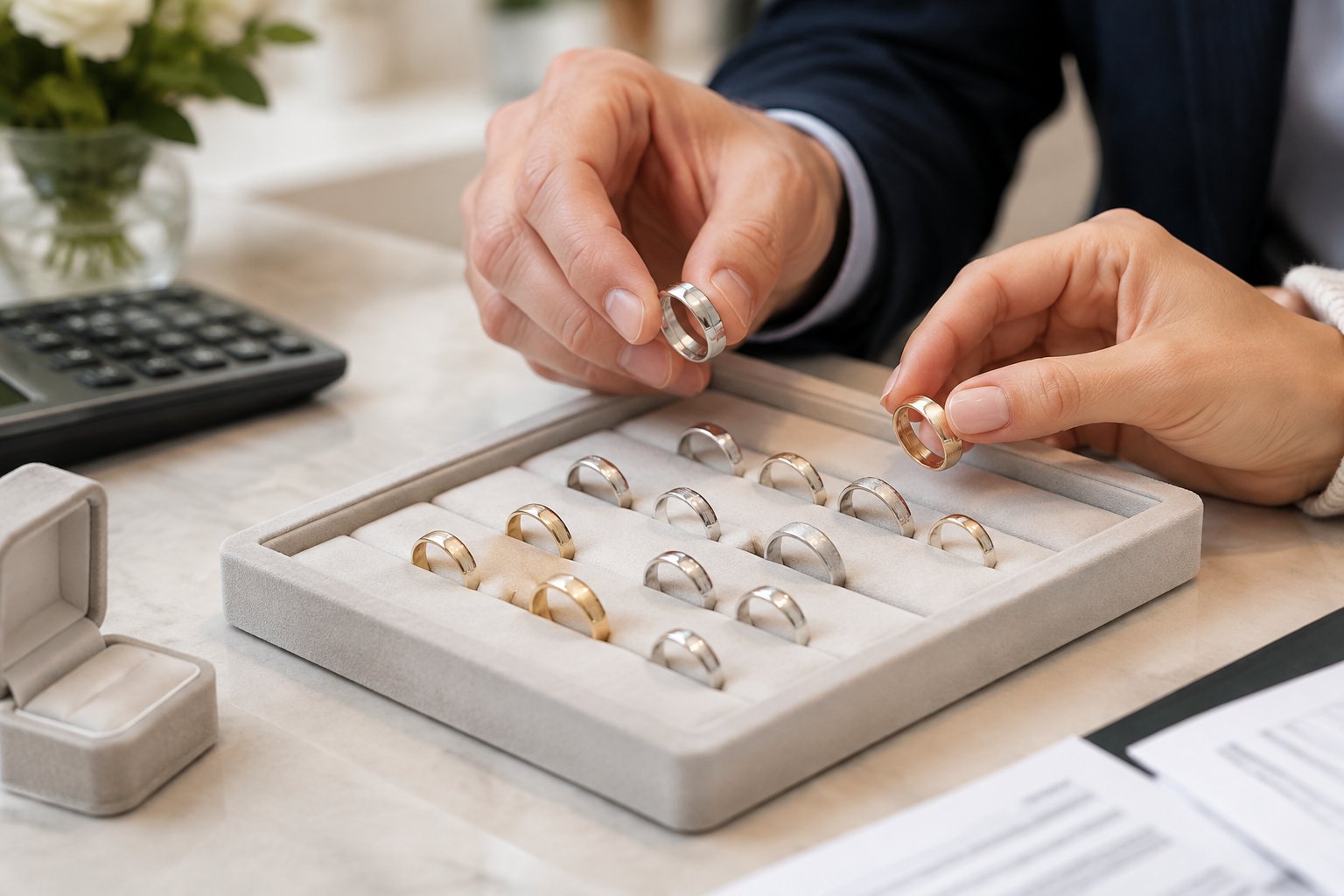
The phrase “wedding band” covers two different purchases: wedding rings exchanged during the ceremony and a live wedding band hired to perform at your reception. Keeping these costs separate gives you a clearer view of your spending.
You can set a comfortable budget by pricing the rings first, then requesting detailed quotes from live music providers. As you compare options, keep your priorities visible so each choice supports the celebration you want.
What Does “Wedding Band” Mean for Your Budget?
A wedding band can mean a ring you wear or a group of musicians you hire, so your budget needs two separate line items. Wedding bands for your hands often cost hundreds or a few thousand dollars, while a live wedding band for your reception can cost several thousand dollars.
Wedding Ring Costs vs. Live Music Costs
Wedding ring cost covers the jewelry you and your partner exchange. A plain 14k gold ring may sit near the lower end of the price range, while platinum, wider bands, diamond wedding bands, and custom designs raise the total.
Live music cost covers the musicians and the services needed for a performance. A small acoustic group may cost about $1,000 to $3,000, while a professional five- to eight-piece live wedding band often costs $3,000 to $7,000. Premium groups with larger lineups and full production may reach $10,000 or more.
Why the Two Costs Should Be Budgeted Separately
Ring prices follow jewelry factors such as metal weight, ring width, gemstone quality, and craftsmanship. Music quotes follow event factors such as the number of musicians, set length, travel distance, sound equipment, and lighting equipment.
Separating these categories helps you protect essential purchases. You might choose 14k gold to preserve funds for reception music, or book a smaller group while selecting a custom wedding ring.
What Is a Typical Price for Wedding Rings?
A typical wedding ring costs about $400 to $1,800 per ring, with many couples spending around $1,200 to $3,500 for both wedding bands. Plain metal styles sit near the lower end, while diamond-accented and custom designs move higher.
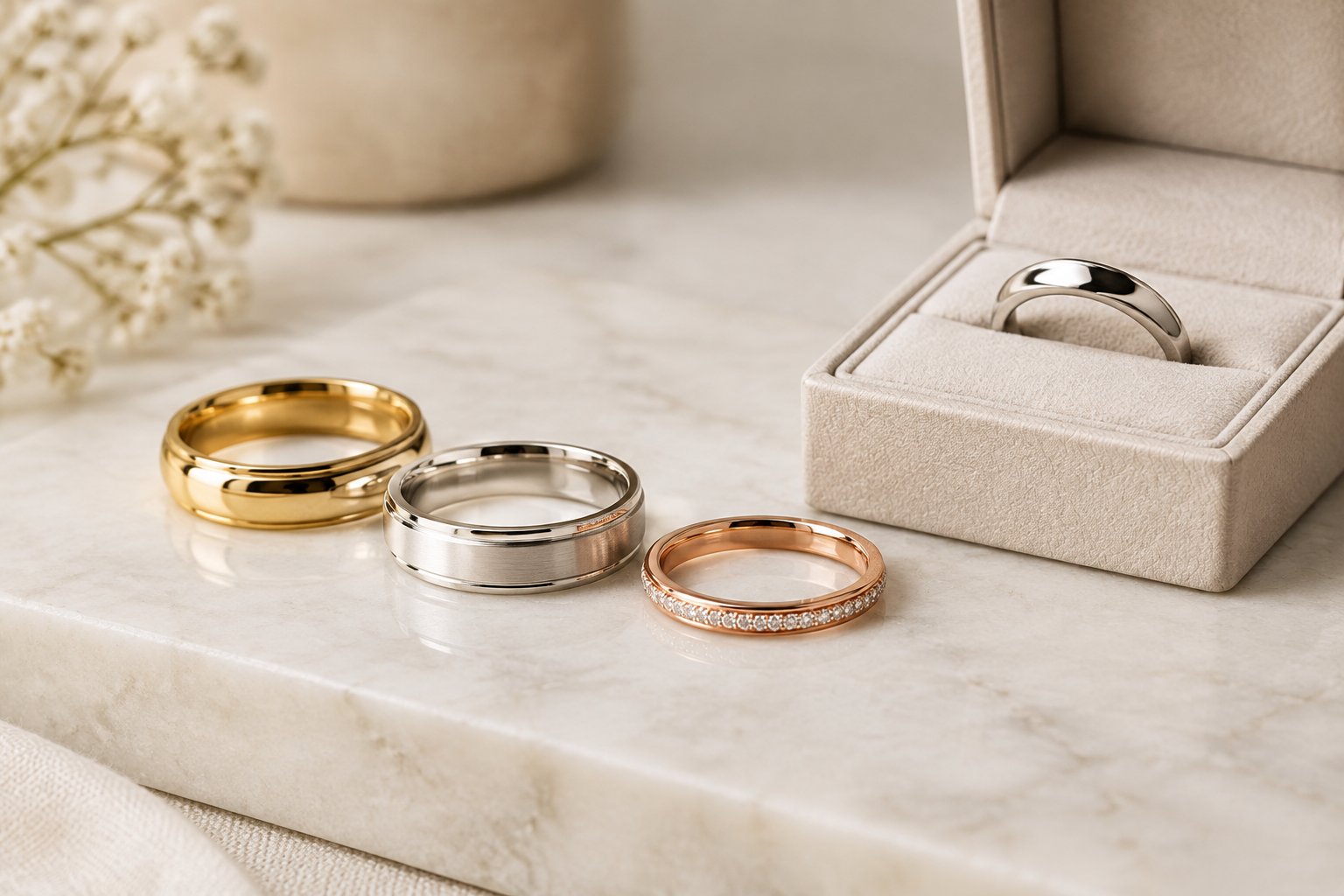
Your final price reflects the ring’s metal, width, gemstone details, and design work. For more planning context, you can compare how much are wedding rings on average before choosing a spending limit.
Average Cost for Women’s Wedding Bands
Women’s wedding bands often cost about $600 to $1,800. A narrow gold band with a smooth finish may cost less, while a contoured ring designed to sit beside an engagement ring requires extra shaping and fitting.
Diamond accents also raise the price. A half-eternity style with stones across the front costs less than a full eternity band with diamonds around the entire ring. Custom engraving, milgrain, filigree, and mixed-metal details add labor.
Average Cost for Men’s Wedding Bands
Men’s wedding bands often range from $400 to $1,000 for straightforward designs. A 14k gold or alternative-metal band with a moderate ring width gives you an accessible starting point.
A wider band uses more material and increases the price. Platinum, 18k gold, custom finishes, interior engraving, and diamond accents push the cost above the basic range. Comfort-fit shaping also affects the design and fit, though its price impact depends on the retailer.
How Wedding Bands Compare With Engagement Ring Cost
The average engagement ring cost is higher because the ring usually includes a prominent center stone and a detailed setting. Many couples spend around $5,000 to $10,000 on an engagement ring, while wedding bands often stay below $2,000 each.
Your engagement ring and wedding band still need to work together. A simple wedding band may balance a detailed engagement ring, while a matching bridal set gives you a coordinated look at a combined price.
Which Ring Choices Raise or Lower the Price?
Metal, band width, gemstones, and design complexity create the largest changes in wedding band prices. You can lower the cost by choosing 14k gold or an alternative metal, then add detail selectively where it has the strongest visual effect.
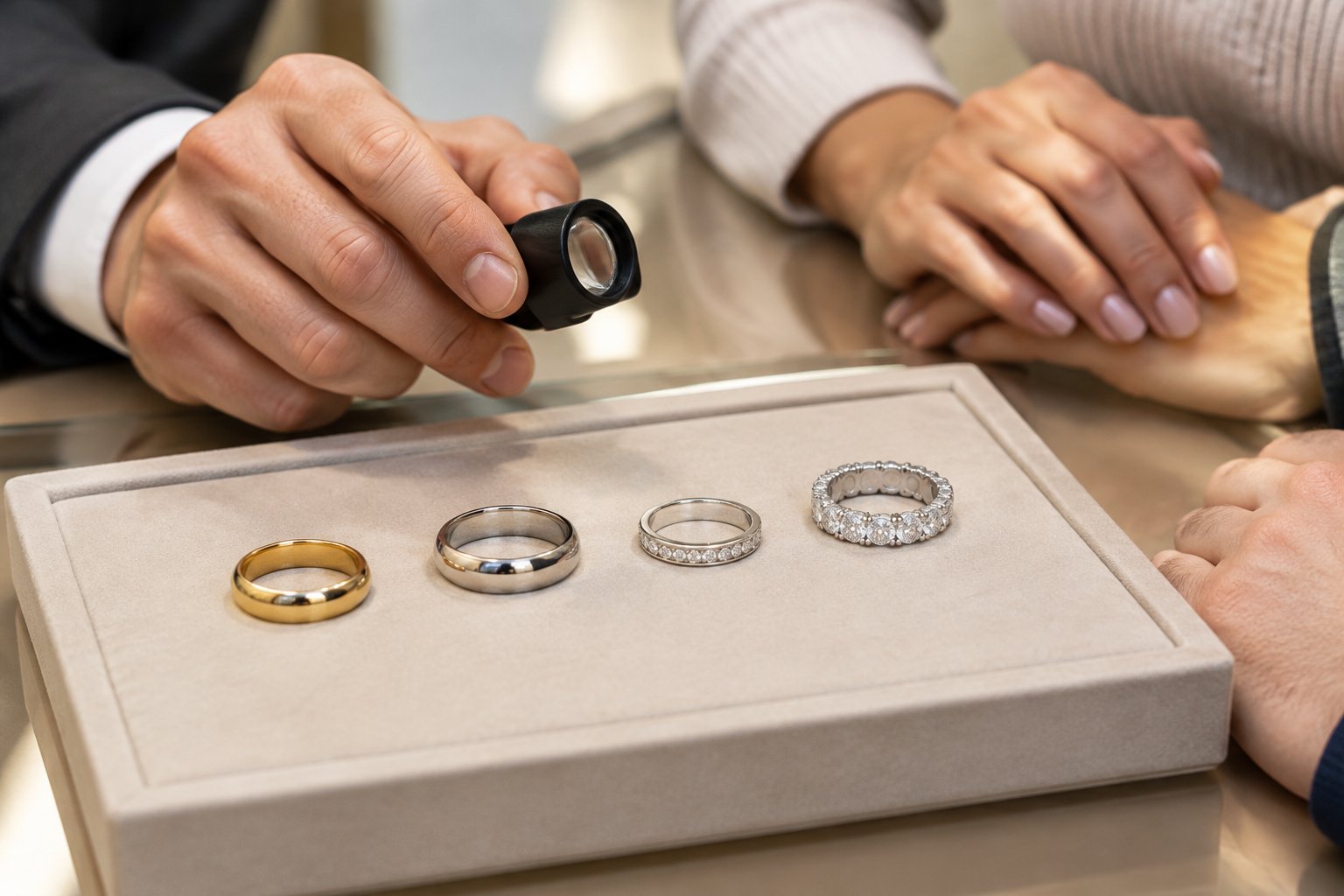
How Metal Type and Band Width Affect Cost
Platinum sits at the premium end because it is dense, durable, and naturally white. White gold, yellow gold, and rose gold offer similar pricing within the same karat and weight, while 14k gold costs less than 18k gold and provides a durable choice for daily wear.
Alternative metals such as titanium, tungsten, and ceramic can reduce the price. Check resizing options before you buy because some alternative metals have limited sizing flexibility.
Band width affects the amount of metal required. A wide ring costs more than a narrow ring in the same material, and a heavier platinum or gold ring increases the difference.
Natural Diamonds, Lab-Grown Diamonds, and Colored Gemstones
Natural diamonds carry a higher price because of their mining, supply, and grading factors. Lab-grown diamonds can cost about 40% to 60% less than natural diamonds with similar size and quality.
Sapphires and other colored gemstones give you color and personality at a range of prices. A sapphire band with a few diamond accents can create a distinctive design while controlling the gemstone spend.
Diamond quality still affects the price of any diamond wedding band. Total carat weight, cut, clarity, color, and setting style all influence the quote.
Diamond Accents, Eternity Styles, and Custom Details
Diamond accents on the front of a ring cost less than stones covering the entire circumference. A half-eternity band places stones across the visible upper portion, while a full eternity band uses more diamonds and requires more setting work.
Custom engraving adds a personal touch for a modest extra charge at many retailers. Hand engraving, vintage rings with intricate details, custom contours, milgrain, and filigree add more labor and raise the price.
Ask whether the ring can be resized, repaired, or matched with your engagement ring before you place the order. Those details affect long-term value and fit.
How Much Does a Live Wedding Band Cost?
A live wedding band costs about $3,000 to $8,000 for many U.S. receptions, with a national average near $4,500. Small groups may charge less, while larger ensembles with professional production can exceed $10,000.
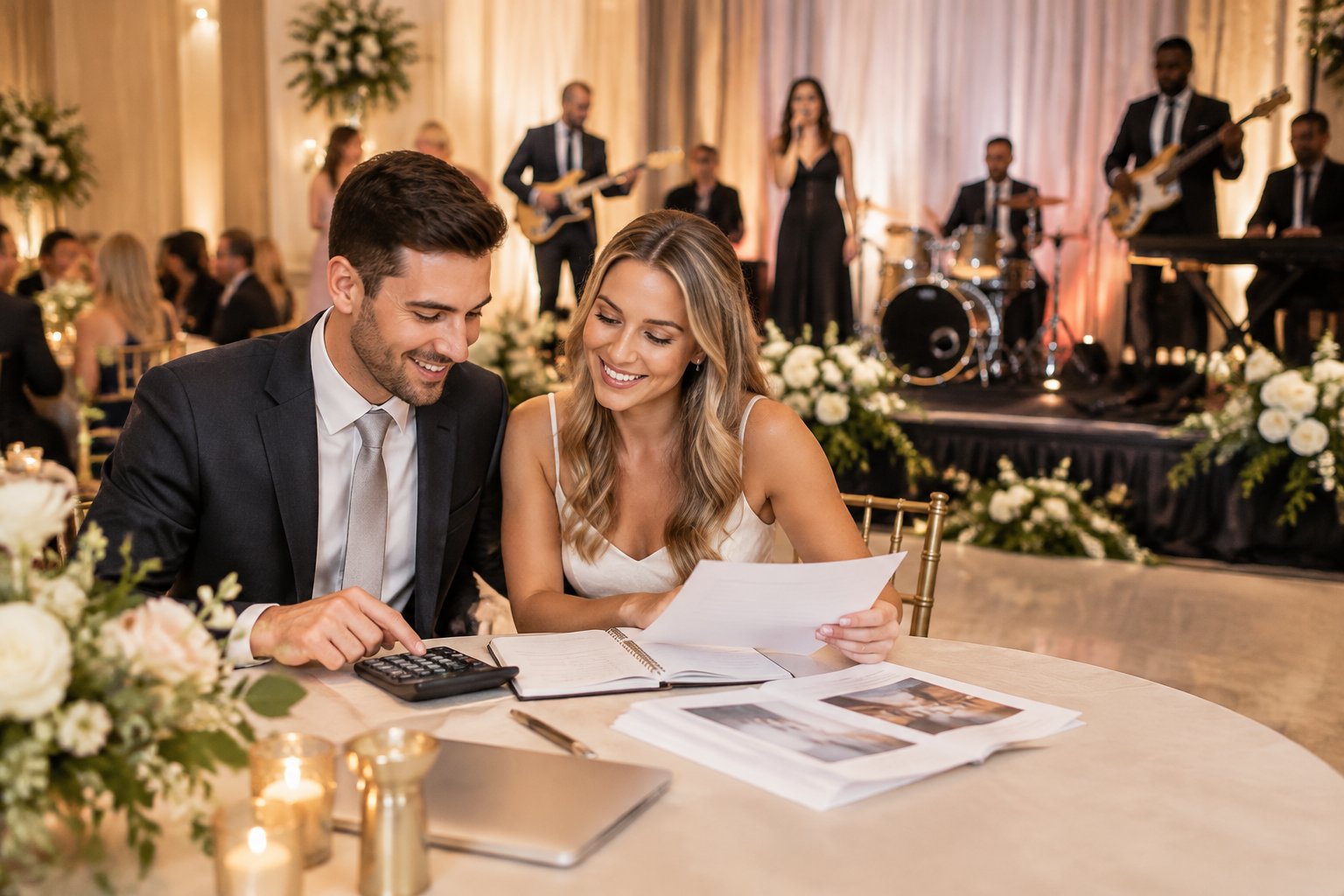
Your quote reflects the number of musicians, event location, reception size, performance time, and services included. A clear proposal helps you compare music options without confusing the base fee with add-ons.
Live Band vs. Wedding DJ Pricing
A live wedding band often costs more than a wedding DJ because you are paying several performers, rehearsals, instruments, and group logistics. A DJ commonly costs about $1,300 to $1,900, while a live band often sits near $4,000 to $5,000 for a reception.
| Criteria | Live wedding band | Wedding DJ |
|---|---|---|
| Common reception range | $3,000-$8,000 | $1,300-$1,900 |
| Performers | 3-10+ musicians | 1 DJ |
| Sound needs | Band PA and microphones | DJ system |
| Musical format | Live performance | Recorded tracks |
| Typical energy | Concert-style | Flexible playlist |
A DJ gives you access to a broad recorded catalog, while a live group creates an onstage performance with musicians and singers. Your choice can follow the role you want wedding music to play during dancing and key reception moments.
How Region and Reception Size Change the Quote
Major metro areas often have higher entertainment rates because demand, labor, and operating costs increase. Travel to a rural venue or destination location adds transportation, lodging, and setup time.
A larger reception may call for more musicians, stronger sound coverage, and additional lighting equipment. A smaller venue may suit a trio or quartet, which reduces the performance footprint and base fee.
Share your guest count, venue address, schedule, and preferred music style when requesting a quote. These details help the band price the event accurately.
What a Live Music Package Usually Includes
A live music package may include the musicians, a set number of performance hours, microphones, a sound system, basic setup, and a playlist consultation. Some packages also include cocktail hour music, emcee duties, a DJ during breaks, or lighting equipment.
Read the inclusions carefully. Ask whether setup and breakdown count toward performance time, who provides the sound engineer, and whether ceremony music carries a separate fee.
What Adds to a Live Music Quote?
Set length, travel, custom requests, musician count, and production needs add the most to a live music quote. A lower base price can change after you add cocktail hour music, extended dancing, lighting equipment, or a distant venue.
Set Length, Travel Fees, and Overtime
A reception package may include two or three sets across a defined number of hours. Extra playing time, early arrival, delays, and overtime can add hourly charges.
Travel fees cover mileage, tolls, parking, lodging, or transportation for the musicians. Ask for a written travel policy when the venue sits outside the band’s local service area.
Give the band a complete timeline before signing. Include guest arrival, dinner, speeches, first dance, parent dances, breaks, and the planned end time.
Custom Song Requests and Production Needs
Custom song requests may require new arrangements, rehearsal time, sheet music, or extra preparation. Ask how many special songs are included and whether a difficult request carries an arrangement fee.
Production needs include microphones for speeches, a sound engineer, stage monitors, power requirements, and lighting equipment. Cocktail hour music may involve a separate acoustic lineup or recorded music between the ceremony and reception.
A wedding DJ might be added for breaks or late-night dancing. Confirm whether that service comes from the same provider and appears in the written quote.
How to Compare Band and DJ Proposals
Compare proposals by the same facts: musician count, hours, breaks, travel, equipment, lighting, emcee service, cocktail hour coverage, and overtime terms. Check cancellation rules, payment dates, insurance requirements, and backup plans.
Ask each provider for a sample timeline and a complete fee list. A proposal with a higher base price may include equipment and services that another quote bills separately.
How Can You Shop Within Your Wedding Band Budget?
You can stay within your wedding band budget by setting a firm spending limit, choosing materials with care, and comparing the full checkout price. A practical starting range for two rings plus reception music is about $3,500 to $12,000, before other wedding expenses.
Set a Comfortable Spend Before Ring Shopping
Choose your ring budget after reviewing savings, monthly obligations, and the rest of your wedding budget. Agree on a maximum price before you browse so attractive upgrades do not reset your plan.
Create separate limits for each ring and for live music. Leave room for sales tax, sizing, engraving, shipping, insurance, and alterations to the event plan.
A wedding budget allocation guide can help you assign money across major categories. Ring shopping becomes easier when you know which categories have flexibility.
Find Value in Materials and Design Choices
14k gold gives you a durable, popular option at a lower price than platinum or 18k gold. Alternative metals can lower the price further, while lab-grown diamonds reduce gemstone costs for diamond wedding bands.
Choose a half-eternity design if you want visible sparkle with fewer stones. Limit custom engraving to a meaningful phrase, or select a ready-made vintage-inspired design that provides detail without a full custom process.
Try rings in different widths and metals before ordering. A less expensive material can still give you the color, comfort, and finish you want.
Compare Retailers, Policies, and Final Costs
Compare listings from retailers such as James Allen, Blue Nile, and Brilliant Earth alongside local jewelers. Review sizing, resizing, returns, warranties, shipping, engraving, and repair policies.
For each ring, record the listed price, selected metal, stone details, size, customization, tax, and shipping. Request a live music quote with the same level of detail, including the number of musicians, set length, equipment, travel, and overtime.
Choose the option that fits your spending limit after every fee is included, then keep the written order and contract with your wedding records.