
Average Wedding Cake Price: Costs, Servings, and Savings
The average wedding cake price in the U.S. is about $540, with many couples spending roughly $300 to $700 before design upgrades, delivery, and venue fees. Your guest count, serving size, frosting, decorations, and baker’s labor shape the final quote.
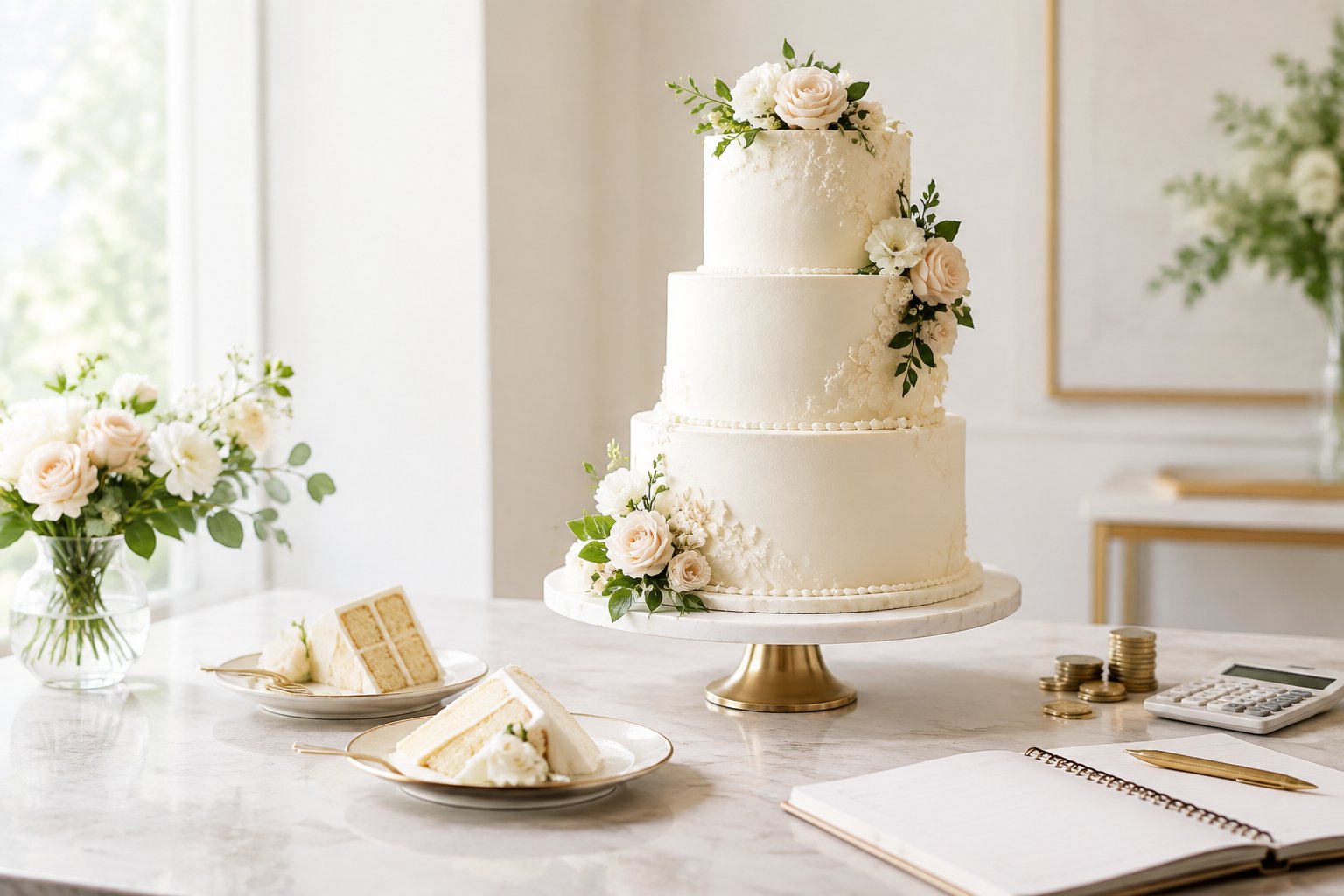
A smaller buttercream cake for 50 guests may cost close to $300, while a detailed tiered cake for 150 or more guests can pass $1,000. Bakers also price by serving, so your guest list gives you the clearest starting point for your wedding budget.
You can set a practical target by estimating servings first, then asking local bakers for itemized quotes. Use that number to contact a wedding cake baker early and shape a cake that fits both your reception and your budget.
What Couples Typically Pay in the U.S.
Most U.S. couples spend about $300 to $700 on a wedding cake, with a national average near $540. Regional labor rates, guest count, design work, and included services create a wide spread in wedding cake pricing.
Why Published National Averages Differ
Published averages measure different types of orders. One figure may reflect the cake alone, while another includes delivery, setup, tasting fees, rentals, or a highly customized design. A survey average can also include small backyard cakes alongside large luxury cakes.
Location adds another layer. A baker in a major city may charge more for labor, ingredients, insurance, and delivery than a baker in a smaller market. Ask whether a quoted average includes tax, venue charges, and cake-cutting service before using it in your wedding budget.
What a Wedding Cake for 100 Guests Usually Costs
A wedding cake for 100 guests commonly falls between $400 and $800, with many standard buttercream designs near the middle of that range. A plain two- or three-tier cake uses fewer decorative hours than a fondant cake covered with handmade details.
A 100-person order might include:
- A two- or three-tier cake sized for about 100 servings
- Buttercream frosting with basic piping
- One or two standard wedding cake flavors
- Delivery and setup as separate charges
For a closer estimate, review guidance on how much wedding cake for 100 people, then request a quote based on your venue and serving plan.
Typical Cost Per Serving
Wedding cake prices commonly run from $3 to $8 per serving for standard designs. Buttercream often sits at the lower end, while fondant, specialty fillings, sugar flowers, painted details, and complex structures raise the rate.
For example:
| Servings | At $4 per serving | At $8 per serving |
|---|---|---|
| 50 | $200 | $400 |
| 100 | $400 | $800 |
| 150 | $600 | $1,200 |
These figures describe the cake portion of the quote. Delivery, setup, stand rental, taxes, and venue cake-cutting fees can add to the total.
Estimate Your Total From Guest Count and Servings
Your guest count multiplied by the baker’s per-serving rate gives a useful first estimate of wedding cake cost. Confirm the serving chart with your baker because tier sizes and wedding slice standards differ.
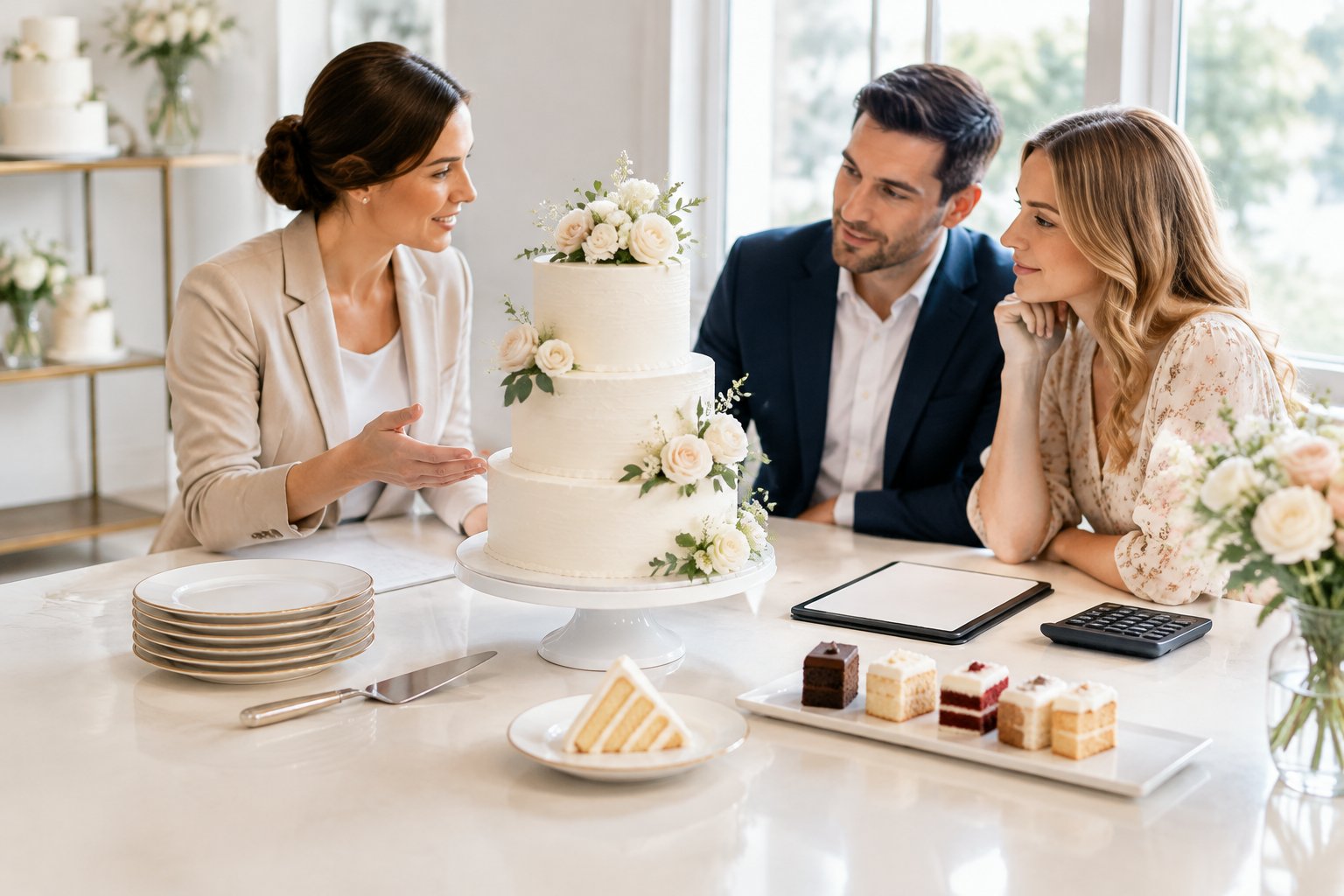
Your serving plan also affects the order. A full dessert portion for every guest calls for more cake than a small ceremonial slice served alongside other desserts. A cutting cake paired with sheet cakes can preserve the tiered look while covering a larger guest list.
How Many Slices Should You Order?
Start with your confirmed guest count, then consider how dessert will be served. Order one wedding serving per guest when cake is the main dessert. If you offer a dessert table, late-night snack, or plated dessert, your baker may recommend fewer servings.
Ask to see the baker’s definition of a serving. Wedding slices are often smaller than party slices, and a round tier does not produce the same number of servings as a square tier of similar width.
Build in a small cushion for children, seconds, and damaged portions. Your baker can recommend the right amount once you share the guest count, reception menu, and serving style.
How Tier Count Changes the Quote
More tiers add materials, filling, support systems, chilling time, stacking, and decoration. A tall cake also takes more care during delivery and setup.
Tier count does not tell you the serving total by itself. Two cakes with the same number of tiers can serve different numbers of guests because their tier diameters differ. A three-tier cake with 6-, 8-, and 10-inch tiers serves far fewer people than one with 8-, 10-, and 12-inch tiers.
A tiered wedding cake also carries a display value. You can ask your baker about dummy tiers for added height, though the quote still reflects finishing and setup labor.
A Simple Wedding Cake Cost Calculator Formula
Use this wedding cake cost calculator formula:
Estimated cake price = number of servings × price per serving
Example:
- 100 servings × $5 per serving = $500
- Delivery and setup = $75
- Stand rental = $25
- Estimated total = $600 before tax or venue fees
Add specialty decorations, tasting charges, and cake-cutting fees when they apply. If you choose a cutting cake and sheet cakes, calculate each cake separately, then add delivery and setup once.
What Makes a Cake Quote Go Up or Down?
Cake quotes rise with serving count and hands-on design labor, while simple finishes, standard flavors, and fewer custom details help control the price. Your baker’s delivery distance and the venue’s policies also affect the final invoice.
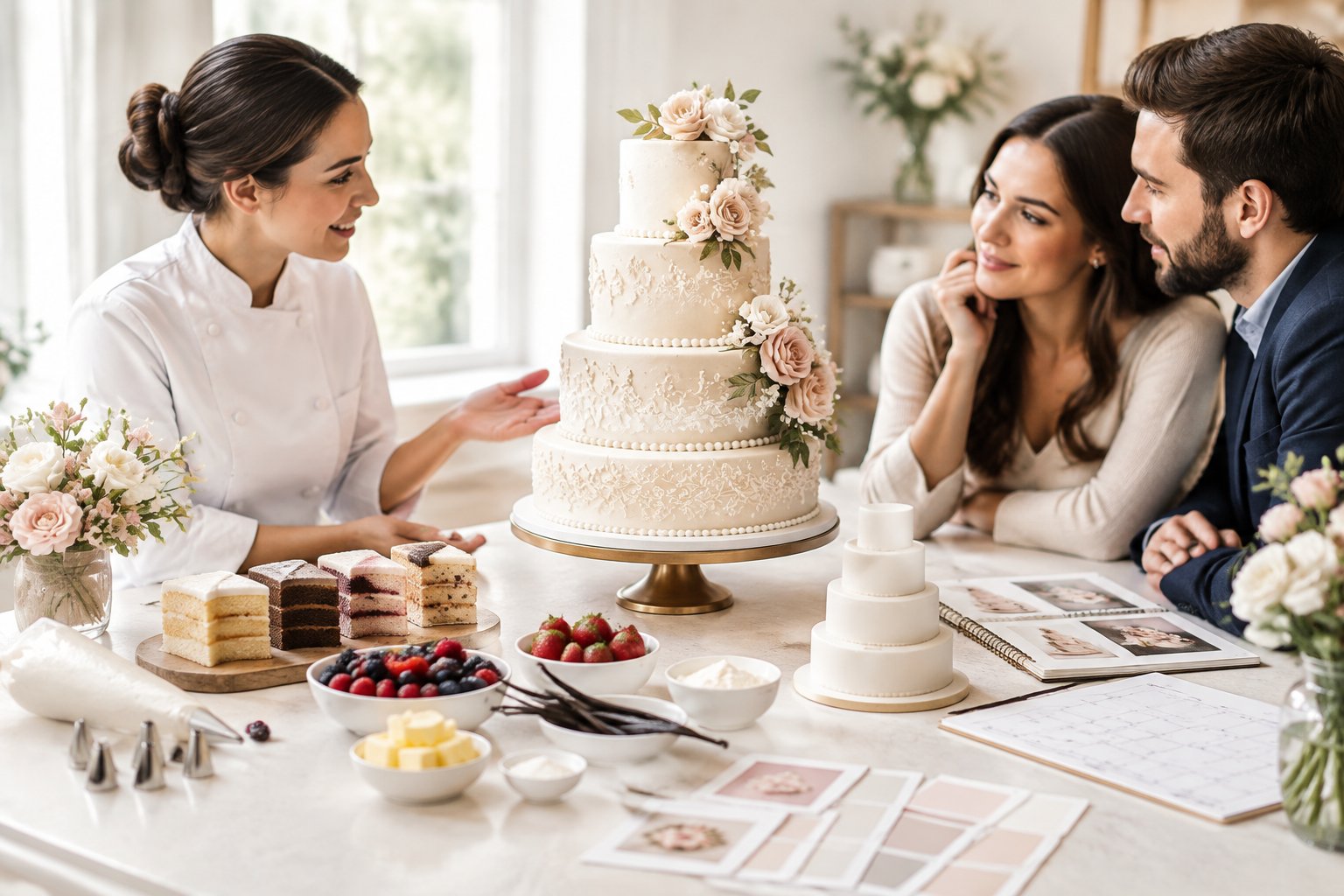
Share your inspiration, venue address, guest count, and target budget before the consultation. A clear brief helps your baker suggest changes that protect the look you want without adding hidden work.
Buttercream Frosting vs. Fondant
A buttercream cake often costs less because the finish takes less time and uses familiar tools. Smooth buttercream, textured edges, and simple piping create polished results at a moderate rate.
A fondant cake provides a firm, smooth surface for sharp edges, molded shapes, and painted details. Applying and finishing fondant adds labor, so fondant cakes commonly cost more per serving.
Weather and venue conditions also influence the choice. Ask your baker which finish will travel and hold up well at your reception location.
How Cake Design and Decorations Affect Labor
Decoration time drives much of the price. Hand-piped lace, ruffles, sculpted tiers, painted patterns, sugar flowers, edible gold leaf, and modeled figures each require careful work.
Cake toppers may be included or priced separately. Fresh flowers also need coordination with your florist and safe placement on the cake. Give your baker a reference image and identify the details you care about most so the quote reflects your priorities.
A clean buttercream design with one focal detail can create a refined look with fewer labor hours than a cake covered in small handmade elements.
Flavors, Fillings, and Dietary Requests
Standard wedding cake flavors often cost less than custom recipes. Vanilla, chocolate, and basic fruit fillings use familiar ingredients and established preparation methods.
Specialty wedding cake flavors with liquor, house-made compote, seasonal fruit, premium chocolate, or multiple fillings increase ingredient and preparation costs. Gluten-free, vegan, dairy-free, and nut-free requests may require separate equipment or careful ingredient sourcing.
Choose one popular flavor for most tiers and reserve a specialty flavor for a smaller tier if you want variety within your wedding cake budget.
Delivery, Setup, and Venue Fees
Wedding cake delivery protects a delicate tiered cake during transport and places it safely at the venue. Bakers may charge a base delivery fee within a set radius, then add mileage for longer trips. Setup, stand rental, and return deposits can appear as separate line items.
Your venue may also charge a cake-cutting fee for slicing and plating. Ask whether the fee applies to outside bakers, cupcakes, sheet cakes, or all desserts. Confirm the delivery window, refrigeration space, table requirements, and pickup rules before signing the contract.
Set a Cake Budget That Fits Your Reception
Set your wedding cake budget after you know your guest count, dessert plan, and expected service fees. A $500 cake may fit comfortably at a smaller reception, while a large custom cake can compete with other wedding catering costs.
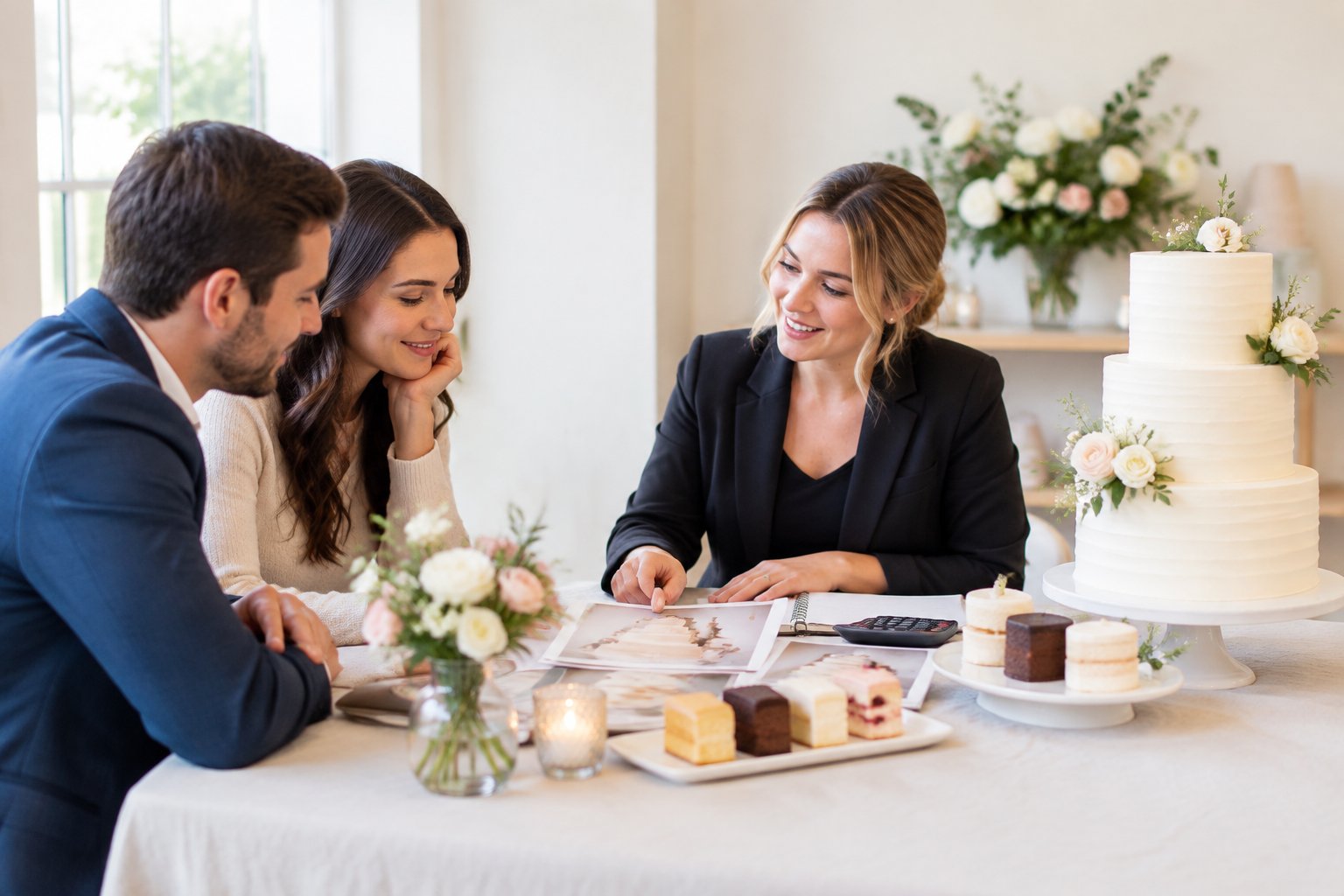
Decide whether the cake serves as the main dessert, a ceremonial centerpiece, or one part of a larger dessert table. Then reserve money for the cake itself plus delivery, setup, rentals, taxes, and venue charges.
How Cake Spending Relates to Catering Costs
Cake is one part of your reception food plan. If your caterer already provides dessert, a large custom cake may duplicate that expense. A smaller display cake can give you the cutting tradition while allowing the catering team to serve another dessert.
When cake is the only dessert, budget for enough servings and a dependable delivery plan. When guests receive several dessert choices, ask your baker about a smaller serving count and confirm that the remaining options will satisfy your guest list.
Questions to Ask Before Booking a Baker
Ask each wedding cake baker:
- What is included in the per-serving price?
- How many servings does each tier provide?
- Which frosting and filling options change the price?
- Are tastings, delivery, setup, stands, and toppers included?
- Does the quote include tax?
- What happens if the guest count changes?
- How does the baker handle dietary needs?
- Does the venue charge a separate cutting fee?
- When is the final payment due?
- What is the cancellation and postponement policy?
Request the answers in writing. A detailed contract gives you a clearer picture of the full wedding cake cost.
How to Compare Cake Quotes Fairly
Compare quotes using the same serving count, flavor plan, finish, decoration level, delivery address, and service requirements. One baker may list a lower base price while charging separately for setup or specialty fillings.
Create a short comparison sheet with:
| Quote detail | Baker A | Baker B |
|---|---|---|
| Servings | 100 | 100 |
| Price per serving | $5 | $6 |
| Delivery and setup | $75 | Included |
| Stand rental | $25 | $30 |
| Estimated total | $600 | $630 |
A higher quote may include more services, stronger venue coordination, or a more detailed finish. Compare the complete package before choosing based on the first number.
Ways to Serve Dessert for Less
The most effective savings come from reducing custom labor or separating the display cake from the servings your guests eat. You can keep a cake-cutting moment while choosing a practical dessert plan for the rest of the reception.
Tell your baker your spending limit at the start. A professional can adjust tier sizes, finish, flavors, and decorations before the design becomes difficult to change.
Use a Small Display Cake With Kitchen Sheet Cakes
A small display cake gives you the height and style you want for photos and the cutting tradition. Kitchen sheet cakes cover the remaining servings and stay chilled until the venue is ready to serve dessert.
Ask whether the same cake and filling can be used for both pieces. Guests receive a consistent flavor, while you reduce the decoration and structural labor required for a large tiered cake.
Confirm who will cut and plate the sheet cake. Your venue may charge a cutting fee even when the sheet cakes remain in the kitchen.
Choose an Affordable Finish and Fewer Custom Details
A buttercream cake with smooth or textured frosting offers a budget-friendly finish. Simple piping, fresh seasonal accents, or one statement topper can replace hours of handmade decoration.
Limit the number of flavors and fillings across the tiers. Standard recipes keep ingredient costs and preparation time easier to manage. Ask your baker which design details create the strongest visual effect within your price range.
You can also choose a smaller tier count, square tiers for efficient servings, or a semi-naked finish if that style suits your reception.
Consider Cupcakes and Other Dessert Table Options
Cupcakes provide individual servings with less cutting and plating work. A cupcake tower creates height, while a small cutting cake on top preserves the cake-cutting tradition.
A dessert table can combine cookies, pies, brownies, fruit, or other treats. A donut wall adds a strong visual feature, while seasonal desserts may match your menu and venue.
Review wedding dessert ideas and compare the full cost of a cupcake tower, dessert table, or display cake with sheet cakes. Include stands, labels, delivery, serving pieces, and venue fees in each estimate before you choose.