
Average Wedding Catering Cost Per Person: What to Budget
You can plan on about $70 to $150 per guest for wedding food and service in the United States, with $80 per person as a useful national planning point. Your all-in bill rises when you add rentals, bar service, taxes, service charges, gratuity, premium ingredients, or extra staff.
A 100-person reception therefore starts around $7,000 to $15,000 before some of those added costs.
Your service style creates one of the largest price differences. Drop-off meals may cost $15 to $30 per guest, while buffet service often falls near $25 to $70 and plated dinners can reach $50 to $120 or more. Premium wedding packages with extensive appetizers, desserts, stations, and bar service can exceed $150 per person.
Your location, guest list, venue, date, menu, and quote terms shape the final wedding catering cost. Reserve a cushion of about 5% to 10%, then request itemized proposals that show the full cost per guest. For another budgeting perspective, see how much should a wedding meal cost per person as you set your wedding budget.
What Is a Realistic Per-Guest Catering Budget?
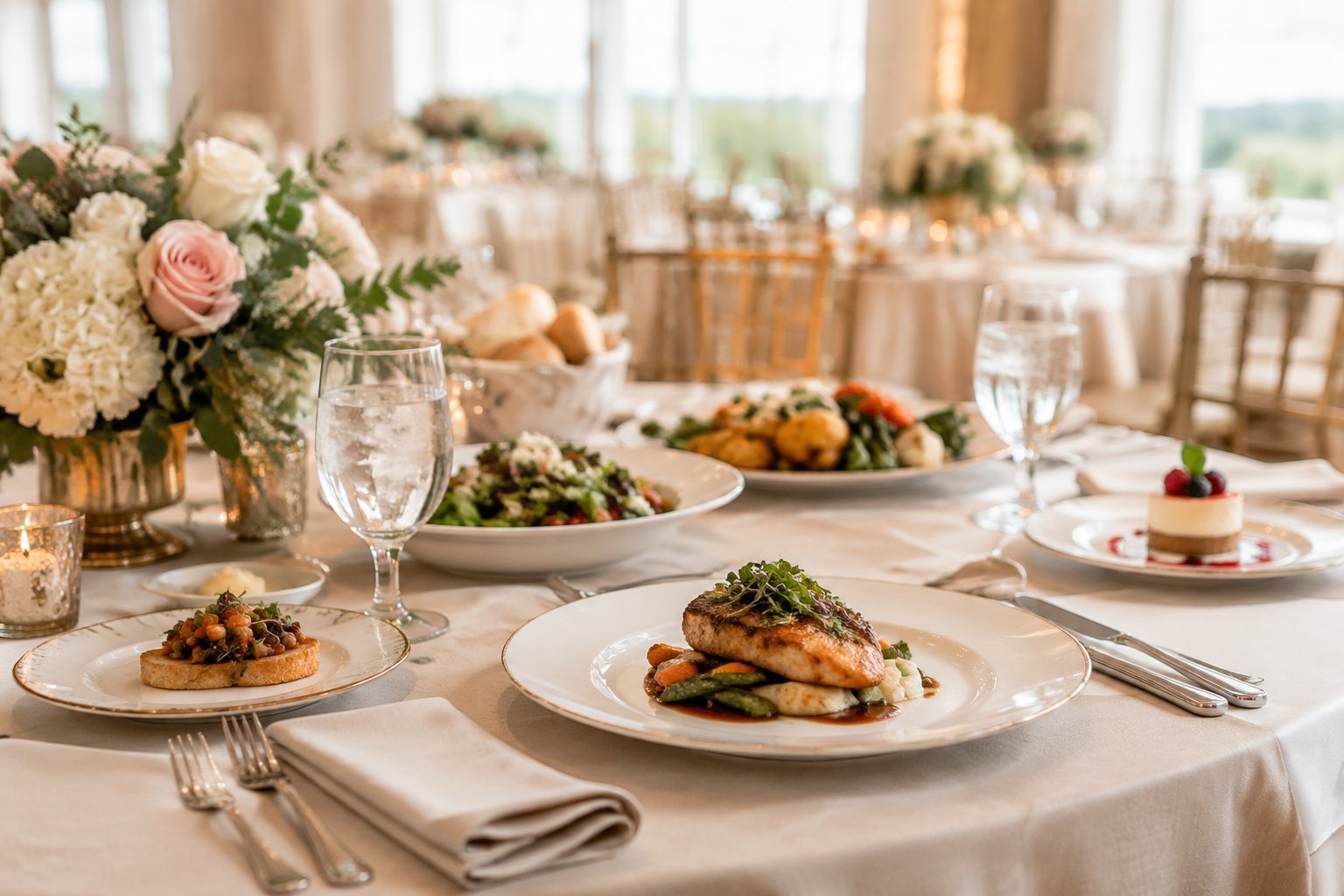
A realistic wedding catering budget is $70 to $150 per guest for food and service, with about $80 per person as a national planning benchmark. That range gives you a starting point, while local wedding catering prices can fall below or above it based on service, menu, venue, and season.
National Benchmarks and Local Price Differences
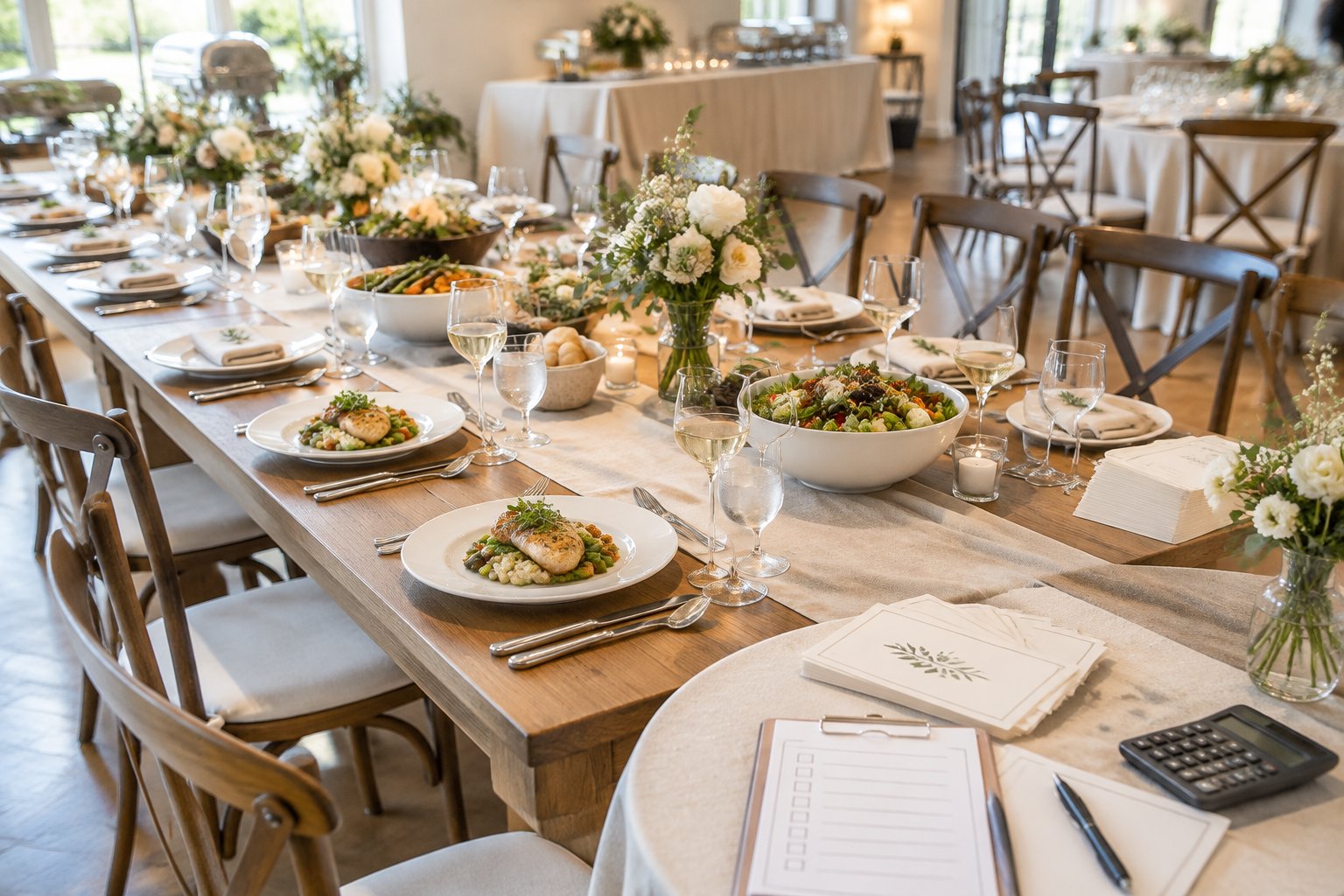
The average catering cost for a wedding sits near $80 per person for food and basic service. At that rate, 50 guests create an $4,000 food-and-service estimate, while 100 guests create $8,000.
Local pricing shifts that benchmark. Major cities and destination venues often have higher labor, rental, and transportation costs. Rural markets may offer lower menu rates, yet a remote venue can add delivery, lodging, or equipment charges. Saturday evening dates during peak wedding months also attract higher quotes.
Use the national number as a planning anchor, then request proposals from caterers who regularly work in your area and venue.
Food-Only Pricing vs. an All-In Catering Total
A menu price covers the food listed on the proposal. Your all-in wedding catering cost can also include staffing, setup, cleanup, rentals, beverages, delivery, service charges, gratuity, sales tax, and cake cutting.
For example, a $80 menu rate for 100 guests creates an $8,000 food subtotal. Add $1,500 for rentals and labor plus $2,000 for service charges, tax, and gratuity, and the total becomes $11,500, or $115 per guest.
Ask each caterer to label charges as per person, percentage-based, or flat fee. That format lets you compare catering costs without mistaking a food-only price for the final bill.
How Much Should You Reserve for Food and Service?
Reserve at least $70 to $150 per guest for food and service, then add a separate allowance for bar service, rentals, taxes, and gratuity. Set aside another 5% to 10% of your catering budget for final guest-count changes, overtime, extra rentals, or menu upgrades.
A spreadsheet with columns for guest count, food, beverages, staffing, rentals, delivery, fees, tax, gratuity, deposit, and balance keeps each quote comparable. Include vendor meals for your wedding photographer, planner, DJ, and other providers when required.
How Does Service Style Change the Price?
Service style can move your catering cost from about $15 per guest for drop-off food to $120 or more for a formal plated dinner. Labor, kitchen coordination, serving equipment, and cleanup account for much of the difference.
Buffet and Self-Serve Food Stations
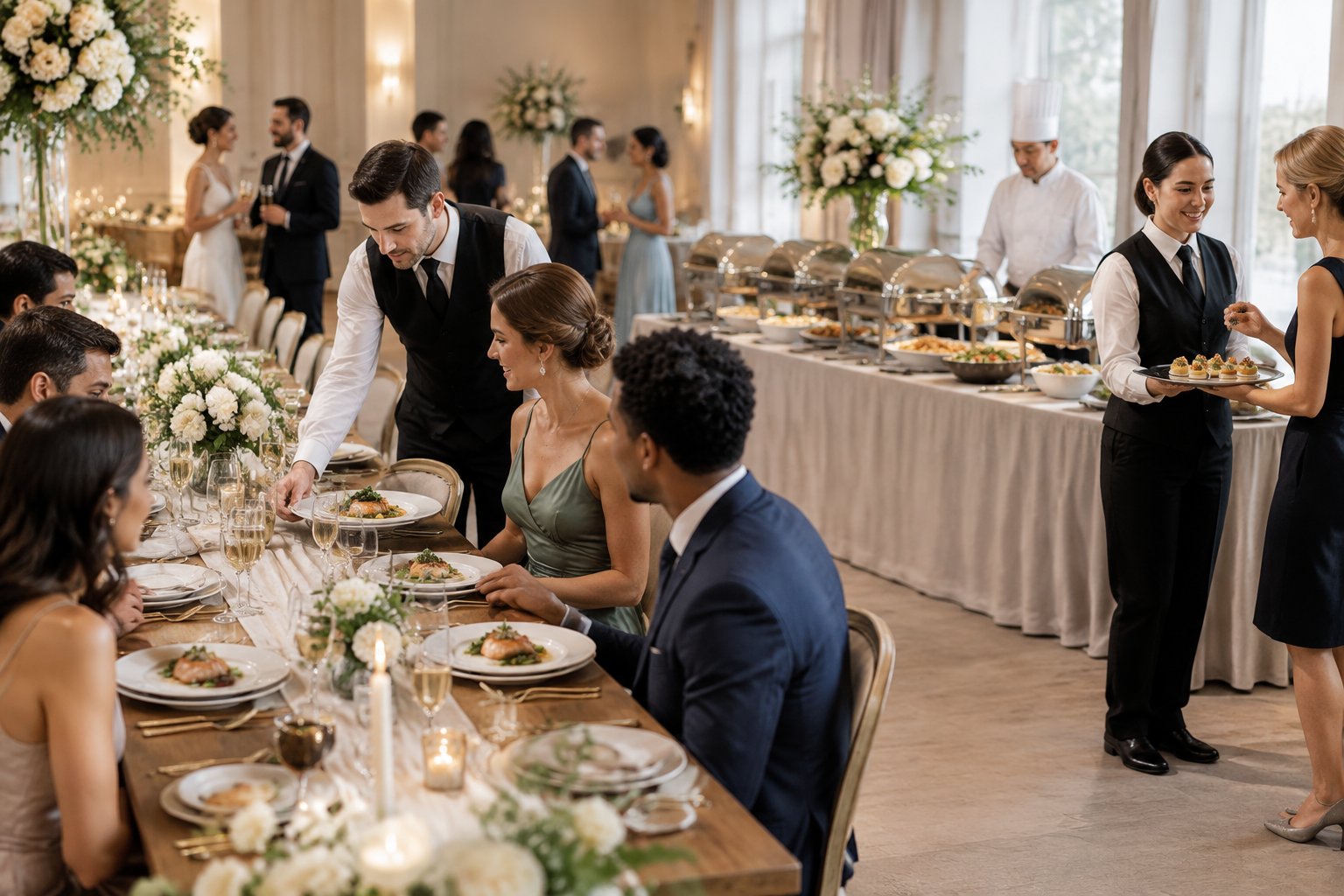
A buffet often costs $25 to $70 per person, depending on the menu and staff included. Self-serve food stations fall in a similar range and might feature pasta, tacos, carving boards, salads, or regional dishes.
A staffed buffet may include setup, replenishment, chafing dishes, serving utensils, and cleanup. Confirm how many servers are present and whether the quote includes plates, flatware, linens, and table rentals. Large receptions need enough serving space and multiple lines to keep guests moving.
Family-Style Meals and Food Stations
Family-style meals commonly cost $35 to $70 per guest. Servers bring shared platters to each table, creating a relaxed meal with more table service than a buffet.
Food stations often cost $50 to $90 per person when chefs, specialty equipment, or several menu areas are included. Stations invite guests to move through the room, though they require floor space, power, and clear traffic paths. Ask whether each station includes an attendant and how long it will remain open.
Plated Dinner Service and Formal Plated Dinners
A plated dinner commonly costs $50 to $120 or more per person. A formal plated dinner needs chefs to coordinate courses, servers to deliver and clear plates, and enough kitchen capacity to prepare meals at the same pace.
Premium proteins such as steak, seafood, and lamb increase the menu price. Ask whether the quote includes guest entrée selections, place cards, bread service, clearing, and meals for guests with dietary needs. Your caterer also needs a reliable final count for each entrée.
Food Trucks and Drop-Off Catering
Food trucks often cost $15 to $35 per guest, while drop-off catering commonly costs $15 to $30. These formats suit casual receptions, brunches, backyard celebrations, and venues with limited dining service.
Drop-off food arrives in trays, and you arrange serving, table setup, and cleanup. Food trucks require parking access, power details, weather planning, and enough service time for your guest count. Check the minimum charge, travel fee, chafing dishes, disposable tableware, and service window before signing.
What Drives Catering Prices Up or Down?
Guest count, menu complexity, venue requirements, and location create the largest swings in wedding catering prices. Your date, meal timing, dietary accommodations, appetizers, desserts, and late-night menu also affect the final quote.
Guest Count, Guest List, and Minimums
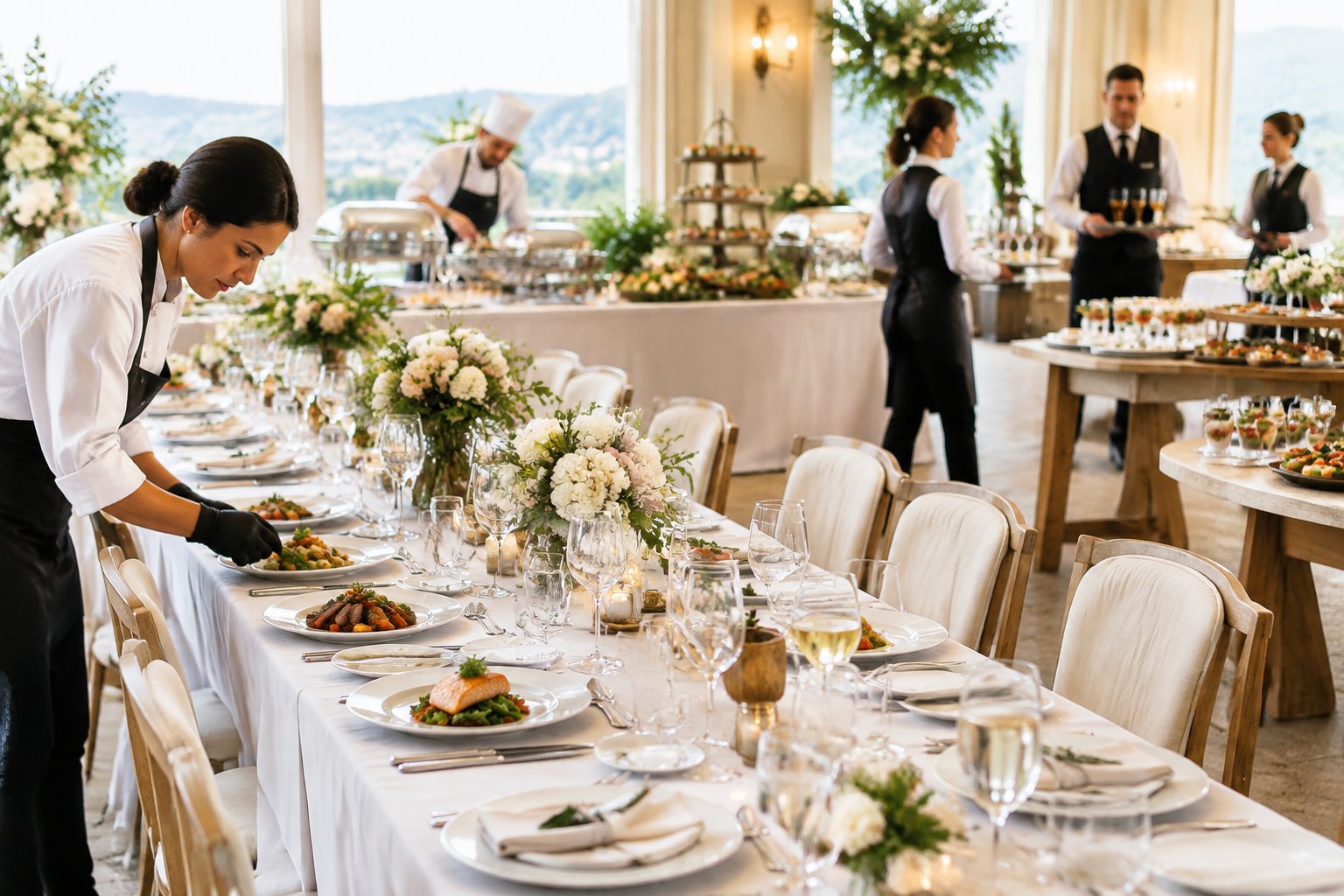
Your guest count sets the food quantity, staffing level, rental needs, and many per-person charges. More guests raise the total even when the per-person price stays steady.
Small receptions can face a minimum food or labor spend. If your guest list falls below that minimum, the caterer can charge the difference as a required fee. Count children and vendors separately, since children’s meals and vendor meals may use different rates.
Your final guaranteed count also affects waste and staffing. Ask when that number is due and what happens if attendance changes afterward.
Menu Selection, Premium Proteins, and Dietary Accommodations
Menu complexity raises labor and ingredient costs. Steak, lobster, lamb, specialty seafood, live cooking, and custom recipes sit above menus built around chicken, pasta, grains, or seasonal vegetables.
Dietary accommodations need advance planning. Vegan, vegetarian, gluten-free, dairy-free, and allergy-safe meals can affect prep areas, ingredients, labeling, and staffing. Ask whether these meals carry an added charge or fit within the package.
A focused menu with one premium feature can create a polished experience while keeping the rest of the food plan manageable.
Venue Requirements, Location, and Seasonal Ingredients
A venue with a commercial kitchen can reduce transportation and equipment needs. A tent, private home, historic building, or outdoor property might require portable cooking equipment, generators, water, prep tables, and extended setup time.
Review venue rules for approved caterers, insurance, loading access, kitchen use, and required rental partners. Travel fees can cover mileage, fuel, tolls, lodging, and delivery labor.
Seasonal and local ingredients can support a fresh menu, while scarce items and imported products raise costs. Ask your caterer which ingredients are most affordable during your wedding month.
Cocktail Hour, Desserts, and Late-Night Add-Ons
Cocktail-hour appetizers and hors d’oeuvres commonly add $10 to $30 per guest, depending on the number and type of items. A grazing table, dessert table, wedding cake, or late-night snack adds another charge per guest or as a flat fee.
Dessert stations often cost $5 to $11 per person. Wedding cake may cost $3 to $8 per slice, and a chocolate fountain rental can cost about $380 to $550. Late-night choices such as sliders, tacos, pizza, or chicken and waffles need extra food, staff, and service time.
Request separate prices for every add-on so you can remove a feature without rebuilding the entire proposal.
Which Fees Belong in Your All-In Estimate?
Your all-in estimate should include food, staffing, setup, cleanup, rentals, beverages, delivery, service charges, gratuity, sales tax, and every fee tied to the reception. A menu rate alone does not show what you will pay at the final invoice.
Staffing, Setup, and Cleanup
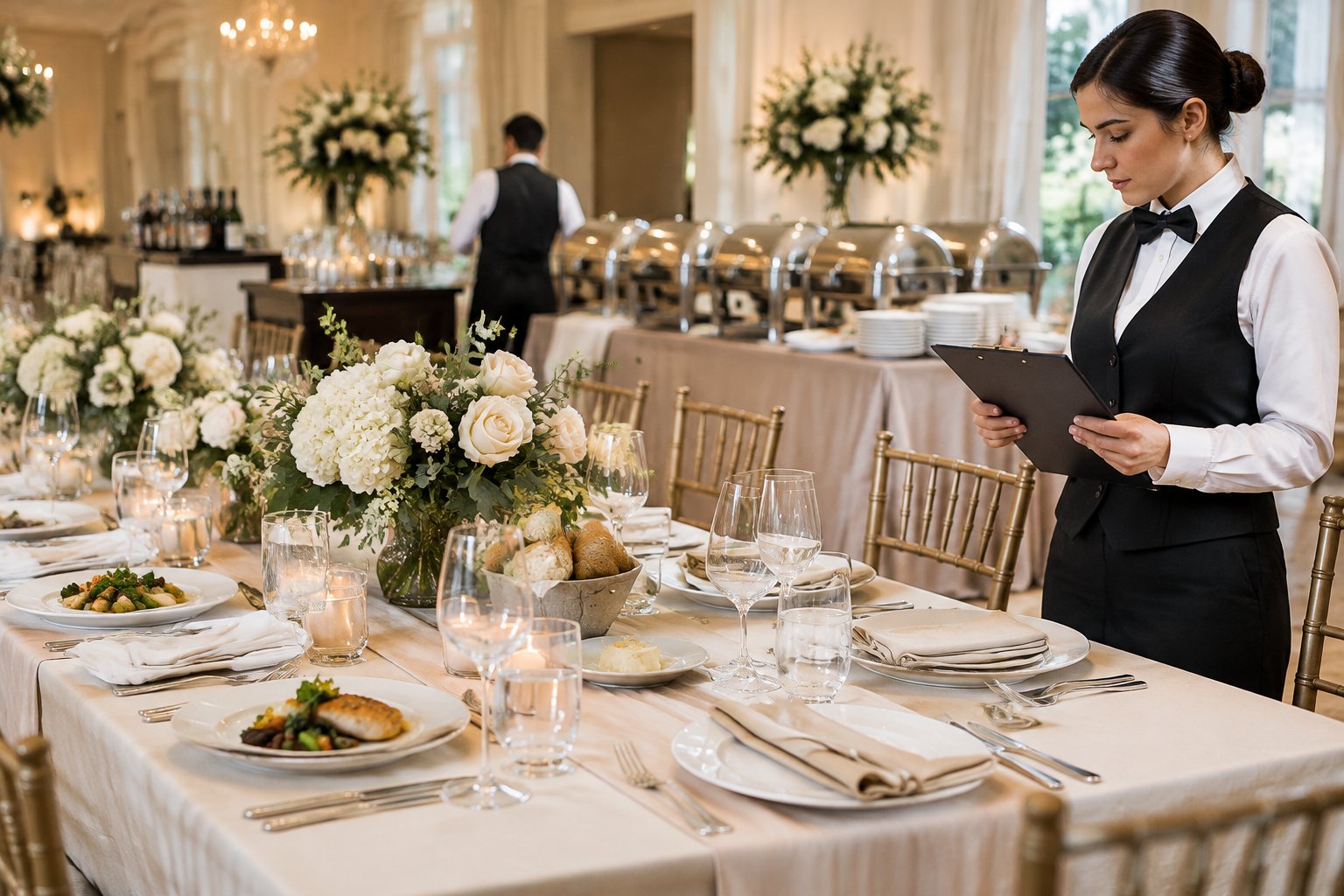
Staffing can include chefs, servers, servers and waitstaff, bartenders, a captain, dishwashers, and an event manager. Plated service needs more front-of-house labor than drop-off food.
Setup and cleanup charges might cover buffet assembly, food placement, trash removal, dishwashing, packing equipment, and post-event clearing. Check the scheduled arrival and departure times, overtime rate, and minimum labor hours.
Ask whether a private bartender, captain, or additional server carries a separate hourly charge.
Rentals and Tableware
Rental lines can include tables, chairs, linens, china, flatware, silverware, glassware, serving pieces, chafing dishes, and portable kitchen equipment. A venue might require rental items even when your caterer supplies basic tableware.
Confirm the quantity, delivery window, pickup schedule, replacement fees, and cleaning responsibility. Compare proposals using the same rental package so a low food rate does not hide higher equipment costs.
Bar Service and Beverage Options
Bar service can range from non-alcoholic beverages to a single drink bar, limited bar, soft bar, full bar, or premium full bar. Beer-and-wine packages often cost about $10 to $20 per guest, while fuller packages can reach $20 to $50 or more.
Ask whether the package includes bartenders, mixers, ice, glassware, bar tools, water, coffee, tea, and signature cocktails. A cash bar passes drink costs to guests, while a consumption bar charges you for each drink served.
For BYO alcohol, confirm the private bartender rate, corkage fee, liquor liability insurance, storage, and service rules. A bar package may also require specific glassware or a venue-approved provider.
Taxes, Service Charges, and Gratuity
A service charge often adds 18% to 22% to food or service charges. It covers business operations and event expenses, while gratuity may be separate, required, suggested, or optional.
Sales tax depends on your state and the taxable items in the contract. Ask whether tax applies to food, rentals, labor, service charges, or the full subtotal.
Also check delivery fees, delivery charges, cake-cutting fees, cake cutting fee language, overtime, and administrative charges. Request a sample final invoice that shows each percentage applied to its correct subtotal.
How Much Does Catering Cost for 50, 100, 150, or 200 Guests?
Using the $80 national planning point, wedding catering works out to about $4,000 for 50 guests, $8,000 for 100, $12,000 for 150, and $16,000 for 200 before many added fees. Your service style, bar plan, rentals, and location can push each total lower or higher.
Estimating a 50-Guest Reception
At $80 per guest, 50 guests create a $4,000 food-and-service estimate. A drop-off meal can fall near $750 to $1,500 for food, while a plated dinner can reach $2,500 to $6,000 or more before taxes, rentals, and gratuity.
Small weddings can still face a caterer’s minimum charge. Ask whether the minimum is based on guests, food spend, labor, or a package total.
Vendor meals also affect the count. Your wedding photographer, wedding planner, and wedding DJ may need meals even when they are not included in the guest list.
Estimating a 100-Guest Reception
A 100-person reception at the $80 planning point creates an $8,000 food-and-service estimate. A broader planning range of $7,000 to $15,000 covers many standard food-and-service proposals before selected extras.
Bar service, rentals, taxes, service charges, gratuity, cake cutting, and delivery can raise the all-in total. A plated dinner with premium proteins and a full bar will sit above a buffet with beer and wine.
Ask for a quote that lists every guest-facing and operational cost in one proposal.
Estimating a 150-Guest Reception
At $80 per guest, 150 guests produce a $12,000 food-and-service estimate. Larger groups can create better purchasing efficiency, though they also require more servers, buffet space, tableware, and kitchen coordination.
A 150-person plated meal needs a firm entrée count and an efficient service plan. A buffet or food-station format can simplify individual meal selections while shifting attention to line design, replenishment, and guest flow.
Keep appetizers, dessert, bar service, and late-night food in separate budget rows.
Catering for 200 Guests Cost and Scale Considerations
Catering for 200 guests costs about $16,000 at the $80 planning point before added fees. A casual drop-off plan might land near $3,000 to $6,000 for food, while formal food and service can reach $10,000 to $24,000 or more before a full bar and other extras.
Large receptions need enough kitchen capacity, serving equipment, bartenders, servers, and cleanup labor. Check whether the venue has loading access, refrigeration, power, water, and a commercial kitchen.
Vendor meals, including meals for your photographer, planner, DJ, and other providers, should appear as separate line items when they use different pricing.
How to Compare Catering Quotes Before You Book
Compare catering quotes by their all-in wedding catering cost per person, not by the headline menu rate. Use the same guest count, service style, beverage plan, rental package, service hours, and dessert plan for each wedding caterer.
What to Ask During a Menu Tasting
A menu tasting should confirm flavor, portion size, presentation, timing, and dietary options. Ask whether tasting fees apply to your final balance and whether the tasting menu matches the food served at the reception.
Discuss:
- Which appetizers, entrées, sides, desserts, and beverages are included
- Whether portions are fixed or adjusted by guest count
- How vegan, vegetarian, gluten-free, and allergy-safe meals are prepared
- Which ingredients are seasonal or subject to substitution
- How food stays hot and safe during transport and service
- Whether children and vendors receive different meals
- How late-night food and dessert service are timed
Food safety practices should be clear, especially for outdoor venues or long service windows.
How to Read the Catering Contract
Your catering contract should state the date, venue, guaranteed guest count deadline, menu, staffing, service hours, rentals, bar plan, deposit, cancellation terms, overtime, and final payment schedule.
Look for separate lines for delivery fees, setup, cleanup, service charge, gratuity, sales tax, cake-cutting fee, corkage, and rental replacement costs. Confirm whether gratuity is included, required, suggested, or optional.
Check the cancellation and postponement terms before paying a deposit. Keep a copy of the signed menu, rental list, staffing plan, and final invoice estimate with your wedding budget records.
Cost-Saving Choices That Preserve Guest Experience
Choose the service format that fits your reception flow. A buffet, family-style meal, or focused food-station plan can reduce labor while giving guests satisfying choices.
Use seasonal ingredients, limit the number of entrée selections, and select one standout premium item. Serve beer and wine with signature cocktails, offer a dessert table alongside a smaller cake, or schedule a substantial lunch reception with daytime pricing.
Compare Friday, Sunday, and off-season dates when your venue allows them. Keep a 5% to 10% reserve until the final invoice is paid, and ask each caterer to show the all-in price per guest before you book.