
Average Wedding Live Band Cost: 2026 Pricing Guide
For most U.S. couples, the average wedding band cost is about $4,500, with many live wedding bands pricing between $3,000 and $8,000 for a reception. Small acoustic groups may start near $2,000, while large show bands with extra production can exceed $15,000.
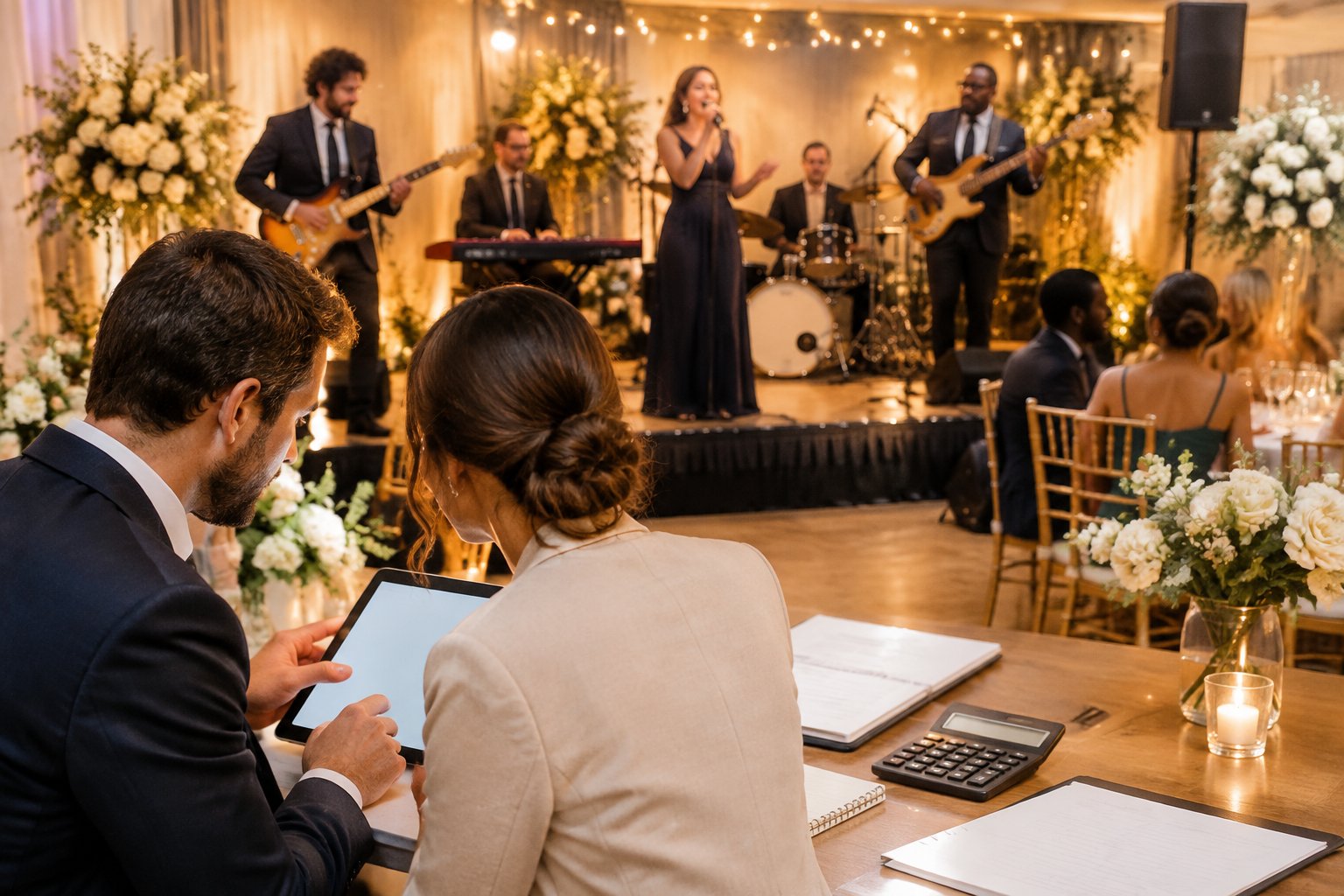
Your final live wedding band cost depends on the number of musicians, performance hours, location, date, and equipment included. Add ceremony music, cocktail hour music, travel, lighting, or custom songs, and the wedding entertainment line in your wedding budget can rise quickly.
A clear quote helps you protect the rest of your wedding budget. Ask each band for the same details, compare the full package, and request a written agreement before you book.
What Is the Typical Price for Live Wedding Music?
The typical U.S. price for live wedding music is about $4,500, with a practical range of $3,000 to $8,000 for a professional reception band. Your location, band size, event schedule, and production needs set the final wedding band pricing.
2026 National Average and Typical Range
The Knot Real Weddings Study places the average wedding band cost at about $4,500. That figure represents a national average, so your local quotes may sit below or above it.
A useful planning range looks like this:
- Small acoustic group: $2,000 to $3,500
- Four- to six-piece live band: $3,500 to $8,000
- Large premium ensemble: $8,000 to $15,000+
- Full show production: $15,000 to $25,000+
These figures usually focus on reception music. Ceremony musicians, cocktail hour coverage, travel, lighting, and special production may carry separate charges.
Why Wedding Band Prices Differ Across Data Sources
Wedding band prices differ because each study collects different types of bookings. One source may count only reception bands, while another combines solo musicians, DJs, ceremony performers, and live wedding bands.
The average also shifts with the survey year, region, guest count, event length, and band quality. A national figure gives you a starting point for your wedding budget. A quote from a band serving your venue gives you a closer estimate.
Ask whether a published price includes:
- Set length and breaks
- Sound equipment
- Setup and teardown
- Emcee services
- Travel fees
- Overtime rates
- Sales tax or service charges
Live Band vs. Wedding DJ Cost
A wedding DJ costs about $1,800 on average, with many bookings falling between $1,000 and $2,500. A live band costs more because you are paying several musicians, rehearsals, instruments, transportation, and a larger setup.
| Cost factor | Live wedding band | Wedding DJ |
|---|---|---|
| National average | About $4,500 | About $1,800 |
| Common range | $3,000–$8,000 | $1,000–$2,500 |
| Performers | 2–10+ musicians | 1 DJ |
| Sound setup | Band system and microphones | DJ system |
| Musical feel | Live performance | Recorded tracks |
| Space needed | More floor area | Smaller footprint |
A DJ offers broad song access and a lower wedding DJ cost. Live music gives your reception a visible performance and a different energy. You can also combine options, such as live ceremony music with a DJ for the reception.
What Does Each Band Size Cost?
Band size is one of the strongest price drivers, with small acoustic acts near $2,000 and premium show bands reaching $15,000 or more. Each added musician brings talent, travel, equipment, rehearsal time, and production needs into the quote.
Acoustic Duo and Small Combos
An acoustic duo or small combo often costs $1,500 to $3,500. This format works well for a ceremony, cocktail hour, dinner, or an intimate reception.
A duo may feature guitar and vocals, piano and vocals, or two vocalists with acoustic instruments. A three-piece group adds a fuller sound while keeping the stage area and equipment needs modest.
Small groups suit venues with limited space and couples who want background music with a personal touch. Ask whether the performers provide amplification for outdoor areas and whether the quote covers more than one part of the day.
Standard Professional Wedding Band
A standard professional wedding band costs $3,500 to $8,000 for a reception. A four- to six-piece lineup might include guitar, keyboard, bass, drums, and one or two vocalists.
This size gives you a strong dance sound without the production demands of a large ensemble. Some bands add a horn section for Motown, funk, soul, or dance music. That extra player raises the fee and may require more microphones, stage space, and sound equipment.
Confirm the number of musicians in the contract. Some bands offer a base price for four players and charge more for additional vocalists or horns.
Premium Show Band and Big Band Options
A premium show band or big band commonly starts around $8,000 and can exceed $15,000. Large lineups may include multiple vocalists, a horn section, backup singers, dancers, costume changes, and coordinated stage lighting.
A show band suits a large reception where entertainment is a major part of the guest experience. The quote may include a dedicated sound engineer, sound and lighting equipment, and a longer production schedule.
Ask for the exact lineup, stage dimensions, power needs, performance schedule, and production package. Those details help you compare a large band with a smaller group that adds guest musicians for selected songs.
What Changes a Live Band Quote?
Performance time, production needs, travel, date, venue rules, and custom requests can move a live wedding band quote by thousands of dollars. The advertised booking fee covers only the services listed in the proposal.
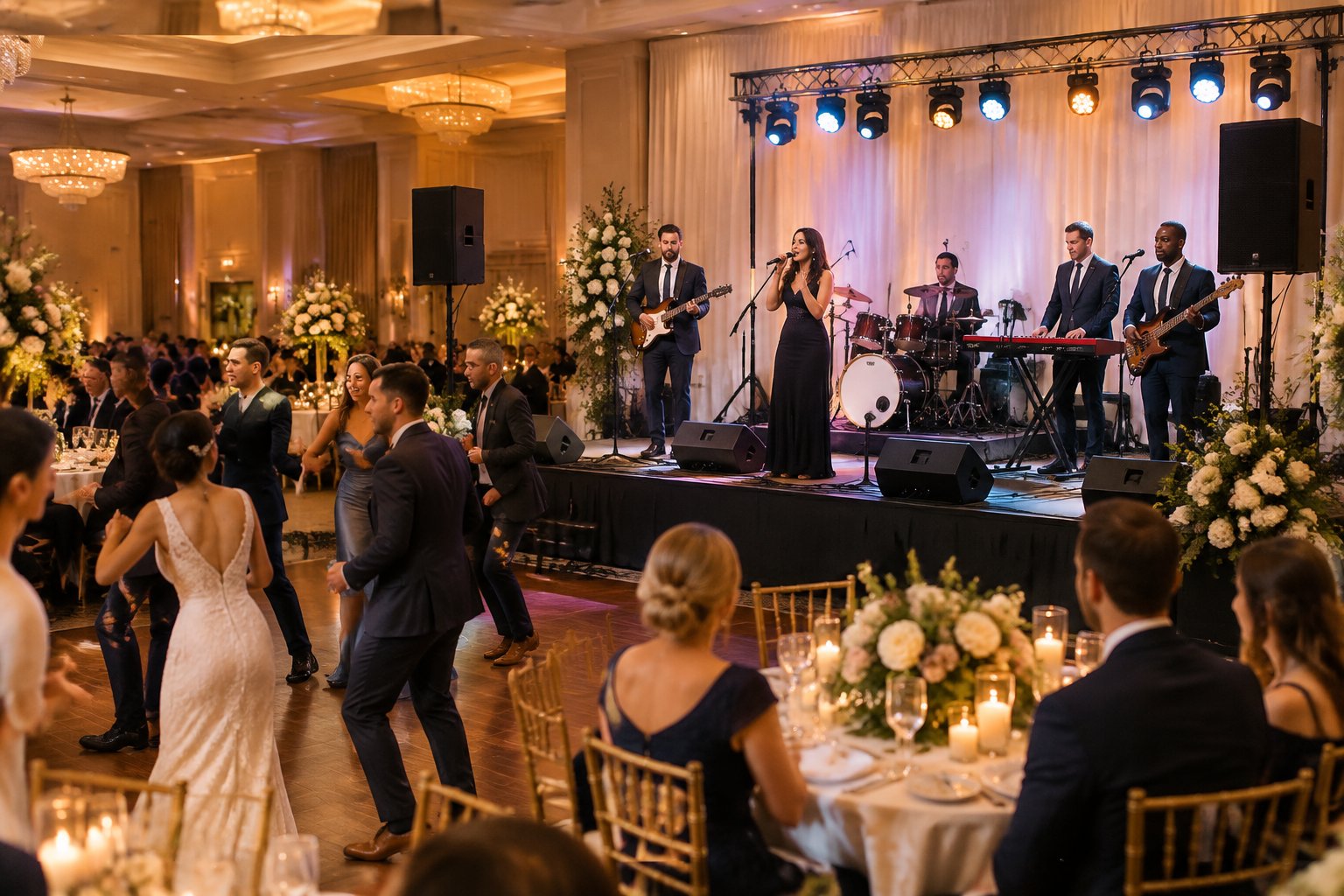
Performance Hours and Additional Music Sets
Most reception packages cover a set number of performance hours, often split into several sets with breaks. Your quote rises when you add ceremony music, cocktail hour music, dinner music, or a longer late-night set.
Ask for the full timeline:
- Arrival and load-in
- Sound check
- Guest arrival
- Ceremony
- Cocktail hour
- Dinner
- Dance sets
- Final song
- Load-out
A band may charge overtime rates when the event runs past the contracted end time. Build a buffer into your schedule so a delayed ceremony does not consume paid performance hours.
Sound, Lighting, and Production Requirements
A band quote may include a sound system, speakers, microphones, basic lighting, and a sound engineer. Larger events may need extra sound equipment, stage lighting, wireless microphones, monitors, or a fog machine.
Venue rules shape the production cost. A ballroom with installed equipment may need less gear than an outdoor wedding that requires a complete sound and lighting setup. Ask who supplies power, staging, weather protection, and equipment storage.
Travel, Date, and Venue Logistics
Travel fees may cover mileage, lodging, parking, tolls, or transport for instruments. A remote venue and a long load-in route add labor and travel time.
Peak wedding season dates often carry higher rates because demand is strong. Saturday evenings in spring and fall may cost more than weekday, Sunday, or off-season bookings. Venue access also affects pricing when the band must use stairs, long corridors, or restricted loading areas.
Custom Requests and Band Experience
Custom song requests can add rehearsal time, sheet music costs, or arrangement fees. Ask how many requests are included and when you must submit them.
An experienced professional wedding band may charge more for polished transitions, strong vocalists, reliable event timing, and an organized booking process. Check whether the band carries liability insurance if your venue requires proof before allowing setup.
What Is Included in Wedding Band Pricing?
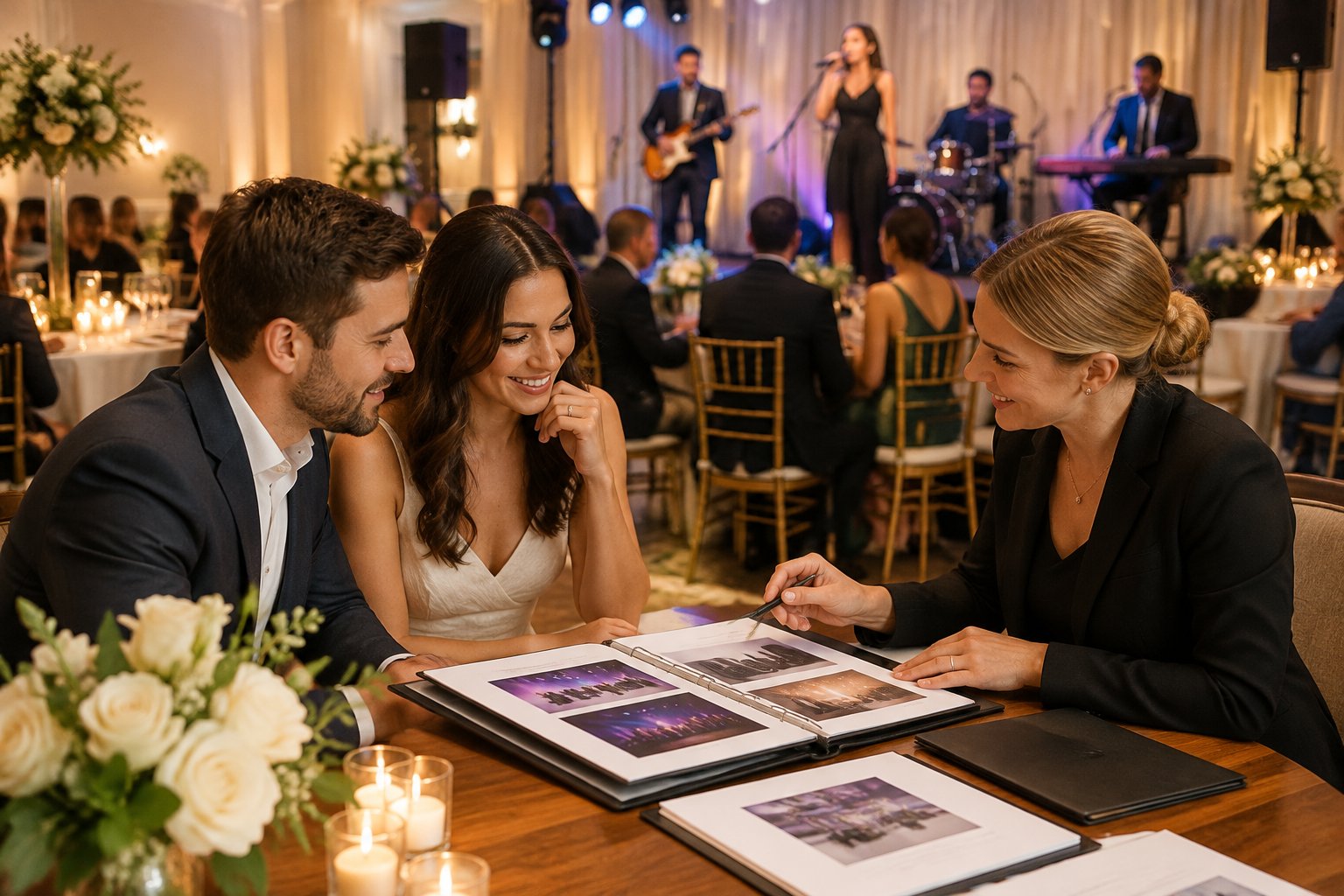
Wedding band pricing often includes the musicians, contracted performance sets, basic setup, and a sound system, while travel, extra hours, and expanded production may cost more. Read the proposal line by line before you compare the booking fee with another band.
Music During Band Breaks and Emcee Duties
Ask what happens during band breaks. Some bands provide a playlist through their sound system. Others expect the venue, DJ, or coordinator to handle recorded music.
Emcee duties also vary. A bandleader may announce the first dance, dinner service, speeches, and last song. Confirm whether those announcements are included in the band booking and whether the band brings a wireless microphone.
Setup, Sound Checks, and Venue Requirements
The base fee may include arrival, setup, sound check, performance, and teardown. Get the timing in writing, especially when your venue allows vendors to enter only during a narrow window.
Check the venue requirements for:
- Stage size
- Electrical outlets
- Sound limits
- Equipment access
- Parking
- Vendor insurance
- Meal breaks
- Curfew
A sound engineer may be part of the package for a larger band. A smaller group may have one musician manage the sound system during the performance.
Costs That May Appear Outside the Base Fee
Common extra costs include overtime rates, vendor meals, travel fees, lodging, parking, ceremony coverage, and additional sound and lighting equipment. Liability insurance certificates may also involve an administrative charge.
Sales tax, service fees, and deposits should appear in the contract. Ask whether the deposit is refundable, when the balance is due, and what happens if the event date changes.
How Can You Budget and Compare Band Quotes?
Set aside about 5% to 8% of your wedding budget for live music, then compare quotes by total event cost instead of the headline fee. A lower quote may cover fewer hours, a smaller lineup, or less equipment.
Build an All-In Entertainment Budget
Start with your total wedding budget and create one entertainment category. Include the band, DJ, ceremony musicians, cocktail hour coverage, sound system, lighting, travel, vendor meals, taxes, and gratuity if you plan to provide it.
For example, a $60,000 wedding budget creates a starting live music range of about $3,000 to $4,800. A premium band may need a larger share, especially when the reception depends on a full show.
Use a schedule to estimate performance hours. A band playing dinner and dancing for four hours has different staffing needs from a group covering the ceremony, cocktail hour, and reception.
For a broader planning framework, review this guide to how to figure out your wedding budget.
Compare Quotes on Equal Terms
Send every band the same event details:
- Wedding date and venue
- Guest count
- Performance areas
- Music schedule
- Set length
- Break plan
- Sound and lighting needs
- Special songs
- Venue restrictions
Then place the responses in a side-by-side list. Compare the number of musicians, total hours on-site, included equipment, travel policy, overtime rates, cancellation terms, and insurance coverage.
A $5,000 quote with ceremony music and lighting may offer more value than a $4,000 quote limited to four reception hours.
Ways to Lower Live Wedding Band Costs
You can reduce live wedding band costs by choosing an off-season or weekday date, booking a smaller lineup, or limiting the band to the reception. Sharing a venue’s approved sound system may also reduce equipment needs when the band accepts it.
Other options include:
- Choose a local band to reduce mileage and lodging.
- Book a duo for the ceremony and cocktail hour.
- Use recorded music during breaks.
- Keep custom requests focused on essential songs.
- Avoid overtime by setting a firm end time.
- Ask about Sunday and winter pricing.
- Book early before peak wedding season fills.
Ask for a complete package price so you can compare savings without removing a service you need.
Does “Wedding Band” Mean a Ring Instead?
In wedding planning, “wedding band” can mean live wedding entertainment or a ring exchanged during the ceremony, so the surrounding words show which cost you need. A music booking involves performers and event production; a ring involves metal, design, sizing, and gemstones.
Typical Wedding Ring Price Ranges
A single wedding ring often costs about $400 to $1,800, while wider designs, premium metals, and gemstones can push the price above $2,500. Simple stainless steel bands sit near the low end, while platinum designs command more.
Your final ring price depends on width, weight, finish, engraving, stones, and the jeweler. A matching pair also costs more than one band.
You can review how much are wedding rings on average when you are building the jewelry part of your budget.
How Metal and Style Affect Ring Costs
Platinum costs more because it is dense, durable, and highly pure. Gold prices vary by karat, color, weight, and market conditions. Stainless steel offers a low-cost option with a modern appearance.
A plain polished band needs less labor than a ring with milgrain edges, engraving, pavé stones, or a curved shape designed to fit an engagement ring. Wider bands also use more metal and raise the price.
Wedding Bands vs. Engagement Rings
A wedding band is commonly a simpler ring exchanged during the ceremony. An engagement ring often features a center stone and a more detailed setting.
The two rings may be designed as a matching set, worn together, or chosen as separate pieces. If you plan to buy both, add the ring costs to your wedding budget separately from your live music or wedding entertainment expenses.