
Barn Venue for Wedding: How to Choose the Right One
A barn venue for wedding celebrations suits you if you want rustic character, open countryside, and a flexible space for dinner and dancing. The right venue pairs that atmosphere with practical essentials such as a comfortable capacity, weather protection, accessible parking, and a clear rental agreement.
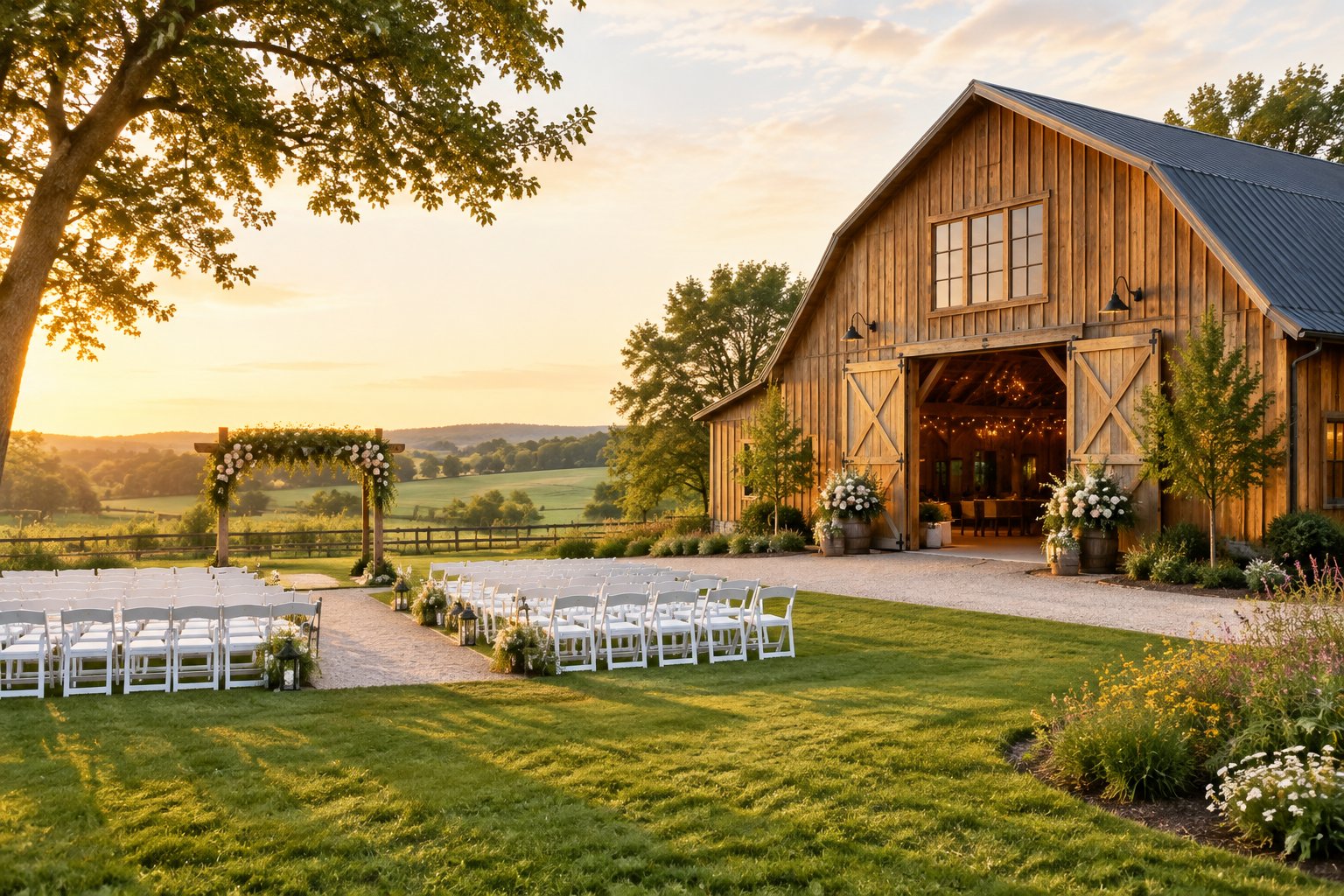
You can create a relaxed barn wedding with exposed wood, warm lighting, garden views, and personal décor. Start by choosing the guest experience you want, then compare each wedding venue by layout, services, total cost, and travel time.
If you are considering a countryside celebration near Durham, Blue Rock Farm offers private barn weddings and event packages for celebrations of up to 130 guests. Reach out to the venue to discuss your date, guest count, and preferred package.
Is a Barn Setting Right for Your Wedding?
A barn setting is right for your wedding when you value a relaxed farm wedding atmosphere, flexible indoor and outdoor spaces, and rustic details that need little decoration. The best choice depends on your guest experience, season, ceremony plan, and comfort needs.
A farm wedding venue gives you room for lawn ceremonies, photos among fields, and a reception inside a farmhouse or barn. Ask whether the property supports your preferred ceremony style and whether guests can move easily between each area.
Barn, Farmhouse, and Traditional Barn Styles
A traditional barn brings exposed beams, wood siding, large doors, and a strong rustic feel. A renovated barn wedding venue may add climate control, finished floors, restrooms, and elegant lighting.
A farmhouse adds a comfortable getting-ready space, overnight lodging, or a separate setting for a rehearsal dinner. Consider the building’s natural style before choosing décor.
Historic wood and high rafters suit a rustic wedding with greenery and simple florals. A polished interior works well with formal table settings, neutral linens, and modern arrangements.
Indoor, Outdoor, Garden, and Farm Ceremony Options
Outdoor weddings offer open skies, field views, and natural ceremony backdrops. Garden weddings bring flowers, paths, and shaded seating close to the reception area.
Indoor wedding ceremonies provide a reliable plan during heat, rain, or cold weather. Ask the venue to show you each ceremony location in person.
Confirm the rain plan, guest seating, aisle access, sound setup, and time required to move from the ceremony to the reception. A strong plan keeps guests comfortable while preserving the flow of your wedding ceremonies.
What Should You Look for on a Venue Tour?
During a venue tour, focus on the main hall, seated capacity, guest flow, weather protection, accessibility, parking, getting-ready rooms, and vendor facilities. Photos show atmosphere, while a site visit reveals the details that shape your wedding day.
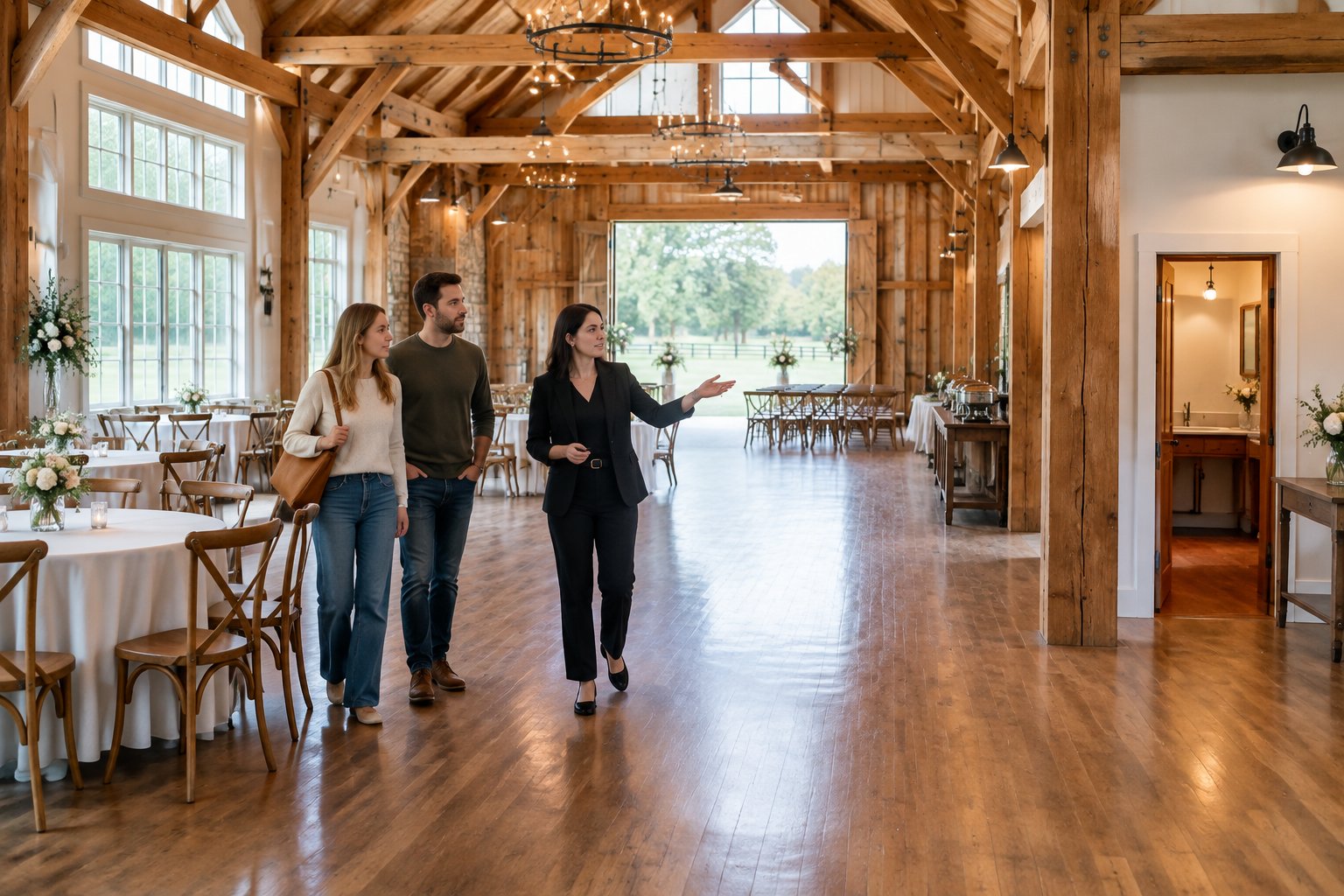
Bring your guest count, draft timeline, and vendor questions. Take notes on what comes with the rental fee and photograph areas you want to compare later.
Main Hall Layout, Guest Capacity, and Reception Flow
Ask for the seated dinner capacity with tables, chairs, buffet service, a bar, and a dance floor in place. A main hall that holds a large ceremony may feel crowded during dinner.
Walk the path from the ceremony area to cocktail hour and the reception space. Look for clear routes to restrooms, exits, the banquet hall, and outdoor areas.
High ceilings create visual impact, while support posts or narrow doors can affect table placement and vendor access. Check whether the venue provides a separate dance floor, tables, chairs, linens, and a sound area.
Ask how long staff needs to reset the room if your ceremony and reception share one space.
Weather Comfort, Accessibility, and Parking
Ask whether the barn has heating, air conditioning, fans, or portable units. Confirm the rain plan in writing, including the backup ceremony location and any added fee.
Walk from parking to the ceremony, main hall, restrooms, and tables. Check the surface after wet weather and identify spaces near the entrance for guests with mobility needs.
Ask about overflow parking, shuttle drop-off, rideshare access, and lighting after sunset.
Getting-Ready Areas and Vendor Support
A calm morning starts with a clean dressing room, mirrors, seating, outlets, and nearby bathrooms. Ask when you receive access and whether separate spaces are available for each wedding party.
Inspect the commercial kitchen and ask what your caterer can use. Confirm refrigeration, sinks, prep counters, power, trash handling, and loading access.
Ask who manages setup, cleanup, bar service, vendor arrival, and emergency needs at the wedding and event venue.
How Can You Make a Barn Feel Like Your Wedding?
You make a barn feel personal by using lighting, greenery, seating, and meaningful details that support the building’s natural character. Choose a focused design plan so the room feels intentional and comfortable.
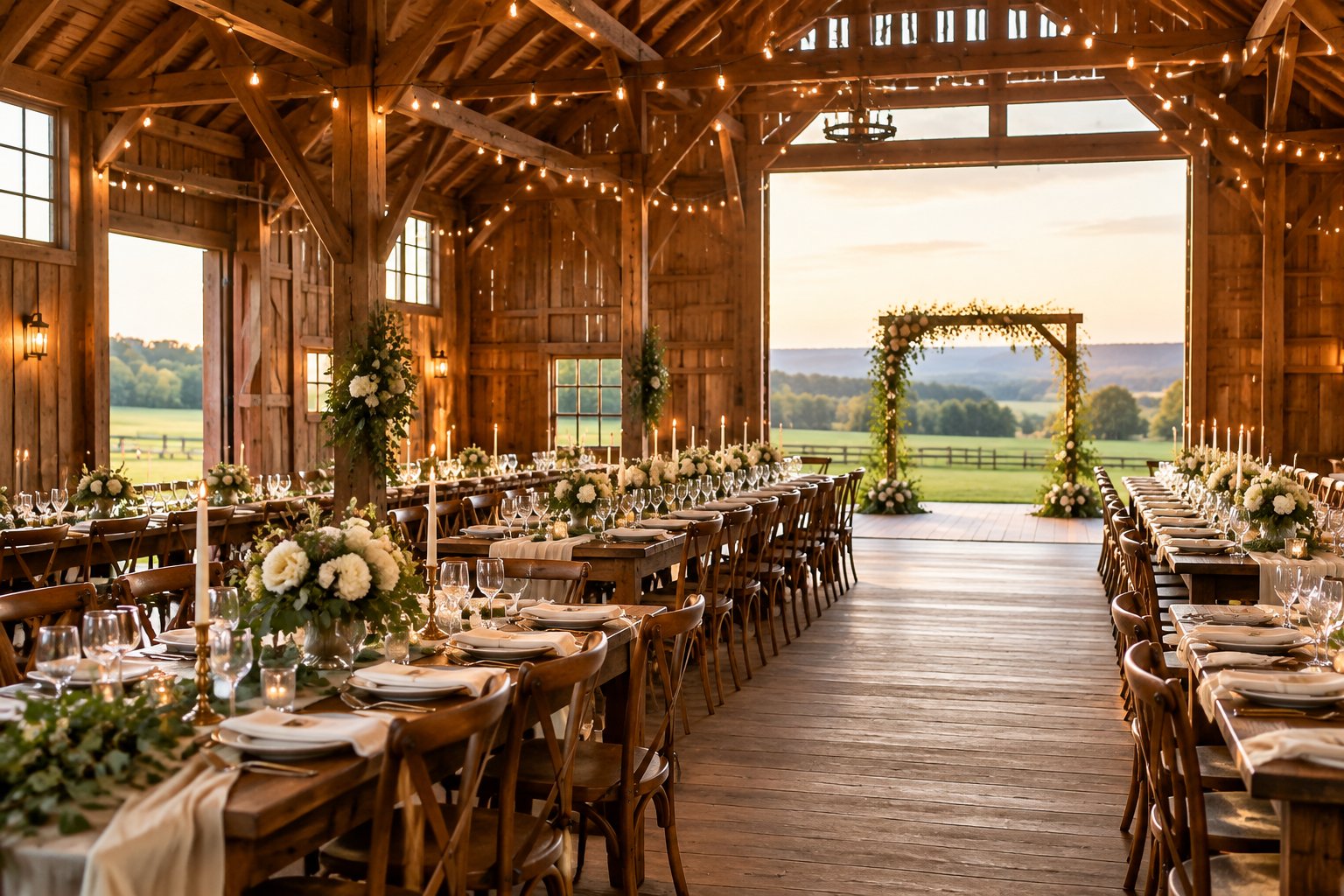
Start with the barn’s strongest features, such as timber framing, wide windows, old wood, or sliding doors. Your décor should guide attention toward those details while adding color and warmth.
Lighting, Greenery, and Architectural Details
String lights soften high ceilings and create a welcoming glow after sunset. Use warm bulbs along rafters, above tables, or around the dance floor.
Candles, lanterns, and low table lamps add smaller points of light where venue rules allow them. Frame barn doors with greenery, floral clusters, or fabric that matches your colors.
Garlands along beams bring nature inside, while potted plants work well near entrances and lounge areas. Check whether hanging décor, open flames, staples, and tape are allowed before ordering supplies.
Use the existing architecture as part of your design. A dramatic doorway can become a ceremony entrance, while a blank wall can hold your seating chart or escort display.
Ceremony and Reception Styling Ideas
Create a ceremony focal point with a floral arch, wooden arbor, or fabric backdrop. Position it so guests see the barn, fields, or garden behind you without blocking important walkways.
For the reception, choose long farm tables for a family-style feel or round tables for easy conversation. Add colored napkins, textured runners, place cards, and simple centerpieces.
You can find more barn wedding table decoration ideas when you are choosing details for each place setting. Use bench seating for the ceremony, then move guests to assigned reception tables if the venue supports the reset.
A lounge with soft chairs, rugs, and small tables gives guests a comfortable place to talk away from the dance floor. For more design direction, explore these barn wedding ideas.
How Much Does a Barn Wedding Venue Cost?
A barn wedding venue commonly costs about $2,000 to $15,000 for the venue itself, with the final amount shaped by location, date, capacity, access hours, and included services. A rental-only event barn may cost less at first, while a package venue may include catering, bar service, rentals, setup, and coordination.
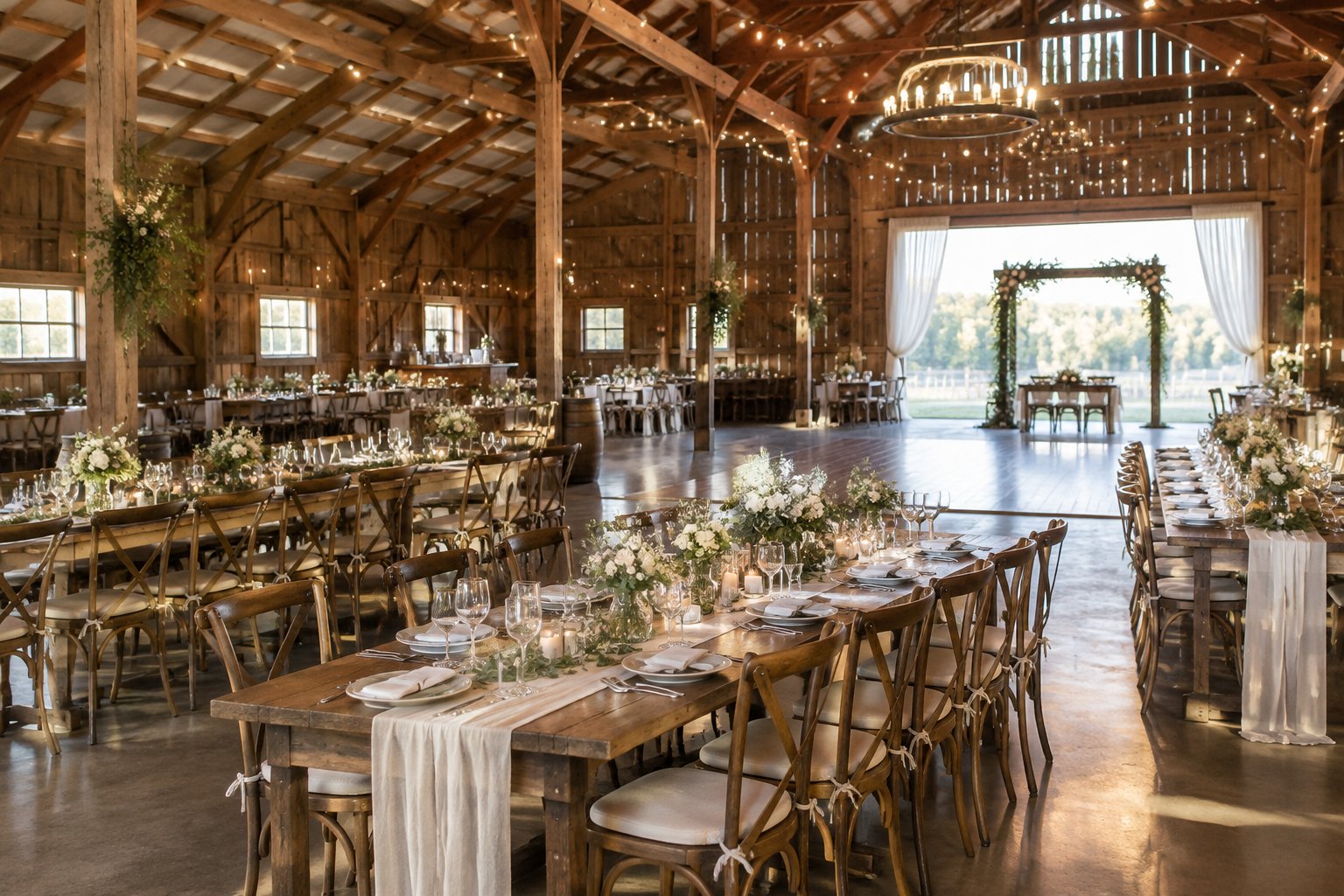
A Friday, Sunday, winter, or shoulder-season date can reduce the rental fee. Compare the complete wedding budget, including restrooms, insurance, rentals, catering, transportation, heating or cooling, and cleanup.
What Is Usually Included in the Rental Fee?
Rental agreements vary, so ask for an itemized list. Possible inclusions include:
- Tables and chairs
- Reception space and ceremony area
- Basic lighting
- Getting-ready rooms
- Setup and cleanup
- Parking
- Bar furniture or service areas
- On-site venue staff
Confirm quantities and timing. “Tables included” should specify how many tables, which sizes, their condition, and who sets them up.
Ask whether the fee covers the full wedding day, rehearsal access, décor setup, and next-day pickup.
Questions to Ask About Vendors, Catering, and Add-Ons
Ask whether you can select any licensed caterer, choose from a preferred list, or use in-house catering. Confirm outside-caterer fees, corkage, kitchen access, alcohol rules, bartender requirements, and insurance.
Price every add-on before comparing venues. Common charges include restroom trailers, linens, place settings, dance floors, heaters, fans, shuttle service, trash removal, coordination, and overtime.
A wedding venue cost guide can help you organize these expenses. Request the payment schedule, deposit terms, cancellation policy, rescheduling rules, noise cutoff, vendor insurance requirements, and cleanup responsibilities in writing.
Finding a Convenient Rural Location
A convenient rural wedding venue keeps the countryside atmosphere while giving guests and vendors a manageable trip from nearby cities. Look at drive time, lodging, road conditions, parking, cell service, and vendor access before you reserve a date.
Comparing Columbus and Dayton Area Options
Columbus and Dayton offer access to hotels, airports, rental cars, and a broad vendor network, while nearby rural areas provide fields, farms, and spacious barn settings. Compare each wedding venue by distance from the city center, route quality, guest capacity, and nearby lodging.
Ask whether the venue has hosted weddings with your guest count. Review the route at the time your guests will travel, especially for evening events and winter celebrations.
Search for a wedding location that fits your guest experience before scheduling tours.
Planning Travel for Guests and Wedding Vendors
Send guests clear directions with the invitation or wedding website. Include hotel options, rideshare limits, shuttle details, parking instructions, and a suggested arrival time.
Give caterers, rental companies, DJs, photographers, and florists the full address and loading instructions. Confirm whether large trucks can reach the barn, where vendors unload, and when they can enter.
If alcohol is served, arrange a shuttle or designated transportation for guests who should not drive.
Building an Event Barn Instead of Renting One
Building an event barn suits a property owner who wants a long-term wedding and event venue with control over layout, capacity, guest amenities, and brand identity. Start with zoning, code requirements, a business plan, and a realistic construction budget before choosing finishes.
What Is an Event Barn Kit?
An event barn kit is a pre-engineered building package designed for gatherings such as weddings, parties, and corporate events. Plans can include open floor plans, covered porches, large sliding barn doors, vaulted ceilings, and customizable exterior details.
Work with local professionals to confirm that the design meets zoning, building, fire, accessibility, septic, electrical, plumbing, and licensing requirements. A kit provides a structure and design framework, while your project still needs site planning, engineering, permits, utilities, and construction management.
Design Priorities for a Profitable Venue
Plan capacity before selecting the building’s appearance. The main hall needs enough room for seated meals, circulation, a dance floor, a DJ or band, buffet service, and safe exits.
Design parking and drop-off areas for guest vehicles, shuttles, catering trucks, and emergency access. Include a commercial kitchen with power, water, refrigeration, ventilation, prep space, and a separate loading route.
Add accessible restrooms, dressing rooms, storage, staff areas, and a reliable climate system. A flexible wedding and event venue can serve weddings, reunions, parties, business gatherings, and seasonal events.
Review expected bookings, staffing, maintenance, insurance, utilities, marketing, and debt service before construction begins. Choose durable finishes that preserve the barn look while supporting frequent cleaning and heavy guest use.