
Barn Wedding Venues Midlands: How to Choose Yours
A barn wedding gives you countryside charm, flexible spaces, and a warm setting for your ceremony and reception. The best barn wedding venues Midlands couples can choose are those that match your guest count, travel needs, preferred ceremony style, and level of planning support.
A beautiful building helps, yet the right layout and clear costs shape your day just as much. Start by deciding whether you want a traditional barn with original beams, a polished conversion with modern comforts, or a farm setting with open land for outdoor celebrations.
Check how the venue handles rain, heating, catering, accommodation, and supplier access before you fall in love with the photographs. You can begin your search through the how to pick a wedding location guide, then arrange viewings with venues that fit your guest list and budget.
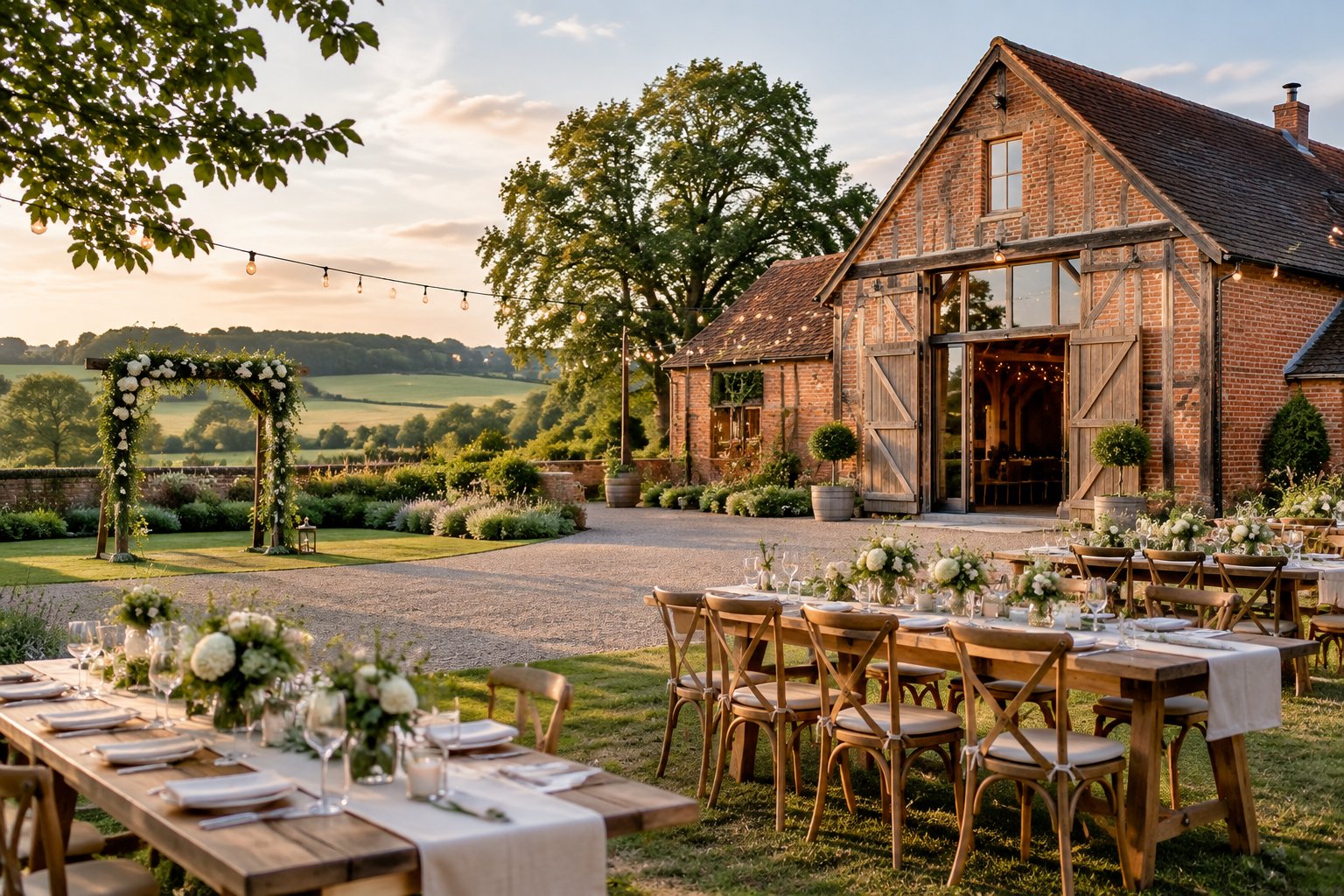
How to Choose the Right Barn Setting
Choose a barn wedding venue that gives you the atmosphere you want while supporting your guest count, ceremony plan, food service, and weather backup. The building should feel special, yet its access, facilities, and staff support will shape how smoothly your wedding day runs.
Your choice comes down to the venue style, booking terms, creative freedom, and comfort across the year. Look closely at the spaces you will use from morning preparation through the wedding breakfast and evening party.
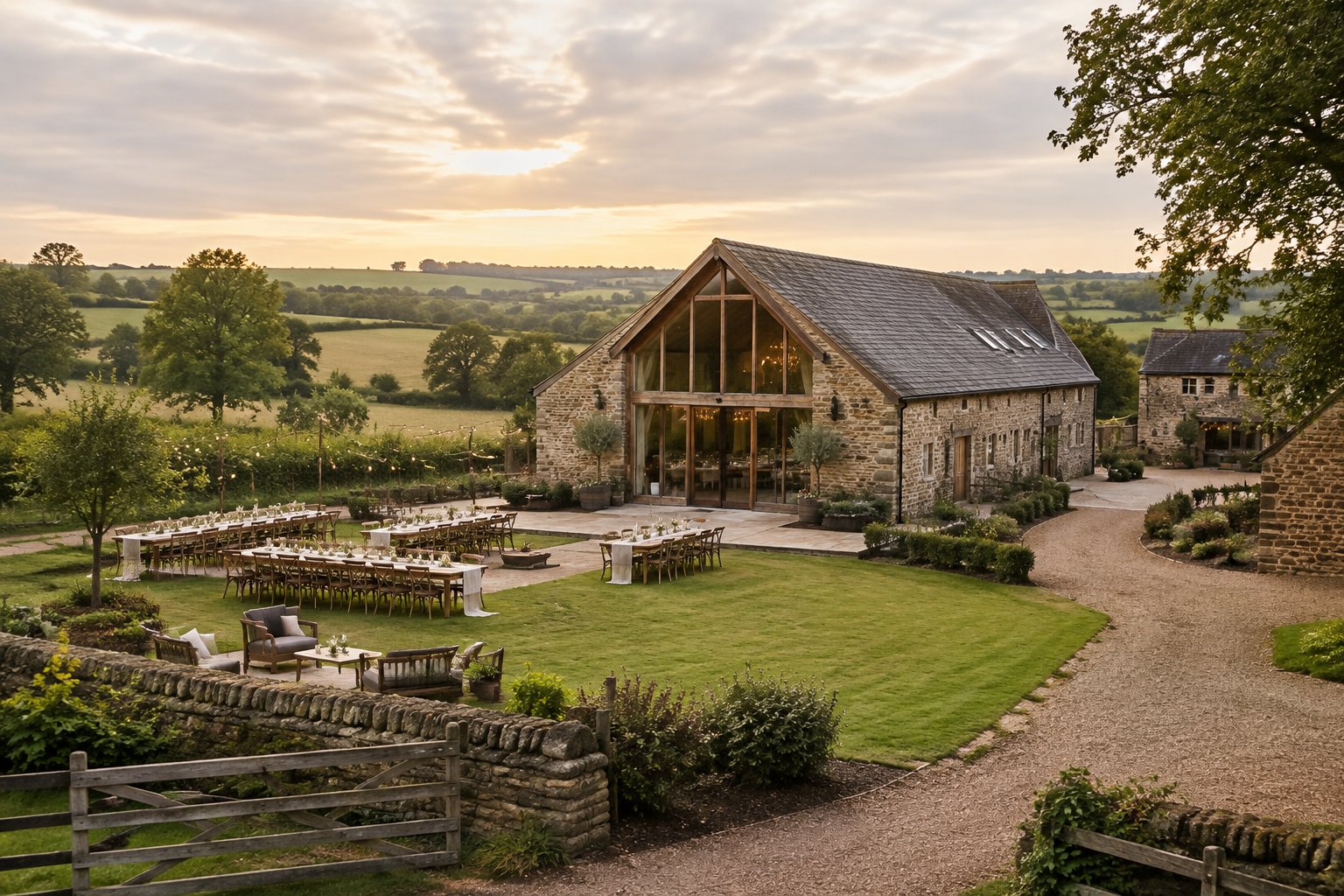
Traditional Barn, Contemporary Conversion, or Farm Venue?
A traditional barn suits a rustic wedding with exposed beams, timber doors, stone walls, and a strong sense of place. A contemporary conversion brings polished floors, lighting, heating, restrooms, and layouts designed around weddings.
A farm wedding venue gives you extra space for photographs, lawn ceremonies, woodland walks, and relaxed outdoor dining. Check whether farmland or woodlands sit close enough to the main building for guests with limited mobility.
For intimate weddings, a smaller rustic wedding venue creates a comfortable atmosphere without leaving large areas unused. Ask to see the ceremony room, reception space, bridal preparation room, restrooms, and routes between them.
Exclusive Use, DIY Freedom, and In-House Support
Exclusive use gives you control of the property for your wedding, including guest movement, music, styling, and photography. Confirm the hours included, access for setup, cleanup duties, and any noise restrictions.
DIY freedom works well if you have a clear design plan and trusted suppliers. Ask about candles, hanging décor, outside caterers, alcohol, furniture hire, and storage.
In-house support reduces the number of jobs you need to manage. Find out whether a wedding coordinator handles the timeline, supplier arrivals, room changes, wedding ceremonies, and evening transition.
What Makes a Venue Work in Every Season?
A year-round venue needs reliable heating, ventilation, lighting, covered paths, and a strong rain plan. Visit during the season you are considering if possible, paying attention to mud, parking, shade, and indoor comfort.
Ask where an outdoor ceremony moves during heavy rain and how quickly the room can be reset for the wedding breakfast. Check whether the backup space holds your full guest count with chairs, tables, a bar, and a dance floor.
Where to Look Across the Midlands
Search across the Midlands by travel time first, then compare each area’s landscape, accommodation, and venue style. Birmingham access helps guests reach the countryside, while counties farther out offer quieter farmland, woodland, and larger estates.
A practical search area gives you more suitable choices and makes guest travel easier. Include nearby hotels, taxi availability, road access, and parking when you compare locations.
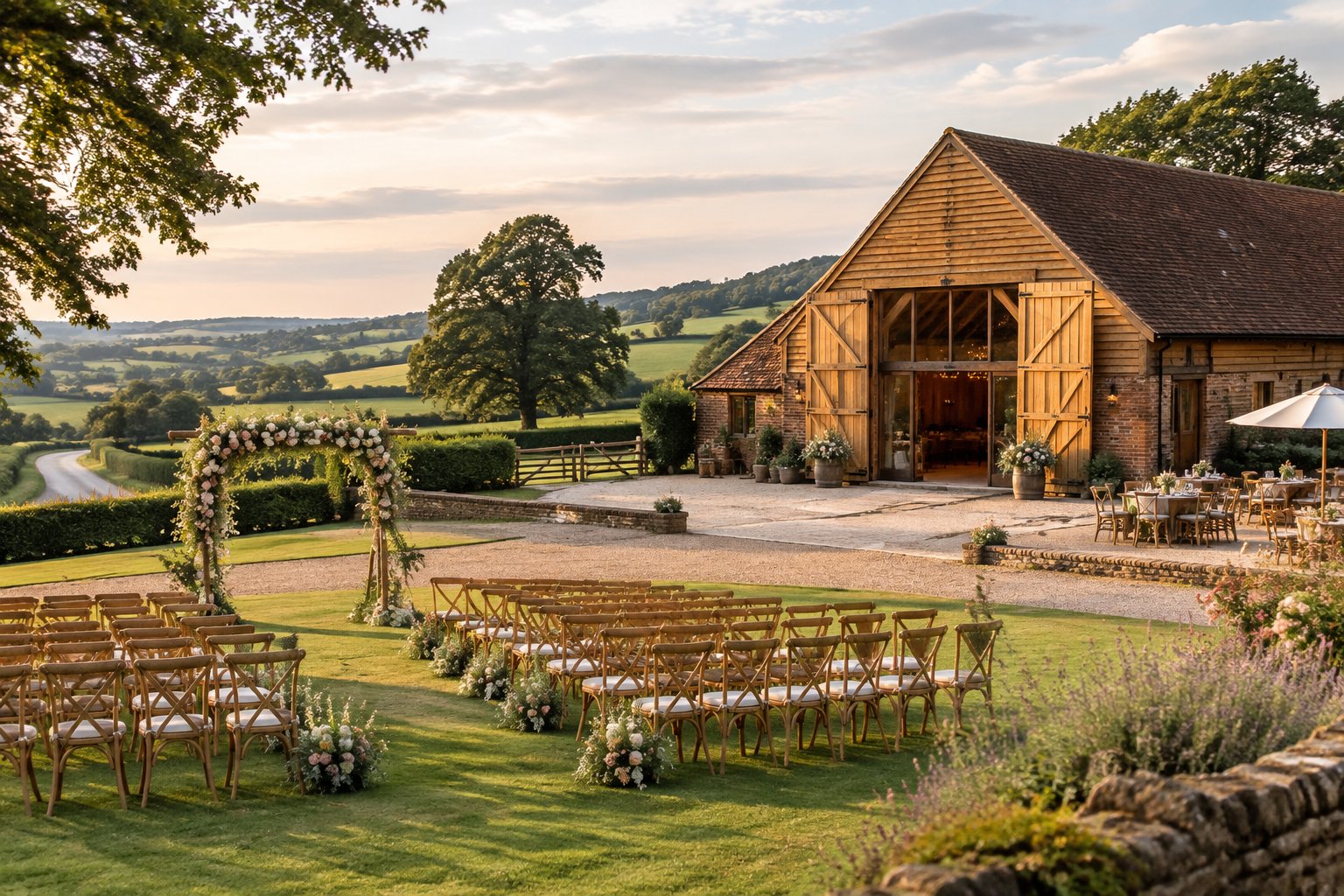
West Midlands and Birmingham-Accessible Countryside
The West Midlands gives you countryside settings within reach of Birmingham, Wolverhampton, and Solihull. Look around the edges of Warwickshire, Staffordshire, and Worcestershire for barns with fields and event facilities.
This area works well when guests are coming from different cities. Check journey times at the expected arrival hour, since rural roads can add time after the main motorway route ends.
Warwickshire, Leicestershire, and the Cotswolds Fringe
Warwickshire and Leicestershire offer rolling farmland, historic buildings, and refined barn conversions. Warwick, the surrounding villages, and the Cotswolds fringe suit couples who want countryside photographs with good links to larger towns.
The border areas can give you more choice across several counties. Confirm the official venue address before booking, since nearby listings may describe the region differently.
Worcestershire, Shropshire, and Herefordshire Escapes
Worcestershire, Shropshire, and Herefordshire offer peaceful settings with orchards, hills, lakes, and woodland. These areas suit a relaxed farm wedding with space for outdoor ceremonies and private celebrations.
Review accommodation early, especially when the venue sits away from a large town. Ask about local taxis, guest transport, and late-night collection before sending invitations.
Staffordshire, Northamptonshire, and Lincolnshire Options
Staffordshire offers rural estates, lakeside barns, and woodland settings. Northamptonshire brings restored historic barns and landscaped grounds, while the Lincolnshire countryside gives you open views and generous event space.
Compare each location by the full guest journey. Look at parking, accessible paths, nearby hotels, vendor loading, and the route between ceremony and reception areas.
Notable Venues to Add to Your Shortlist
Add venues to your shortlist by matching their setting and service model to your wedding plans, then confirm current dates, pricing, and capacity directly with each owner. The Midlands has options ranging from historic barns and farm estates to polished venues with in-house food and planning teams.
Use the names below as starting points for research. Your shortlist should include venues from more than one area so you can compare travel, facilities, and atmosphere fairly.
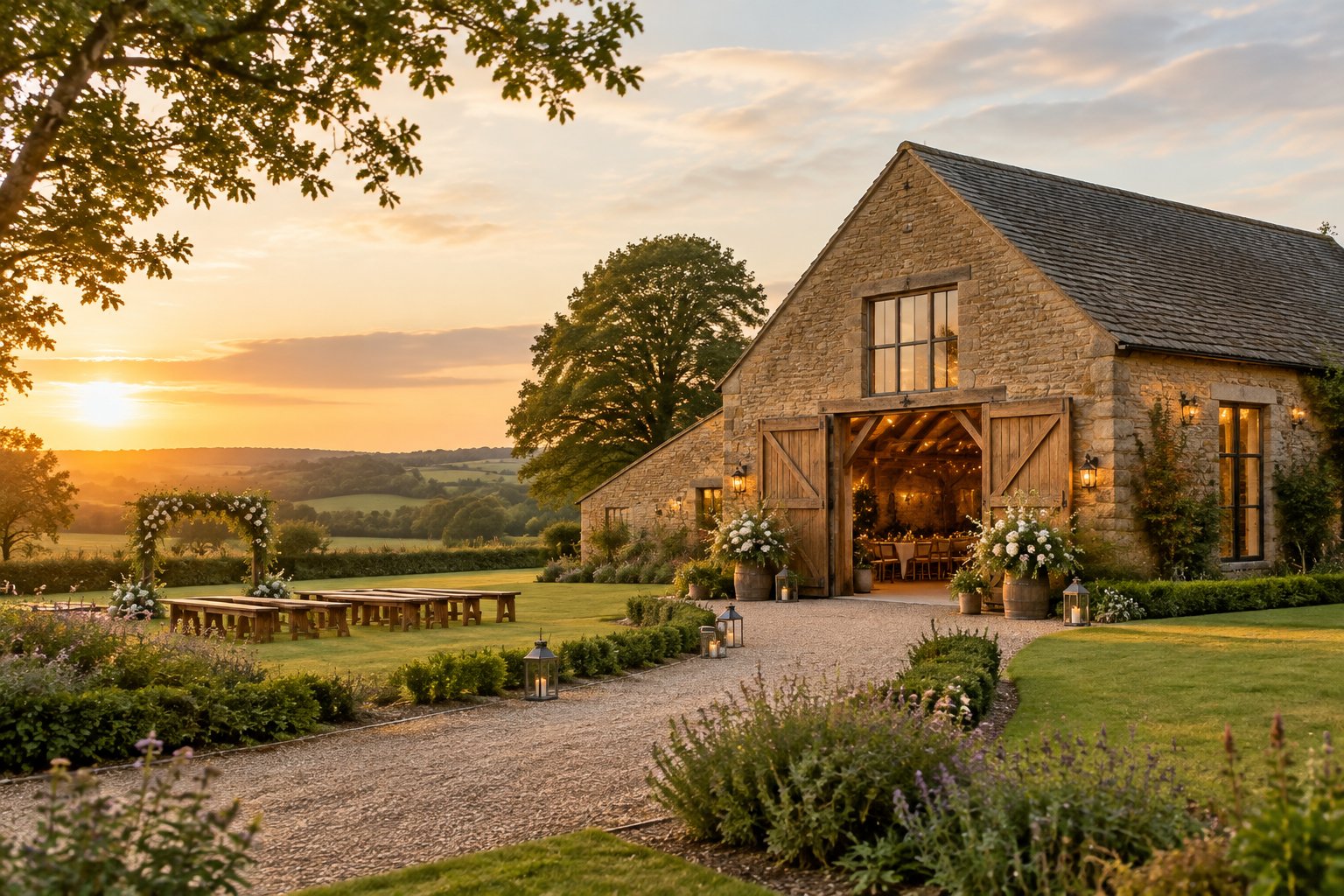
Characterful Choices Near Warwickshire and Leicestershire
Mythe Barn brings a refined rustic style to Leicestershire farmland, with indoor and outdoor ceremony options and space for formal dining or relaxed food service. Shustoke Farm Barns, including Shustoke Barn, offers an 18th-century setting in Warwickshire with vaulted ceilings and flagstone floors.
Dodford Manor and Dodmoor House provide Northamptonshire choices with restored barns, private grounds, and a strong focus on exclusive celebrations. The Mill Barns and Foxtail Barns add polished countryside settings for couples seeking distinctive architecture and guest facilities.
Popular West Midlands, Worcestershire, and Shropshire Venues
Burlton Manor and Curradine Barns suit couples seeking rural character in Shropshire and Worcestershire. The Blakelands Estate, Manor Hill House, and Barns & Yard offer additional countryside settings with room for personal styling.
Wootton Park and Bredenbury Court bring lakeside or estate character to the shortlist. Coton House Farm combines a working-farm setting with separate preparation space and reception areas.
Staffordshire, Northamptonshire, and East Midlands Favourites
Grangefields, Blackwell Grange, and Blithfield Lakeside Barns cover a range of historic, modern, and waterside styles. Hanbury Barns Wedding Venue, Foxtail Barns, and The Hundred House offer further options across Staffordshire and nearby counties.
For a wider East Midlands search, include Tithe Barn, Stone Barn, Hazel Gap Barn, Abbey Farm Weddings, Elsham Hall, The Hall Barns, Thetford Farm Barn, and Redhouse Barn. Check each venue’s licensed ceremony spaces, accommodation, catering rules, and current guest limits before arranging a tour.
What to Ask Before You Book
Ask for written details about capacity, weather plans, inclusions, catering, accommodation, styling rules, and extra charges before you sign a contract. These answers show how each venue will work in practice and help you compare quotes accurately.
Bring your guest estimate and preferred date to every viewing. Ask the same questions at each venue so your shortlist reflects real differences.
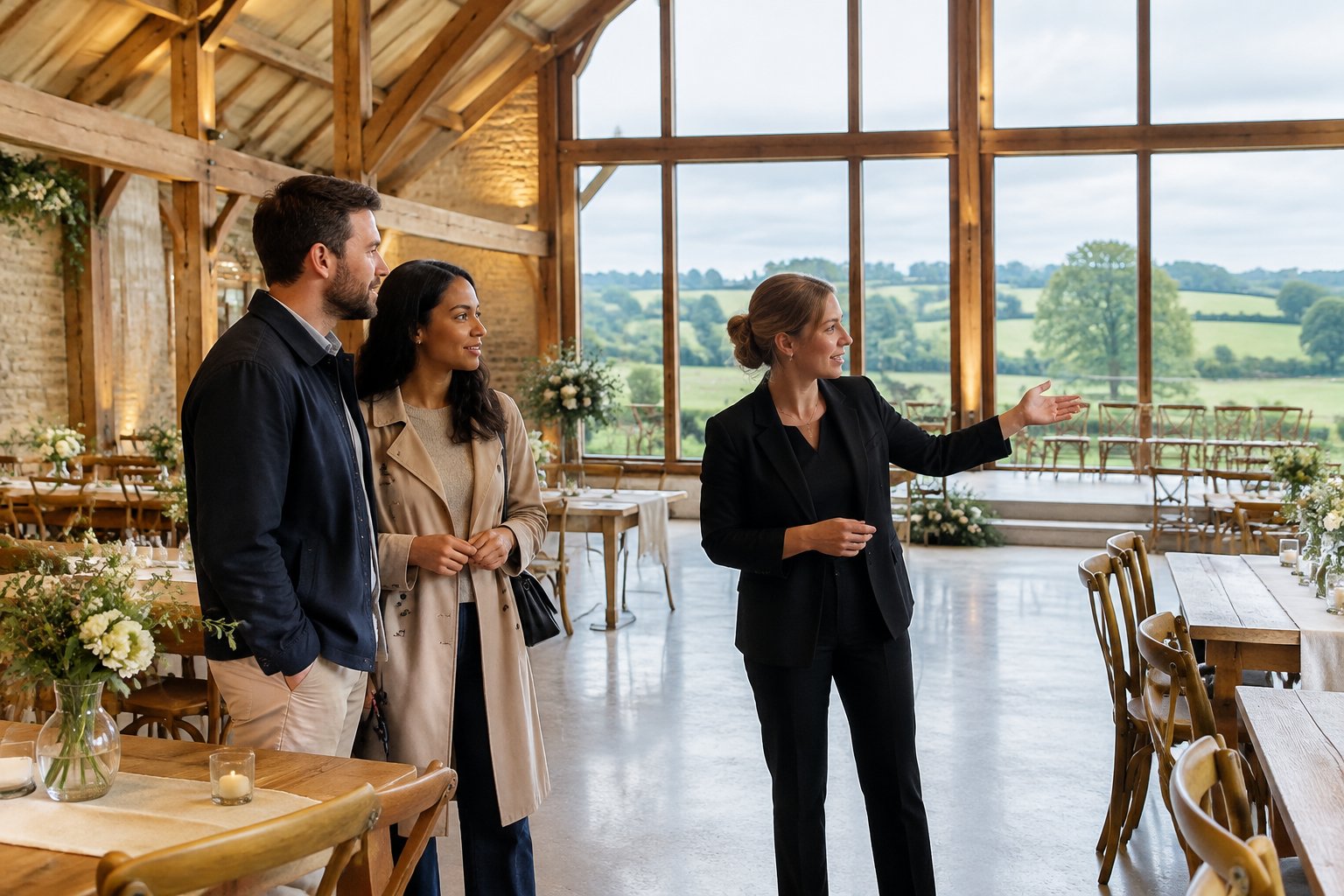
How Many Guests Can the Spaces Comfortably Hold?
Ask for seated capacity with your planned table layout, bar, buffet, dance floor, and entertainment area in place. A room that holds 150 ceremony guests may feel tight during dinner and dancing.
Ask whether the venue uses different rooms for the ceremony, drinks reception, wedding breakfast, and evening party. Walk between each space and check stairs, paths, restrooms, and access for older or disabled guests.
Can You Have an Outdoor Ceremony and a Strong Rain Plan?
Confirm whether the outdoor ceremony area is licensed and whether the venue provides chairs, sound equipment, umbrellas, or staff support. Ask how much time the team needs to move the ceremony indoors.
The rain plan should include a suitable indoor space, seating for your full guest count, and a clear decision time. Ask about wind, heat, muddy ground, parking conditions, and guest access during poor weather.
What Is Included in Hire, Catering, and Accommodation?
Request an itemized quote covering venue access, tables, chairs, lighting, setup, cleanup, staff, parking, and preparation rooms. Check whether catering comes from the venue, an approved list, or your own supplier.
Ask about kitchen access, bar service, corkage, service charges, minimum guest numbers, and overtime. Venues linked with Cripps & Co, for example, may provide in-house food and drink, so confirm the menu, tasting process, and included service before comparing the package with a dry-hire venue.
List nearby or on-site accommodation, transport options, and breakfast arrangements. Confirm the deposit, payment dates, cancellation terms, insurance needs, and rescheduling rules in writing.
How Much Styling Freedom Do You Really Have?
Ask whether you can bring your own florist, décor team, furniture, candles, signage, and lighting. Confirm rules for nails, tape, hanging items, open flames, confetti, and outdoor installations.
Check when you can access the barn for setup and when everything must be removed. Take measurements of doors, beams, tables, and key display areas before ordering large décor pieces.
How to Compare Shortlisted Venues With Confidence
Compare shortlisted venues with a scorecard that weighs your priorities, the complete guest journey, and the full cost of the booking. A consistent method helps you judge a photogenic barn alongside a practical venue with clearer support.
Give each venue the same questions and record the answers after every viewing. Save contracts, menus, floor plans, and quotes in one folder so small differences remain easy to spot.
Build a Viewing Scorecard That Reflects Your Priorities
Choose five to eight criteria that affect your day, such as guest comfort, ceremony options, food, location, accommodation, styling freedom, and coordinator support. Give each one a score from one to five, then add notes that explain the rating.
Record the details that photographs cannot show, including heating, acoustics, parking surfaces, restroom access, supplier loading, and room flow. Add the full quoted cost beside the score so a low hire fee does not hide expensive extras.
A venue with fewer decorative features might score higher when it offers a clear plan, strong staff support, and easy guest movement.
Check Travel, Guest Stays, and the Full-Day Flow
Plan the route from guest arrival to departure. Include parking, welcome drinks, ceremony seating, photographs, dinner, dancing, restrooms, and overnight stays.
Ask how long key transitions take and where guests wait if the room is being reset. Check nearby hotels, taxi services, shuttle options, and late-night transport before you make a decision.
A venue finder can help you create a first list, yet a viewing reveals whether the layout suits your timeline and guest needs.
Use Directories and Venue Finders Wisely
A wedding venue directory helps you filter by county, capacity, ceremony type, style, and facilities. A venue finder is useful for discovering names across the West Midlands, Warwickshire, Leicestershire, and the East Midlands.
Treat directory details as a starting point and confirm every important point with the venue. Ask for current pricing, available dates, package inclusions, licensing, accommodation, and supplier rules.
When you identify the best barn wedding venues for your plans, request the same written information from each finalist and compare the contracts line by line.