
Barn Wedding Venues: How to Find the Right One
A barn wedding venue gives you a warm setting, open space, and a natural connection to the landscape. The right venue is the one that fits your guest count, weather plan, budget, and preferred level of service while still feeling like your celebration. You can find that fit by comparing the full guest experience, not just the barn’s appearance.
Look for clear answers about climate control, ceremony locations, restrooms, accessibility, vendor rules, music curfews, and setup time. A beautiful space becomes much easier to enjoy when those details are settled before you sign. Start your shortlist with venues that match your date, location, and guest count, then schedule tours to see how each property works in person.
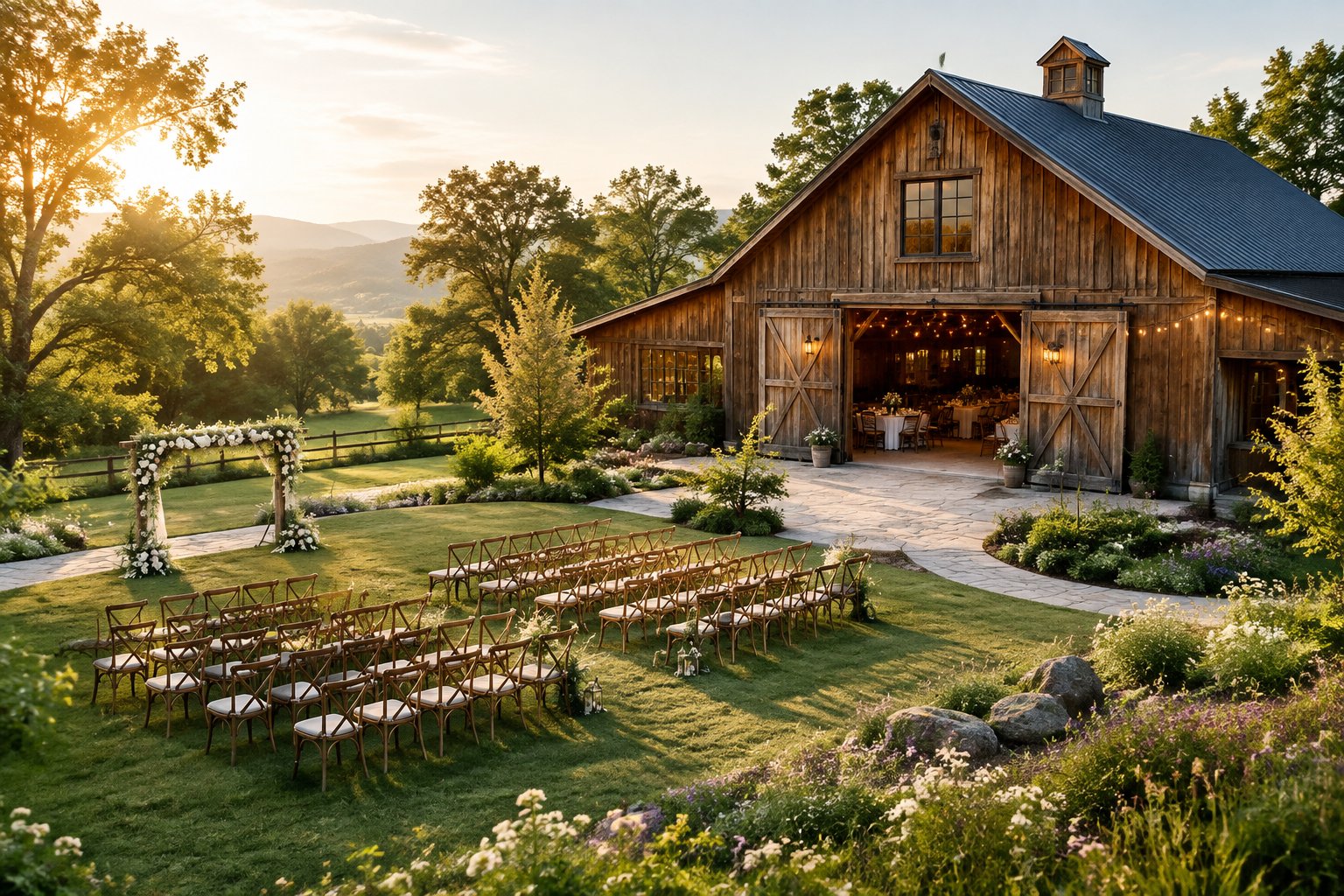
What Makes a Barn Setting the Right Fit?
A barn setting fits you best when you want character, flexible design, and a celebration connected to open land. The property should also provide the practical features your guests need, including comfortable seating, safe paths, dependable restrooms, and a weather-ready plan.
A rustic wedding venue can range from a preserved historic barn to a polished wedding barn with modern systems. Some properties focus on barn & farm weddings, while others operate as a farm wedding venue, wedding retreat, or full wedding and event venue. Compare the feeling of the property with the services behind it.
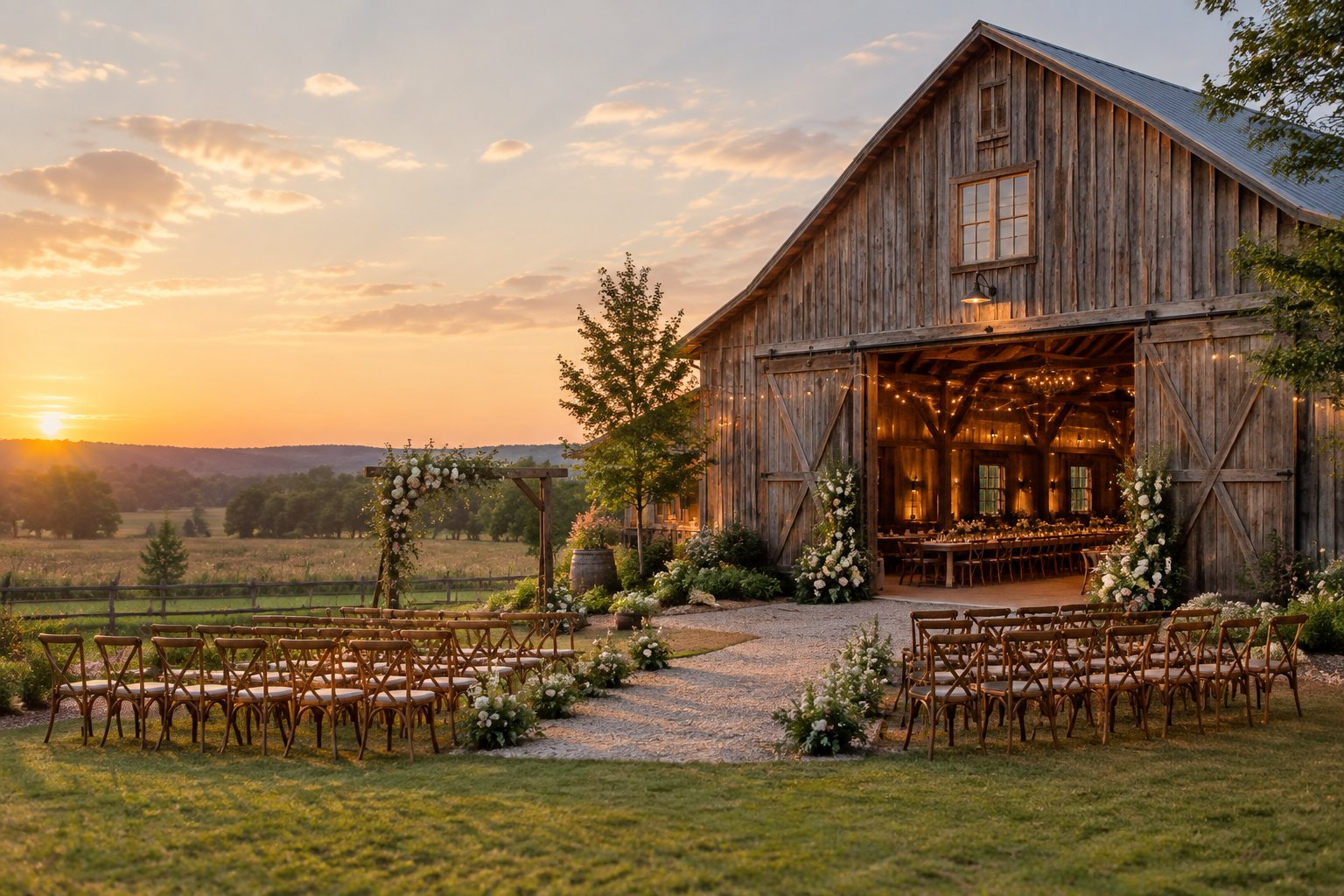
Historic Character vs. Modern Comfort
A historic barn brings hand-hewn beams, aged wood, wide doors, and a strong sense of place. Ask about structural updates, electrical capacity, heating, air conditioning, insulation, and floor conditions before you fall in love with the setting.
A contemporary wedding venue may use barn-inspired design with clean lines, tall windows, polished floors, and built-in lighting. A historic wedding venue offers deeper character, while a newer event barn may provide easier temperature control and flexible layouts. Choose the balance that supports your wedding day.
Farm, Ranch, and Retreat Experiences
A working farm gives you fields, animals, seasonal views, and a more connected countryside experience. A ranch may add wide lawns, mountain or prairie scenery, and outdoor gathering areas. A wedding retreat can include cabins, cottages, or shared lodging that keeps your guests close throughout the weekend.
Ask how active the property remains during your event. Find out whether farm work, equipment, animals, or public access will affect ceremony noise, photographs, or guest movement. If you want a private weekend, confirm the areas reserved for your group.
Guest Counts, Privacy, and Weekend Stays
Start with your seated dinner count, then add room for a dance floor, buffet or catering stations, bar service, DJ equipment, lounge seating, and clear walkways. A venue’s maximum capacity may describe standing guests, so request the capacity for your exact reception layout.
Confirm whether you receive exclusive use of the property. Ask when you can arrive, whether a rehearsal is included, and whether Friday-to-Sunday access is available. On-site lodging helps with transportation and lets guests enjoy a full wedding retreat, while nearby hotels require a room block and a plan for late-night travel.
How to Compare Properties Before You Tour
Compare every property using the same facts: ceremony options, reception flow, capacity, guest comfort, and vendor policies. A simple worksheet helps you spot the difference between a venue that looks appealing and one that supports your plans.
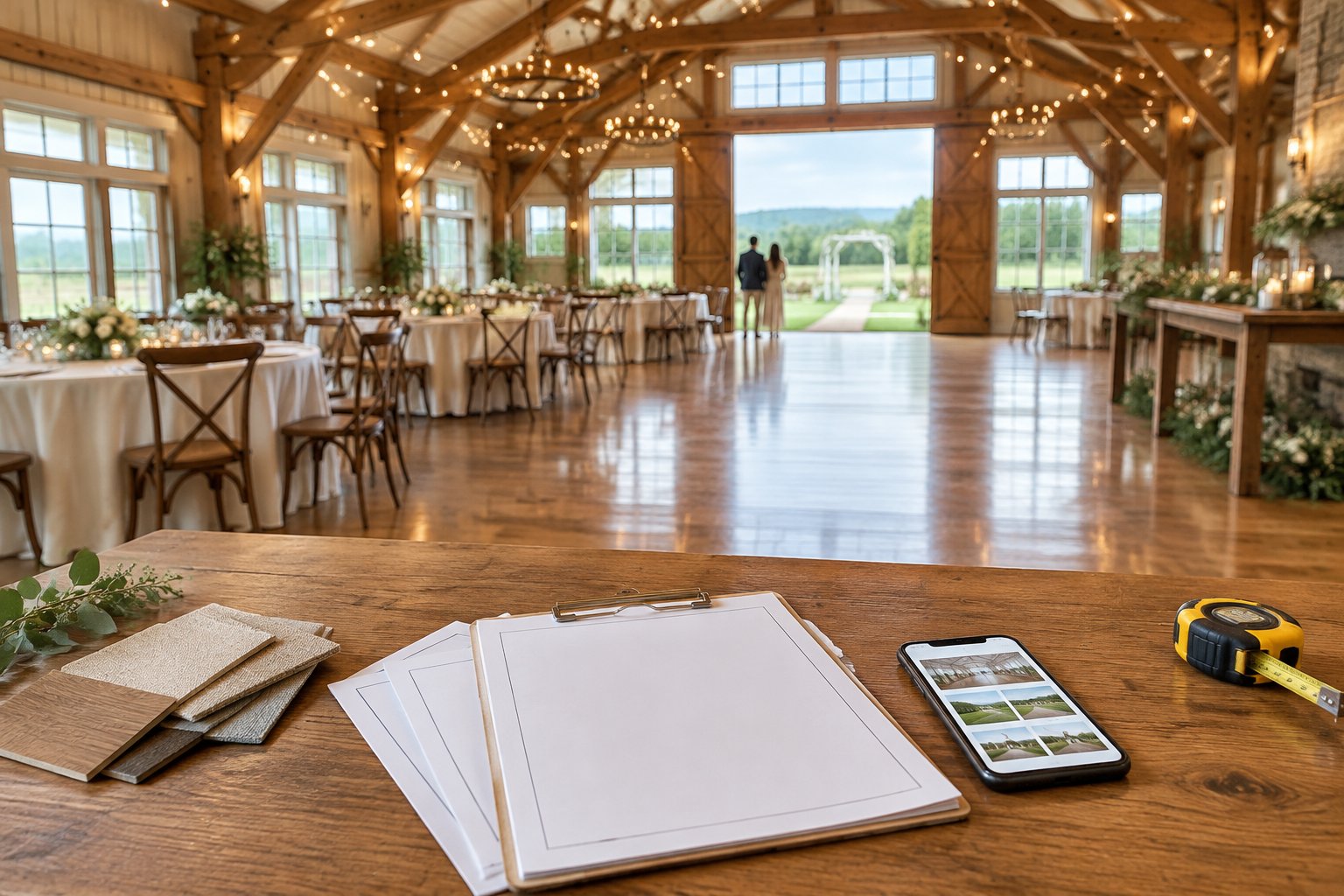
Indoor and Outdoor Ceremony Options
Ask whether the property offers an outdoor ceremony space, an indoor backup, or both. Walk the route from guest parking to the ceremony, cocktail area, and reception room.
For civil ceremonies, confirm whether the location meets local requirements and whether an authorized officiant must be present. Ask who makes the weather call, how much notice you receive, and whether moving indoors changes the layout or fee.
Reception Layout, Capacity, and Dance Space
Request a floor plan for your guest count. Mark tables, the dance floor, buffet, bar, DJ or band, cake table, gift table, and exits. Then check whether guests can move comfortably between dinner and dancing.
Ask to see the tables and chairs included with the rental. Confirm their quantity, condition, setup style, and replacement fee. A clear-span hall gives you more flexibility, while posts, low beams, or fixed features can shape the seating plan.
Getting-Ready Areas, Restrooms, and Accessibility
Inspect both getting-ready areas for mirrors, outlets, seating, natural light, climate control, and private bathrooms. Ask when those rooms open and whether they remain available for personal items.
Check whether restrooms are permanent, accessible, or provided through a restroom trailer. Walk the route for guests who use wheelchairs, walkers, or strollers. Look for ramps, firm paths, accessible parking, level thresholds, and an accessible restroom near the main event space.
Catering, Alcohol, and Vendor Policies
Ask whether you may bring your own caterer or must choose from an approved list. Confirm the kitchen’s refrigeration, sinks, prep space, outlets, loading access, and cleanup rules.
Get precise alcohol details in writing. Ask about beer and wine, liquor, bartenders, insurance, corkage, and last call. Review vendor fees for outside caterers, DJs, florists, rental companies, and planners before comparing quotes.
How Much Does a Barn Wedding Venue Cost?
A barn wedding venue cost can range from a modest site rental to a major part of your wedding budget, with the final amount shaped by location, date, guest count, access hours, and included services. Compare the complete event cost per guest before choosing the lowest rental fee.
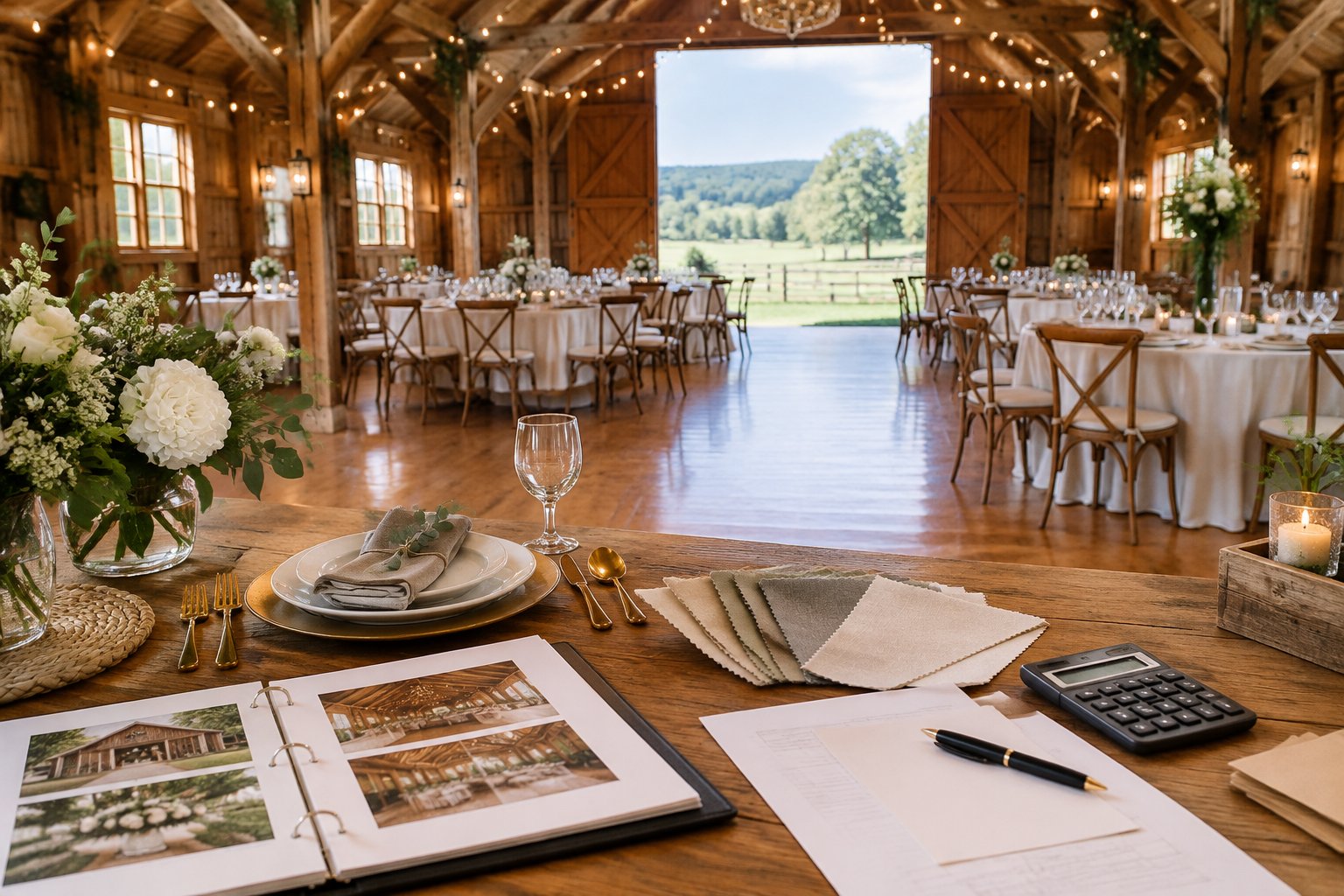
What the Site Fee Usually Includes
A site fee may include use of the barn, grounds, ceremony area, tables, chairs, parking, getting-ready rooms, and a set number of access hours. Some packages also include setup, cleanup, coordination, lighting, heating, or air conditioning.
Request an itemized quote that labels every feature as included, available for an added fee, or supplied by you. Ask whether the ceremony space carries a separate charge and whether rehearsal time is part of the contract.
Expenses That Are Easy to Miss
Common added costs include catering, bar service, rentals, linens, lighting, sound equipment, insurance, security, gratuity, taxes, portable restrooms, generators, heaters, transportation, and overtime. Outdoor plans may also require a tent, flooring, umbrellas, fans, or path lighting.
Ask who handles trash, recycling, restroom servicing, and end-of-night hauling. Review the payment schedule, cancellation policy, damage deposit, service charges, and required insurance before you compare the quoted totals.
Ways to Keep the Total Within Budget
Choose an off-peak date, weekday, Sunday, or shorter rental window if the venue prices those options lower. A package with tables, chairs, basic lighting, and coordination may reduce separate rental fees.
Trim the guest list before cutting essentials such as restroom access or weather protection. Use the barn’s existing beams, doors, landscape, and natural light as design features. For more ideas, compare affordable wedding venues and cheap wedding venue ideas.
Questions to Ask on a Venue Tour
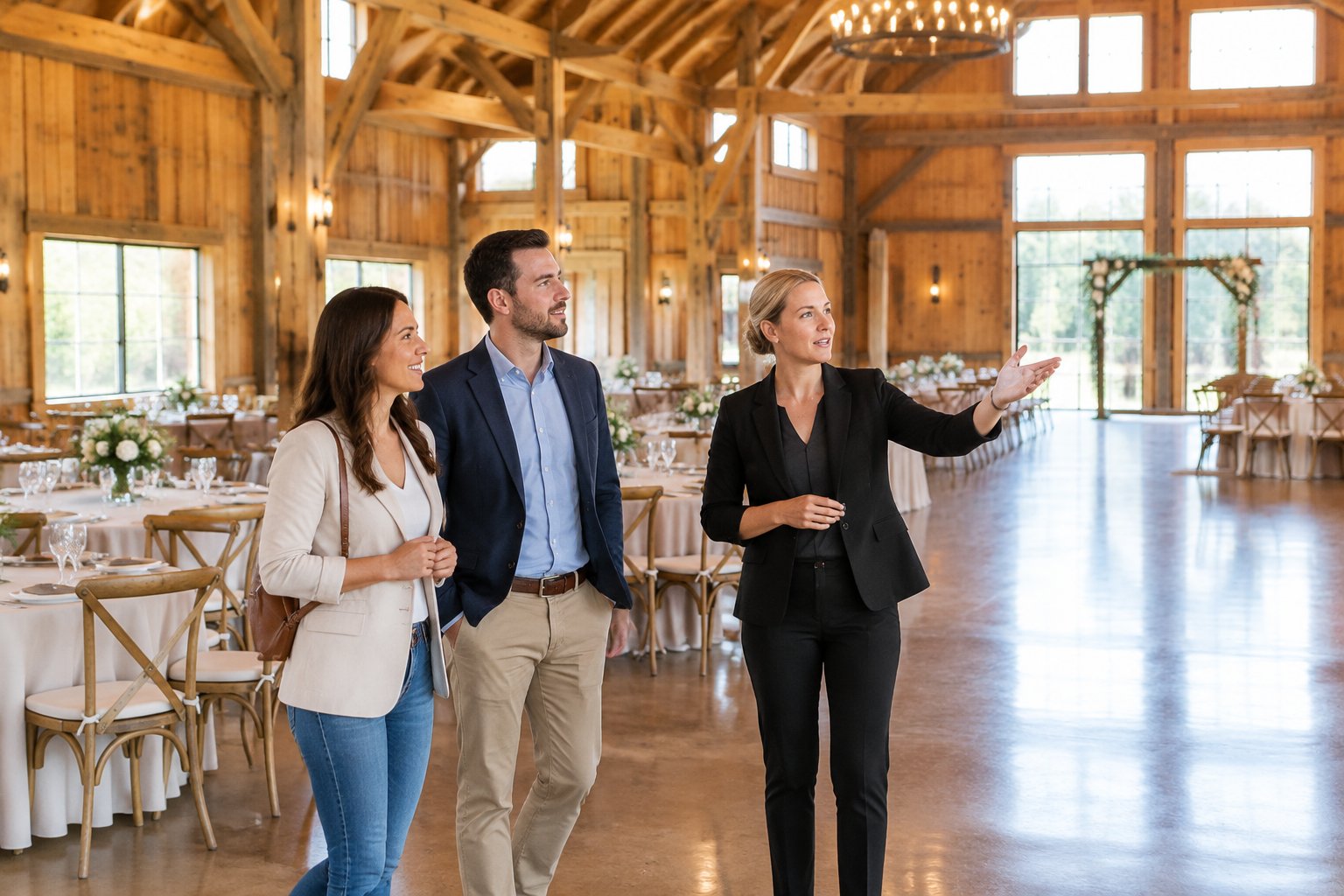
A productive venue tour gives you specific answers about weather, sound, transportation, and day-of responsibilities. Bring your guest count, preferred date, draft timeline, and a written list of costs so each property answers the same questions.
Weather Backups and Seasonal Conditions
Ask whether the barn has heating, cooling, insulation, and ventilation. Find out what happens during rain, extreme heat, cold, wind, smoke, or muddy ground conditions.
Walk the backup location and decide whether you would feel comfortable hosting the ceremony there. Ask about tent fees, generators, fans, heaters, covered walkways, and the deadline for moving an outdoor plan indoors.
Sound, Curfews, and Local Restrictions
Ask when amplified music must stop and whether the cutoff is a hard local restriction. Confirm whether indoor music follows the same rule as outdoor music.
Check policies for candles, sparklers, hanging décor, open flames, nails, staples, confetti, and fireworks. Ask whether a band needs special power, a sound limiter, or an outdoor performance permit.
Parking, Transportation, and Overnight Logistics
Inspect the parking surface and its condition after rain. Ask about accessible spaces, overflow parking, overnight cars, lighting, shuttle drop-off, rideshare access, and the distance to nearby hotels.
If alcohol is served, create a late-night transportation plan. Ask whether the property includes lodging, whether guests can stay onsite, and whether a shuttle can reach the nearest room block.
Set-Up, Cleanup, and Day-Of Support
Confirm your access time, vendor arrival window, rehearsal period, decoration removal deadline, and cleanup duties. Ask who places tables and chairs, handles trash, checks restrooms, and manages the timeline.
Find out whether a day-of coordinator is required and what that person handles. Get every responsibility in the contract, including overtime rates, damage rules, emergency contacts, and the process for changing the floor plan.
Choosing a Style That Feels Personal
Your style comes from the relationship between the building, the landscape, the lighting, and your chosen details. Select a venue whose existing features support your design so your decorations add personality without fighting the space.
Rustic, Refined, and Contemporary Design Directions
A rustic wedding venue pairs well with wood tables, seasonal flowers, lanterns, greenery, and relaxed seating. A refined design can add pressed linens, tailored arrangements, glassware, and soft drapery while keeping the barn’s texture visible.
A contemporary wedding venue supports clean lines, neutral colors, modern chairs, sculptural florals, and focused lighting. Use the building’s strongest features as anchors, then repeat a small set of colors and materials across signs, tables, ceremony décor, and lounge areas.
For more inspiration, explore barn wedding ideas and rustic wedding decor ideas.
Using the Landscape in Your Ceremony Design
Let the landscape guide the ceremony direction, aisle placement, seating, and photography schedule. A meadow works well for open views, while a tree line can provide shade and a natural backdrop.
Check the sun’s position at your ceremony time. Ask about wind, insects, uneven ground, irrigation, and guest access. Provide firm pathways, shade, water, and seating options when the outdoor area requires extra care.
When a Historic Building Needs a Lighter Touch
A historic barn already carries visual weight through its beams, doors, stonework, and aged surfaces. Keep large décor pieces away from fragile features and use freestanding installations when the venue restricts nails, staples, or suspended items.
Ask whether the building has preservation rules, protected areas, weight limits, or fire-safety requirements. A few well-placed floral arrangements and carefully planned lighting can highlight the structure while leaving its original details visible.
Notable Barn and Farm Venue Models to Explore
Different venue models create different wedding experiences, from camp-style weekends to working farms and purpose-built event barns. Use these examples as search directions, then verify each property’s current services, capacity, pricing, and availability.
Catskills Getaways and Camp-Inspired Weekends
A Catskills getaway built around a place such as Camptown or Tyler Hill Camp centers the celebration on shared lodging, outdoor activities, and several days together. This model suits you if guests enjoy a relaxed wedding retreat with meals, social time, and flexible gathering spaces.
Ask about room types, private bathrooms, accessibility, meal service, quiet hours, weather plans, and exclusive-use terms. Confirm whether the ceremony, reception, rehearsal dinner, and farewell gathering can happen onsite without creating long walks or transportation gaps.
Working Farms With Farm-to-Table Appeal
A working farm connects your wedding to seasonal crops, open fields, animals, and local food. The Stock Farm Wedding & Events Barn model represents a property where the setting and food story can shape the guest experience.
Ask which areas remain active during your event and whether farm operations affect noise, parking, photographs, or guest movement. Confirm kitchen access, catering rules, seasonal menu options, pest control, ground conditions, and the plan for rain or extreme temperatures.
Purpose-Built Spaces for Flexible Events
A purpose-built event barn can offer wide clear spans, planned restrooms, climate systems, commercial kitchens, private suites, and layouts designed for weddings. These spaces may use timber framing, a Dutch barn style, or modern barn-inspired construction.
Ask how the event venue handles ceremony flips, band power, lighting, accessible routes, storage, and vendor loading. Compare included amenities with the freedom to choose your own caterer and rental team.
A purpose-built wedding and event venue works well when you want barn character with a carefully planned guest flow.