
Beach House Wedding Venue: How to Choose the Right One
A beach house wedding venue gives you ocean views, a relaxed setting, and room to bring your ceremony, reception, and guest stay into one coastal experience. For couples who want an easy, guest-friendly celebration, a full-service beachfront venue with on-site rooms, indoor and outdoor spaces, catering, and event support is the strongest choice.
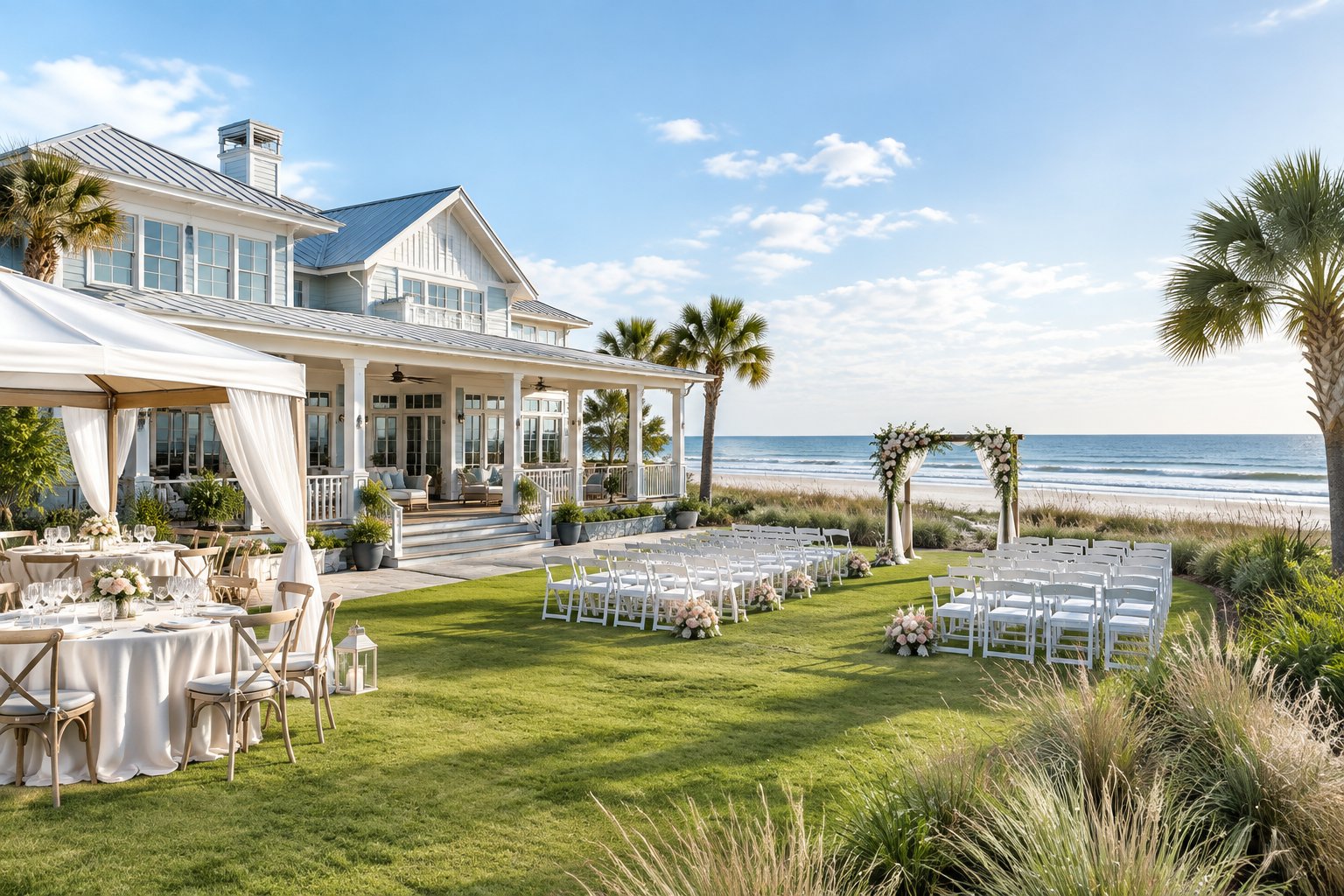
Start by matching the property to your guest count, wedding style, and comfort needs. A private rental can offer privacy and a home-like feel, while a resort-style property can simplify catering, lodging, setup, and weather planning. If you are considering a coastal celebration, exploring beach wedding ideas can help you define the atmosphere before you tour venues.
Ask each property for a detailed quote and availability so you can move from inspiration to a practical plan.
What Makes a Beach House Suitable for a Wedding?
A suitable beach house wedding venue combines direct beach access with a dependable indoor space, guest accommodations, event services, and clear permission for weddings. Ocean views create the setting, while thoughtful logistics keep your wedding comfortable and organized.
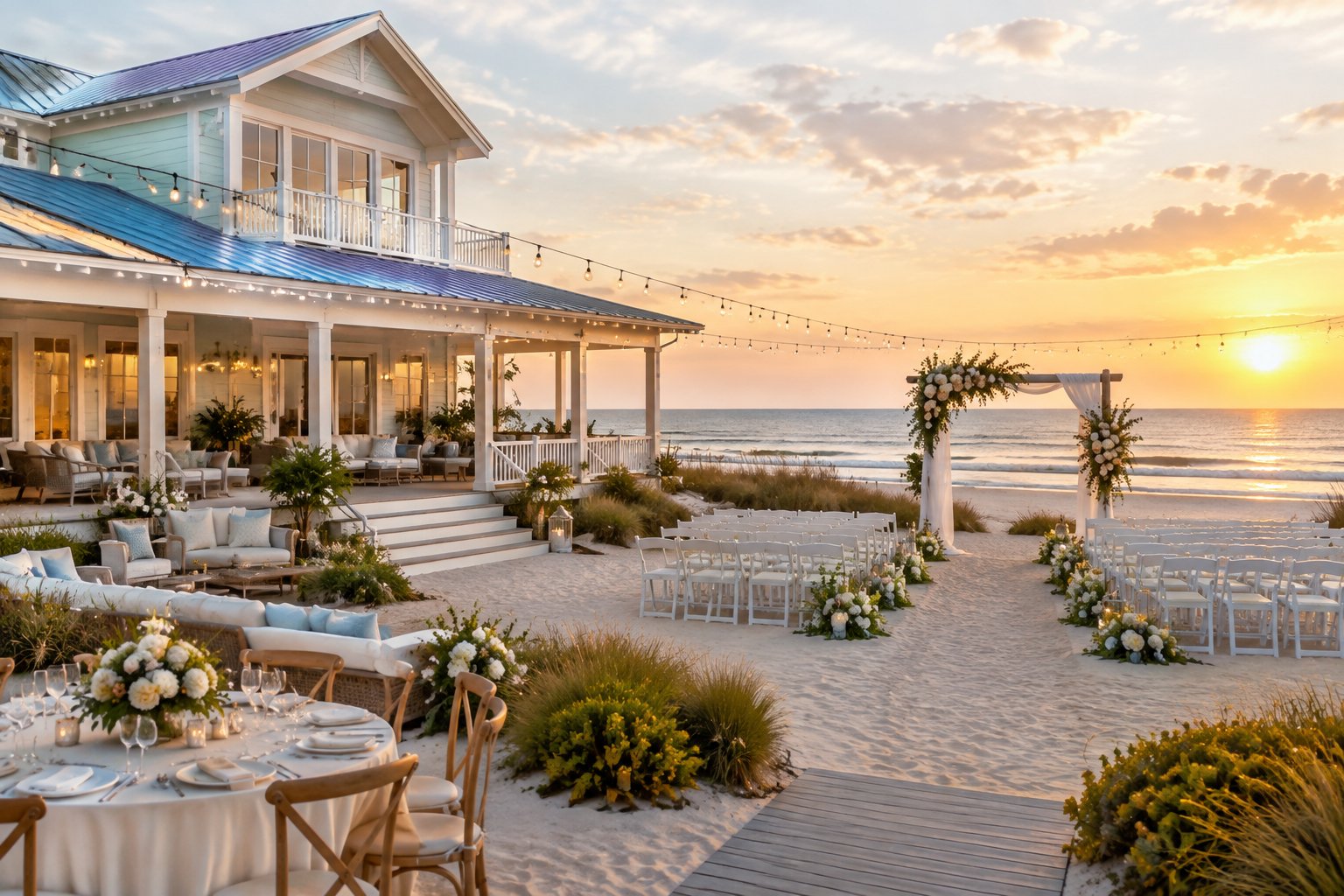
Look for a property that supports the full guest journey, from arrival and ceremony access to dinner, dancing, and overnight stays. Confirm every detail in writing before you pay a deposit.
Private Rental vs. Full-Service Resort Venue
A private rental gives you a residential feel and more control over the space. It may suit a small wedding with a flexible schedule and a trusted team of outside vendors. You will need to confirm whether the owner allows weddings, how many people may gather, and who handles rentals, catering, cleanup, and permits.
A full-service resort venue places lodging, food service, event coordination, and reception spaces in one location. For example, Beach House Hilton Head offers an on-the-beach wedding venue, indoor and outdoor areas for up to 225 guests, custom catering, event support, and 202 rooms and suites. This format reduces travel between wedding events and guest accommodations.
Ceremony, Reception, and Overnight-Stay Requirements
Confirm that the venue supports both your ceremony and wedding reception. Ask whether you can hold vows on the sand, move guests to a covered terrace, and continue dinner and dancing indoors if weather changes.
Review the room layout, restrooms, getting-ready areas, accessibility features, parking, and vendor loading route. If guests will stay on-site, ask about room blocks, booking deadlines, resort fees, and the distance between rooms and event spaces. An indoor backup area should fit your guest count and planned seating.
Guest Count, Event Permission, and Local Restrictions
Your guest count affects seating, restrooms, catering capacity, parking, noise levels, and the size of your dance floor. Request capacity numbers for the ceremony, seated meal, cocktail hour, and dinner with dancing.
A public beach may require permits, access fees, noise limits, or restrictions on structures and lighting. Local rules can also protect sea turtles, dunes, birds, and other coastal habitats.
Ask who secures permits and whether beach access remains open to the public. Confirm your cleanup plan, event end time, and rules for candles, amplified music, fireworks, and alcohol.
Choose the Right Coastal Location and Setting
Choose a coastal location that fits your travel needs, wedding season, guest experience, and preferred level of privacy. A Florida beach house wedding offers warm Gulf Coast scenery, while Hilton Head provides a resort setting with on-site support and accommodations.
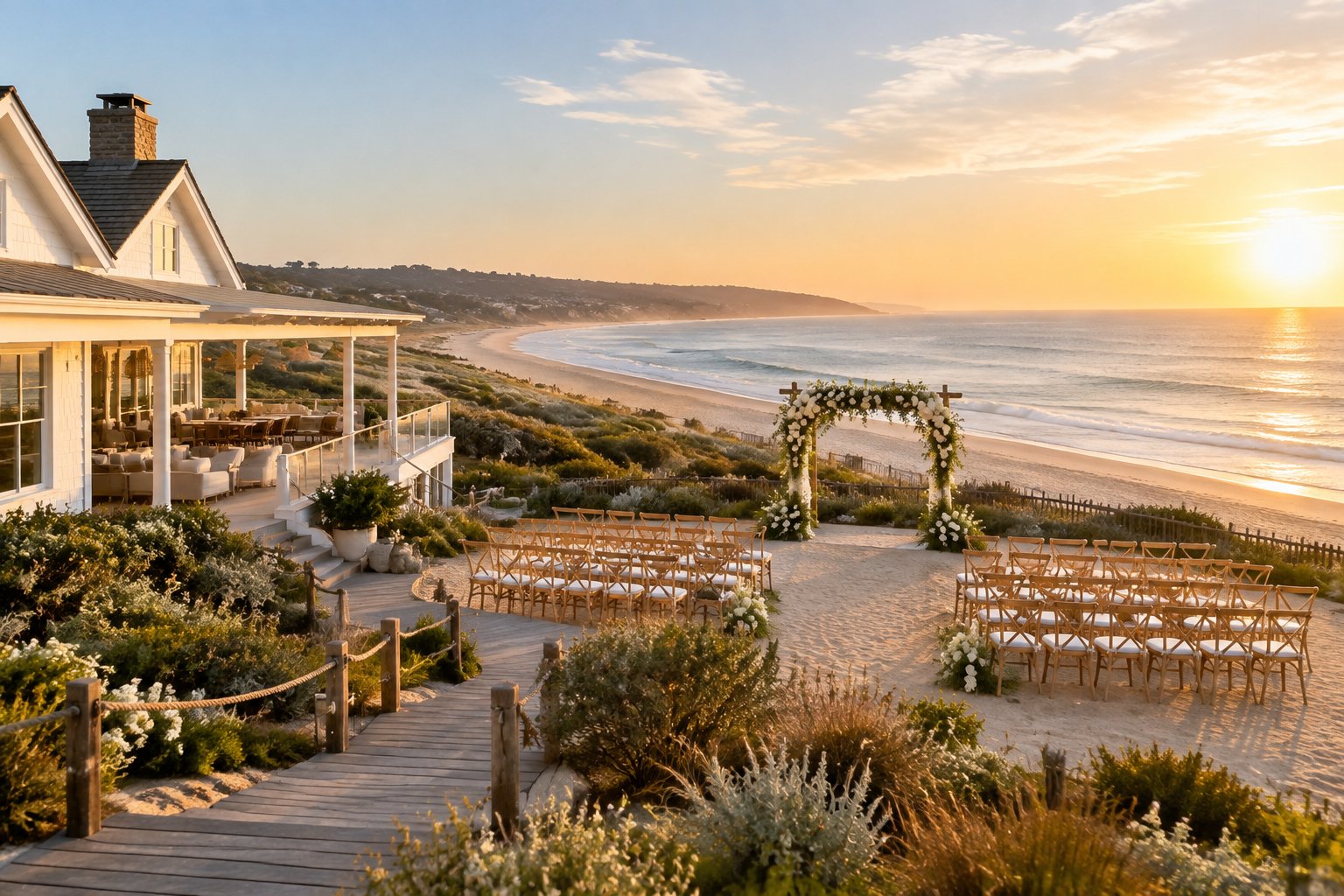
Compare airport access, lodging, local attractions, weather patterns, beach conditions, and vendor availability before you commit. Your location shapes the wedding weekend as much as the ceremony site does.
Florida Gulf Coast, Destin, and 30A
The Florida Gulf Coast offers white sand, warm water, and a wide range of vacation rentals and resorts. Destin appeals to couples who want a lively beach town with restaurants, activities, and room for a destination weekend.
The 30A corridor brings a polished coastal style, planned communities, boutique lodging, and scenic beach access. Ask about seasonal crowds, beach permits, parking, private-event rules, and restrictions on tents or amplified music. Your venue should also provide a firm weather plan during hot, storm-prone months.
Hilton Head Island’s Resort-Style Beachfront Options
Hilton Head Island suits couples seeking a beachfront wedding with resort conveniences. Beach House Hilton Head Island offers the island’s only on-the-beach wedding venue, flexible indoor and outdoor spaces for up to 225 guests, custom catering, professional event support, a dance floor, portable heaters, portable walls, and on-site rooms and suites.
This format helps guests stay close to the ceremony and reception while giving you practical choices for changing weather. Ask to review the venue capacity chart, room-block terms, reception menus, and available event spaces.
Other Destination Settings
Coastal settings across the United States offer different guest experiences. Rhode Island brings classic New England scenery and larger indoor event spaces, while California and the Carolinas offer distinct beach towns, climates, and vendor communities.
Consider travel time, direct flights, local transportation, accessibility, and the number of nearby lodging options. A beautiful location becomes harder to enjoy when guests struggle to reach the property or find rooms within their budget.
From Vail to the Florida Coast
Vail and the Florida coast create very different wedding days. Vail offers mountain scenery, cooler weather, and a land-based setting, while the Florida coast centers on sand, salt air, and waterfront ceremonies.
If you are comparing a mountain destination with a beach house wedding, focus on the experience you want guests to have. Review seasonal weather, attire, travel costs, outdoor access, and reception design before choosing the backdrop.
Plan the Ceremony and Reception Experience
Plan the ceremony and reception as one connected guest experience, with comfortable transitions, practical shade, and a clear response to wind, heat, rain, and noise. Your venue should support the mood you want from the first processional through the final dance.
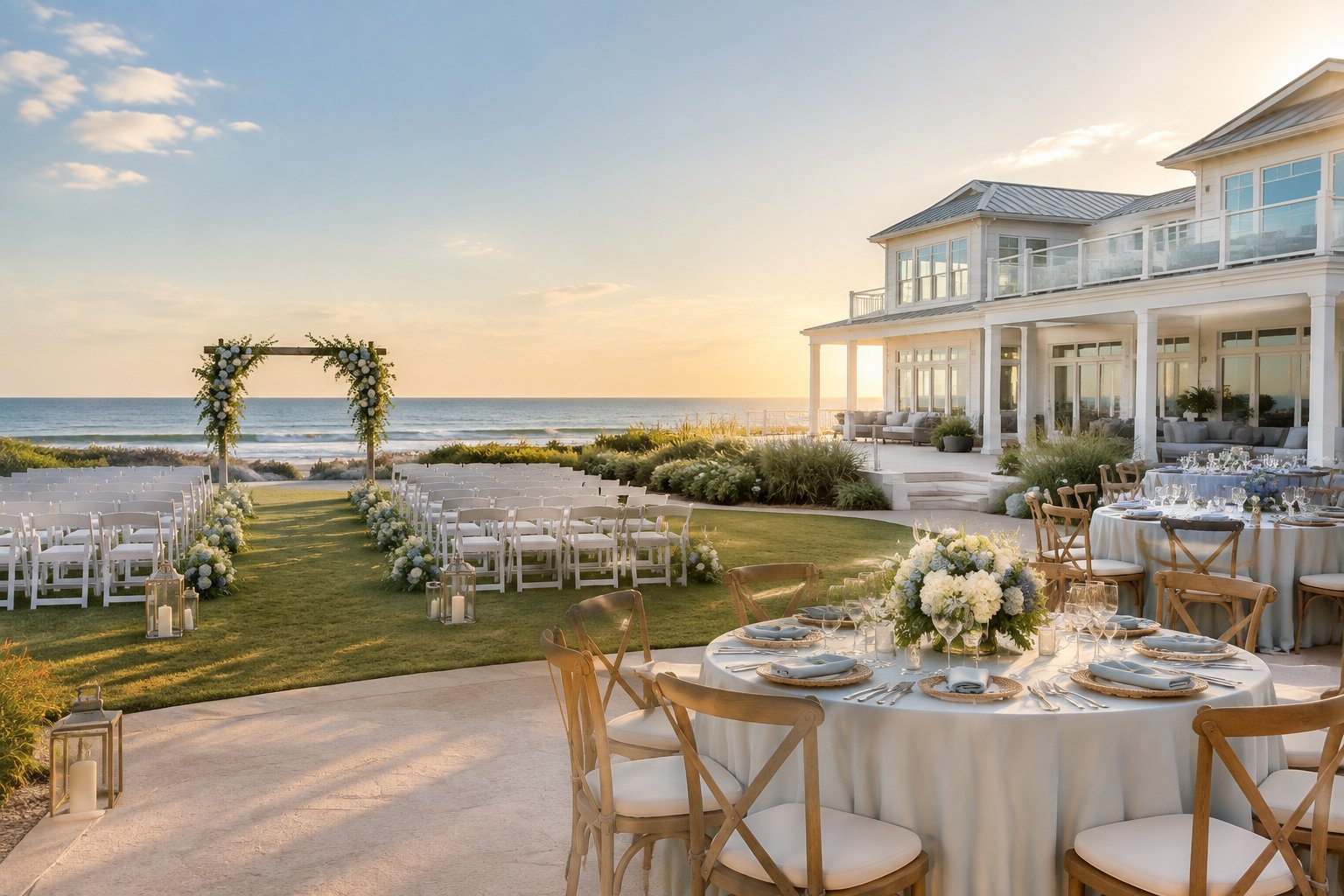
Review the event flow with your coordinator before selecting décor or entertainment. Confirm where guests will gather, how vendors will move equipment, and where the reception will take place if the beach ceremony changes.
Creating a Beach Ceremony That Feels Private
Create privacy with the venue’s layout, ceremony timing, seating design, and natural features. Dunes, landscaping, terraces, and a covered structure can help define the ceremony area while keeping the ocean in view.
Ask about beach traffic, tide patterns, accessibility across sand, sound control, and guest seating. A short aisle, sturdy arch, weighted décor, and a shaded waiting area help the ceremony feel polished. Provide water, fans, or parasols during hot weather, and offer a clear surface or walkway for guests who need easier access.
Reception Spaces, Dance Floors, and Lighting
Select a reception space that gives you enough room for dining, service stations, dancing, entertainment, and guest circulation. Confirm whether the dance floor is included, how large it is, and where power connections are located.
Coastal décor works best when it supports the setting. Chandeliers, lanterns, string lights, and soft uplighting add warmth after sunset. A tiki hut or tiki bar can create a casual cocktail area, while a fire pit gives guests a place to gather when evening temperatures drop.
Ask about wind-safe décor, lighting limits, sound restrictions, and cleanup responsibilities.
Hosting a Rehearsal Dinner and Welcome Events
Use the wedding weekend to help guests settle in through a rehearsal dinner, welcome drinks, or a casual beach gathering. A tiki bar, ocean room, terrace, or private dining area can give each event its own feel.
Ask whether the venue offers rehearsal dinners, group menus, bar packages, and private spaces. A welcome event near the beach helps guests meet before the ceremony, while a quieter dinner gives the wedding party time to review the processional and timing.
Which Services and Amenities Should Be Included?
Prioritize a venue package that includes food service, event coordination, guest comfort equipment, and a firm weather plan. These services reduce the number of outside vendors you must manage and make the wedding day easier to run.
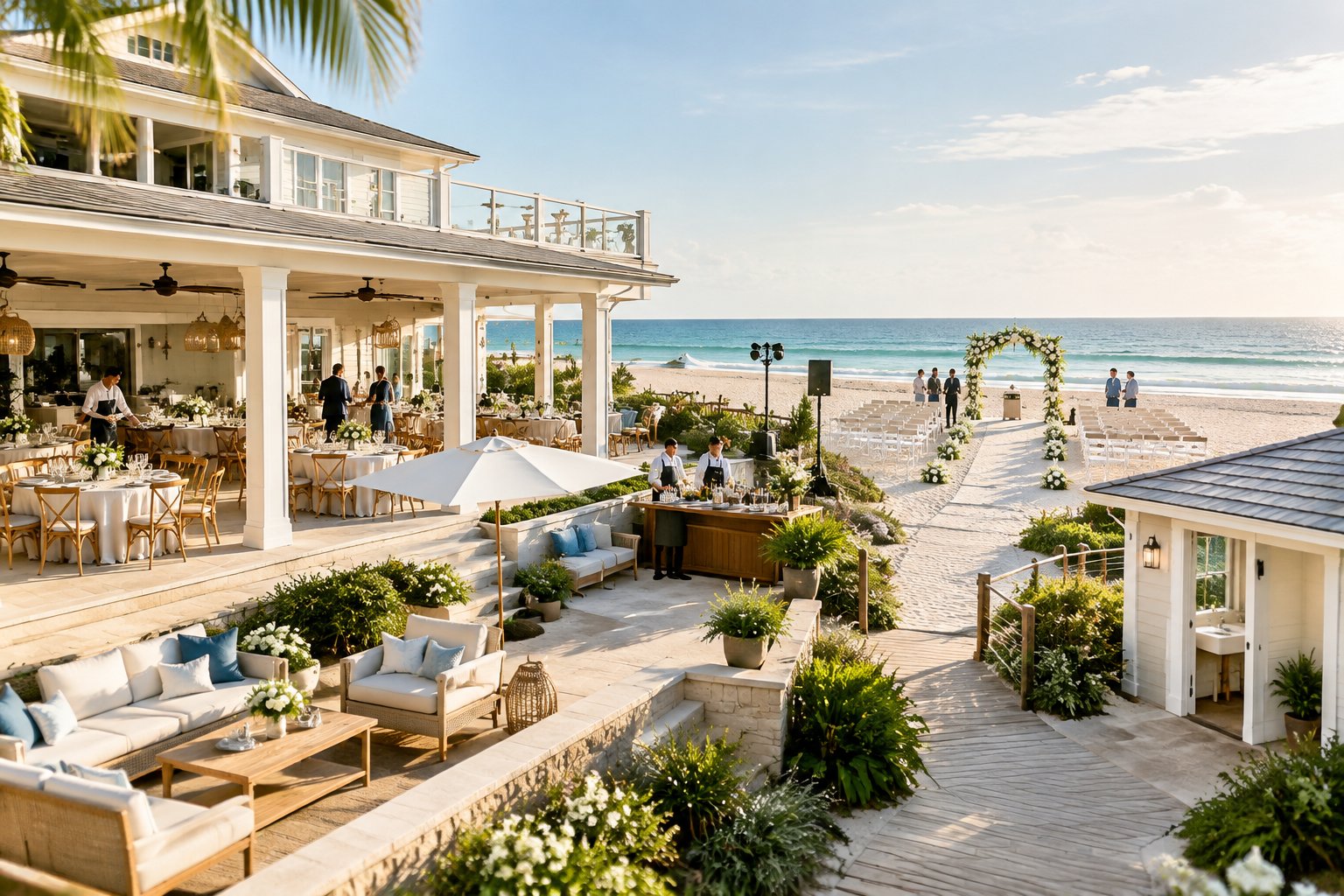
Read the package line by line. Inclusions such as a dance floor, portable heaters, portable walls, rooms, setup, and cleanup can change the value of a venue quote.
Catering, Bar Service, and Dessert Options
Ask who prepares the food, where it is cooked, and how the culinary team handles dietary needs. Review plated meals, buffets, food stations, late-night snacks, children’s meals, and service staffing.
Clarify what the bar package includes, such as beer, wine, cocktails, mixers, bartenders, glassware, and a champagne toast. Confirm whether the wedding cake comes from the venue, an approved baker, or an outside vendor. Request per-person prices, service charges, taxes, minimums, and menu tasting details in writing.
Coordination and Professional Event Support
A wedding planner or venue coordinator should help with the timeline, vendor access, setup, ceremony transition, meal service, and cleanup. Ask who will be present on the wedding day and how many events that person manages at once.
On-site professional event support helps resolve practical issues before they reach you. Confirm whether the coordinator creates floor plans, runs the rehearsal, manages the processional, communicates with vendors, and handles weather decisions.
Weather Plans and Guest-Comfort Essentials
Choose a venue with a usable indoor room or covered backup space. Portable walls can close an open area during rain or wind, while portable heaters help guests stay comfortable on cool evenings.
Ask about air conditioning, shade, fans, water stations, restrooms, lighting, flooring, and accessibility. Confirm the decision deadline for moving the ceremony indoors and who has authority to make that call.
Your contract should explain backup-room access, setup changes, added rental fees, and guest communication.
How to Compare Packages, Costs, and Vendor Rules
Compare beach wedding venue packages by their complete cost, included services, restrictions, and guest experience. A lower rental fee may require separate spending on catering, rentals, staffing, permits, transportation, lodging, or weather protection.
What an All-Inclusive Package May Cover
An all-inclusive package may combine the ceremony site, reception room, catering, bar service, cake, tables, chairs, linens, dance floor, event coordination, and guest accommodations. Some properties also include heaters, portable walls, setup, and cleanup.
Review the exact definition of each inclusion. Ask whether the package covers a champagne toast, vendor meals, cake cutting, ceremony chairs, rehearsal dinner, room blocks, taxes, service charges, and overtime. All-inclusive wedding venues near the beach can help you compare package styles before you request proposals.
Questions to Ask Before Signing a Rental Agreement
Ask these questions during every venue tour:
- What is the total price after taxes, service charges, staffing, rentals, and cleanup?
- Which spaces are reserved for your event, and for how many hours?
- Who secures beach permits and pays related fees?
- Can you bring your own planner, caterer, baker, florist, DJ, or photographer?
- Which vendors must come from an approved list?
- What happens if rain, wind, heat, or high tide affects the ceremony?
- When must you choose the indoor backup plan?
- What deposit, payment schedule, cancellation terms, and refund rules apply?
- How are room blocks, parking, transportation, and guest accessibility handled?
- What fees apply to overtime, extra guests, outside alcohol, or added rentals?
Save the answers with the proposal and contract so each venue remains easy to compare.
How to Build a Realistic Venue Budget
Build your budget around the full wedding weekend. Include venue rental, catering, bar service, taxes, service fees, attire, photography, flowers, entertainment, lodging, transportation, permits, rentals, décor, welcome events, and contingency funds.
Use a spreadsheet to compare the same categories for every property. Label each cost as included, estimated, optional, or excluded. If you are saving on the venue, beach wedding ideas on a budget can help you focus spending on guest comfort and the moments you value most.
A planner from a team such as Seas The Day Weddings can also help coordinate permits, vendors, timelines, and coastal logistics.