
Beach Wedding Venues Area: How to Find the Right Spot
A memorable beach wedding starts with a venue that fits your guest list, travel plans, budget, and comfort needs. The best beach wedding venues area search balances natural beauty with practical details such as permits, restrooms, sound, shade, parking, and a weather backup.
For most couples, a private resort or venue with direct beach access is the strongest choice because it combines ocean views with coordinated services, guest rooms, and an indoor backup space. Public beaches bring scenic flexibility, while destination wedding resorts simplify many travel and event details.
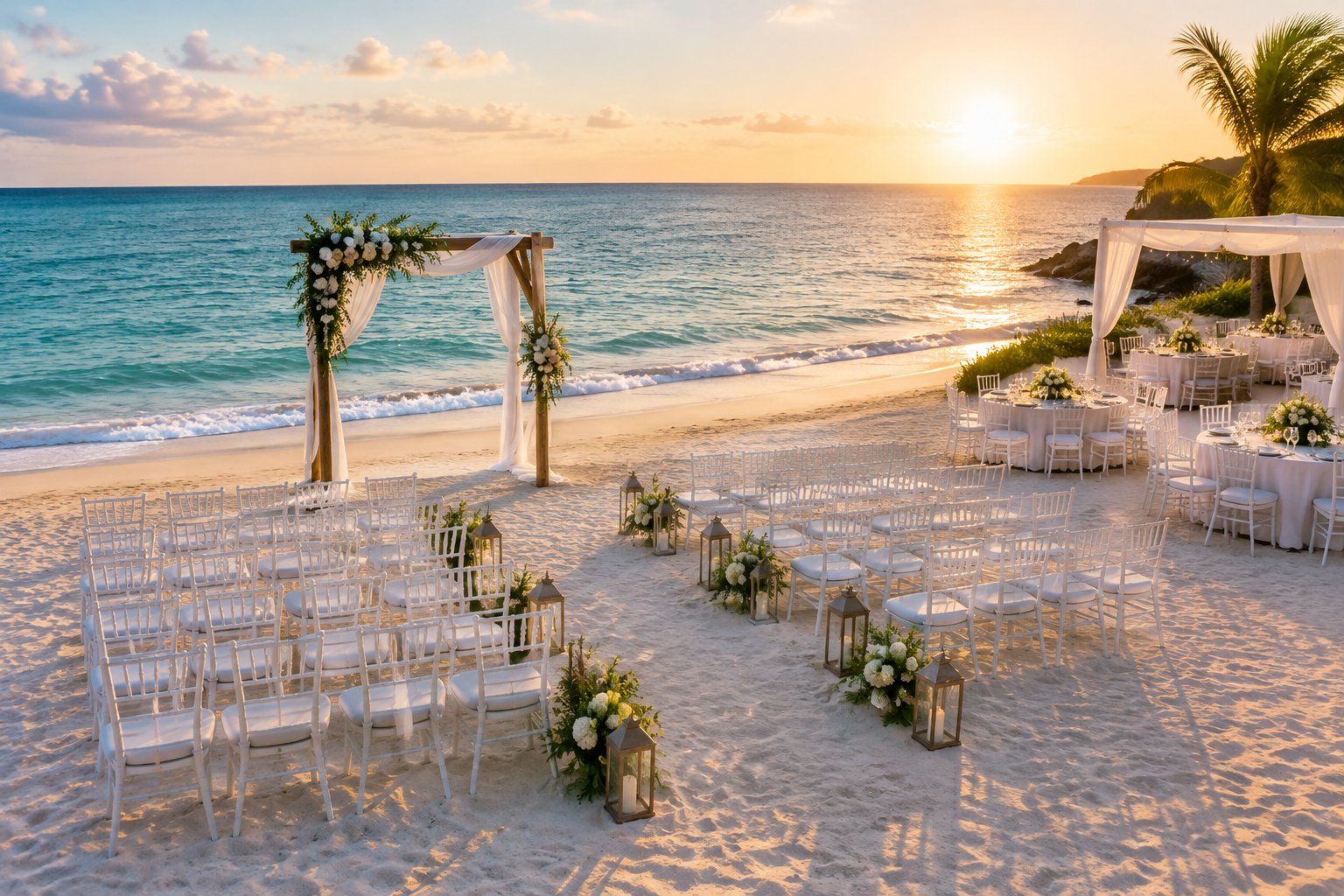
Start by deciding whether you want a relaxed beach wedding ceremony, a full outdoor wedding weekend, or a reception near the water with indoor comforts. As you compare wedding venues, save locations that match your preferred setting and ask each one how it handles tides, wind, accessibility, and local rules. For more inspiration, browse these beach wedding ideas and begin a shortlist that reflects your style.
How to Narrow Down the Right Coastal Setting
Choose a coastal setting by matching the shoreline, travel demands, guest needs, and level of privacy to your wedding plans. A venue with beautiful ocean views still needs safe access, reliable services, and enough space for your ceremony and reception.
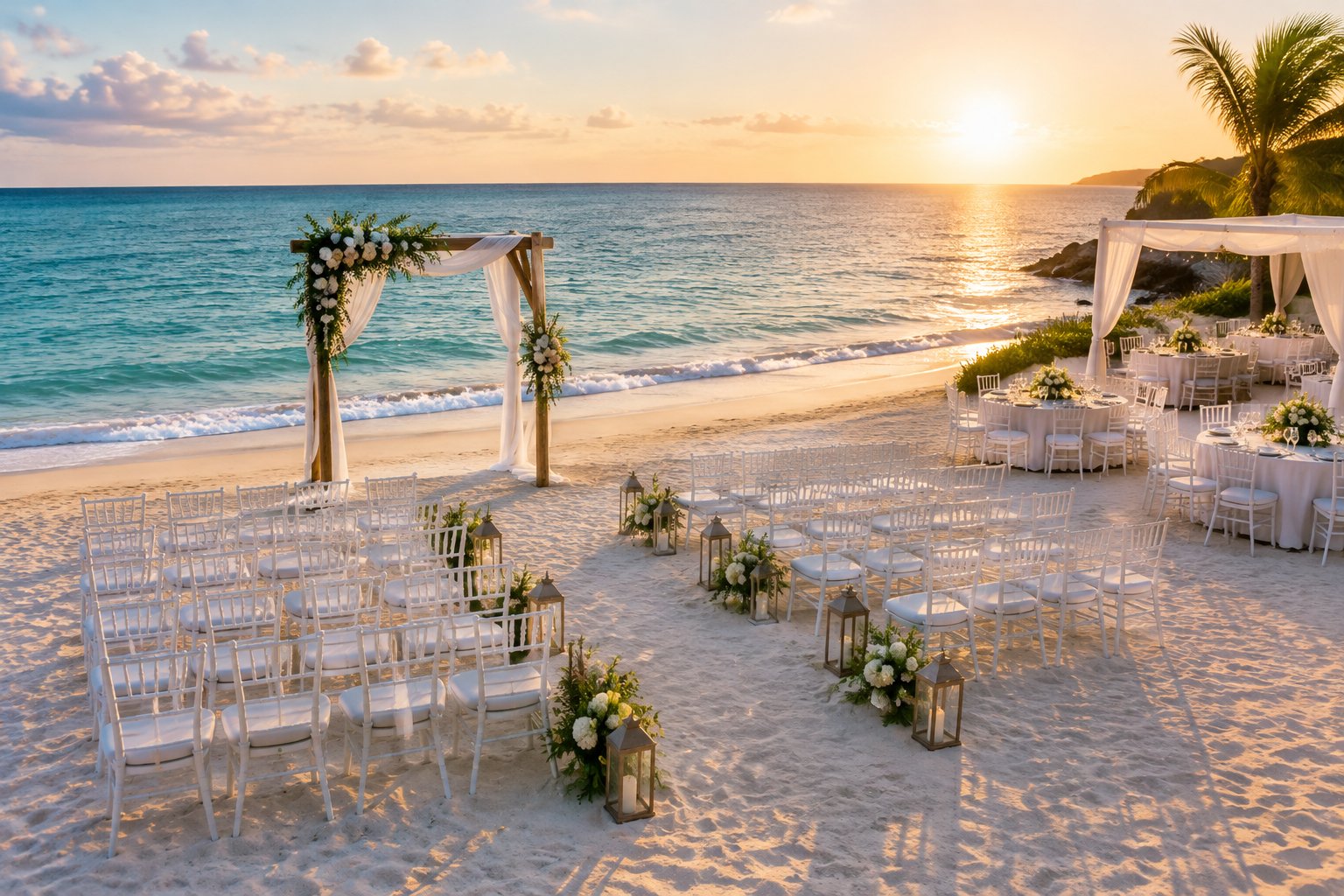
A short list becomes easier to manage when you decide how much sand, travel, and public exposure your guests will enjoy. Consider your ceremony time early because tides, heat, light, and beach traffic all affect the experience.
On-the-Sand vs. Oceanfront and Waterfront Locations
An on-the-sand ceremony places you directly on the sandy shoreline and creates the classic toes-in-the-sand wedding feel. Ask about firm walking paths, chair placement, sound equipment, and access for guests using wheelchairs or walkers.
An oceanfront wedding venue may sit beside the beach with a deck, lawn, terrace, or pavilion. This setup gives you waterfront scenery while keeping guests on a stable surface. Waterfront weddings near bays, lagoons, or inlets can offer calmer water and easier reception logistics.
For local beach weddings, check whether the beach ceremony requires a permit, whether the public can use the area during your event, and whether decorations, amplified sound, alcohol, or tents are allowed.
Local Celebrations vs. Destination Weekends
A local venue reduces travel time and lets you visit during the same season as your wedding. You can attend tastings, meet your wedding planner, and check the ceremony site in person before signing a contract.
A destination beach wedding creates a full guest experience with lodging, welcome events, and a post-wedding brunch. Look for nearby airports, room blocks, transportation, and activities that suit different ages and budgets. A resort with on-site coordination can reduce the number of vendors you need to manage from home.
Guest Count, Privacy, and Accessibility Needs
Guest count shapes the ceremony layout, reception space, parking plan, and permit requirements. Confirm the maximum capacity for both the beach ceremony and the meal because the limits may differ.
Privacy also varies widely. A private venue or resort gives you more control over the guest area, while a public beach brings beachgoers, passing families, and changing noise levels. Ask whether the ceremony area can be reserved or marked.
Accessibility deserves a site visit or detailed video walkthrough. Check paths from parking to the ceremony, restroom access, seating stability, shade, and flooring options across the sand.
Where to Look Across Popular U.S. Coastlines
The strongest U.S. coastal regions each offer a distinct wedding setting, from calm Gulf beaches and tropical islands to dramatic Pacific cliffs and Atlantic barrier islands. Compare the scenery with seasonal weather, travel distance, water conditions, and local event rules.
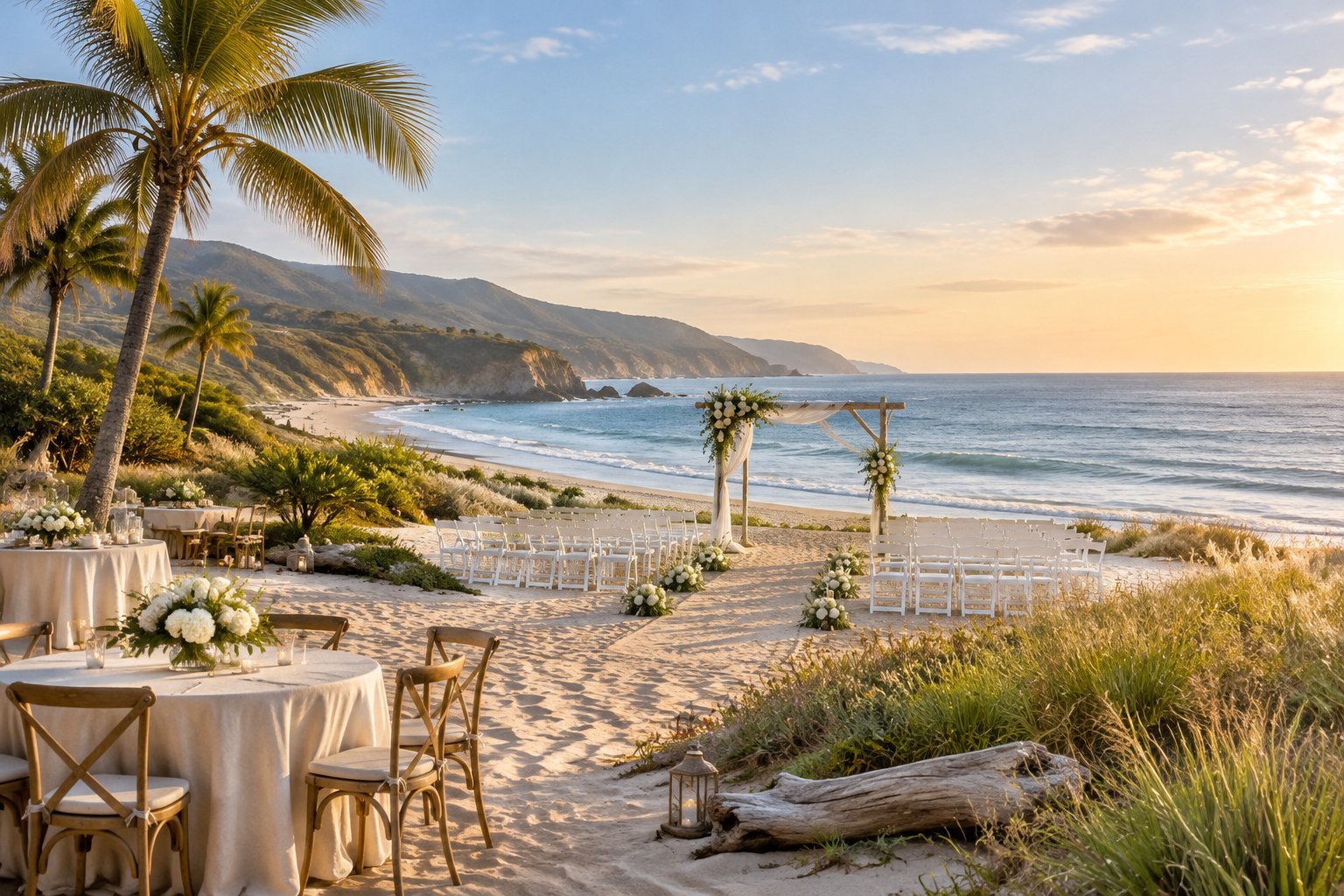
Your ideal region may be close to home or several flights away. Create a practical shortlist by choosing the coastline that fits your guest travel needs first, then compare towns and venues within that region.
Florida and the Gulf of Mexico
Florida offers many wedding styles, from a relaxed Florida Keys celebration to a lively event in Miami Beach or South Beach. St. Pete Beach and Clearwater Beach provide wide Gulf shorelines, while Gulf Coast resorts often offer calm water and easy beach access.
Gulf Shores, Alabama, brings soft sand and a casual coastal atmosphere. The Florida Panhandle also suits couples who want clear water, resort amenities, and room for larger groups. Texas locations such as Galveston and South Padre Island add Gulf scenery with a different local feel.
Ask about hurricane-season dates, public beach permits, parking, and reception noise limits. A resort with an indoor ballroom or covered terrace gives you a useful weather option.
California’s Pacific Coast
Southern California offers a broad range of styles. Malibu and Malibu Beach suit elegant celebrations with strong sunset appeal, while Newport provides a polished resort and harbor setting. Santa Barbara combines Spanish-style charm with coastal views.
Carmel-by-the-Sea and Monterey bring a quieter, romantic mood with rocky shoreline scenery. Muir Beach works for intimate events that favor dramatic natural surroundings. Pacific beaches often bring cool evenings, strong wind, and changing marine conditions, so ask about wraps, heaters, sound, and covered spaces.
California venues may place the ceremony on a bluff, lawn, terrace, or beach access point. Confirm the distance between the view and the actual ceremony surface before booking.
The Carolinas and Atlantic Barrier Islands
South Carolina offers coastal charm in places such as Isle of Palms and Folly Beach. Myrtle Beach provides broad lodging choices and entertainment for larger groups. North Carolina’s Outer Banks, including Nags Head, suits couples who want dunes, open Atlantic Ocean views, and a more relaxed destination setting.
Virginia Beach combines a busy shoreline with extensive hotels and event services. Barrier islands create beautiful ceremony backdrops, though wind, dunes, seasonal crowds, and beach access rules need close review.
Ask whether chairs and arches can be placed on the sand, how far vendors must carry equipment, and whether the reception can continue after sunset.
Hawaii and Other Island-Style Escapes
Hawaii offers a classic island setting for a Hawaii beach wedding, with palm-lined shores, warm light, and resort support. Waikiki gives you city access, iconic views, and many lodging options. Other Hawaiian islands provide quieter beaches and a more secluded feel.
Public beach ceremonies in Hawaii require careful permit planning, and each location has its own rules for guest counts, structures, sound, and setup. Resorts may provide a smoother process through on-site coordinators and package options.
Consider travel time, guest budgets, weather patterns, and the number of events you want to host. A smaller guest list makes an island celebration easier to coordinate.
Northeast and Great Lakes Waterfronts
The Northeast includes coastal options across Long Island, Long Island Sound, Bridgehampton, New Jersey, and Rhode Island. These areas offer refined inns, private estates, harbor views, and seasonal beach towns. Summer dates bring strong demand, while shoulder seasons may offer quieter surroundings.
Michigan provides freshwater waterfront settings with sandy beaches and lake views. Washington offers rugged coastal scenery, evergreen landscapes, and cooler conditions. Check water temperatures, wind exposure, sunset timing, and indoor heating before selecting a date.
What to Ask Before Booking a Venue
Ask about permits, backup spaces, included services, and guest lodging before you sign a venue contract. These answers show how much planning support you receive and which costs remain outside the quoted fee.
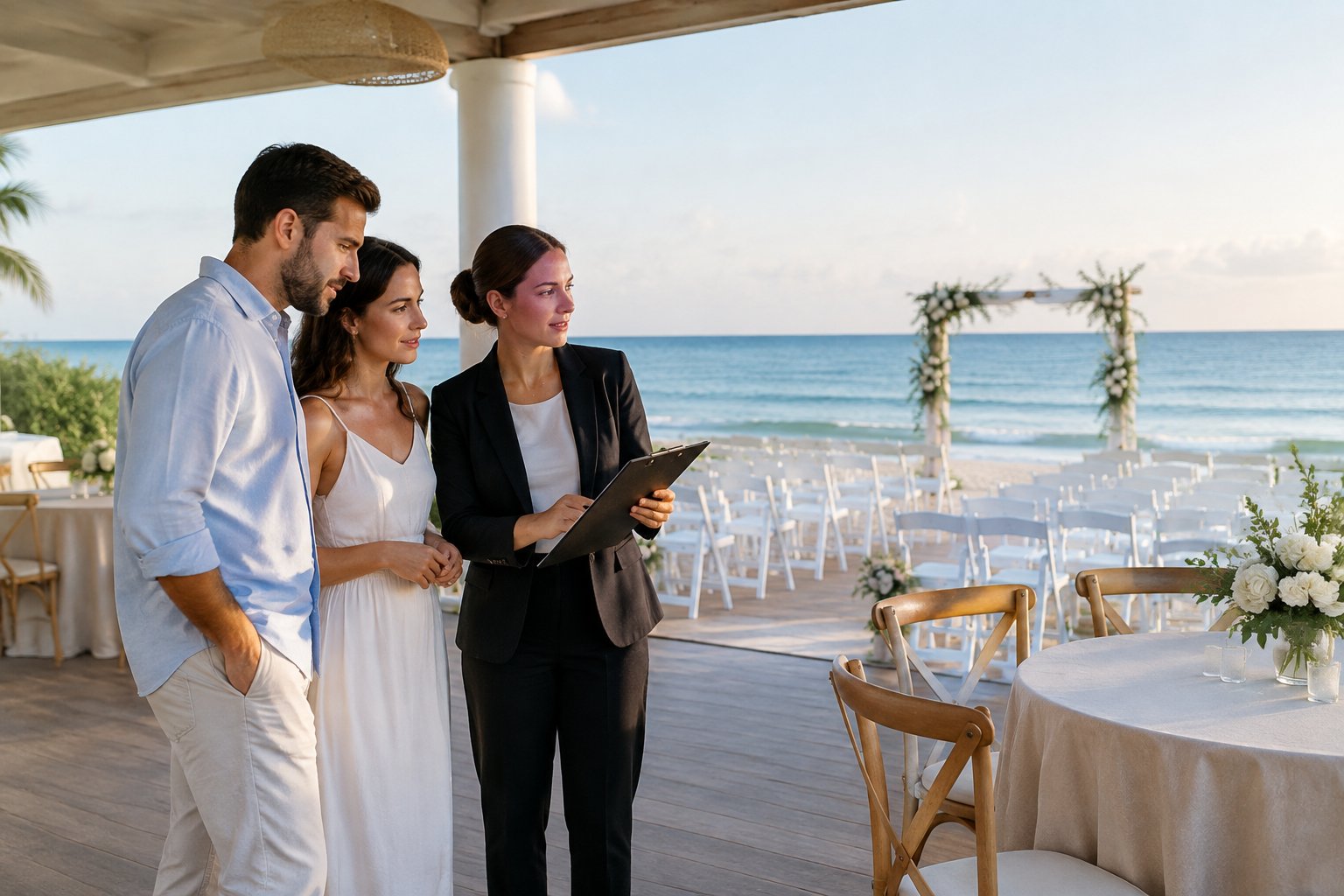
Request a written proposal that separates venue rental, food and beverage, rentals, staffing, taxes, service charges, cleanup, and overtime. Keep the answers with your contract so your wedding planner and vendors can work from the same details.
Is the Ceremony Space Private and Permitted?
Ask who controls the ceremony site and whether the venue handles required permits. Public beaches may limit guest counts, event hours, decor, amplified sound, alcohol, and reserved space.
Confirm the exact location, setup window, cleanup deadline, and rules for arches, chairs, florals, candles, pets, and photography. Ask whether the ceremony area stays private during your time slot and whether other beach activity will remain nearby.
If a permit requires liability insurance or a special event application, request the deadlines and fees in writing.
What Is the Weather and Tide Backup Plan?
Ask where the wedding ceremony moves if rain, high wind, extreme heat, or unsafe water conditions affect the beach. A covered terrace, pavilion, ballroom, or nearby indoor room gives you a clear alternative.
Review the tide chart for your date and ask how the venue tracks changes. Confirm when the final weather call happens, who makes it, and how guests receive the update. A backup plan needs its own layout, seating, sound, lighting, and catering details.
Which Services Are Included in Wedding Packages?
Wedding packages may include chairs, an arch, linens, catering, bar service, basic lighting, setup, cleanup, and coordination. Read the itemized list and ask about delivery fees, service charges, vendor meals, overtime, and replacement costs.
Ask whether you can choose outside vendors or must use an approved list. Confirm who manages the timeline, ceremony cues, rentals, sound check, and transitions between the beach and reception.
If you want more styling support, compare package details with wedding venue ideas that match your preferred level of service.
Can Guests Stay On-Site or Nearby?
On-site rooms make a destination wedding easier for guests and simplify transportation after the reception. Ask about room blocks, booking deadlines, minimum stays, accessibility, parking, and resort fees.
If rooms are nearby, request a list of hotels at different price points. Confirm shuttle routes, pickup times, rideshare access, and walking conditions after dark. Guests also need nearby options for breakfast, groceries, pharmacies, and last-minute attire needs.
Venue Types and Notable Coastal Examples
Venue type shapes your planning workload, privacy, guest comfort, and room for personalization. Full-service resorts simplify multi-day events, while private estates and styled micro-wedding spaces give you more control over the design.
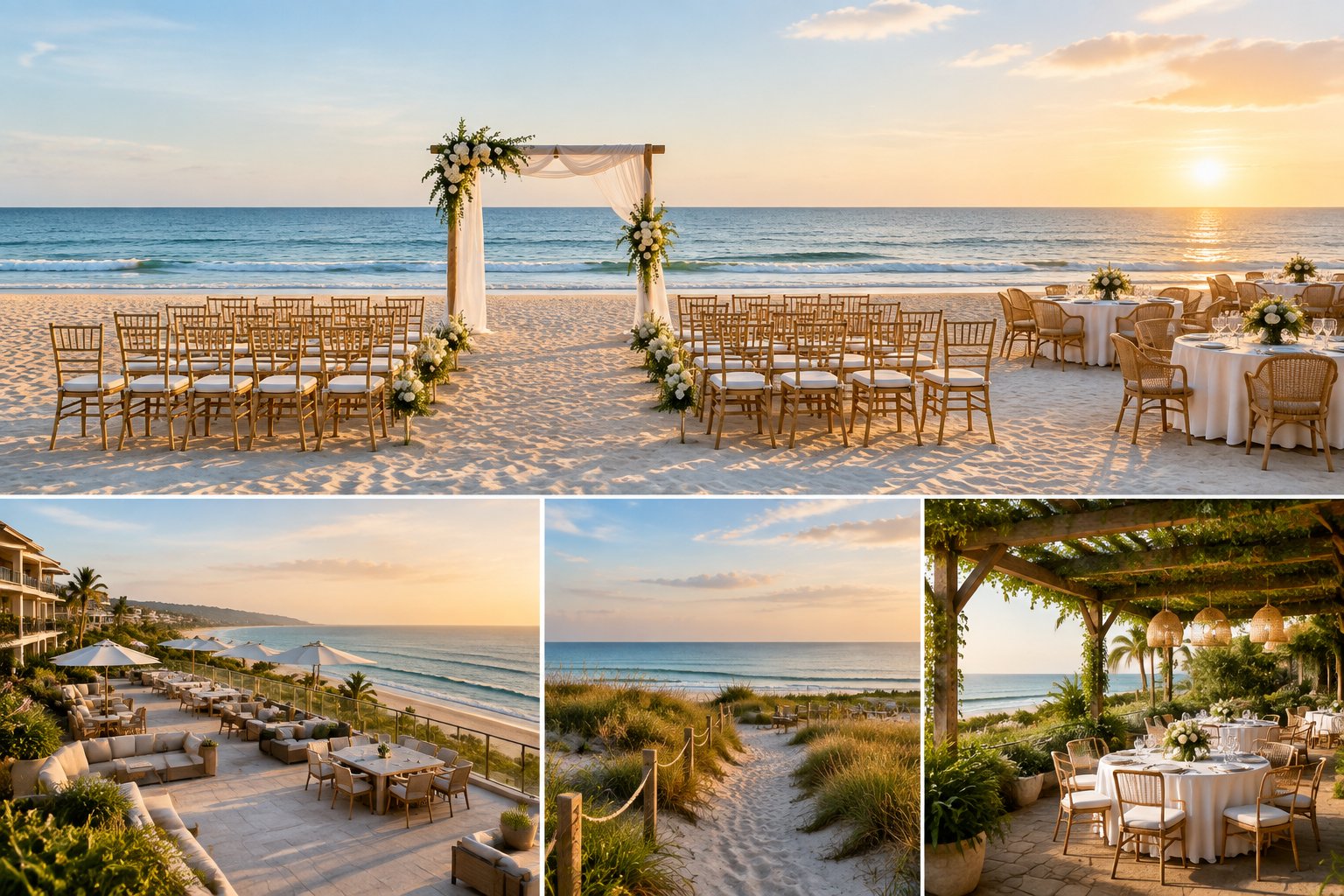
Use the examples below as starting points for research. Confirm current capacity, availability, package details, and ceremony access directly with each property or provider.
Full-Service Resorts for Multi-Day Events
Full-service resorts suit couples who want lodging, catering, ceremony coordination, and reception space in one setting. They also make welcome parties, rehearsal dinners, and farewell brunches easier to organize.
Examples include Daytona Grande Oceanfront Resort, Perdido Beach Resort, DiamondHead Beach Resort, Holiday Inn Resort Fort Walton Beach Hotel, The Island Resort, and Palm Island Resort. These properties represent the resort model across Florida and the Gulf Coast, with options for oceanfront ceremonies and guest stays.
Ask how many events the property hosts on one day, where your guests move between spaces, and how the resort protects your ceremony from other hotel activity. Review package limits closely if you want outside florists, caterers, musicians, or photographers.
Hotels and Inns With Indoor-Outdoor Flexibility
Hotels and inns work well when you want a beach ceremony paired with an indoor dining room, covered porch, ballroom, or private restaurant. This format gives guests a stable place to eat and socialize while preserving the coastal setting for vows and portraits.
Sea Breeze Manor Bed and Breakfast Inn offers the intimate inn model, while Bella Villa provides another private, residential-style option to investigate. Confirm room capacity, event hours, parking, catering access, and whether the ceremony site is on the property or nearby.
A venue with short walking distances helps older guests and makes transitions easier after the ceremony.
Private Estates and Styled Micro-Wedding Setups
Private estates fit couples who want a smaller guest list, personal design, and a more private atmosphere. They work well for elopements, vow renewals, and micro-weddings with a short reception.
The Beach Picnic Co. provides a styled beach setup approach, with design centered on seating, florals, food, and a carefully planned footprint. Ask about weather changes, delivery access, restroom arrangements, beach rules, cleanup, and photography time.
For a smaller celebration, review these tips for choosing the perfect venue for a small wedding before you compare minimums and package fees.
Clubs, Restaurants, and Waterfront Event Spaces
Clubs, restaurants, and waterfront spaces give you stronger food service, restrooms, power, and indoor seating. They suit couples who want water views without placing the full reception on sand.
Monterey Beach Station, Surf Club, and The Pearl are useful names to explore within this category. Ask whether the ceremony takes place on the beach, a terrace, a lawn, or an adjacent public area. Confirm the distance between ceremony and meal space, plus music curfews and private dining rules.
A waterfront venue can deliver the coastal mood while keeping dinner service protected from wind and shifting sand.
Planning Details That Protect the Guest Experience
Protect guest comfort by planning around the season, tide, sun, wind, transport, and reception flow. Small choices such as water stations, stable flooring, quiet fans, and clear footwear guidance help your outdoor wedding feel polished.
Choose a Season and Ceremony Time Wisely
Select a season after reviewing local temperatures, storm patterns, crowd levels, and sunset times. Gulf of Mexico beaches may bring intense summer heat and tropical weather concerns, while Pacific beaches may feel cool after sunset.
Late afternoon or early evening often gives you softer light and lower heat. Check the tide schedule before setting the ceremony time, especially when the beach narrows during high tide.
Give guests the timing details on your invitation or wedding website. Tell them when to arrive, where to park, and whether they should bring a wrap or sun protection.
Prepare for Wind, Heat, Sand, and Rain
Secure arches, signage, aisle decor, table linens, and floral pieces with weights approved by the venue. Choose hairstyles, veils, menus, and paper goods that handle moving air.
Use a professional microphone and speaker system so guests can hear the vows over waves and wind. Offer water, parasols, fans, sunscreen, shade, and a place to leave shoes.
Choose flat sandals, wedges, or barefoot-friendly attire, and share guidance through your beach wedding dress ideas planning.
Rain protection needs more than a tent reservation. Confirm flooring, sidewalls, lighting, power, seating, and the time required to move the event.
Plan Transportation, Attire, and Reception Flow
Map the route from lodging to parking, ceremony, cocktail hour, and reception. Provide shuttle details and allow extra time for traffic, beach paths, elevators, and guest mobility needs.
Keep the ceremony layout close to restrooms and shade when possible. Place the cocktail hour in a stable area where guests can brush off sand and refresh before dinner.
If the reception follows on a deck or indoors, tell guests when and how the move happens. Use lightweight fabrics and secure footwear for the wedding party.
Keep a backup pair of shoes, garment covers, towels, and a small repair kit nearby.
Use Beach Wedding Ideas That Work in Real Conditions
Choose decor that supports the coastline, such as weighted lanterns, sturdy floral arrangements, driftwood accents, and low-profile seating. Avoid loose confetti, balloons, fragile glass, and decor that could harm wildlife or break under wind.
Create a simple guest comfort station with water, sunscreen, fans, tissues, insect protection, and sandals. For reception styling, explore beach wedding table decoration ideas that use secure containers and weather-ready materials.
Test the sound system at the ceremony site, walk the guest route in the planned footwear, and confirm the backup setup with every vendor before the wedding day.